
Your roof protects everything underneath it, your family, your belongings, your investment. But like any part of your home, it won’t last forever. So how long do asphalt shingles last, and when should you start planning for a replacement? The answer depends on several factors. Material quality, local climate, and regular maintenance all determine whether your roof holds up for 15 years or pushes past 30.
At Sunflowers Energy LLC, we’ve inspected and replaced asphalt shingle roofs across countless residential properties. We’ve seen roofs fail early because of poor installation, and we’ve seen others last decades with the right care. This guide covers what you can realistically expect from your shingles, the conditions that shorten or extend their lifespan, and the clear warning signs that replacement is coming. By the end, you’ll know exactly where your roof stands, and what steps to take next.
What determines asphalt shingle lifespan
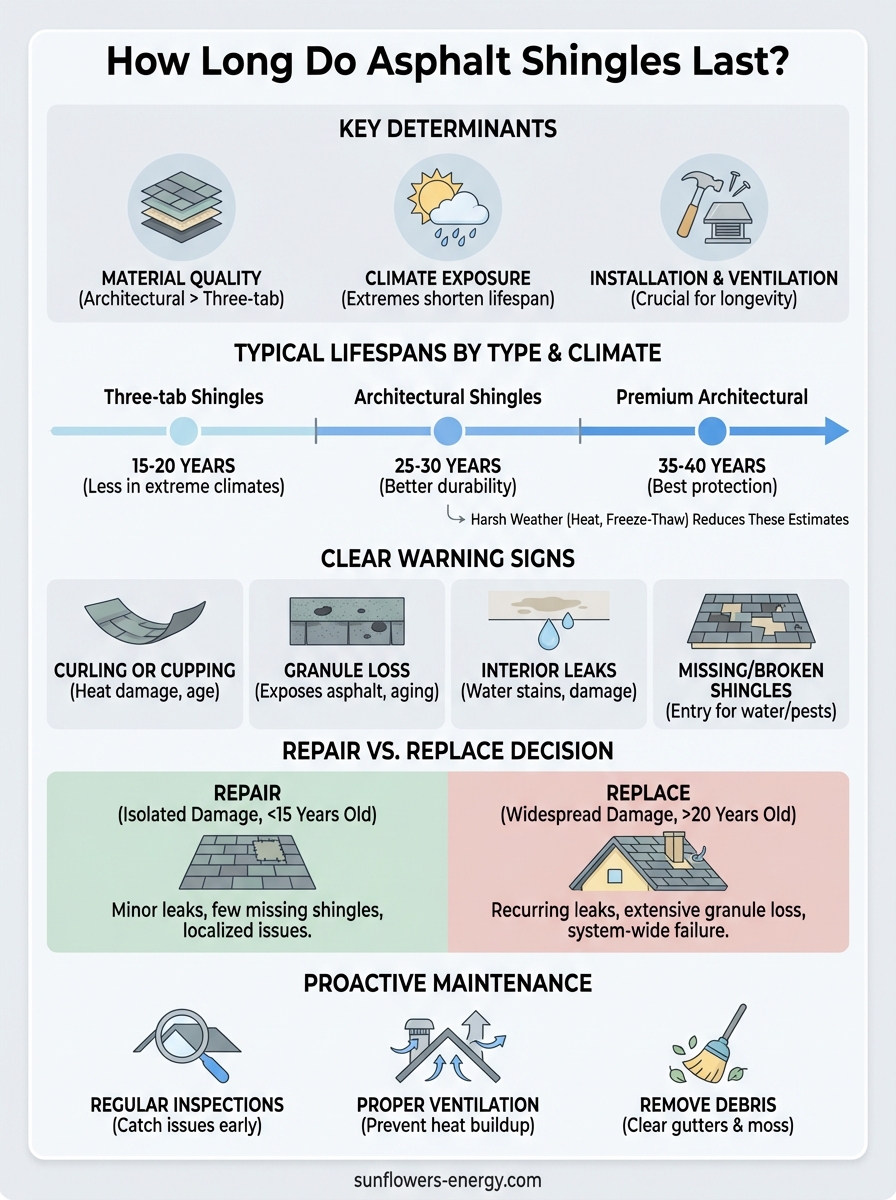
Your shingles don’t come with an expiration date stamped on them, but several factors dictate how long do asphalt shingles last on your particular roof. Material quality sits at the top of that list. Three-tab shingles typically contain less asphalt than architectural shingles, which means they’re thinner and less resistant to weathering. Climate and installation quality round out the big three. A roof installed correctly in a mild climate will outlast one installed poorly in an area with extreme temperature swings and constant UV exposure.
Material quality and manufacturing grade
The shingles themselves set the baseline for longevity. Architectural shingles use more asphalt and feature multiple layers, which makes them heavier and more durable than basic three-tab options. Premium shingles include additional granules that reflect UV rays and resist algae growth. You get what you pay for in roofing materials, and cutting corners on shingle quality means you’ll face replacement sooner than expected.
Higher-grade shingles cost more upfront, but they deliver years of additional protection and often come with longer warranties.
Climate and weather exposure
Temperature extremes break down asphalt faster than steady, moderate conditions. Roofs in areas with hot summers and freezing winters expand and contract constantly, which weakens the shingle structure over time. UV radiation, heavy rainfall, hail, and high winds all accelerate wear. A roof in Florida faces different challenges than one in Maine, and both will age differently than a roof in a temperate, dry climate.
Installation quality and ventilation
Poor installation can cut your roof’s lifespan in half. Shingles need to be nailed correctly, aligned properly, and sealed against moisture infiltration. Attic ventilation also plays a critical role. Without proper airflow, heat builds up under your roof and bakes the shingles from below, causing premature curling and cracking.
Typical lifespans by shingle type and climate
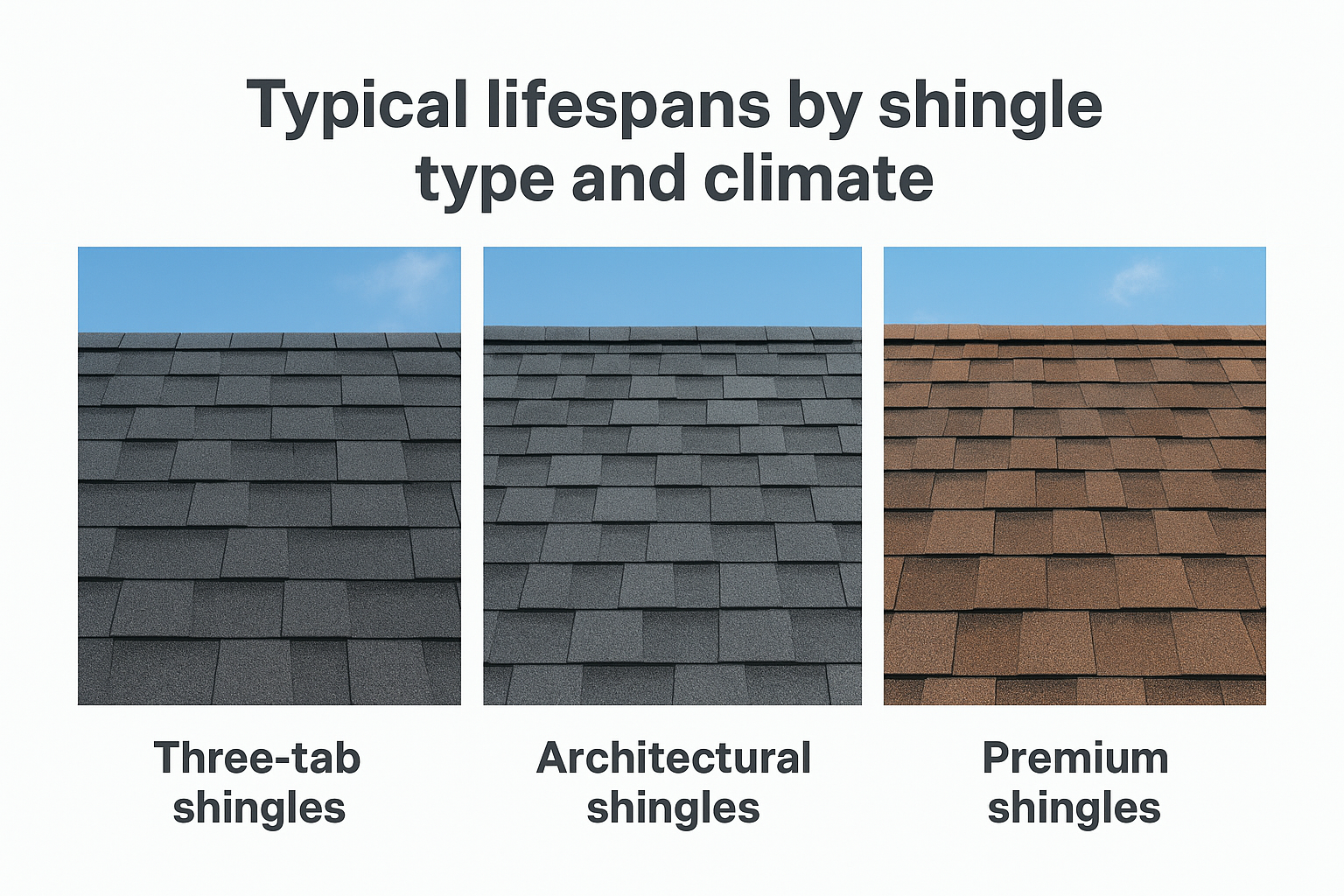
When asking how long do asphalt shingles last, you need to consider both the shingle type and your local climate. Three-tab shingles typically last 15 to 20 years in moderate conditions, while architectural shingles reach 25 to 30 years. Premium architectural options can push 40 years when everything aligns properly. Your specific weather patterns then adjust these baselines up or down.
Three-tab shingles
Three-tab shingles handle moderate conditions reasonably well but struggle under extremes. You’ll see 15 to 20 years in areas without harsh weather. Hot, sunny climates with intense UV radiation drop that to 12 to 15 years. Cold regions with freeze-thaw cycles produce similar results, as repeated ice expansion cracks and damages the shingle surface over time.
Architectural and premium shingles
Architectural shingles use thicker asphalt layers and multi-dimensional construction, which delivers 25 to 30 years in most environments. Premium versions with enhanced granule protection can reach 35 to 40 years when properly maintained and installed in favorable conditions.
Higher-grade shingles consistently outlast basic options by a decade or more, making them worth the upfront investment.
Climate’s effect on longevity
Harsh weather subtracts years from any shingle type. Desert heat, coastal humidity, and heavy snow all speed up deterioration. Moderate temperatures with limited extreme weather give your roof the best chance to meet or exceed manufacturer estimates.
Signs your asphalt shingle roof needs replacement
Your roof sends clear signals when it approaches the end of its useful life. Knowing what to look for helps you catch problems before they cause interior damage. While understanding how long do asphalt shingles last gives you a general timeline, physical warning signs tell you exactly when action becomes necessary. Regular inspections reveal these issues early, giving you time to plan and budget for replacement.
Visible damage and wear patterns
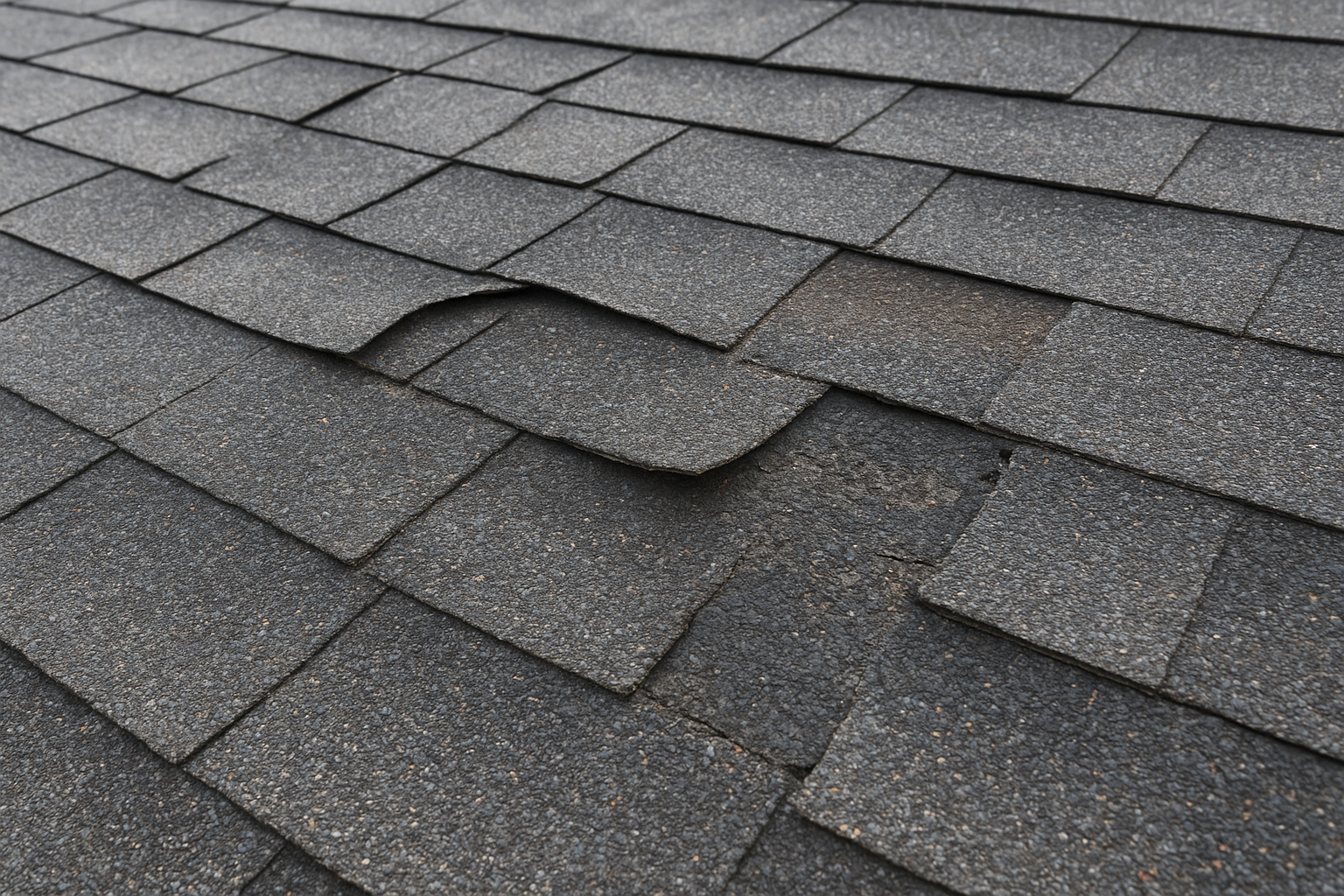
Curling or cupping shingles indicate advanced age or heat damage from poor ventilation. Missing granules expose the asphalt layer underneath, which accelerates deterioration and reduces waterproofing. You’ll notice dark streaks or bare spots where the protective granules have worn away. Cracked, broken, or missing shingles create entry points for water and pests.
Visible shingle damage rarely affects just one area, it usually signals widespread deterioration across your entire roof.
Interior warning signs
Water stains on ceilings or walls point to active leaks that require immediate attention. Daylight visible through roof boards means gaps have opened between shingles or decking. Sagging roof sections indicate structural problems that demand urgent professional assessment.
Repair vs replace and when to act
You face a critical decision when your roof shows damage: patch the problem or replace the entire system. The answer depends on the extent of damage, your roof’s age, and cost comparison between short-term fixes and long-term solutions. A few damaged shingles after a storm warrant repair, but widespread deterioration signals that replacement makes more financial sense.
When repairs make sense
Isolated damage from recent storms or falling branches calls for targeted repairs. If your roof sits under 15 years old and shows damage in only one section, patching saves money and extends your roof’s overall life. Minor leaks, a handful of missing shingles, or localized granule loss all qualify as repair-worthy issues. You preserve your warranty coverage and avoid unnecessary replacement costs.
Repairs work best when damage affects less than 30% of your roof and the remaining shingles remain in good condition.
When full replacement becomes necessary
Multiple problem areas indicate system-wide failure that repairs can’t address. Once your roof reaches 20 years or approaches how long do asphalt shingles last for your specific type, replacement becomes the smarter investment. Widespread curling, significant granule loss across large sections, or recurring leaks all point to replacement. Repeated repairs often cost more over time than installing a new roof that protects your home for decades.
How to make asphalt shingles last longer
Proactive maintenance extends your roof’s lifespan and helps you reach or exceed the typical estimates for how long do asphalt shingles last. Regular inspections, proper ventilation, and timely repairs prevent small issues from becoming expensive problems. You control several factors that determine whether your roof meets its expected lifespan or fails early.
Schedule professional inspections
Annual professional inspections catch problems before they cause serious damage. A trained eye spots loose flashing, damaged shingles, and clogged gutters that you might miss during casual observation. Schedule these checks in spring or fall when weather remains moderate. Your inspector identifies vulnerabilities and recommends specific repairs that prevent water infiltration and structural damage.
Professional inspections cost a fraction of premature replacement and typically extend your roof’s life by several years.
Maintain ventilation and remove debris
Proper attic ventilation prevents heat buildup that cooks your shingles from underneath. You need balanced intake and exhaust to keep temperatures stable. Clear debris from your roof and gutters at least twice yearly. Leaves, branches, and standing water accelerate shingle deterioration. Remove moss and algae growth promptly, as these organisms trap moisture against your shingles and break down the protective granules over time.
Next steps for your roof
Your roof’s lifespan depends on material quality, climate exposure, and consistent maintenance. Understanding how long do asphalt shingles last gives you a realistic timeline for planning, but regular inspections reveal the actual condition of your specific roof. Take action when you spot curling, granule loss, or water stains rather than waiting for complete failure that leads to interior damage.
Start with a professional inspection if your roof approaches 15 to 20 years old or shows visible damage. You’ll get an honest assessment of remaining lifespan and specific repair recommendations that help you plan and budget appropriately. Schedule maintenance before small problems grow into expensive emergencies that threaten your home’s structure and belongings.
Ready to get an expert evaluation of your roof? Contact Sunflowers Energy LLC for a free on-site inspection and estimate. Our team assesses your shingles, identifies problem areas, and provides transparent pricing for repairs or replacement. You’ll know exactly where your roof stands and what steps make the most sense for your specific situation and budget.

6 Responses