
Why Understanding the Cost to Add Solar Panels to Home Matters Now
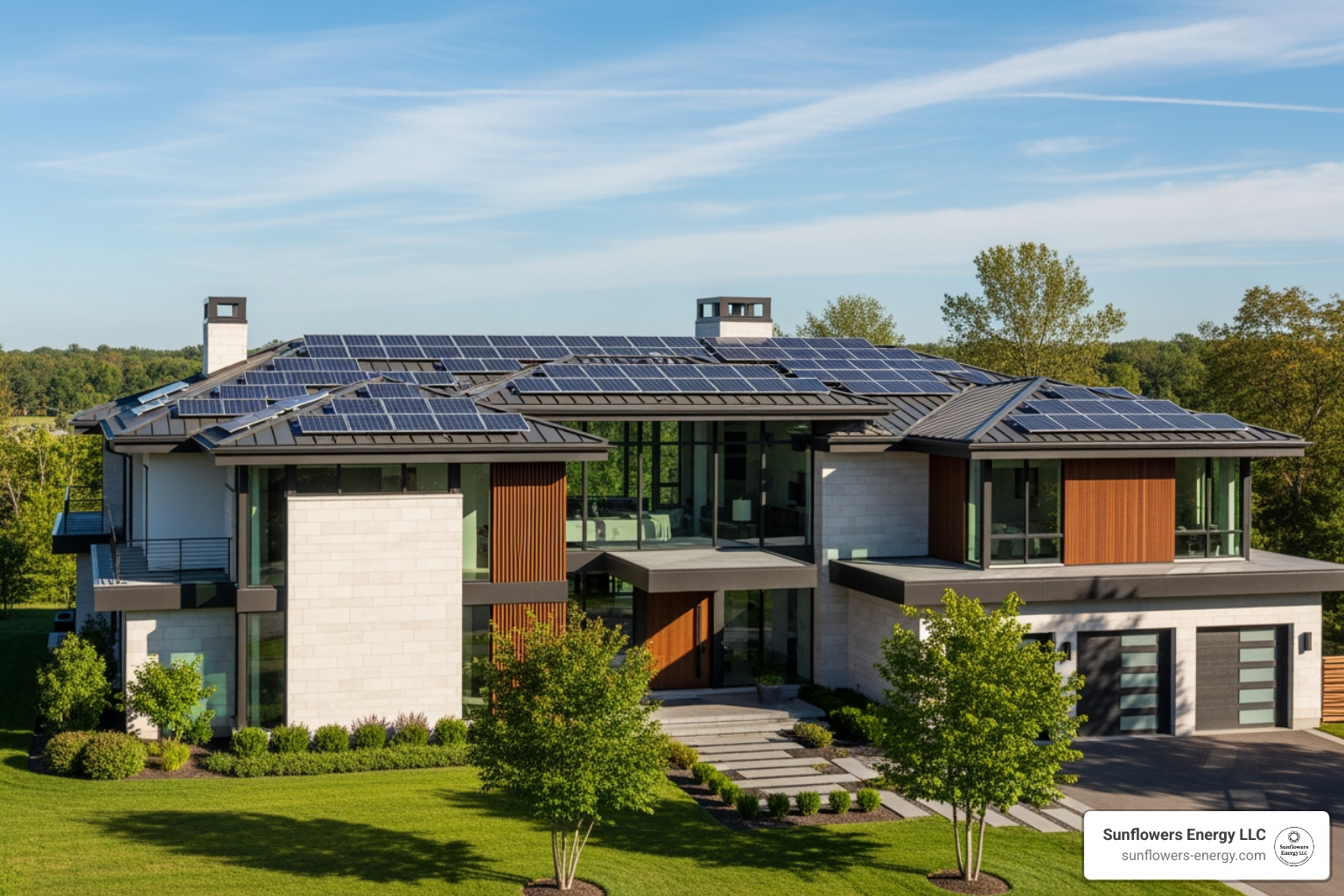
The cost to add solar panels to home typically ranges between $15,000 and $40,000 for most US households, depending on system size, location, and equipment quality. Here’s what determines your final price:
- System Size: Most homes need a 5-10 kW system.
- Cost Per Watt: Averages $2.50-$3.80 nationally, with state-level variations.
- Government Rebates: The federal tax credit can cover 30% of total costs, with additional state programs available.
- Payback Period: Typically 8-15 years in the US, varying by state and electricity rates.
- Long-Term Savings: Systems generate free power for 25-30+ years, protecting against rising utility rates.
With national electricity costs steadily climbing, many homeowners are looking for a stable alternative. The cost of solar systems has dropped significantly over the past decade, making it a more accessible investment than ever.
However, solar is a significant purchase. You need to understand what you’re paying for, what drives costs, and if the long-term savings justify the upfront expense. Costs vary dramatically based on your state, roof condition, and energy use. A 7 kW system in Florida might have a different price tag than the same system in Colorado.
This guide breaks down every cost factor in plain language. You’ll learn what makes up your system price, how to calculate the right size for your home, which incentives can slash your costs, and how to determine your real payback period. We’ll help you answer the most important question: is solar worth it for your specific situation?
Breaking Down the Upfront Cost to Add Solar Panels to Home
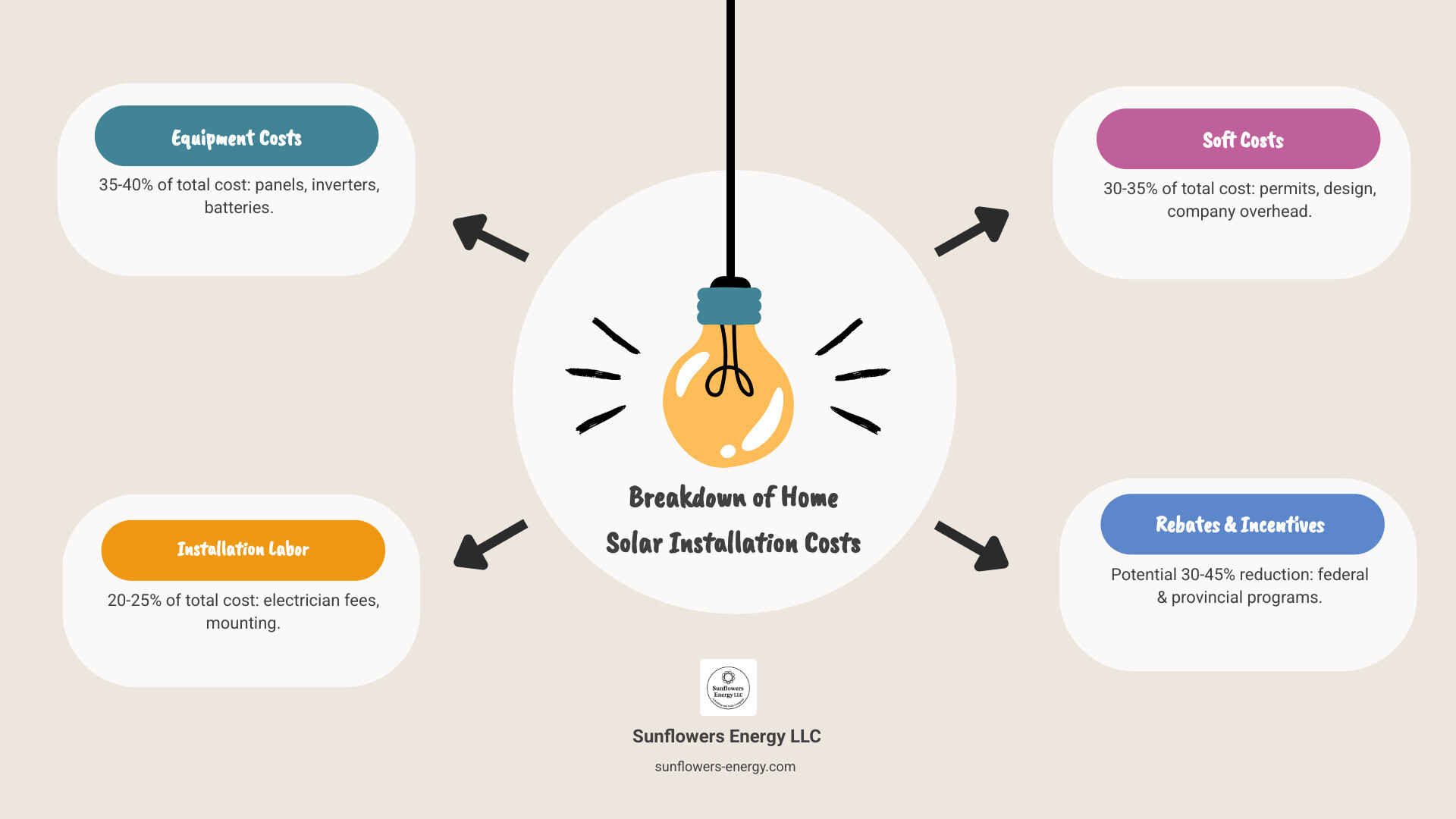
The cost to add solar panels to home is a holistic figure including hardware, labor, and paperwork. In the US, the average cost per watt is around $2.58 to $3.56 before incentives. For a typical 5kW to 10kW residential system, this means a total cost of $12,800 to $40,000+.
Interestingly, about 65% of this total comes from “soft costs” like labor, permitting, and design, according to the US Department of Energy. The hardware itself is only about 35%. Installation labor can add $2.50 to $3.50 per watt, and permits average around $450. We’re here to help you understand every line item. You can learn more about our solutions on our Solar page.
Core System Components and Their Price Impact
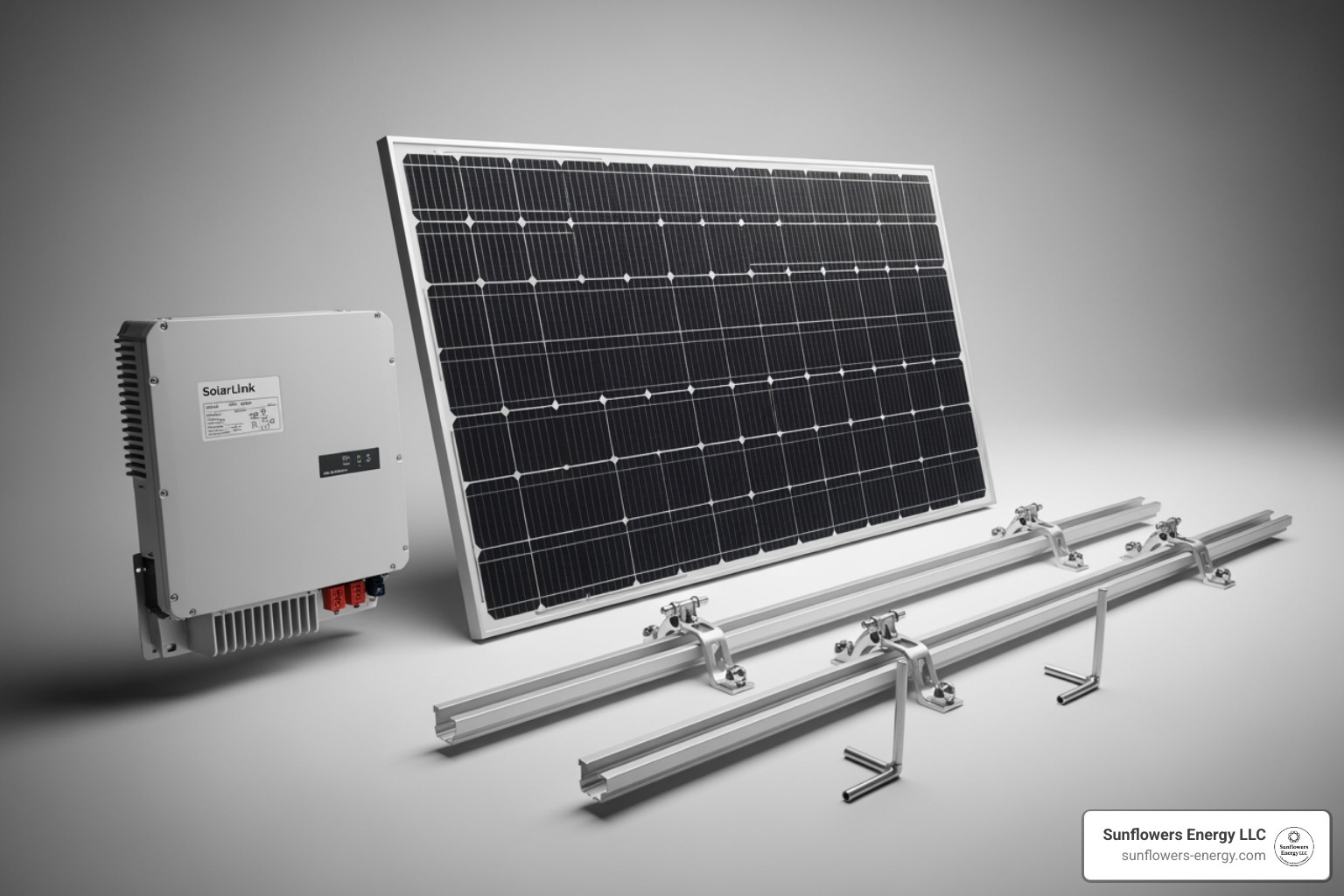
A solar installation is a system of interconnected parts, each affecting the total cost to add solar panels to home:
- Solar Panels (35-40% of total cost): These convert sunlight into electricity. Costs range from $0.80 to $1.80 per watt, with higher efficiency panels costing more.
- Inverters (20-25% of total cost): These convert DC electricity from panels to usable AC electricity for your home. Options include string inverters, microinverters, and power optimizers, each with different costs.
- Racking Systems (20-25% of total cost): This mounting hardware secures panels to your roof, with costs varying by roof type.
- Wiring and Electrical Components: This essential infrastructure connects the system to your home’s grid. An electrical panel upgrade may be needed, adding to the cost.
- Monitoring Systems: These track your system’s energy production. Initial setup can be $200-$500, with some systems having optional subscription fees.
- Structural Components: This includes roof attachments and reinforcements to ensure your roof can safely support the panels.
Calculating Your System Size (kW) and Total Cost
The first step in determining your cost to add solar panels to home is sizing the system based on your energy consumption in kilowatt-hours (kWh).
- Check Your Utility Bills: Your annual kWh usage is on your monthly power bills. This is influenced by your heating source, number of occupants, and appliance use.
- Determine Peak Sun Hours: This is the average daily hours of strong sunlight in your location. Our service areas in Arizona, Colorado, Florida, Louisiana, Oklahoma, and Texas typically get 4-6 peak sun hours per day.
- Calculate System Size (kW): A simple formula estimates your needed system size:
System Size (kW) = (Annual kWh Usage) / (Peak Sun Hours per Day * 365 * 0.8)
For example, a home using 10,800 kWh annually with 5 peak sun hours needs about a 7.5 kW system.
Once you have your estimated system size, we can apply the average cost per watt for your region. A 5 kW system in our service areas could range from $13,950 (Arizona) to $19,000 (Colorado) before incentives. A 10kW system would be roughly double that.
Average Solar Installation Prices Across Our Service Areas
While national averages provide a starting point, the specific cost to add solar panels to home varies significantly by state. Here’s a look at average costs for a 5kW system across some of our key service areas, based on recent data:
- Arizona: Approximately $13,950, or about $2.79 per watt. Abundant sun may mean you need fewer panels.
- Colorado: Around $19,000, which is about $3.80 per watt. Higher labor costs can influence this price.
- Florida: Roughly $15,250, or $3.05 per watt. A strong solar market makes it cost-effective.
- Louisiana: About $18,200, translating to $3.64 per watt. Regional market dynamics play a role.
- Oklahoma: Around $15,550, or $3.11 per watt. A growing market with competitive pricing.
- Texas: Approximately $15,200, or $3.04 per watt. A large, competitive market for installations.
These figures are a baseline. Your project cost will depend on panel type, roof complexity, and any additional equipment like batteries.
Key Factors That Influence Your Final Price
Beyond system size, several other elements sway the final cost to add solar panels to home. Understanding these helps you budget effectively.
Choosing the Right Solar Panel Type
The panel type you select impacts both efficiency and upfront cost to add solar panels to home.
| Panel Type | Efficiency | Cost per Watt (approx.) | Lifespan (Warranty) | Best Use Case |
|---|---|---|---|---|
| Monocrystalline | 20-23% | $1.00 – $1.50 | 25-30 years | Limited roof space, maximum power output |
| Polycrystalline | 15-17% | $0.90 – $1.00 | 25 years | Larger roof space, budget-conscious |
| Thin-Film | 10-13% | Lower (relative) | 10-20 years | Large open areas, flexible applications |
- Monocrystalline Panels: Made from a single silicon crystal, these are the most efficient and have a sleek black look. They are ideal for homes with limited roof space or those seeking maximum energy production.
- Polycrystalline Panels: Made from fused silicon fragments, these have a blue, marbled look. They are less efficient but more budget-friendly, suiting homes with ample roof space.
- Thin-Film Panels: Less common for homes due to lower efficiency, they are flexible and work well in applications with less direct sun.
You might also see solar shingles, which integrate into roofing materials. They offer a seamless look but come at a higher cost, often $3.00-$7.50 per watt.
How Your Roof Affects Installation Costs and Performance
Your roof is integral to your solar system. Its condition, material, and orientation impact costs and performance. As a company specializing in both solar and Roofing, we understand this interplay.
- Roof Condition and Age: Solar panels last 25-30 years. If your roof is old, it’s best to replace it before installation to avoid the costly process of removing and reinstalling panels later.
- Roof Material: Asphalt shingles are the easiest and cheapest for solar installation. Metal roofs are also good candidates. Tile or slate roofs require more time and specialized labor, increasing costs.
- Roof Orientation and Angle: A south-facing roof is ideal in the Northern Hemisphere. While other orientations are viable, they might require more panels to achieve the same output.
- Shading Analysis: Trees or buildings that cast shadows can reduce efficiency. We conduct thorough shading analyses to optimize panel placement.
State Differences and Other Market Factors
Solar costs are location-dependent. In our US service areas (Arizona, Colorado, Florida, Louisiana, Oklahoma, Texas), several factors affect the final cost to add solar panels to home:
- Local Labor Rates: These vary by city and state, affecting overall pricing.
- Permitting Fees: Each municipality has its own regulations and fees for permits and inspections, which are part of the “soft costs.” Our team handles this process for you.
- Market Conditions and Tariffs: The broader economy, supply chain stability, and trade policies can impact panel prices and consumer costs.
- Quality of Components: Premium, high-efficiency components increase upfront cost but often provide better performance and greater long-term savings.
Long-Term Value: Savings, Payback, and Net Metering
The upfront cost to add solar panels to home is just one side of the coin. The real value unfolds over decades through electricity savings, increased home value, and energy independence.
Investing in solar is like buying 30 years of energy upfront, hedging against rising utility costs. With electricity rates inflating by about 2.8% annually over the past decade, generating your own power provides financial stability. Beyond savings, solar reduces your carbon footprint and can increase your property value.
Calculating Your Payback Period and Return on Investment
The “payback period” is the time it takes for energy savings to equal your initial investment. A more comprehensive metric is the “Levelized Cost of Electricity (LCOE),” which compares the system’s lifetime cost to its total energy production. In most cases, solar provides a lower LCOE than grid electricity.
To calculate a simple payback period:
Payback Period (Years) = (Net Project Cost) / (Annual Electricity Savings)
For example, a net cost of $21,000 with $1,800 in annual savings results in a payback period of about 11.7 years, a typical range for our service areas. Over 30 years, an average 8.0kW system offers significant savings compared to renting electricity from the grid indefinitely.
Understanding Net Metering Policies in Our Service Areas
Net metering is a policy that credits you for excess electricity your panels send to the grid. When your system produces more power than you use, the surplus flows to the utility, and you earn credits. At night or on cloudy days, you draw power from the grid, and your credits offset the cost.
This system effectively turns the grid into a battery for your home. Policies vary by state; some offer full retail rate credits, while others offer less. Understanding your local net metering rules is vital for maximizing savings, and our experts will guide you through the specifics for your area.
Ongoing Costs: Maintenance and Component Replacement
Solar panels require minimal maintenance, but there are a few ongoing costs to consider:
- Panel Cleaning: Rain often suffices, but occasional cleaning ($150-$750 annually) can optimize performance in dusty areas. Many homeowners do this themselves.
- Annual Inspections: Yearly check-ups ($150-$300) are recommended to ensure optimal performance.
- Inverter Replacement: Inverters typically have a 10-12 year warranty, shorter than panels (25-30+ years). You should budget for a potential replacement during the system’s lifetime.
- Warranty Coverage: Reputable companies offer comprehensive warranties on performance, inverters, and workmanship. Learn about our commitment on our Service page.
- Repairs and Insurance: While rare, repairs can cost $200-$1,250 on average. Your home insurance premium may also increase slightly ($75-$150 annually) to cover the system’s value.
Making Solar Affordable: Rebates, Loans, and Installation Choices
The initial cost to add solar panels to home can be a hurdle, but thankfully, numerous programs and flexible options exist to make solar power accessible and affordable. We’re here to help you steer these opportunities and choose the path that best suits your financial goals.
Government Grants, Rebates, and Loans
The US federal government and many state and local entities offer powerful incentives to reduce your solar investment:
- Federal Investment Tax Credit (ITC): This is the most significant incentive. The ITC allows homeowners to claim a 30% dollar-for-dollar credit off their federal income taxes for systems installed between 2022-2032. For example, a $25,000 system becomes $17,500 after the credit. You can learn more about it from the official Homeowner’s Guide to the Federal Tax Credit for Solar Photovoltaics.
- State and Local Programs: Our service areas in Arizona, Colorado, Florida, Louisiana, Oklahoma, and Texas often have additional state-specific tax credits, cash rebates, or performance-based incentives. These vary widely, so we’ll help you identify all available programs in your specific locality.
- Financing Options: Beyond direct grants and credits, you have several ways to pay for your system:
- Outright Purchase: If you have the funds, buying your system upfront maximizes your long-term savings and eligibility for all incentives.
- Solar Loans: Many lenders offer specialized solar loans with competitive interest rates and extended terms, allowing you to own your system with manageable monthly payments. This is a popular option if you want to benefit from incentives but prefer not to use your own cash.
- Power Purchase Agreements (PPAs) or Leases: With these options, a third party owns and maintains the solar system on your roof. You pay a fixed monthly rate for the electricity it generates (PPA) or a fixed monthly lease payment. This allows for zero upfront costs and predictable payments, but you don’t own the system or directly claim the federal ITC.
Is Battery Storage a Worthwhile Addition?
Adding a battery storage system to your solar setup can increase the total system cost by approximately $8,000 to $15,000 for a 10 kWh battery. However, the value it adds often outweighs the additional cost to add solar panels to home for many homeowners, especially in our service areas:
- Energy Independence and Backup Power: Batteries store excess solar energy generated during the day for use at night or during power outages. This provides true energy independence and peace of mind during grid disruptions.
- Maximizing Savings in Specific Net Metering Scenarios: In states where net metering policies offer lower credit rates for exported energy or where credits expire, a battery allows you to store your own power rather than selling it cheaply, maximizing its value.
- Time-of-Use (TOU) Rates: If your utility charges higher electricity rates during peak demand hours (e.g., evenings), a battery can discharge stored solar power during these times, further reducing your electricity bill.
- Rebates for Batteries: Some states and local utilities offer specific rebates for battery storage systems, which can help offset the additional cost. We’ll help you explore these opportunities in your area.
For many, a battery system is a strategic investment that offers improved resilience, greater savings, and a higher degree of control over their energy consumption.
Professional vs. DIY: What’s the Real Cost to Add Solar Panels to Home?
The idea of a DIY solar installation might seem appealing to save on labor costs. However, for residential rooftop systems, the complexities and risks often make professional installation the safer and more cost-effective choice in the long run.
Here’s a look at the pros and cons of a DIY approach:
Pros of DIY Solar Installation:
- Potential Labor Cost Savings: You might save the $2.50-$3.50 per watt typically allocated to professional labor.
- Sense of Accomplishment: For the highly skilled and experienced, there’s satisfaction in building your own system.
Cons of DIY Solar Installation:
- Safety Risks: Working on roofs and with high-voltage electricity is inherently dangerous. Serious injury or even death is a real risk for untrained individuals.
- Permitting Challenges: Navigating local building codes, electrical codes, and utility interconnection agreements is complex and time-consuming. Improper permitting can lead to fines or system shutdown.
- Warranty Implications: Many manufacturers’ warranties are voided if the system isn’t installed by a certified professional.
- Electrical Code Compliance: Ensuring your system meets all national and local electrical codes is critical for safety and system longevity. Mistakes can lead to system failure or fire hazards.
- Suboptimal Performance: Without expert design and installation, your system might not be optimally oriented, leading to lower energy production and reduced savings.
- No Professional Support: If something goes wrong, you’re on your own for troubleshooting and repairs.
- Insurance Issues: Home insurance providers may be hesitant to cover a system not installed by a licensed professional.
For most homeowners, the real cost to add solar panels to home is best managed by relying on experienced professionals like us. We ensure your system is safely designed, correctly installed, fully compliant with all regulations, and backed by comprehensive warranties, giving you peace of mind and maximum long-term value.
Frequently Asked Questions about Home Solar Costs
How much do solar panels cost for a 2000 sq ft house?
The cost depends more on your energy usage than your home’s square footage. A typical 2000 sq ft house might need a 7-9 kW solar system.
In our US service areas, a 5kW system ranges from approximately $13,950 (Arizona) to $19,000 (Colorado) before incentives. Proportionally, a 7-9 kW system could range from roughly $19,500 to $34,200. These figures are before applying the 30% federal Investment Tax Credit and any local incentives. Your exact cost to add solar panels to home will depend on your energy consumption, equipment choice, and roof characteristics.
Do solar panels increase your home’s value?
Absolutely! This is one of the most compelling financial benefits of going solar. Studies, including those from the US Department of Energy (DOE), show that homes with solar panels can sell for more than comparable homes without them. The DOE estimates that installing solar panels could increase your home’s resale value by about $15,000. This makes your solar investment a valuable asset that pays off not only in energy savings but also when it comes time to sell your property.
How long do solar panels last?
Solar panels are incredibly durable and built for the long haul. Most manufacturers provide a performance warranty of 25 to 30 years, guaranteeing that your panels will still produce at least 80% to 90% of their original capacity after that time. In reality, solar panels can continue to produce power well beyond their warranty period. They are rigorously tested to withstand harsh weather conditions, including heavy snow loads, hail, and extreme temperatures, making them a robust investment for decades to come.
Conclusion: Is a Solar Investment Right for Your Home?
Deciding on the cost to add solar panels to home is a significant financial decision, but it’s one that offers profound long-term rewards. While the upfront investment can be substantial, the benefits of reduced electricity bills, protection against rising energy costs, increased home value, and a positive environmental impact make it a truly worthwhile endeavor for many homeowners.
We’ve explored how system size, panel type, roof conditions, and local market factors all play a role in your final price. More importantly, we’ve highlighted the powerful government incentives, flexible financing options, and the critical role of net metering that can make solar not just affordable, but a smart financial move. Paying for solar now is an investment in your future, securing your energy costs for decades to come, unlike the indefinite expense of renting electricity from the grid.
At Sunflowers Energy LLC, we pride ourselves on combining top-rated residential roofing and solar services. We offer superior materials and expert installation to ensure your home is both sustainable and cost-efficient. We understand that every home is unique, which is why we offer free, no-obligation onsite inspections. Our team will provide a customized design and a transparent quote, helping you steer the incentives and understand your true payback period.
Ready to take the next step toward energy independence and long-term savings? Contact us today, or visit our solar solutions page to get a comprehensive quote for your home solar project custom to your specific needs and location in Arizona, Colorado, Florida, Louisiana, Oklahoma, or Texas. We’re here to help you make an informed decision for your home and your future.

4 Responses