
Your shingles get all the attention, but the layer beneath them does the real heavy lifting. Choosing the best underlayment for asphalt shingles determines whether your roof withstands decades of weather or develops leaks within a few years.
Underlayment acts as your roof’s secondary defense against moisture, ice dams, and wind-driven rain. With options ranging from traditional felt to modern synthetic and self-adhering rubberized products, picking the right match for your climate and budget can feel overwhelming. Each type offers distinct advantages in durability, installation ease, and long-term protection.
At Sunflowers Energy LLC, we’ve installed thousands of asphalt shingle roofs across varying conditions, and we’ve seen firsthand how underlayment choice impacts roof performance. This guide breaks down the five top-rated underlayment products for 2026, comparing their features, costs, and ideal applications so you can make a confident decision for your next roofing project.
1. Hybrid underlayment system installed by Sunflowers Energy
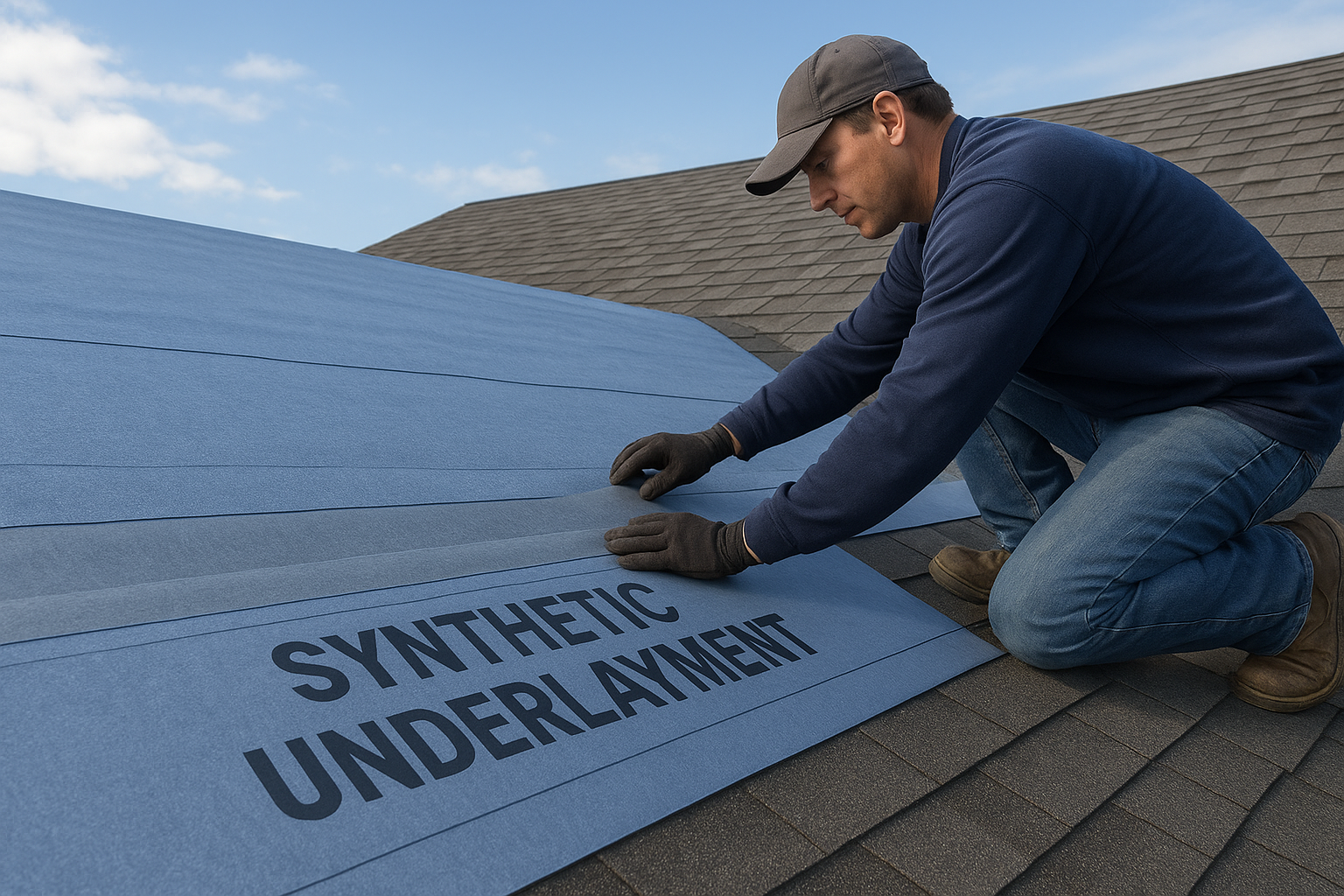
Our hybrid system combines synthetic underlayment across the main roof field with self-adhering membrane in vulnerable areas. This approach gives you complete protection where standard single-layer solutions fall short. You get the walkability and breathability of synthetic material paired with the waterproof seal of rubberized barriers at critical leak points.
What you get in this system
The system layers a high-tensile synthetic base over your entire roof deck, then adds peel-and-stick membrane along eaves, valleys, sidewalls, and penetrations. This dual-material strategy addresses the fact that water infiltration happens at transitions, not across flat roof planes. You receive 230-day UV exposure rating from the synthetic component and watertight nail-sealing from the membrane sections.
"Strategic placement of self-adhering membrane at leak-prone areas delivers better protection than using one material type everywhere."
Where this system performs best
This configuration excels on complex roof designs with multiple valleys, dormers, and skylights. Your roof benefits most if you live in regions with freeze-thaw cycles that cause ice dams or areas with wind-driven rain that pushes moisture under shingles. Properties with steep slopes above 6:12 also gain traction advantages from synthetic coverage during installation.
Tradeoffs to know before you choose it
You’ll pay 30 to 40 percent more than standard felt underlayment and 15 to 20 percent more than full synthetic coverage. Installation requires additional labor time because crews switch between materials and must prep deck surfaces differently for adhesive sections. The system also demands precise material transitions to avoid creating weak spots where layers meet.
Installation details that make or break performance
Your installer must apply the synthetic base first with proper overlap (6 inches at horizontal seams, 4 inches at vertical seams). Membrane sections go down next, requiring clean, dry deck surfaces for adhesion. Fasteners penetrating membrane areas need immediate shingle coverage to activate the self-sealing feature. Temperature during install should stay above 40°F for membrane adhesive to bond correctly.
Typical pricing for materials and install
Materials cost $85 to $125 per square (100 square feet) depending on membrane coverage percentage. Professional installation adds $45 to $65 per square to your total project cost. A typical 2,000-square-foot roof runs $2,600 to $3,800 for this underlayment system alone, before shingle installation begins.
2. Titanium UDL synthetic underlayment
Titanium UDL delivers commercial-grade protection at a residential price point. This synthetic underlayment ranks among the best underlayment for asphalt shingles when you need maximum tear resistance without premium membrane costs. Your roof gets a slip-resistant surface that installers can walk on safely in various weather conditions.
What it is and what makes it "high-performance"
This product features a woven polypropylene construction with UV inhibitors embedded throughout the material. Titanium UDL achieves its strength through cross-laminated fibers that resist punctures from roofing nails and foot traffic. The material weighs 26 pounds per square, giving you durability without adding excessive load to your roof structure.
Best-fit scenarios for asphalt shingle roofs
Your project benefits most from Titanium UDL when you face extended installation timelines that expose underlayment to weather. Properties in high-wind zones gain extra protection from the material’s 160-mph wind rating. Roofs with slopes between 2:12 and 12:12 receive optimal performance from this product’s slip-resistant coating.
"Titanium UDL’s 180-day UV exposure rating lets you handle unexpected construction delays without compromising roof protection."
Strength, traction, and UV exposure limits
The material provides 250-pound tear strength in both directions and maintains traction when wet. You can leave it exposed for up to 180 days before installing shingles. Performance drops if temperatures exceed 260°F during installation, though normal conditions rarely reach this threshold.
Common mistakes to avoid during install
Installers sometimes skip the 4-inch side lap requirement, creating potential leak paths. Your crew must avoid over-fastening, which can compromise the material’s waterproofing ability. Wrinkles during application signal improper tensioning that leads to performance issues.
Typical pricing for materials and install
Materials run $55 to $75 per square depending on your region and supplier. Professional installation costs $35 to $50 per square, bringing your total to $90 to $125 per square installed.
3. GAF Deck-Armor synthetic underlayment
GAF Deck-Armor stands as one of the most widely specified synthetic products in residential roofing. This underlayment combines lightweight construction with contractor-friendly features that speed up installation without sacrificing protection. Your roof gains a reliable barrier that integrates seamlessly with GAF shingle systems or works as a standalone solution with any manufacturer’s products.
What it is and why contractors use it
This product features a reinforced synthetic base with a slip-resistant coating on both sides. GAF designed Deck-Armor specifically to address common jobsite challenges, including wet weather installations and crew safety concerns. The material weighs just 22 pounds per roll, making it easier to handle than heavier alternatives while maintaining sufficient strength for your roof deck.
Best-fit scenarios for asphalt shingles
Your project benefits most from Deck-Armor when you need predictable performance across standard residential applications. Properties with moderate climates and slopes between 4:12 and 10:12 get optimal results. This product works particularly well for straightforward roof designs without extensive valleys or complex flashing details.
"GAF Deck-Armor delivers reliable protection for conventional roofing projects where extreme weather resistance isn’t the primary concern."
Tear resistance, walkability, and exposure limits
The material provides 185-pound tear strength in the machine direction and maintains adequate traction during installation. You can leave it exposed for up to 90 days before applying shingles. Performance remains consistent in temperatures ranging from 0°F to 240°F, covering most installation conditions you’ll encounter.
Compatibility notes with shingles and fasteners
Deck-Armor pairs naturally with GAF Timberline and Camelot shingles but works with any asphalt product. Your crew can use standard roofing nails or staples without special fastening requirements. Overlap specifications call for 6-inch horizontal laps and 4-inch vertical laps to maintain waterproofing integrity.
Typical pricing for materials and install
Materials cost $45 to $65 per square depending on your location and supplier relationships. Professional installation adds $30 to $45 per square, bringing your total to $75 to $110 per square installed.
4. Grace Ice and Water Shield membrane
Grace Ice and Water Shield functions as a self-adhering rubberized membrane that creates a watertight seal across vulnerable roof areas. This product eliminates the need for mechanical fasteners during installation, relying instead on aggressive adhesive backing that bonds directly to your roof deck. When you need absolute protection against ice dams and water intrusion, this membrane outperforms conventional rolled underlayment.
What it is and how peel-and-stick differs
This membrane consists of rubberized asphalt laminated to a cross-laminated polyethylene film. You peel off the release liner and press the material directly onto your deck, creating an instant waterproof barrier without nails or staples. The adhesive activates on contact and strengthens over time as temperatures rise.
Where you should use it on a shingle roof
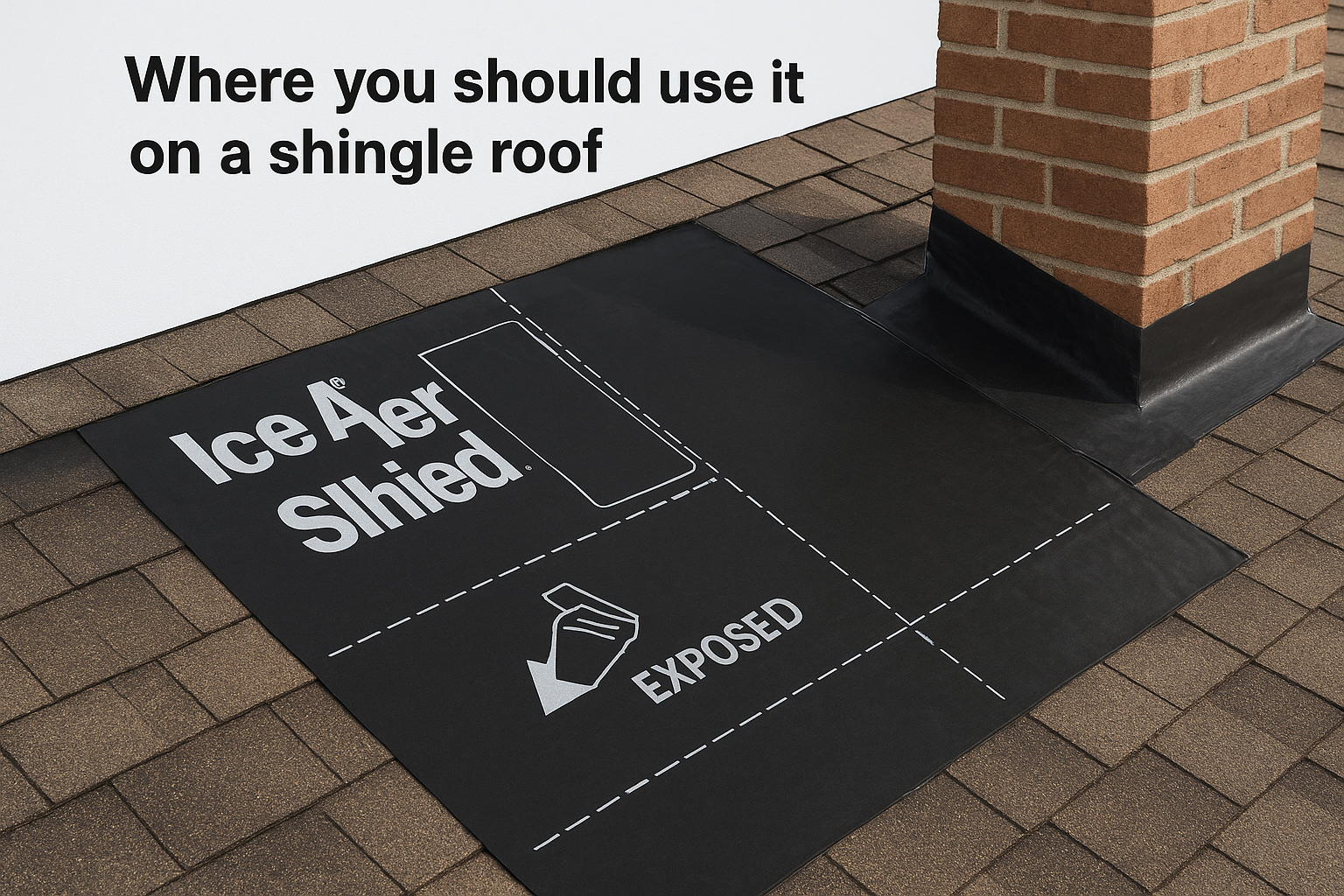
Your roof needs Ice and Water Shield along eaves (first 3 to 6 feet), in all valleys, around chimneys, and at sidewall flashings. Properties in regions with freezing temperatures require this membrane to prevent ice dam damage. You should also apply it under any area where water accumulates or flows during storms.
"Strategic membrane placement at leak-prone areas provides better protection than covering your entire roof with this premium product."
Nail-sealing, waterproofing, and temperature limits
The membrane’s self-healing properties seal around fasteners that penetrate it, preventing water migration along nail shanks. Performance remains reliable in temperatures from -40°F to 240°F. Installation requires deck temperatures above 25°F for proper adhesion.
Deck prep and flashing details to get right
Your deck surface must be clean, dry, and smooth before membrane application. Remove all dust, debris, and protruding nails that could compromise adhesion. Metal flashing should go over the membrane, not under it, to direct water properly.
Typical pricing for materials and install
Materials run $95 to $135 per square depending on your region. Professional installation costs $55 to $75 per square, bringing your total to $150 to $210 per square installed.
5. Type II asphalt felt underlayment #30
Type II asphalt felt (#30) represents the traditional choice that has protected roofs for over a century. While synthetic products dominate modern installations, this felt material still serves specific applications where cost control matters more than extended exposure ratings. Your project might benefit from #30 felt when you’re working with a tight budget on a straightforward roof design that doesn’t require the performance features of premium options in the best underlayment for asphalt shingles category.
What it is and when it still makes sense
This product consists of organic or fiberglass mat saturated with asphalt for water resistance. #30 felt weighs approximately 30 pounds per square and provides basic protection during and after installation. You should consider it when your project involves immediate shingle installation with minimal weather exposure between underlayment and final roof covering.
Best-fit scenarios for budget-focused projects
Your roof gains adequate protection from #30 felt on simple gable designs with slopes above 4:12 in moderate climates. Properties requiring code-minimum specifications without premium performance needs fit this product well. Rental properties and basic residential reroof projects where initial cost drives decisions represent ideal applications.
"#30 felt serves budget-conscious projects adequately when installation proceeds quickly without extended weather exposure."
Wrinkling, tearing, and weather exposure limits
The material tears more easily than synthetic alternatives and wrinkles when wet, creating potential leak paths. You can leave it exposed for only 7 to 14 days before degradation begins. Temperatures below 40°F make felt brittle and prone to cracking during installation.
Slope and layering rules that affect performance
Your installer must apply felt in horizontal courses starting at the eave, with 2-inch side laps and 4-inch end laps. Roofs with slopes below 4:12 require double underlayment layers for proper protection. Fasteners should penetrate every 12 to 18 inches to prevent wind uplift.
Typical pricing for materials and install
Materials cost $25 to $35 per square, making this the most affordable option. Professional installation adds $25 to $35 per square, bringing your total to $50 to $70 per square installed.
Final takeaways
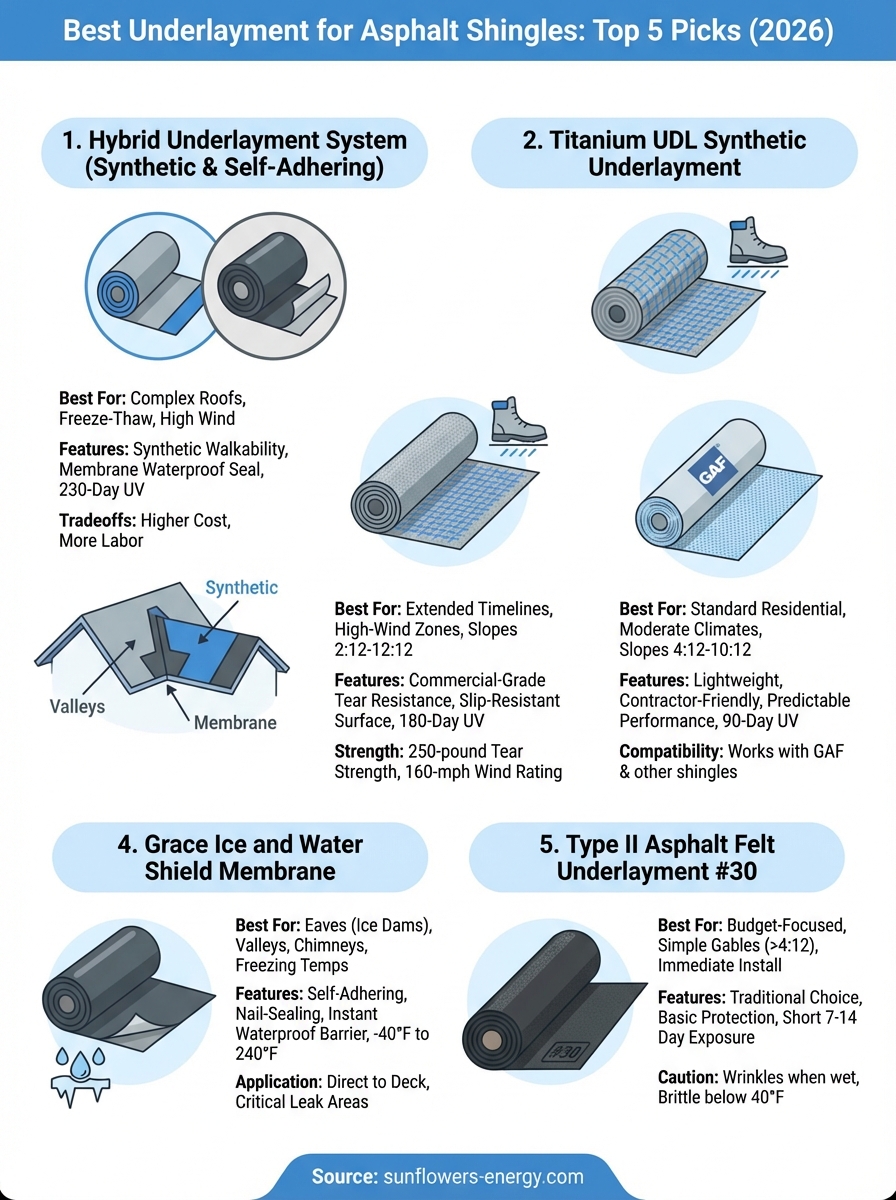
Selecting the best underlayment for asphalt shingles depends on your budget, climate, and roof complexity. Hybrid systems offer maximum protection for challenging conditions, while synthetic products like Titanium UDL and GAF Deck-Armor balance performance with cost efficiency. Self-adhering membranes provide critical waterproofing at vulnerable areas, and traditional felt still works for straightforward projects with tight budgets.
Your choice impacts not just initial installation costs but long-term roof performance. Premium underlayment materials add 15 to 40 percent to upfront expenses but can prevent costly leak repairs and extend your roof’s service life by years. Consider your local weather patterns, roof design complexity, and timeline when weighing options.
At Sunflowers Energy, we help homeowners select and install the right underlayment system for their specific needs. Our team evaluates your roof’s unique requirements and recommends solutions that maximize protection within your budget. Contact us for a free inspection to discuss which underlayment option delivers the best value for your property.

4 Responses