A damaged roof can feel like a setback, but for many American homeowners it presents an opportunity to make a smart, sustainable upgrade. Investing in solar panels does more than protect your home from the elements. It opens the door to lower energy bills and a potential increase in property value, all while supporting clean energy goals. Photovoltaic cells generate electricity by capturing sunlight, offering a practical path toward energy independence and greener living.
Table of Contents
- What Are Solar Panels and How They Work
- Different Types of Solar Panel Systems
- Environmental Benefits of Solar Energy
- Financial Savings and Incentives Explained
- Common Misconceptions and Mistakes to Avoid
- Solar Panels’ Impact on Home Value and Market
Key Takeaways
| Point | Details |
|---|---|
| Understanding Solar Panels | Solar panels convert sunlight into electricity using photovoltaic cells, significantly reducing reliance on fossil fuels. |
| Types of Solar Panels | Homeowners can choose from various types, including Monocrystalline and Polycrystalline, each with unique costs and efficiencies. |
| Environmental and Financial Benefits | Solar energy reduces carbon emissions while offering long-term savings on electricity bills and increased home value. |
| Avoiding Common Pitfalls | It is crucial to consult professionals and understand the market to prevent misconceptions and ensure successful solar panel installation. |
What Are Solar Panels and How They Work
Solar panels represent a groundbreaking technology that transforms sunlight into usable electrical energy through an ingenious process of photovoltaic conversion. Photovoltaic cells generate electricity by leveraging semiconductor materials, typically silicon, which absorb sunlight and trigger an electron-generating reaction.
These innovative devices work by capturing solar radiation and converting it into direct current (DC) electricity through a remarkable scientific phenomenon known as the photoelectric effect. When sunlight strikes the solar panel’s photovoltaic cells, photons interact with silicon layers, causing electrons to break free and generate an electrical charge. This electrical current can then be transformed into alternating current (AC) electricity suitable for powering homes and businesses.
Solar panel systems consist of several key components that work together to maximize energy production:
- Photovoltaic cells: The fundamental units that convert sunlight into electricity
- Glass protective layer: Shields delicate semiconductor materials
- Metal framing: Provides structural support and mounting capabilities
- Inverter: Converts DC electricity to usable AC power
- Battery storage systems: Optional components for energy retention
Residential solar technologies have advanced significantly, with modern panels achieving impressive efficiency rates. Solar technologies now include advanced photovoltaic designs that can generate electricity directly or store energy in specialized battery systems.
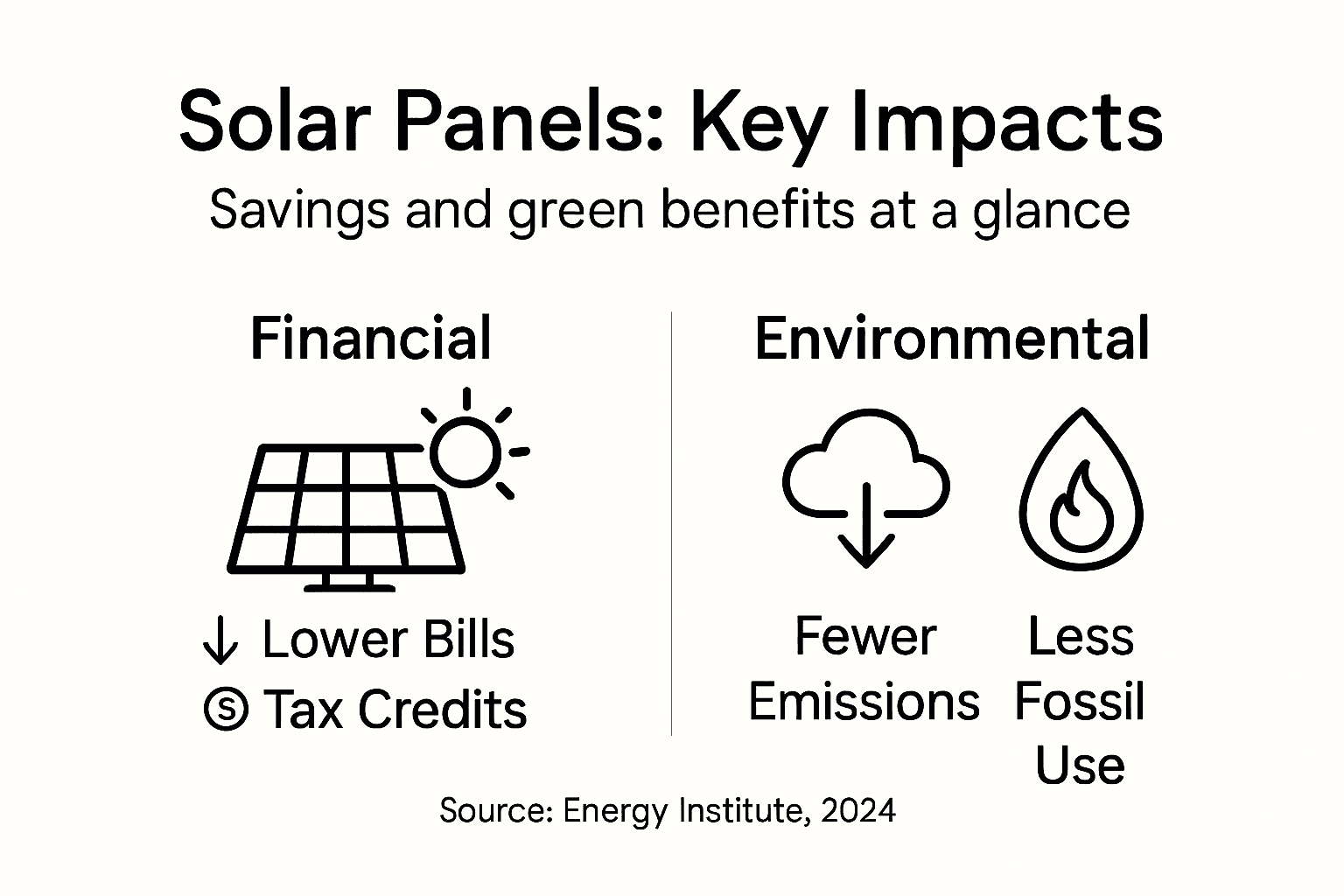
Pro tip: When considering solar panel installation, assess your home’s sun exposure and roof orientation to maximize potential energy generation.
Different Types of Solar Panel Systems
Solar panel technologies have evolved significantly, offering homeowners multiple options to meet their energy needs. Various solar cell technologies present unique performance characteristics that impact energy generation, cost, and overall system effectiveness.
The primary categories of solar panel systems include:
-
Monocrystalline Panels:
- Highest efficiency rate
- Made from single-crystal silicon
- Premium price point
- Best performance in limited space
-
Polycrystalline Panels:
- More affordable
- Moderate efficiency
- Bluish speckled appearance
- Slightly lower heat tolerance
-
Thin-Film Panels:
- Lightweight and flexible
- Lower efficiency
- Best for large commercial installations
- Lower manufacturing costs
-
PERC (Passivated Emitter and Rear Cell) Panels:
- Improved efficiency over traditional designs
- Enhanced light absorption
- Reduced electron recombination
- Better performance in low-light conditions
Emerging solar technologies like perovskite and multi-junction cells continue to push the boundaries of solar energy conversion, promising even greater efficiency and design flexibility in future installations.
Here’s a concise comparison of major solar panel types and their best-fit scenarios:
| Panel Type | Ideal Use Case | Average Efficiency | Typical Cost (per watt) |
|---|---|---|---|
| Monocrystalline | Small roofs, high consumption | 19-22% | $1.00-$1.50 |
| Polycrystalline | Budget projects, moderate space | 15-17% | $0.90-$1.20 |
| Thin-Film | Large commercial layouts | 10-13% | $0.80-$1.10 |
| PERC | Low-light or mixed climates | 17-21% | $1.20-$1.60 |
Pro tip: Consult with a solar professional to determine which panel type best matches your home’s specific energy requirements and architectural constraints.
Environmental Benefits of Solar Energy
Solar energy represents a transformative solution for addressing critical environmental challenges facing our planet. Renewable technologies significantly reduce greenhouse gas emissions by replacing fossil fuel-based energy generation with clean, sustainable alternatives.
The environmental advantages of solar energy are extensive and multifaceted:
-
Reduced Carbon Footprint:
- Minimal direct carbon emissions during operation
- Decreases reliance on fossil fuel power generation
- Supports global climate change mitigation efforts
- Helps meet international environmental agreements
-
Ecosystem Protection:
- Preserves natural water resources
- Minimizes air and water pollution
- Reduces environmental degradation from traditional energy extraction
- Supports biodiversity conservation
-
Resource Conservation:
- Utilizes renewable solar radiation
- Requires minimal land disruption
- Promotes sustainable energy infrastructure
- Supports circular economy principles
Large-scale solar deployment supports global decarbonization efforts by providing a scalable, clean energy solution that can be integrated into existing power grids worldwide. Solar technologies continue to advance, promising even greater environmental benefits and efficiency in the coming years.

Pro tip: Consider your local solar potential and investigate community solar programs to maximize environmental impact beyond individual home installations.
Financial Savings and Incentives Explained
Government incentives dramatically reduce solar installation costs, transforming solar energy from a premium investment into an accessible and financially attractive option for homeowners across the United States.
The primary financial benefits of solar panel installations include:
-
Direct Energy Cost Savings:
- Reduce monthly electricity bills
- Generate personal electricity
- Minimize dependence on utility grid
- Protect against rising energy prices
-
Tax Credits and Rebates:
- Federal solar investment tax credit
- State-level solar incentive programs
- Property tax exemptions
- Local municipality solar grants
-
Long-Term Financial Advantages:
- Increased home property value
- Potential energy credit earnings
- Lower maintenance expenses
- Predictable energy production costs
Renewable energy financial mechanisms provide multiple pathways for homeowners to offset installation expenses. These include net metering programs, where excess energy generated can be sold back to the electrical grid, creating an additional revenue stream.
Modern solar investments typically yield substantial returns, with many homeowners experiencing full system payback within 7-10 years and continued savings throughout the system’s 25-30 year lifespan.
Below is a summary of long-term financial impacts for homeowners who install solar panels:
| Impact Area | Short-Term Benefit | Long-Term Outcome |
|---|---|---|
| Electricity Bills | Immediate reduction | Consistent ongoing savings |
| Property Value | Lower initially | Higher resale price |
| Maintenance Costs | Minor upfront setup | Reduced annual expenses |
| Tax Credits | One-time incentive | No additional tax burden |
Pro tip: Consult a tax professional to maximize available solar energy tax credits and understand the full financial implications of your solar installation.
Common Misconceptions and Mistakes to Avoid
Navigating the solar panel installation landscape requires careful consideration and understanding of common pitfalls that can derail your renewable energy journey. Homeowners often approach solar energy with preconceived notions that can lead to costly mistakes and unrealistic expectations.
Key misconceptions about solar panel installations include:
-
Cost-Related Myths:
- Believing solar is prohibitively expensive
- Expecting immediate 100% energy independence
- Overlooking available financial incentives
- Assuming no upfront investment is required
-
Performance Misunderstandings:
- Thinking solar works perfectly in all weather conditions
- Expecting zero maintenance requirements
- Assuming uniform energy production across all locations
- Believing solar panels eliminate electricity bills completely
-
Technical Misconceptions:
- Underestimating roof structural requirements
- Ignoring local permitting and zoning regulations
- Failing to assess home’s solar energy potential
- Choosing panels without professional consultation
Most homeowners mistakenly view solar as a simple plug-and-play solution, when in reality, successful solar implementation requires comprehensive planning, professional assessment, and ongoing maintenance. The complexity of solar energy systems demands thorough research and expert guidance to maximize both financial and environmental benefits.
Pro tip: Consult multiple solar professionals and request detailed site assessments to develop a truly customized solar strategy for your specific home and energy needs.
Solar Panels’ Impact on Home Value and Market
Residential solar installations increasingly influence property market dynamics, transforming how homeowners and real estate professionals perceive energy-efficient upgrades. Modern buyers are showing growing interest in homes with pre-installed solar technology as a valuable long-term investment.
Key factors affecting home value through solar panel installation include:
-
Direct Market Value Increases:
- Average home value boost of 4-5%
- Faster sale potential
- Attractive to environmentally conscious buyers
- Demonstrates home’s energy efficiency
-
Financial Performance Indicators:
- Lower ongoing energy expenses
- Reduced utility bill dependency
- Potential tax incentive qualifications
- Enhanced mortgage attractiveness
-
Regional Market Variations:
- Higher impact in sunny states
- More significant in environmentally progressive regions
- Varying local real estate market responses
- Different valuation approaches by appraisers
Location-specific solar impact studies reveal nuanced property value relationships, demonstrating that solar panel installations can create moderate yet meaningful increases in residential real estate valuations.
Pro tip: Request a professional solar assessment that provides detailed documentation of system value to maximize potential home resale benefits.
Take Control of Your Energy Savings and Environmental Impact Today
Understanding the financial and environmental benefits of solar panels is the first step toward a smarter, more sustainable future. Many homeowners and business owners face challenges like rising electricity costs and a desire to reduce their carbon footprint. With advanced solar technologies and expert guidance, you can overcome these obstacles to achieve significant energy savings and contribute positively to the environment. From choosing the right panel type for your property to maximizing available tax incentives, practical solutions exist to make solar installation both affordable and effective.
Explore expert residential and commercial solar systems backed by premium materials and reliable service at Sunflowers Energy. Our comprehensive offerings include not only solar installations but also roofing repairs and storm damage restoration, ensuring your home or business stays protected while becoming energy efficient. Ready to unlock your home’s solar potential and enjoy long-term savings? Discover your options and benefits with a free onsite inspection and personalized quote by visiting 1win Brazil – Sunflowers Energy LLC A Roofing and Solar Companys.
Don’t wait to reduce your utility bills and increase your property’s value with trusted solar solutions tailored for your unique needs. Take the next step to a greener, more cost-effective energy future at Sunflowers Energy. Contact us today to schedule your free consultation and start transforming how you power your home or business.
Frequently Asked Questions
What are the main financial savings associated with installing solar panels?
Installing solar panels can lead to reduced monthly electricity bills, increased home property value, and potential tax credits or rebates, which collectively make solar energy a financially attractive option.
How do solar panels impact the environment positively?
Solar panels significantly reduce greenhouse gas emissions, conserve water resources, and decrease reliance on fossil fuels, contributing to a cleaner and more sustainable environment.
What types of solar panels are available, and how do they differ?
There are several types of solar panels, including monocrystalline, polycrystalline, thin-film, and PERC panels. They differ in efficiency, cost, and ideal use cases, impacting your choice based on your specific energy needs and budget.
How long does it typically take to recoup the costs of solar panel installation?
Most homeowners experience a payback period of 7-10 years for solar panel installations, after which they can enjoy continued savings throughout the system’s 25-30 year lifespan.
Recommended
- Is Solar Worth It? A Comprehensive Guide to Home Solar Panel Costs – Sunflowers Energy LLC A Roofing and Solar Companys
- Energía Solar en Casa: Impacto, Costos y Beneficios – Sunflowers Energy LLC A Roofing and Solar Companys
- Solar Power for Beginners: Savings and Sustainability – Sunflowers Energy LLC A Roofing and Solar Companys
- Why Choose Residential Solar: Savings, Value, Impact – Sunflowers Energy LLC A Roofing and Solar Companys
One Response