
A single storm can turn a solid roof into an urgent, expensive problem. Whether it’s hail craters across your shingles or wind that peeled back entire sections, the first question on every homeowner’s mind is the same: what will the storm damage roof repair cost actually be? The answer depends on several factors, from the type of damage and roofing material to your roof’s pitch, size, and accessibility.
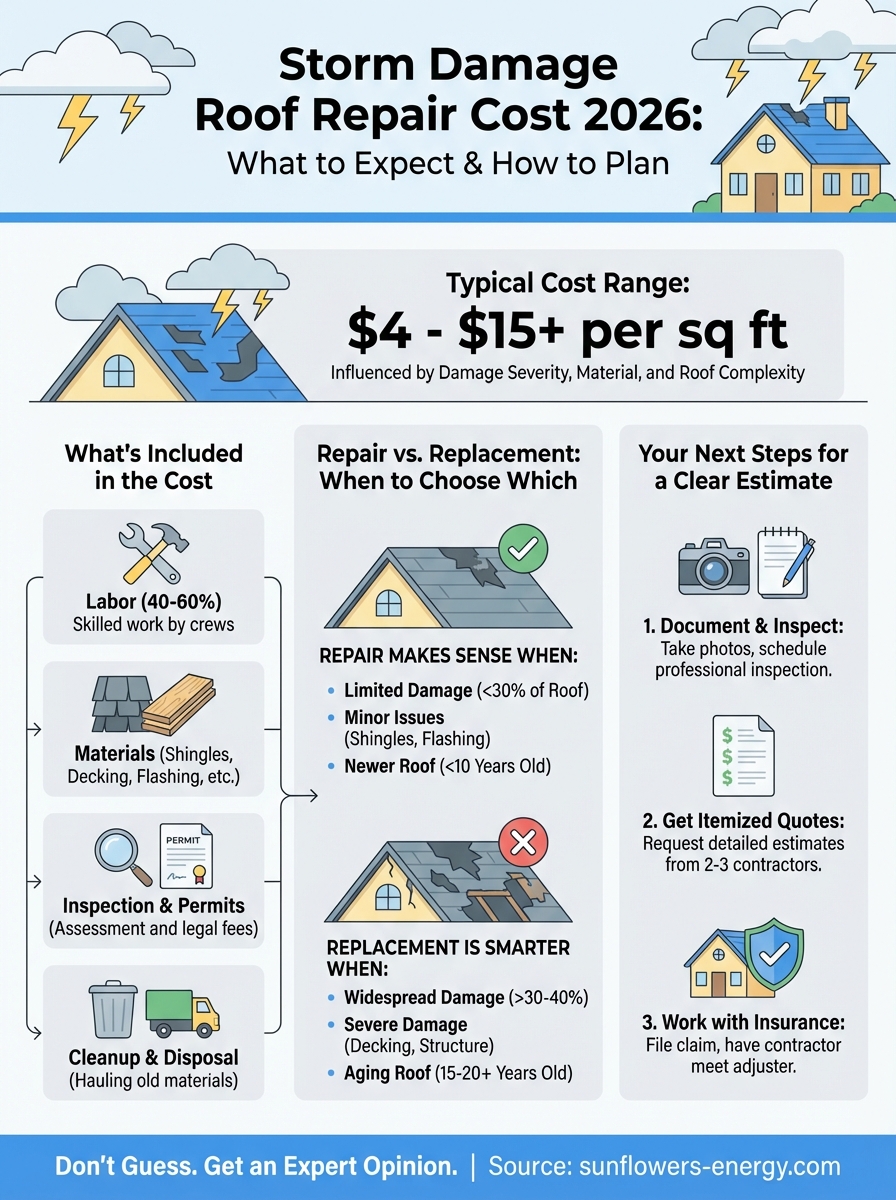
In 2026, homeowners across the U.S. are paying anywhere from $4 to $15+ per square foot for storm-related roof repairs, with full replacements climbing much higher. Those numbers shift based on your location, the severity of the damage, and whether insurance covers part of the bill. Without a clear breakdown, it’s easy to overpay, or underestimate what your roof actually needs.
At Sunflowers Energy LLC, we handle storm damage repairs and roof restoration daily, including walking homeowners through insurance claims so nothing falls through the cracks. This article breaks down the real costs you can expect in 2026, per square foot, by damage type, and by material, so you can make an informed decision before signing anything.
What storm damage roof repair cost includes
When you get a quote for storm damage roof repair, the number reflects more than just new shingles. Labor, materials, disposal, and permits all fold into the final price, and each one varies depending on the scope of damage and your specific roof. Understanding what drives that number helps you read a contractor’s estimate with confidence and spot anything that looks incomplete or inflated before you sign.
Labor and materials
Labor typically accounts for 40 to 60 percent of your total storm damage roof repair cost. Skilled roofing crews charge by the square, which equals 100 square feet, and rates shift based on your region, roof pitch, and overall job complexity. Steeper roofs take longer and require more safety equipment, which pushes labor costs higher. In high-demand areas, especially after a major storm event, contractor availability tightens and rates often climb further.
Materials are the other major line item. Asphalt shingles, underlayment, flashing, ice and water shield, and ridge caps all need replacing when a storm does enough damage. If hail or water compromised the roof decking beneath the shingles, you’ll also pay for new plywood or OSB boards, which adds meaningful cost to the overall project. Quality materials cost more upfront but reduce the likelihood of repairs within a few years.
Never accept a quote that only lists shingles and labor. A thorough estimate should itemize every material category so you know exactly what you’re paying for.
Inspection, permits, and cleanup
Before any work starts, a professional inspection confirms the full extent of the damage. Some contractors include the inspection in their estimate; others charge separately, typically between $150 and $400 for a detailed assessment. Skipping a thorough inspection risks missing hidden damage under the surface, which can reappear as leaks or structural problems months later.
Permits are required in most jurisdictions for roof replacements and significant repairs, with fees ranging from $150 to $500 depending on your city or county. A reputable contractor pulls the permit on your behalf. Disposal and cleanup also factor into the final bill, covering the cost of hauling old materials to a landfill. Most contractors bundle dumpster rental and site cleanup into the quote, but you should always confirm that explicitly before any work begins.
Typical 2026 price ranges per square foot
Knowing the general price bands before you call a contractor puts you in a much stronger position. Storm damage roof repair cost in 2026 falls across a wide range depending on whether you need a partial repair or a full replacement, and which material covers your roof.
Repair costs by damage type
Minor repairs, such as replacing a few missing shingles or sealing small hail impacts, typically run $4 to $7 per square foot. Moderate damage, where sections of the roof need full re-shingling or flashing replacement, lands in the $7 to $10 per square foot range. Severe damage that reaches the decking or structural components pushes costs past $10 to $15 per square foot before any full replacement conversation begins.
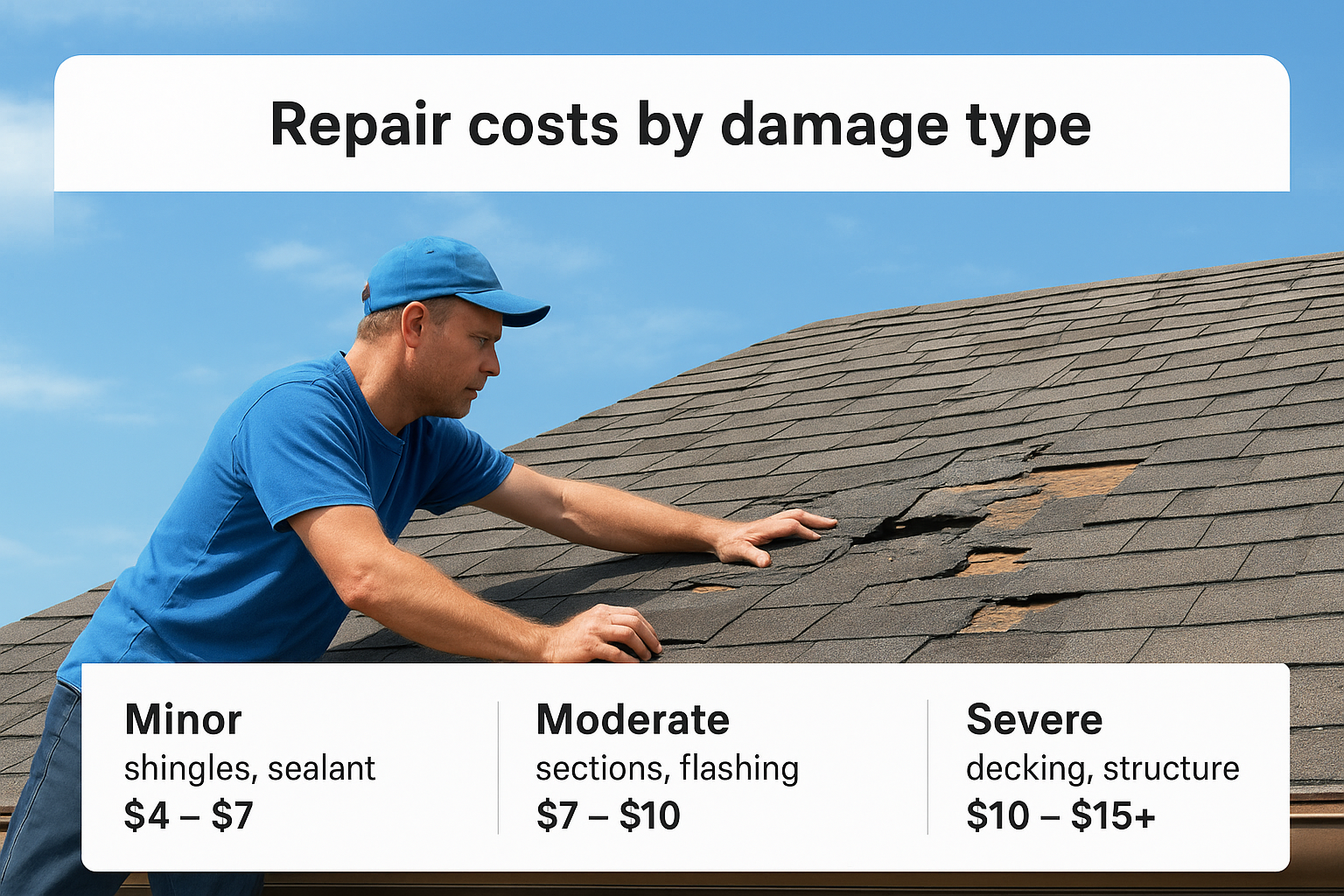
| Damage Level | Cost Per Sq Ft |
|---|---|
| Minor (shingles, sealant) | $4 – $7 |
| Moderate (sections, flashing) | $7 – $10 |
| Severe (decking, structure) | $10 – $15+ |
If your contractor quotes well below these ranges without a clear explanation, ask for a detailed material breakdown before agreeing to anything.
Full replacement costs
When storm damage is widespread, a full replacement becomes more cost-effective than ongoing patching. Full asphalt shingle replacements average $8,000 to $20,000 for a standard home, translating to roughly $5 to $12 per square foot installed. Metal, tile, or specialty roofing materials push that number higher, sometimes exceeding $20 per square foot depending on local labor availability and material supply.
What drives the price up or down
Several factors push your storm damage roof repair cost higher or pull it back down, and understanding them helps you anticipate what a contractor will factor into their quote. Two homes on the same street can receive very different estimates after the same storm, simply because of how their roofs are built, what materials cover them, and how accessible each one is for a crew.
Roof size, pitch, and accessibility
Your roof’s total square footage is the most direct cost driver. Larger roofs cost more to repair or replace. Steeper pitches add complexity because crews work slower, use more safety equipment, and take on greater physical risk, all of which increase labor rates. Hard-to-reach roofs or those with multiple valleys, dormers, or skylights require extra time and precision, which raises your final bill accordingly.
Material type and damage depth
The roofing material on your home changes the cost picture significantly. Standard asphalt shingles sit at the lower end of the price range, while metal, slate, or tile materials cost more per square foot to source and install. How deep the damage penetrates matters just as much. Surface-level hail hits that only affect granules cost far less to fix than impacts that compromise the underlayment or roof decking underneath.
If your decking shows soft spots or water staining, expect the repair scope to expand once work begins, since contractors often find hidden damage after removing the top layer.
Repair vs replacement after hail or wind
After a storm, deciding between a repair and a full replacement is one of the most important calls you’ll make, and it directly shapes your storm damage roof repair cost. The right answer depends on how much of the roof is affected and how old your current system is, not just the visible damage you can see from the ground.
When repair makes sense
Repair is the right move when damage is limited to a specific section of your roof, typically less than 30 percent of the total surface. If hail hit one slope or wind pulled shingles from a small area, a targeted repair restores performance without the cost of a full tear-off. Roofs under 10 years old with no prior damage history are strong candidates for repair rather than replacement.
A practical rule: if the damaged area is smaller than one or two squares (100 to 200 square feet), repair is almost always the more cost-effective path.
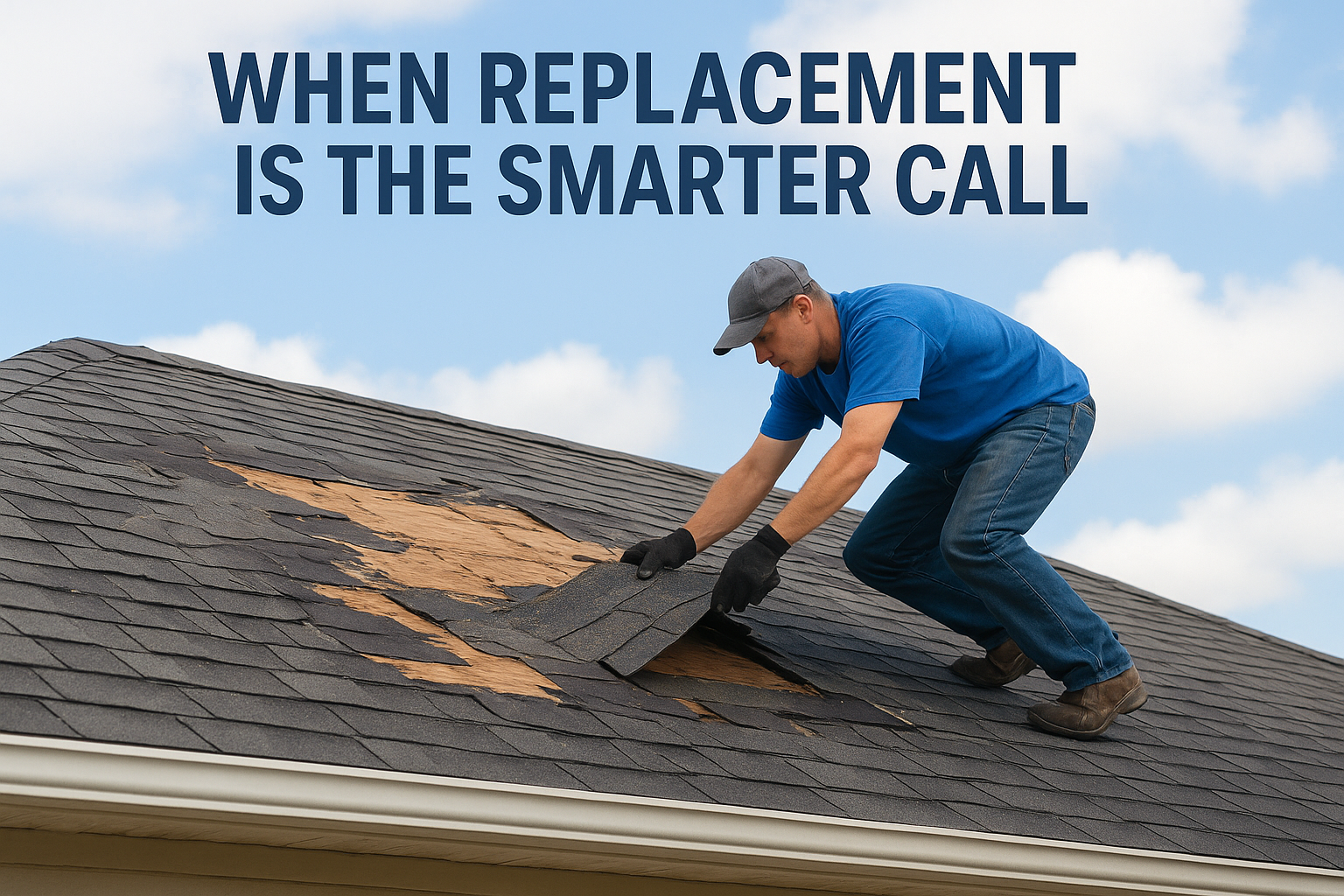
When replacement is the smarter call
Replacement makes more financial sense when damage covers more than 30 to 40 percent of the roof or when your roof is already 15 to 20 years old. Repeated repairs on an aging system often cost more over time than a single replacement. Widespread hail strikes that reach the underlayment or decking across multiple sections tip the scale toward full replacement, since partial fixes rarely survive the next major storm.
Signs that replacement is likely the right call:
- Damage spread across multiple slopes or sections
- Soft spots or visible sagging in the decking
- Your roof is within five years of its expected lifespan
- Your insurance adjuster recommends full replacement after inspection
How to estimate your cost and plan next steps
Getting an accurate storm damage roof repair cost starts before any contractor sets foot on your property. The most reliable approach is to gather information in a structured order, starting with documentation, then professional input, then financial planning. Skipping steps in that sequence usually means missing damage or leaving insurance money on the table.
Start with a professional inspection
Your first move after a storm is to document visible damage with photos and video from the ground before anything gets disturbed. Once you have that record, schedule a professional inspection with a licensed roofing contractor. A thorough inspection identifies both surface and subsurface damage, giving you a complete picture of what the repair or replacement will actually involve rather than a guess based on what you can see from your yard.
Document the date of the storm alongside your photos, since insurance carriers use that timeline to validate your claim.
Build your estimate and work the insurance process
After inspection, request itemized quotes from at least two or three licensed contractors so you can compare labor, materials, and scope line by line. If the storm damage is significant, file a claim with your homeowner’s insurance carrier and ask your contractor to be present during the adjuster’s visit. An experienced contractor can point out damage the adjuster might miss, which directly affects your payout and what comes out of your pocket.
Once your insurance settlement and contractor quotes are aligned, you have everything you need to move forward with a clear budget and a realistic timeline.
Quick recap and what to do next
Storm damage roof repair cost in 2026 ranges from $4 to $15+ per square foot depending on damage depth, material type, roof size, and your location. Minor repairs stay at the lower end of that range, while widespread hail or wind damage that reaches the decking pushes costs significantly higher. Your decision between repair and replacement hinges on how much of the roof is affected and how old your current system is.
Your next step is straightforward: get a professional inspection before prices or damage conditions change. Document the storm date, photograph everything, and request itemized quotes from licensed contractors so you can compare scope line by line. Working with an experienced team also protects you during the insurance claim process, since a knowledgeable contractor helps you recover the full value of your damage. Contact Sunflowers Energy LLC for a free on-site inspection and estimate and get a clear number before making any decisions.