
A roof does its job quietly, until it doesn’t. When leaks show up, shingles go missing, or your roof hits the 20-year mark, you’re forced to ask a straightforward question: what is a roof replacement, and do I actually need one? It’s a major investment, and understanding exactly what’s involved helps you make a confident decision rather than a rushed one.
A roof replacement means removing everything down to the deck and installing a completely new roofing system. It’s different from a simple repair or patch job, and knowing when one is necessary versus the other can save you thousands of dollars, or prevent far more expensive damage down the road. Timing and preparation matter just as much as the materials you choose.
At Sunflowers Energy LLC, we handle residential and commercial roof replacements from first inspection to final cleanup. This guide walks you through the full process, typical costs, the signs that tell you it’s time, and what to expect at every stage, so you’re never caught off guard.
Why roof replacement matters for your home
Your roof is not just a cover. It’s a fully integrated system that protects your home’s framing, insulation, electrical systems, and interior finishes from moisture and extreme temperatures. When part of it fails, water moves into places you can’t see, reaching the decking, rafters, and drywall. That damage builds quickly and quietly, turning what could be a scheduled replacement into a far more expensive emergency that also involves mold remediation, structural repairs, and destroyed belongings.
Structural damage compounds fast
Water intrusion is the most immediate threat from a roof that’s past its prime. Once moisture bypasses the shingles and reaches the underlayment or wooden decking, rot sets in and mold begins to develop in the walls and ceiling cavities. You might not spot any interior signs for months, but the damage keeps building the whole time. Catching the problem before total failure keeps the scope of work limited to the roof itself, rather than pulling in the home’s structure, insulation, and interior finishes.
A single undetected leak can cause thousands of dollars in framing and drywall damage before any visible stain appears on your ceiling.
Home value and energy performance
Appraisers and buyers treat the roof as a major variable when evaluating a property. A roof nearing the end of its lifespan can cut your sale price, complicate financing approvals, or stop a deal from closing altogether. Replacing it before you list or refinance removes that friction entirely. Beyond resale, a new roof installed with modern underlayment and proper attic ventilation directly affects how hard your HVAC system has to work. Old or poorly installed roofing traps heat in summer and bleeds warmth in winter, pushing your monthly energy bills higher year after year.
Insurance coverage and storm readiness
Most homeowners insurance policies tie coverage terms to roof age and condition. If your roof is old or already shows visible deterioration, your insurer may reduce a payout after a storm or deny the claim outright. Scheduling a replacement before severe weather arrives puts you in a much stronger position. Understanding what is a roof replacement and planning one proactively means you stay covered structurally and financially, not scrambling after the damage is already done.
Roof repair vs replacement and reroofing options
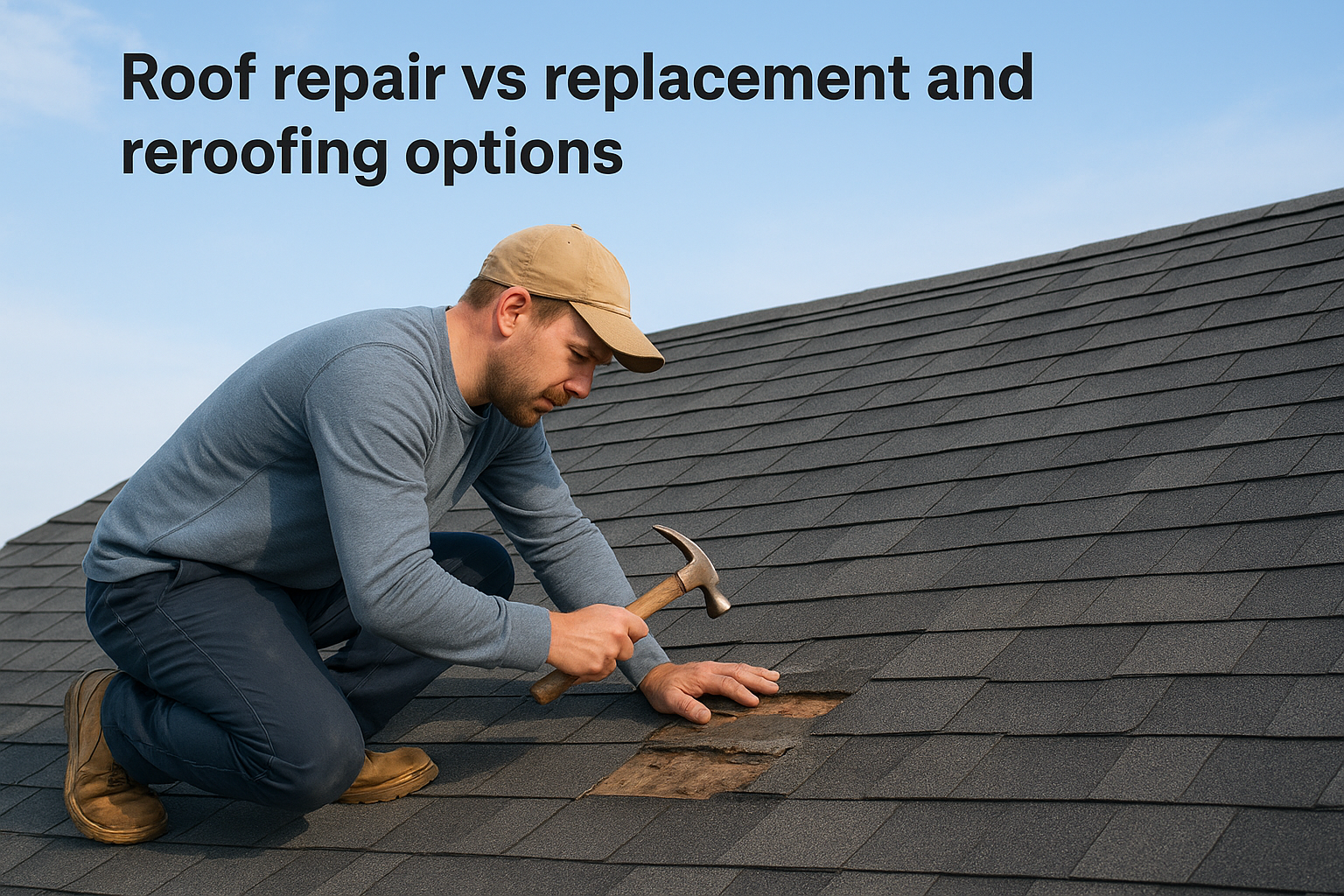
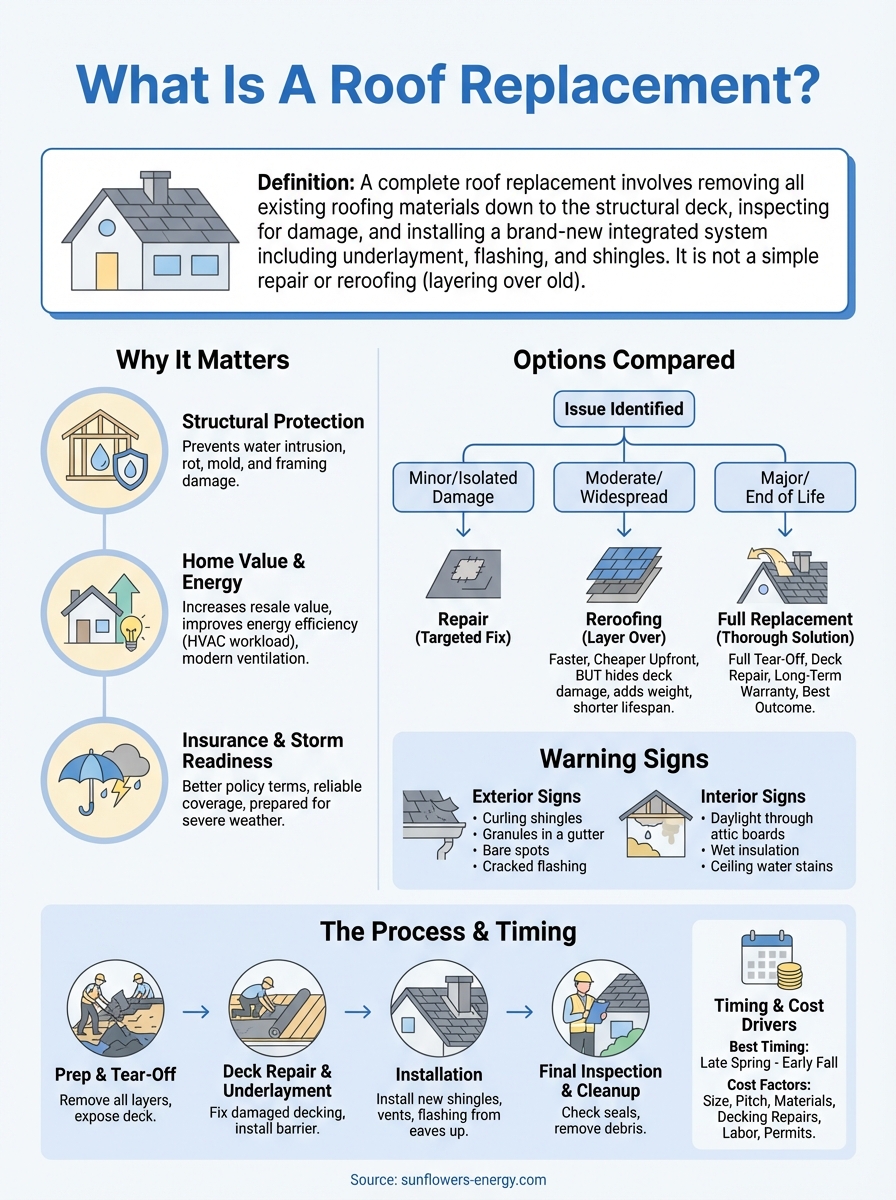
Not every roofing problem requires a full replacement. Repairs work well when damage is isolated, the roof is relatively young, and the underlying decking is still sound. If you’re dealing with a missing shingle, a small flashing failure, or a single minor leak, a targeted repair is the faster and cheaper fix. The calculus changes when damage is widespread or repairs keep coming back season after season.
When reroofing is an option
Reroofing means installing a new layer of shingles directly over the existing ones without tearing off the old material. This costs less upfront and skips tear-off labor, but comes with real trade-offs:
- Hidden decking damage stays in place under the new layer
- The added weight stresses your roof structure
- New shingles over old ones typically carry a shorter effective lifespan
- Most building codes limit properties to two total shingle layers
Reroofing can mask problems rather than solve them, which often leads to a full replacement sooner than expected.
When full replacement is the right call
Understanding what is a roof replacement clarifies why it’s the more thorough option. A full replacement removes all old materials, lets you inspect and repair the decking directly, and installs a complete new roofing system with fresh underlayment and flashing.
This approach comes with a full manufacturer warranty and eliminates uncertainty about hidden damage beneath the surface. If your roof has multiple problem areas or is nearing the end of its rated lifespan, a full replacement gives you a reliable long-term outcome rather than a temporary fix.
Signs you need a roof replacement
Knowing when to replace rather than repair saves you from throwing money at a roof that won’t hold up much longer. Several warning signs point clearly toward replacement, and most of them are visible during a basic walkthrough of your home and attic. The sooner you identify them, the more control you have over the timeline and budget.
Age and visible shingle damage
Asphalt shingles have a typical lifespan of 20 to 30 years, depending on materials, installation quality, and local weather conditions. If your roof is in that range, schedule an inspection even if nothing looks obviously wrong. What is a roof replacement worth at that point? Almost always more than repeated short-term repairs on aging materials.
Look for these specific signs from the ground or during an inspection:
- Curling, buckling, or missing shingles across multiple roof sections
- Granules collecting in your gutters, which signals shingle breakdown
- Bare spots or dark streaking where protective granules have worn off
- Flashing that has lifted, cracked, or separated around chimneys and vents
Once granule loss becomes widespread, the shingles can no longer shed water effectively, and deterioration accelerates quickly.
Structural warning signs inside your home
Daylight visible through your attic boards means your roof deck has gaps that let water in along with light. Check your attic after a rainstorm for wet insulation, staining on rafters, or soft spots on the decking boards. These point to long-term moisture damage that repairs alone cannot reverse.
Roof replacement process step by step
Understanding what is a roof replacement becomes much clearer once you see how the work actually unfolds. A standard residential replacement moves through several distinct phases, each one building on the last. Knowing the sequence helps you set realistic expectations and communicate clearly with your contractor from day one.
Preparation and tear-off
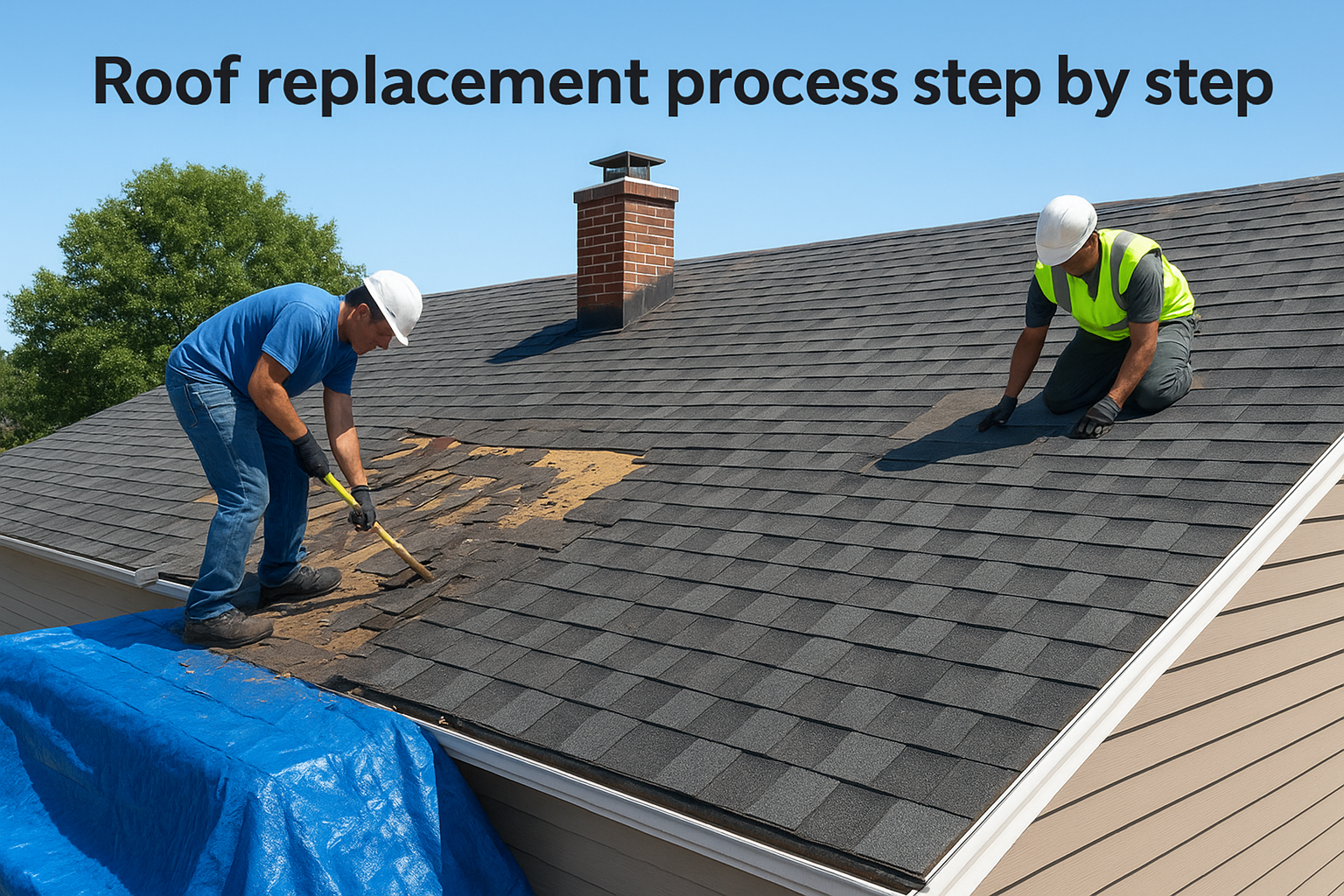
Before any new materials go up, your crew removes every layer of existing roofing down to the wooden decking. This is where hidden problems surface. Damaged or rotted deck boards get replaced at this stage, giving you a clean, solid base for the new system. Your contractor will also cover landscaping and driveways with tarps to catch debris and simplify cleanup.
Skipping a full tear-off hides decking damage and shortens the lifespan of your new roof significantly.
Installation and final inspection
Once the deck is solid, the crew installs new underlayment across the entire surface as a moisture barrier before any shingles go down. Flashing gets placed around chimneys, vents, and valleys next, since these spots are most vulnerable to water entry. Shingles then go on in overlapping rows from the eave line upward to the ridge cap.
After installation wraps up, your contractor walks the roof and checks every flashing seam, ridge cap, and drip edge for proper fit. A final ground-level cleanup removes all debris, nails, and discarded materials from your property before the job closes out.
Roof replacement costs, timing, and what affects them
Most homeowners want a number upfront, but what is a roof replacement going to cost depends heavily on variables specific to your home. A standard asphalt shingle replacement on a 2,000-square-foot home typically runs $8,000 to $20,000, with material grade, roof complexity, and local labor rates doing most of the work to move that number up or down.
What drives the final price
Roof size and pitch are the two biggest cost drivers. A steep roof requires specialized safety equipment and more labor hours than a low-slope design. Material choice also shifts the number significantly, since architectural shingles cost more than basic three-tab options, and premium materials like metal or tile can double the base price.
Other factors that affect your total:
- Decking repairs: Rotted boards found during tear-off add both material and labor costs
- Penetrations: Each chimney, skylight, or vent requires custom flashing work
- Permit fees: Most municipalities require a permit for a full replacement, and fees vary by location
Getting at least three written estimates before you commit gives you a realistic price range and reveals how different contractors approach the same scope of work.
Best time of year to schedule
Late spring through early fall is the ideal window for a roof replacement in most of the United States. Temperatures in that range keep shingles pliable enough to seal correctly, and lower humidity reduces the risk of moisture getting trapped before everything cures.
Scheduling during the off-peak winter months can sometimes lower your cost, but cold temperatures affect how shingles seal and bond, which can compromise the finished result.
Next steps
Now you know what is a roof replacement, when it makes sense over a repair, and what the full process looks like from tear-off to final inspection. The most important move you can make right now is getting a professional inspection before a minor issue becomes a structural problem. Waiting rarely saves money, and a roof that fails on its own timeline always costs more to address than one you plan for.
If your roof is aging, showing visible damage, or you simply want a clear picture of where things stand, reach out to a contractor who can give you an honest assessment. At Sunflowers Energy LLC, we offer free on-site inspections and no-obligation estimates for both residential and commercial properties, so you walk away with real information and no pressure. Schedule your free roof inspection with Sunflowers Energy LLC and take the first step toward a roof that protects your home for decades.

3 Responses