
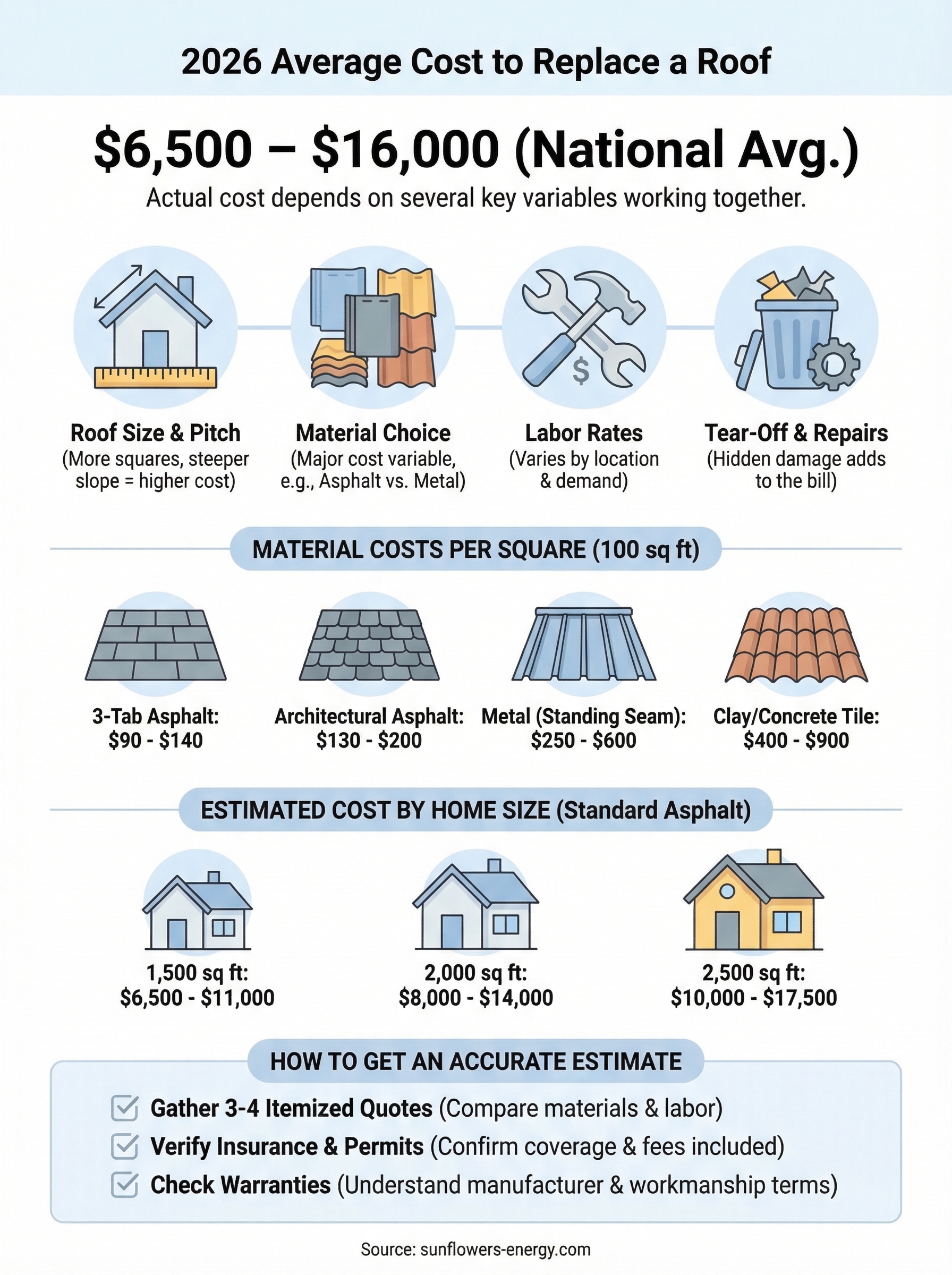
The average cost to replace a roof in 2026 falls somewhere between $6,500 and $16,000 for most homeowners, but that range is wide enough to make budgeting feel like guesswork. Your actual number depends on a handful of specific factors: roof size, material choice, labor rates in your area, and whether your old roof needs a full tear-off before anything new goes on.
At Sunflowers Energy LLC, we handle residential and commercial roof replacements every day. We’ve seen firsthand how confusing pricing can get when homeowners start collecting quotes and comparing numbers across different contractors and materials. That experience is exactly why we put this guide together, to give you real pricing context before you pick up the phone or schedule an inspection. No fluff, just the data you need to make a confident decision about one of your home’s biggest investments.
Below, we break down national averages, per-square-foot costs, pricing by material type, and the key variables that push your total up or down. We also cover often-overlooked expenses like permits, decking repairs, and disposal fees so you can budget for the full picture, not just the sticker price.
Why roof replacement prices vary so much
The average cost to replace a roof moves up and down based on several variables working together at once. A small ranch-style home in a rural area with simple asphalt shingles will cost far less than a steep two-story home in a high-cost metro using premium materials. Understanding the main cost drivers gives you a reliable baseline before any contractor sets foot on your property.
Roof size and pitch
Roof size is measured in "squares," where one square equals 100 square feet of roof surface. A larger roof simply requires more labor hours and more materials, which raises your total directly. But pitch matters just as much as size. Steeper roofs are harder and slower to work on safely, so contractors often add a pitch surcharge for slopes above 6:12. A complex roofline with multiple valleys, dormers, or angles adds even more time on top of that.
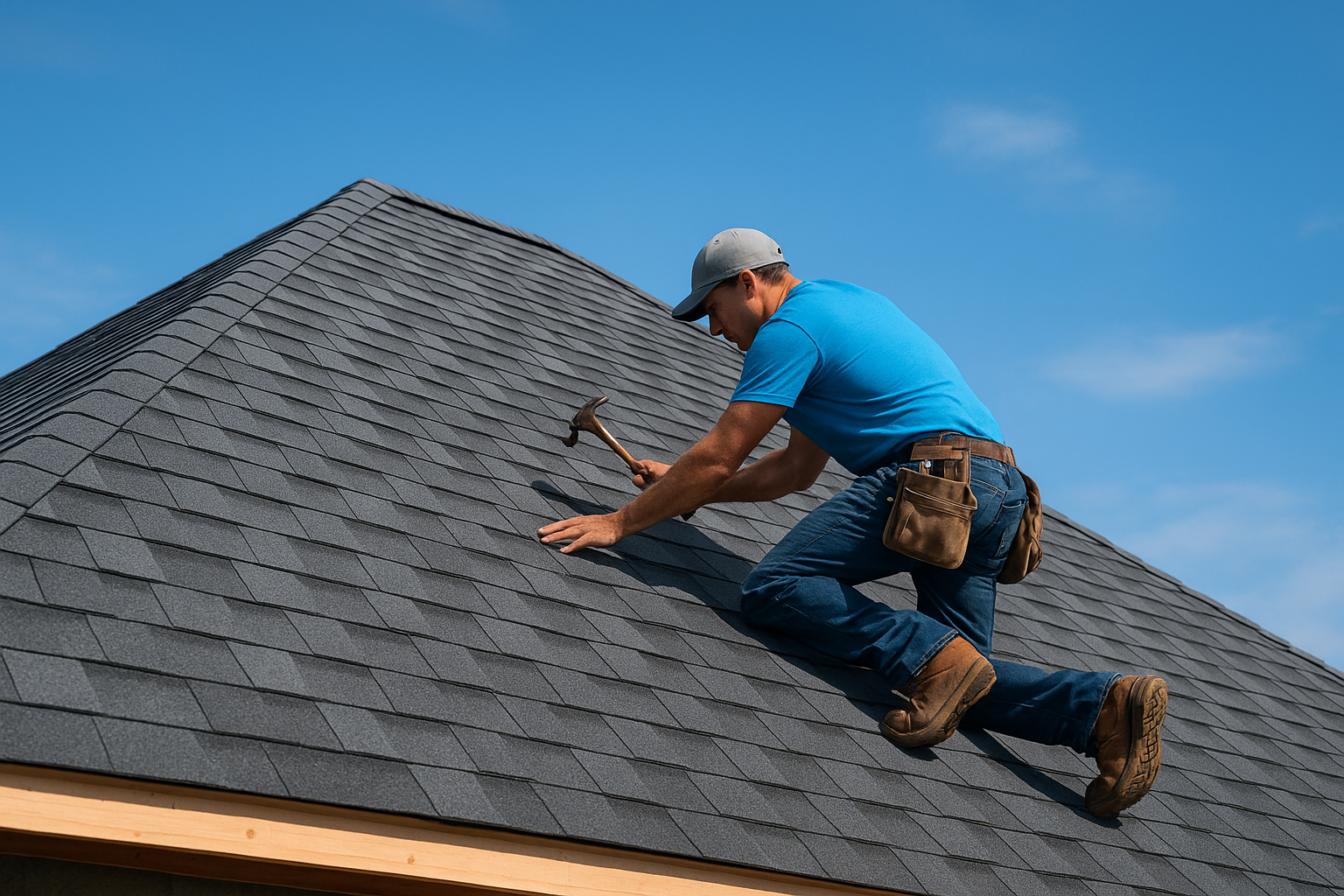
A steep roof with a complex shape can add 20-30% to your labor cost compared to a flat or low-slope roof of the same square footage.
Material selection
Your choice of roofing material is often the single biggest cost variable in the entire project. Standard three-tab asphalt shingles sit at the low end of the range, while architectural shingles, metal roofing, and tile systems cost significantly more per square. Material prices also shift with supply chain conditions, so figures from sources more than a year old may not reflect what suppliers charge today.
| Material | Typical Cost per Square |
|---|---|
| 3-tab asphalt shingles | $90 – $140 |
| Architectural shingles | $130 – $200 |
| Metal roofing | $250 – $600 |
| Tile (clay or concrete) | $400 – $900 |
Labor rates and local market conditions
Where you live directly affects what you pay for labor. Contractors in high cost-of-living metros charge more per hour than those in rural or lower-cost regions. Seasonal demand plays a role too. Booking during peak storm season or in the height of summer when contractors run full schedules can push prices noticeably higher than off-peak months.
Tear-off and hidden structural repairs
Replacing a roof isn’t always just laying down new material. If your old roof requires a full tear-off, that adds both labor time and disposal fees to your total. Rotted decking, damaged fascia, or compromised underlayment only become visible once the old surface comes off, and fixing them adds directly to your final bill. These hidden repairs are one of the most common reasons actual project costs exceed the original estimate.
2026 average roof replacement costs in the US
The average cost to replace a roof in 2026 sits between $6,500 and $16,000 for a typical single-family home. That national range comes from a combination of all roofing materials, home sizes, and regional labor rates averaged together, so it gives you a useful starting point before you factor in your specific situation.
National average benchmarks
Most homeowners land somewhere between $8,000 and $12,000 when replacing a standard 2,000 square foot asphalt shingle roof with a full tear-off included. On a per-square-foot basis, that works out to roughly $4 to $8 per square foot for labor and materials combined, with basic projects at the lower end and more complex jobs pushing toward the top.
Higher-end roofing materials like metal or tile can push your total well above $20,000 even on a mid-sized home.
Regional cost differences
Your location shifts costs significantly from the national average. Homeowners in the Northeast and West Coast typically pay 15 to 25 percent more than the national figure because of higher labor rates and stricter building codes that add permit costs. Southern and Midwest markets often come in below the national average, where labor is more affordable and competition among contractors keeps pricing tighter.
Seasonal timing also affects your final number. Spring and early summer represent peak demand, which gives contractors less room to negotiate on price. Scheduling your replacement in late fall or winter, when demand drops, can save you several hundred dollars without any trade-off in quality.
Average cost by roof size and home size
Your home’s footprint is one of the most direct inputs into your final project cost. A larger home means more square footage of roof surface, more materials, and more labor hours. Roof area is not the same as your home’s floor plan area, though, because pitch and overhangs push the actual measurable surface higher than your square footage alone suggests.
Estimated costs by home size
The table below shows typical replacement cost ranges for common home sizes using standard architectural asphalt shingles with a full tear-off included. These figures assume moderate pitch and a straightforward roofline.
| Home Size (sq ft) | Estimated Roof Squares | Estimated Total Cost |
|---|---|---|
| 1,000 sq ft | 11-13 squares | $4,500 – $8,000 |
| 1,500 sq ft | 16-18 squares | $6,500 – $11,000 |
| 2,000 sq ft | 20-24 squares | $8,000 – $14,000 |
| 2,500 sq ft | 25-30 squares | $10,000 – $17,500 |
| 3,000 sq ft | 30-36 squares | $12,000 – $21,000 |
Your actual roof square count can run 20 to 40 percent higher than your home’s floor plan area once pitch and overhangs are measured.
Why pitch multiplies your cost
A steeper roof covers more physical surface area than a flat layout with the same footprint, so your contractor measures the actual slope surface rather than just your floor plan dimensions. For the average cost to replace a roof, pitch adjustments alone can add 15 to 30 percent to your total. A complex roofline with dormers, multiple ridges, or valleys pushes costs further because each transition point requires additional cuts, flashing work, and labor time.
Average cost by roofing material and roof type
Your material choice shapes the average cost to replace a roof more than almost any other single decision. Different materials carry different price points per square, different labor requirements, and different lifespans, so the cheapest option upfront is not always the cheapest over time.
Asphalt shingles: the most common choice
Asphalt shingles dominate the residential market because they balance cost and durability well for most homeowners. Three-tab shingles sit at the lower end of the price range, while architectural (dimensional) shingles cost more but last longer and hold up better against wind and impact. Most contractors default to architectural shingles today because the performance difference justifies the modest price bump.
Architectural shingles typically carry a 30-year warranty compared to 20 years for basic three-tab options, making them a stronger long-term value for most homes.
Metal, tile, and specialty roofing
Metal roofing has gained significant popularity because it offers a lifespan of 40 to 70 years with minimal maintenance. Standing seam metal panels cost more to install than shingles because the interlocking system requires more precise labor. Clay and concrete tile roofs run even higher on both materials and installation, largely because their weight requires structural reinforcement in many homes.
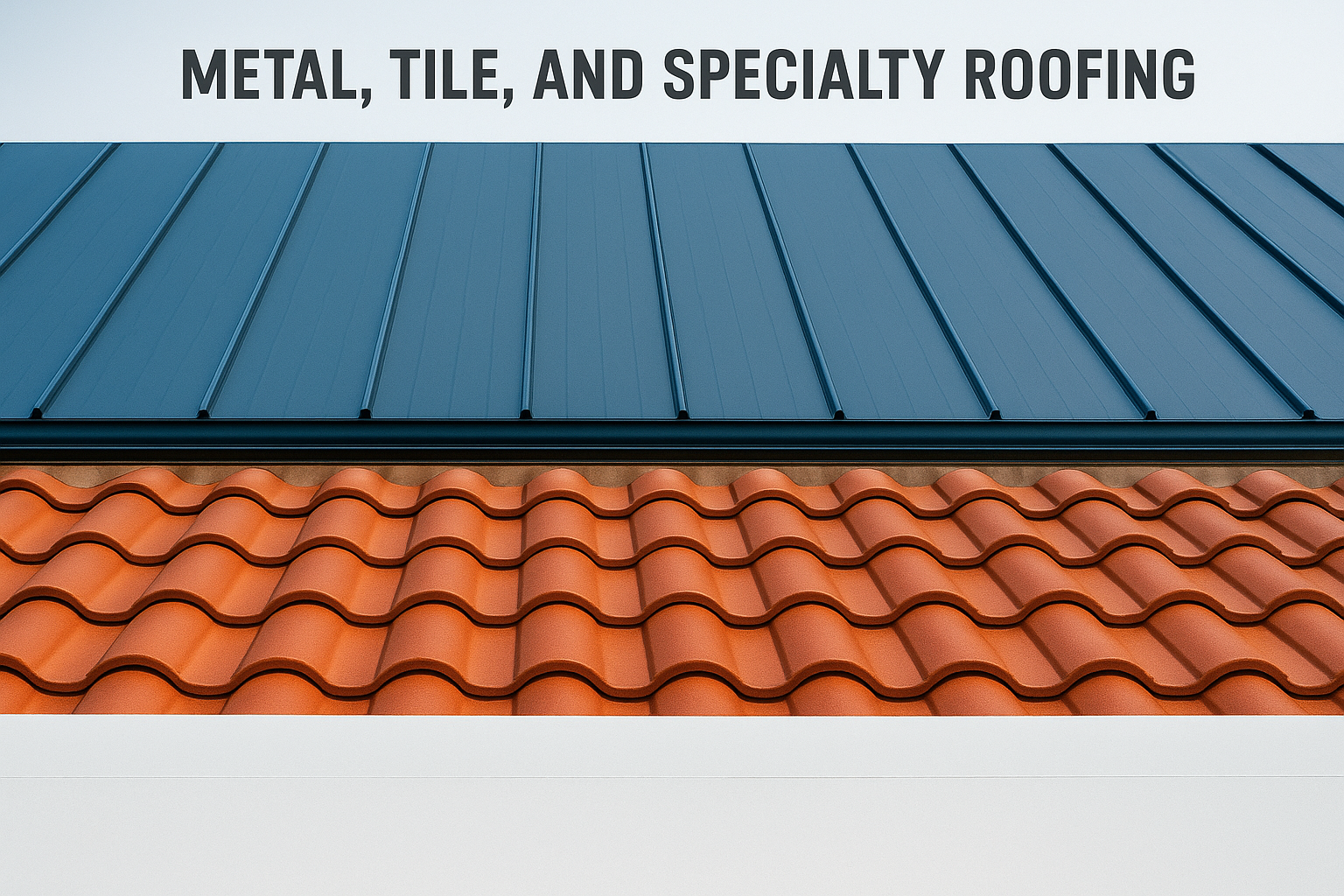
| Material | Cost per Square | Estimated Lifespan |
|---|---|---|
| 3-tab asphalt | $90 – $140 | 15-20 years |
| Architectural shingles | $130 – $200 | 25-30 years |
| Metal (standing seam) | $350 – $600 | 40-70 years |
| Clay/concrete tile | $400 – $900 | 50+ years |
| TPO/flat roofing | $150 – $350 | 15-25 years |
Flat and low-slope systems like TPO, PVC, and rubber roofing use completely different installation methods than pitched residential roofs, so labor costs reflect that added complexity regardless of the material price per square.
How to get an accurate roof estimate
Getting a reliable estimate starts with gathering multiple quotes from licensed contractors in your area. A single quote gives you no benchmark. Three to four quotes let you identify outliers, understand the local market rate, and negotiate from an informed position before you commit to anything.
What to ask each contractor
When you meet with a contractor, ask for a detailed written breakdown of every line item in the quote. Materials, labor, tear-off, disposal, permits, and any known decking repairs should each appear as separate line items, not bundled into one lump sum. A contractor who resists itemizing costs is a red flag worth paying close attention to.
An itemized quote protects you from hidden charges and gives you a clear basis for comparing bids side by side.
Key items to verify before signing
Before you sign anything, confirm the contractor carries both liability insurance and workers’ compensation coverage. Ask to see the certificates directly rather than taking their word for it. You should also verify that the quoted price includes permit fees, since permit costs are easy to overlook and can add $150 to $500 to your total depending on your municipality. Understanding the average cost to replace a roof in your region also helps you spot bids that come in suspiciously low, which often signals cut corners on materials or labor. A trustworthy contractor will explain every line without pressure.
- Itemized written quote covering all cost categories
- Proof of current license and insurance certificates
- Permit fees confirmed as included
- Manufacturer and workmanship warranty details in writing
- Clear payment schedule before work begins
Next steps
Now you have a clear picture of what goes into the average cost to replace a roof, from material choices and home size to regional labor rates and hidden repair costs. The most important next step is getting a real quote for your specific home, because no national average fully replaces an on-site measurement and inspection from a licensed contractor.
Before you call anyone, pull together the key questions from this guide: ask for itemized bids, verify insurance certificates, and confirm that permit fees are included in the quoted price. Those three checks alone will protect you from surprises once work begins.
At Sunflowers Energy LLC, we provide free on-site inspections and no-obligation estimates for homeowners across our service area. Our team walks you through every line item so you know exactly what you’re paying for and why. Schedule your free roof inspection today and get an accurate number for your home.

2 Responses