
New gutters aren’t exactly a glamorous upgrade, but they’re one of the smartest investments you can make in your home’s long-term health. Without a functioning gutter system, rainwater pools around your foundation, damages your siding, and shortens the lifespan of the roof above it. If you’re researching gutter installation cost, you’re already thinking ahead, and the numbers you’ll find range widely depending on materials, home size, and who does the work.
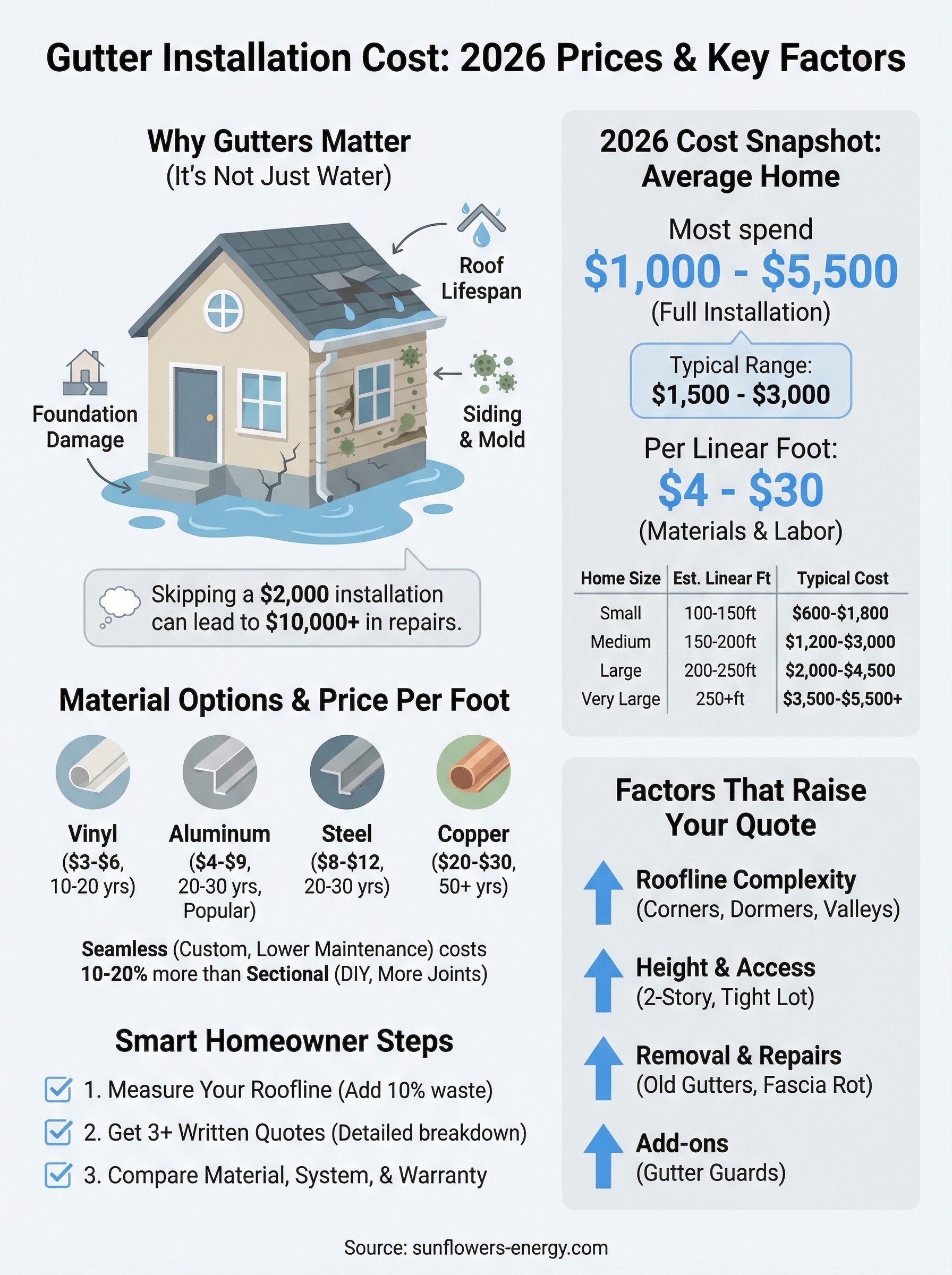
In 2026, most homeowners spend between $1,000 and $5,500 on a full gutter installation, though premium materials and complex rooflines can push that figure higher. The price per linear foot, the standard way contractors quote gutter jobs, typically falls between $4 and $30, with aluminum on the low end and copper at the top.
At Sunflowers Energy LLC, we see firsthand how gutters and roofing work together as a system. A new roof without proper drainage is only doing half its job, which is why we help homeowners think about the full picture, from shingles to downspouts. This guide breaks down every factor that affects gutter installation pricing so you can budget accurately and make a confident decision.
Why gutter installation cost matters
Understanding gutter installation cost before you call a contractor puts you in control of the conversation. When you know what drives pricing, you can spot inflated quotes, ask better questions, and make a decision based on value rather than guesswork. Gutters are not a nice-to-have feature; they are a core part of your home’s water management system, and neglecting them leads to repair bills that far exceed the original installation price.
The real damage unmanaged water causes
Water that runs off your roof without a directed path does not simply disappear harmlessly. It saturates the soil around your foundation, where repeated cycles of wetting and drying can crack concrete slabs and compromise the structural base your entire home rests on. Water also runs down your siding, causing paint failure, wood rot, and mold growth that spreads behind walls and into your attic before you ever notice it from inside. Each of these repair projects costs several thousand dollars, and most develop slowly enough that the damage is already significant by the time you spot it.
Skipping a $2,000 gutter installation today can lead to $10,000 or more in foundation repairs, siding replacement, and mold remediation within just a few years.
Your basement takes a hit too. Without gutters directing water away from the structure, the ground around your home stays saturated after heavy rain, and that moisture finds every small crack in your foundation walls. If you have a finished basement, a single heavy storm can destroy flooring, drywall, and stored belongings that cost far more to replace than gutters would have.
How gutters extend the life of your roof
When gutters become clogged, damaged, or missing altogether, water backs up under shingles and flashing, which accelerates the deterioration of the materials protecting your home from above. Roof edges and fascia boards are especially vulnerable because they sit right where runoff collects before it can drain, and fascia rot is one of the most common and entirely avoidable roof-adjacent repairs homeowners face.
A properly installed gutter system channels runoff away from the roofline fast enough to prevent standing water from working its way beneath the surface layer of your roof. Roofing contractors consistently recommend addressing gutters and roof maintenance together because replacing a roof without fixing drainage issues puts that new investment at immediate risk. For homeowners who have already paid for quality shingles and materials, proper gutters are the logical final step in protecting everything above.
2026 average gutter prices per foot and total
The gutter installation cost for a typical home in 2026 falls between $1,000 and $5,500 for the full project, though most homeowners land closer to the $1,500 to $3,000 range. That spread reflects differences in home size, material choice, and regional labor rates. Knowing the baseline numbers gives you a realistic starting point before you request your first quote.
What the average homeowner pays
For a standard single-story home with roughly 150 to 200 linear feet of gutters, the total installed price usually comes in between $1,200 and $3,000 using aluminum sectional gutters. Larger two-story homes with more complex rooflines can run $3,500 to $5,500 or higher when you factor in the extra labor involved in working at greater heights.
| Home size | Estimated linear feet | Typical installed cost |
|---|---|---|
| Small (under 1,500 sq ft) | 100-150 ft | $600-$1,800 |
| Medium (1,500-2,500 sq ft) | 150-200 ft | $1,200-$3,000 |
| Large (2,500-3,500 sq ft) | 200-250 ft | $2,000-$4,500 |
| Very large (3,500+ sq ft) | 250+ ft | $3,500-$5,500+ |
Your total linear footage is the single biggest driver of cost, so measuring your roofline before calling contractors helps you verify that quotes are based on accurate numbers.
Price per linear foot
Per-foot pricing is the standard unit contractors use to build your quote, and it ranges from $4 to $30 per linear foot installed depending on the material. Aluminum sits at the affordable end at $4 to $9 per foot, while steel runs $8 to $12, vinyl comes in at $3 to $6, and copper commands $20 to $30. Those per-foot figures include both materials and labor, which is why comparing material-only prices from a hardware store will always look lower than what a contractor quotes for a complete installation.
Gutter cost by material, style, and system
The material you choose has the biggest impact on gutter installation cost per linear foot, but the style and system type add another layer to your final number. Each option carries its own tradeoffs between upfront price, longevity, and maintenance, so understanding how they compare helps you match the right product to your budget and your home’s needs.
Material cost comparison
Vinyl is the most budget-friendly option at $3 to $6 per linear foot installed, but it becomes brittle in cold climates and has a shorter lifespan than metal alternatives. Aluminum is the most popular choice for most homeowners, running $4 to $9 per foot, because it resists rust, handles most climates well, and stays lightweight enough for straightforward installation. Steel gutters cost $8 to $12 per foot and offer more durability in high-snow regions, while copper commands $20 to $30 per foot and is typically reserved for high-end homes where longevity and appearance justify the premium.
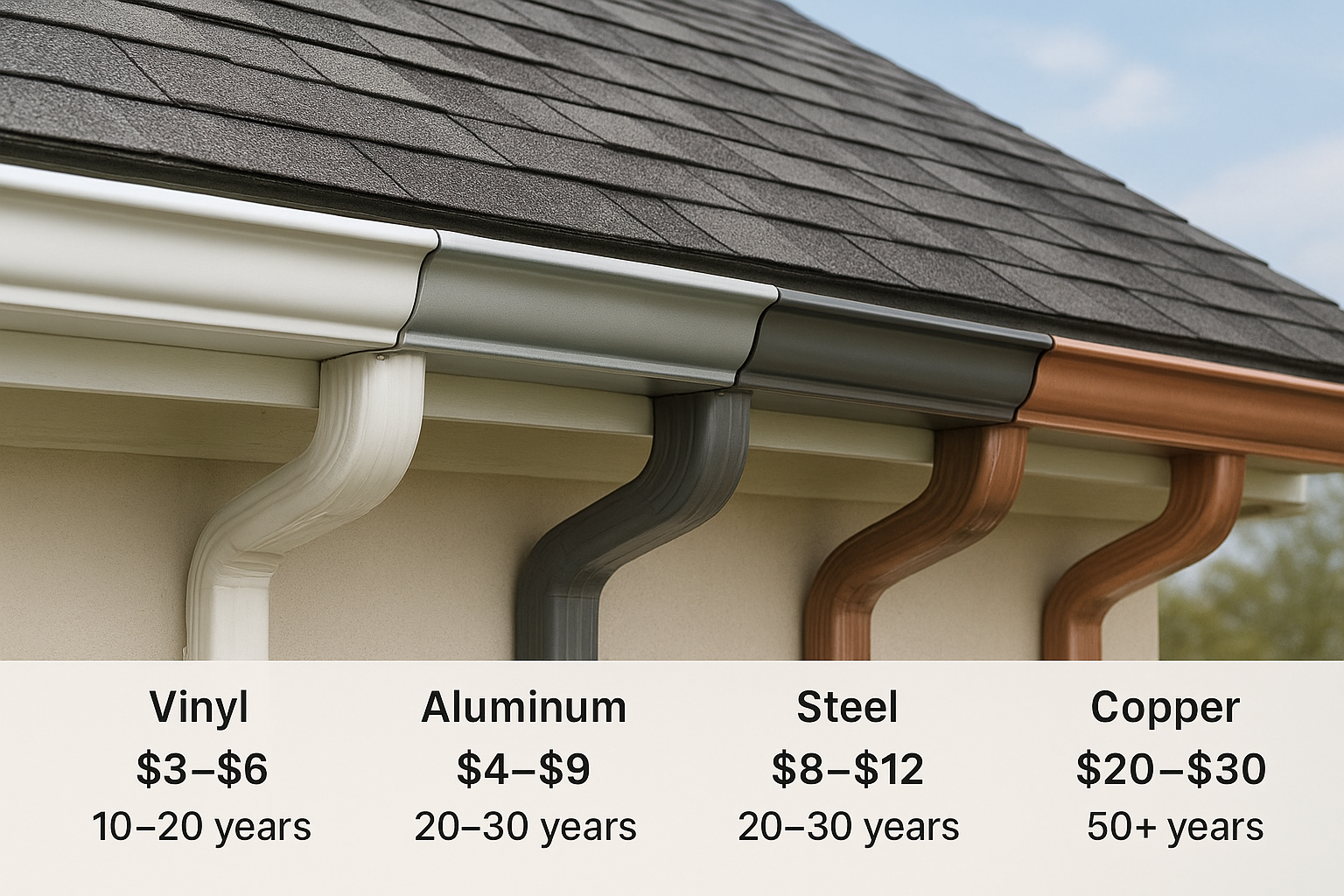
| Material | Cost per linear foot (installed) | Lifespan |
|---|---|---|
| Vinyl | $3-$6 | 10-20 years |
| Aluminum | $4-$9 | 20-30 years |
| Steel | $8-$12 | 20-30 years |
| Copper | $20-$30 | 50+ years |
Sectional vs. seamless gutters
Sectional gutters come in pre-cut pieces that connect at joints, which makes them easier to transport and install yourself. The drawback is that those joints are the first place leaks develop, so they require more maintenance over time compared to a seamless system.
Seamless gutters cost 10 to 20 percent more upfront but significantly reduce long-term leak risk because they have no joints along the run.
Seamless gutters are custom-fabricated on-site using a roll-forming machine, which is why they require professional installation. For most homeowners, the reduced maintenance and improved water management make the added cost worthwhile.
Key factors that raise or lower your quote
Two contractors can walk the same property and return quotes that differ by hundreds of dollars. That gap is rarely random. Specific conditions on your home make the job faster or slower, simpler or more technical, and those differences show up directly in your gutter installation cost. Knowing what drives those adjustments lets you anticipate where your quote will land before anyone shows up with a tape measure.
Your roofline’s complexity
A simple rectangular home with a single roofline is the easiest and cheapest job a gutter installer will quote. Multiple roof angles, valleys, and dormers require more cuts, more custom pieces, and more time to ensure a watertight fit at each transition point. Homes with steep pitches also slow the work down because installers need additional safety equipment and more time to move across the surface safely.
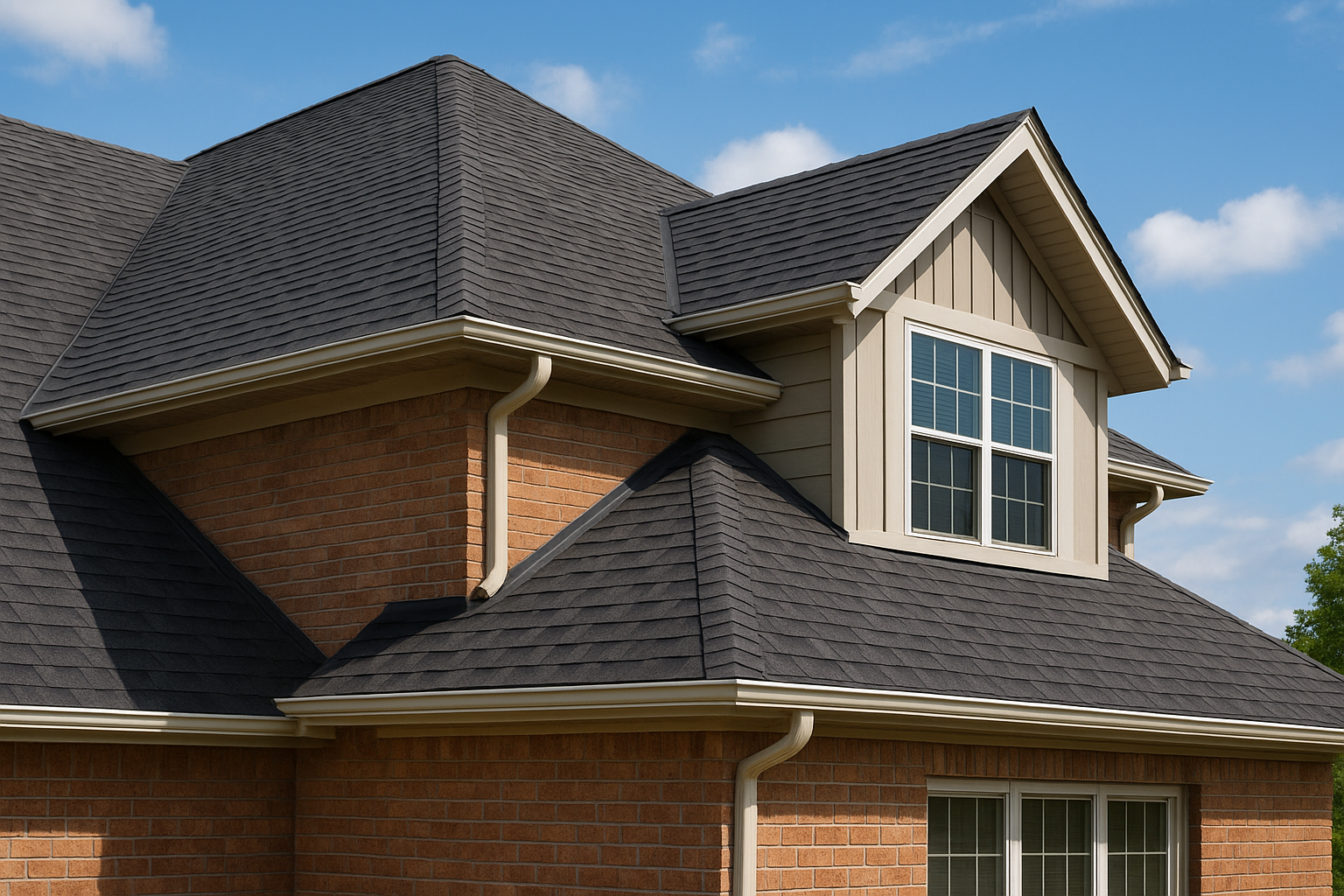
The more corners and transitions your roofline has, the more your labor costs climb relative to your linear footage.
Labor, height, and site conditions
Two-story homes consistently cost more to gutter than single-story homes, even at identical linear footage, because working at height requires taller ladders, more setup time, and sometimes additional crew. Tight lot lines, mature landscaping, or uneven ground all add to the complexity of moving equipment around the house, which contractors factor into their labor estimates. Regional labor rates also vary significantly, so the same job in a high cost-of-living area can run 20 to 30 percent more than the identical project elsewhere.
Removal, repairs, and add-ons
If your home already has gutters, removing and disposing of the old system typically adds $0.50 to $1.50 per linear foot to your quote. Fascia board replacement, which is often necessary when existing gutters have caused rot, adds $6 to $20 per linear foot on top of the gutter work itself. Gutter guards, which reduce cleaning frequency, add $1 to $10 per foot depending on the style you choose.
How to estimate your job and compare bids
Getting an accurate gutter installation cost estimate starts before you pick up the phone. When you walk into the quoting process with your own measurements and a clear list of questions, you give yourself the leverage to evaluate every bid on equal terms instead of just comparing bottom-line numbers that may not reflect the same scope of work.
Measure your roofline before calling
Walk the perimeter of your home and measure each run of roofline that needs a gutter. Add those figures together to get your total linear footage, then add roughly 10 percent for waste and overlap. Note the number of corners, downspouts, and any second-story sections separately, because those details directly affect labor time and materials. Most homes fall between 150 and 250 linear feet, so if a contractor’s quote reflects a number far outside your own measurement, ask them to show their math.
Bringing your own linear footage estimate to the first call signals to contractors that you’re an informed buyer, which tends to produce more detailed and competitive quotes.
What to look for when comparing quotes
Request at least three written quotes that break down material costs, labor, downspout count, and any removal fees separately. A quote that only shows a single total number makes it nearly impossible to compare against competitors or verify that the scope matches your project. Check that each bid specifies the material type, gauge, and whether the gutters are seamless or sectional, since those details significantly change the value you’re receiving. Any contractor unwilling to provide a line-item breakdown is a contractor worth skipping. Also confirm that each quote includes warranty information for both materials and labor, because that protection is part of what you are paying for.
What to do next
You now have everything you need to approach gutter installation cost with confidence. You know what drives the price per linear foot, how material choices and roofline complexity shift your total, and what a thorough written quote should include. The difference between a smart investment and an overpriced one almost always comes down to how prepared you are before the first contractor arrives.
Gutters do not work in isolation. They protect the roof, siding, foundation, and fascia that hold your home together, which means the decision connects directly to the overall health of your property. If you are already thinking about your roof or considering a full exterior upgrade, combining that work with gutter installation often saves you on labor and keeps everything under one warranty.
Get a free inspection and estimate from Sunflowers Energy LLC and let our team assess your roof and drainage system together.

2 Responses