If you’re planning a flat or low-slope roof for your home or commercial building, the TPO roofing vs EPDM debate is one you’ll run into fast. Both are single-ply membranes, both have strong track records, and both get recommended constantly, often by people with very different opinions. That can make the decision feel harder than it needs to be.
The truth is, each material has distinct strengths and trade-offs when it comes to cost, durability, energy efficiency, and installation. The right choice depends on your building, your budget, and your long-term goals, not a one-size-fits-all answer.
At Sunflowers Energy LLC, we install commercial roofing systems including TPO, PVC, and rubber roofing (EPDM). We’ve worked with both membranes across a range of projects, so we know where each one shines and where it falls short. This article breaks down the real differences between TPO and EPDM, materials, lifespan, pricing, pros, and cons, so you can make a confident, informed decision for your property.
Why the TPO vs EPDM choice matters
The material you choose for a flat or low-slope roof affects your building for 15 to 30 years or more. That means the tpo roofing vs epdm decision isn’t just about upfront price. It shapes your energy costs, maintenance schedule, repair frequency, and how well your building holds up through heat, cold, and storms.
Picking the wrong membrane for your climate or building type can cost you thousands in repairs and energy bills over the life of the roof.
The long-term financial impact
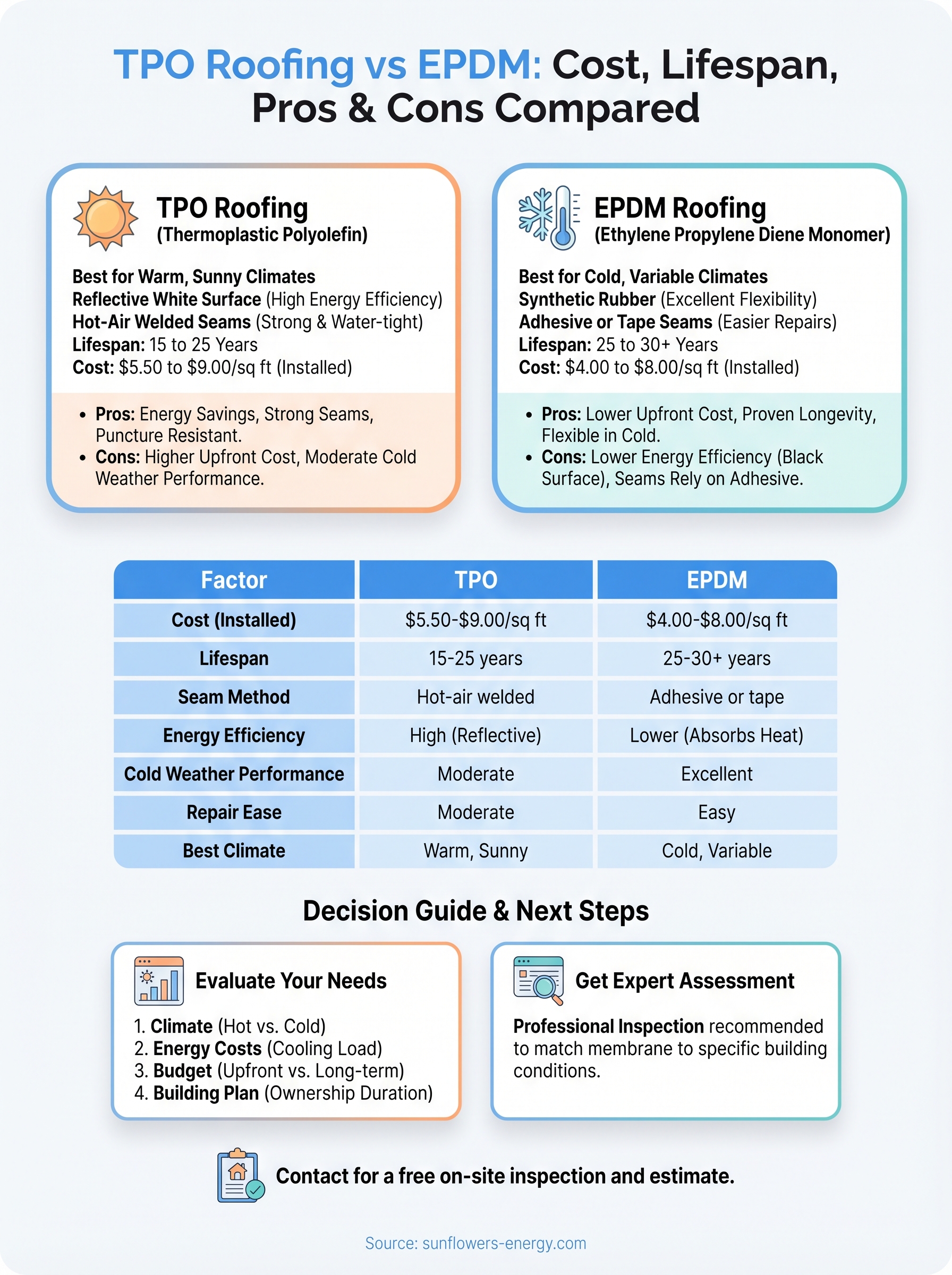
Most commercial roofing projects involve significant upfront investment, and the membrane you select directly influences your total cost of ownership over time. TPO tends to run $5.50 to $9.00 per square foot installed, while EPDM typically comes in at $4.00 to $8.00 per square foot, though local labor rates and roof complexity shift both numbers. Beyond installation, each material carries different maintenance demands and repair costs that add up over a 20-year span.
Your roof is also tied to your building’s energy performance. A material that reflects solar heat can cut cooling loads meaningfully, which matters if your building sits in a warm climate and runs air conditioning for a large part of the year.
How climate and building type factor in
Climate is one of the most important variables in this decision. TPO handles UV exposure and heat cycling well, which makes it a strong option in warmer regions. EPDM holds up well in cold climates with significant temperature swings, partly because it stays flexible at low temperatures without becoming brittle.
Your building’s size, roof slope, and drainage setup all influence which membrane performs better long term. Getting this decision right from the start saves you time, money, and frustration down the road.
What TPO roofing is and where it works best
TPO (Thermoplastic Polyolefin) is a single-ply roofing membrane made from a blend of polypropylene and ethylene-propylene rubber. Manufacturers reinforce it with a polyester scrim layer to boost tensile strength and puncture resistance. TPO has been on the market since the 1990s and has grown into one of the most widely installed commercial flat roofing materials in the US.
What makes TPO stand out
Installers and building owners value TPO’s white or light-colored reflective surface, which pushes solar heat away rather than absorbing it into your building. The seams get bonded using hot-air welding equipment, which fuses the membrane together and creates joints that are watertight and mechanically stronger than glued connections.
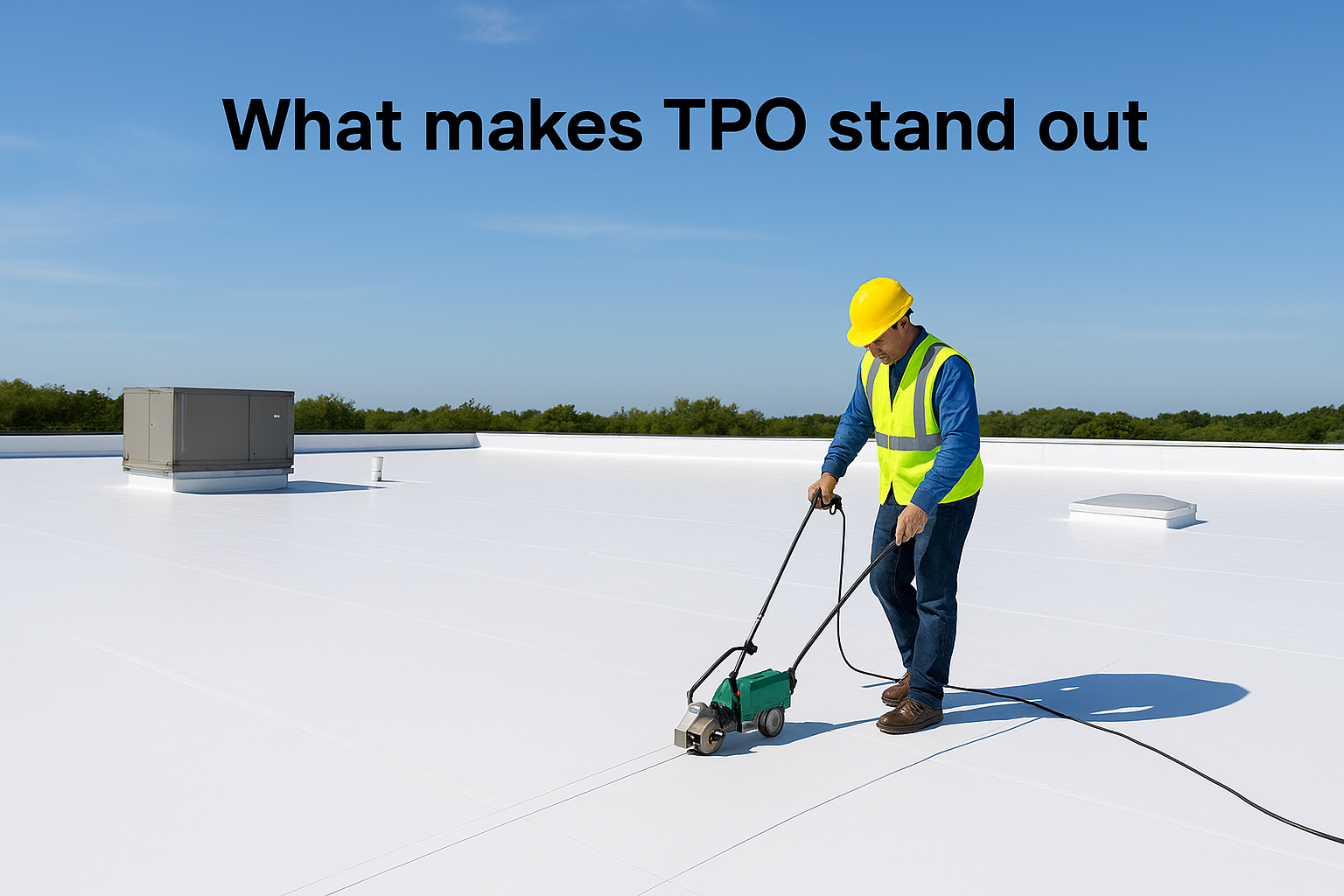
A well-executed TPO heat weld is typically stronger than the membrane itself, making it one of the more reliable systems against water infiltration at seam points.
Compared to older flat roofing systems, TPO also resists punctures, tears, and UV degradation well, which keeps maintenance costs lower over its lifespan.
Where TPO performs best
In the tpo roofing vs epdm comparison, TPO holds a clear edge in warm to hot climates where solar heat gain drives up cooling costs. Large commercial buildings benefit most from TPO’s reflectivity because energy savings scale with roof area. TPO works particularly well for:
- Large flat commercial rooftops in warm or sunny regions
- Buildings with high cooling loads where energy efficiency is a priority
- Projects where long-term, low-maintenance performance is a key goal
What EPDM roofing is and where it works best
EPDM (Ethylene Propylene Diene Monomer) is a synthetic rubber membrane that has been used on flat and low-slope roofs since the 1960s. It comes in large rolls, typically black or white, and installs using adhesive, mechanical fasteners, or ballast. Its rubber composition gives it natural flexibility that holds up reliably on your building through decades of use and seasonal stress.
What makes EPDM stand out
EPDM’s greatest strength is its flexibility in cold temperatures. Unlike materials that stiffen or crack in freezing conditions, EPDM stays pliable, which reduces the risk of splits or tears during winter freeze-thaw cycles. It also carries a proven long-term track record, with many installations lasting 25 to 30 years or more when properly maintained and inspected on schedule.
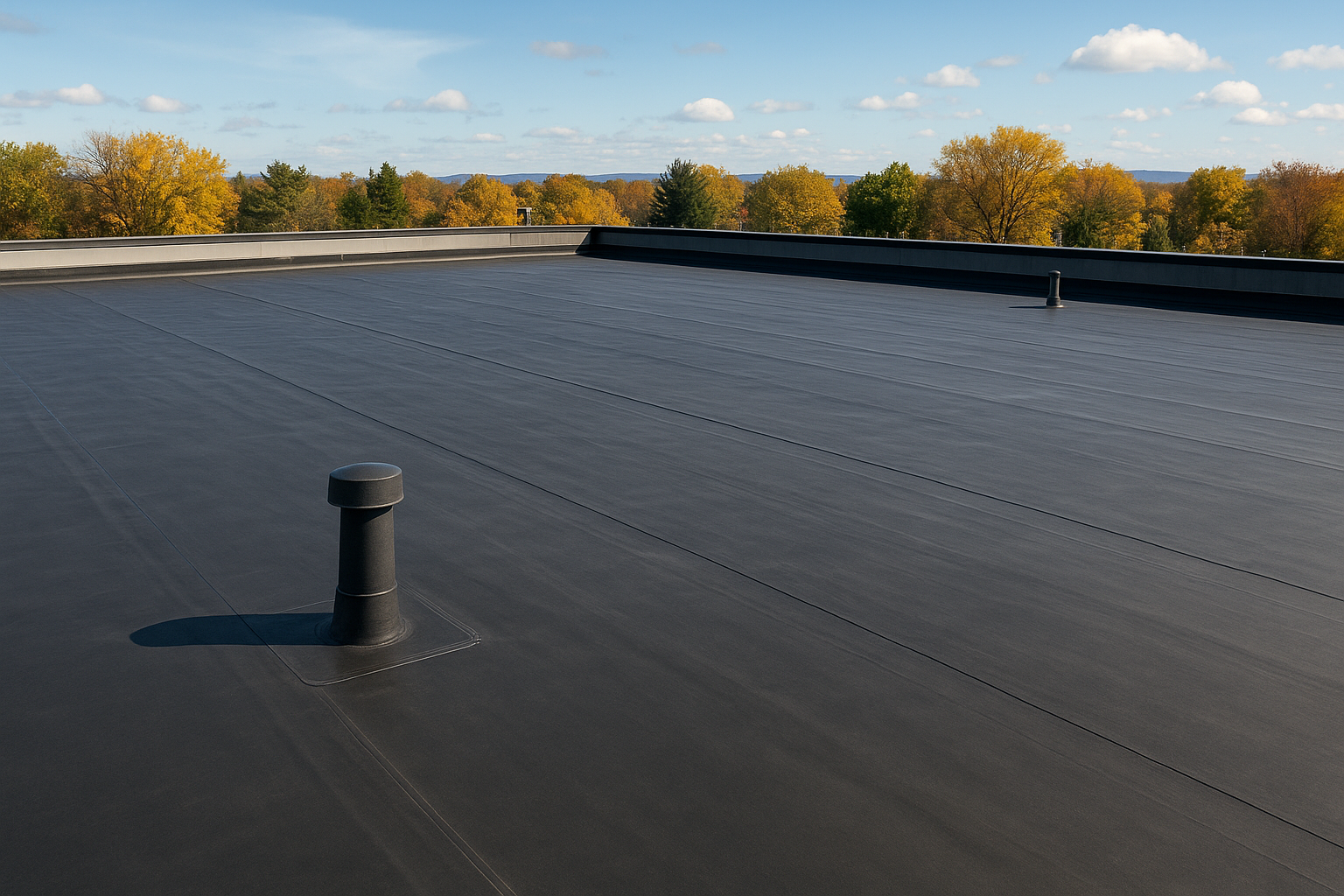
EPDM’s rubber composition handles thermal movement better than most membranes, which makes it a reliable choice when your climate puts a roof through wide seasonal temperature swings year after year.
Where EPDM performs best
In the tpo roofing vs epdm comparison, EPDM holds a clear edge in cold or highly variable climates where temperature shifts are frequent and severe. It suits your project well if:
- Your building sits in a northern or cold-weather region
- Budget efficiency is a primary concern and heat reflectivity is less critical
- You need proven material longevity over high-performance energy savings
TPO vs EPDM side-by-side comparison
Putting the tpo roofing vs epdm comparison in one place makes the trade-offs much easier to evaluate. Both membranes deliver solid performance, but they prioritize different strengths depending on your climate, budget, and building type.
Neither material is universally better, the right choice comes down to which strengths match your specific project conditions.
How they stack up on key factors
The table below covers the categories that matter most when you’re weighing your options:
| Factor | TPO | EPDM |
|---|---|---|
| Cost (installed) | $5.50 to $9.00/sq ft | $4.00 to $8.00/sq ft |
| Lifespan | 15 to 25 years | 25 to 30+ years |
| Seam method | Hot-air welded | Adhesive or tape |
| Energy efficiency | High (reflective surface) | Lower (black absorbs heat) |
| Cold weather performance | Moderate | Excellent |
| Repair ease | Moderate | Easy |
| Best climate | Warm, sunny regions | Cold, variable climates |
EPDM generally wins on long-term durability and upfront cost, while TPO leads on energy performance and seam strength. Your local climate and the size of your cooling bill are often the deciding factors between the two systems.
How to choose between TPO and EPDM
The tpo roofing vs epdm decision comes down to three core variables: your climate, your energy costs, and your budget. If you’re in a warm, sunny region where cooling costs run high, TPO’s reflective surface pays for itself over time. If you’re in a colder region or working with a tighter upfront budget, EPDM’s lower cost and proven long-term durability make it the stronger fit.
Your local climate is the single most reliable guide when choosing between these two membranes.
Questions to ask before you commit
Before locking in either material, work through these factors with your contractor:
- What is your climate like? Hot and sunny conditions favor TPO; cold and variable climates favor EPDM.
- What are your current cooling costs? Higher cooling bills make TPO’s reflectivity more financially valuable over time.
- What is your installation budget? EPDM typically costs less upfront, which matters on larger projects.
- How long do you plan to own the building? EPDM’s longer lifespan rewards owners with a longer time horizon.
Pairing these answers with a proper site assessment from a qualified contractor gives you a clear, evidence-based picture of which membrane suits your building. The goal is to match your project’s actual conditions to the material that performs best under them.
Next steps
The tpo roofing vs epdm comparison points to one clear takeaway: the right membrane depends on your building, your climate, and your budget, not a generic recommendation. TPO gives you strong energy performance in warm climates, while EPDM delivers long-term durability and cost efficiency in colder regions. Matching the material to your actual project conditions is what makes the difference between a roof that performs for 20-plus years and one that creates costly problems early.
Getting a professional assessment removes the guesswork. A qualified contractor can evaluate your roof’s slope, drainage, local weather patterns, and energy costs to give you a clear recommendation grounded in your specific situation. At Sunflowers Energy LLC, we offer free on-site inspections and estimates for commercial roofing projects, so you can get accurate answers before you commit to anything.
Request your free roofing estimate today and get a straightforward assessment from a team that works with both systems.

One Response