
If you own a building with a flat or low-slope roof, you’ve probably come across the term at some point, so what is modified bitumen roofing, exactly? It’s one of the most widely used commercial roofing systems in the United States, known for its durability, flexibility, and strong resistance to harsh weather conditions. But like any roofing material, it comes with trade-offs worth understanding before you commit.
At Sunflowers Energy LLC, we install and repair roofing systems for both residential and commercial properties, and modified bitumen is a material we work with regularly. We’ve seen firsthand how it performs across different climates and building types, and we know the questions property owners tend to ask before choosing it. That hands-on experience is exactly what shaped this guide.
In the sections ahead, you’ll find a clear breakdown of how modified bitumen roofing is made, the different types available (including SBS and APP), and an honest look at its pros and cons. Whether you’re replacing an aging flat roof or evaluating options for a new build, this article will give you the practical knowledge you need to make a confident decision.
Why modified bitumen is popular for flat roofs
Flat and low-slope roofs face a different set of challenges than pitched roofs. Water doesn’t shed as quickly, so the roofing material needs to form a near-impermeable barrier that holds up under standing water, UV exposure, and temperature swings. Modified bitumen handles all three reliably, which is a big reason it has become the go-to choice for so many commercial and residential flat roofs across the country.
The challenge flat roofs create
When you’re dealing with a flat or low-slope surface, every seam and joint is a potential entry point for water. Traditional built-up roofing (BUR) addressed this by layering tar and gravel, but the process was messy and labor-intensive. Modified bitumen simplified the solution by delivering a pre-manufactured membrane that can be applied in fewer steps without sacrificing the multi-layer protection that flat roofs require.
A well-installed modified bitumen system creates a fully bonded, watertight surface that resists the pooling water and thermal movement that flat roofs experience year-round.
Why it performs well in changing climates
Temperature changes cause roofing materials to expand and contract, and that constant movement eventually cracks rigid materials. Modified bitumen handles this because the polymers added during manufacturing keep the membrane flexible, even in cold weather. If you’re in a region that sees freezing winters or hot summers, that flexibility directly translates to a longer service life and fewer leak-related repairs over time.
Reflective surface coatings are another reason this system holds its own in demanding climates. A reflective finish reduces heat absorption, which keeps your building cooler in summer and takes pressure off your HVAC system. For property owners asking what is modified bitumen roofing and whether it suits their building, that combination of flexibility and thermal performance is often what seals the decision.
How modified bitumen roofing works as a system
Modified bitumen isn’t a single product applied in one coat. It’s a multi-layer roofing system where each component plays a specific protective role, keeping water out and the structure underneath intact. When you ask what is modified bitumen roofing and how it performs, the real answer starts with understanding how these layers work together.
The layers that make up the system
A standard modified bitumen system starts with a cover board or insulation layer installed directly over the roof deck. This base provides thermal efficiency and structural support for the membrane above it. The membrane is the core of the system, a reinforced sheet made of bitumen modified with polymers that give it flexibility and tensile strength under foot traffic and weather stress.
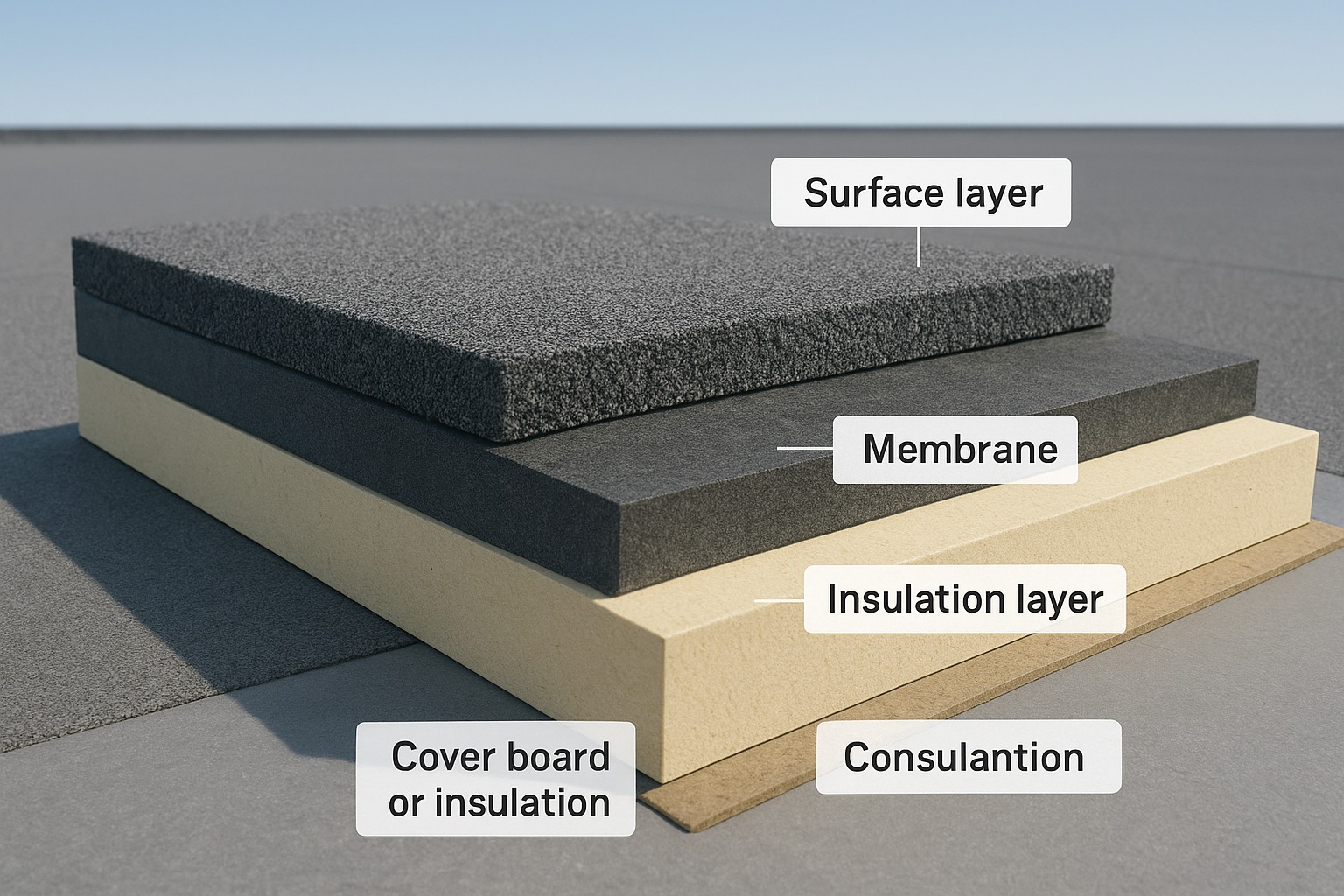
On top of the membrane, most systems finish with a surface layer such as granules, reflective coating, or a cap sheet, depending on the installation method chosen. These layers bond together to create a watertight, continuous assembly that resists water infiltration, UV degradation, and the thermal movement flat roofs experience through seasonal changes.
When all layers are properly installed and bonded, modified bitumen functions as a unified barrier rather than a collection of separate materials.
Types of modified bitumen membranes: SBS and APP
When people ask what is modified bitumen roofing, they’re often surprised to learn it comes in two distinct types, each using a different polymer that produces a different performance profile. Choosing the right one depends on your climate and how the roof gets used day to day.
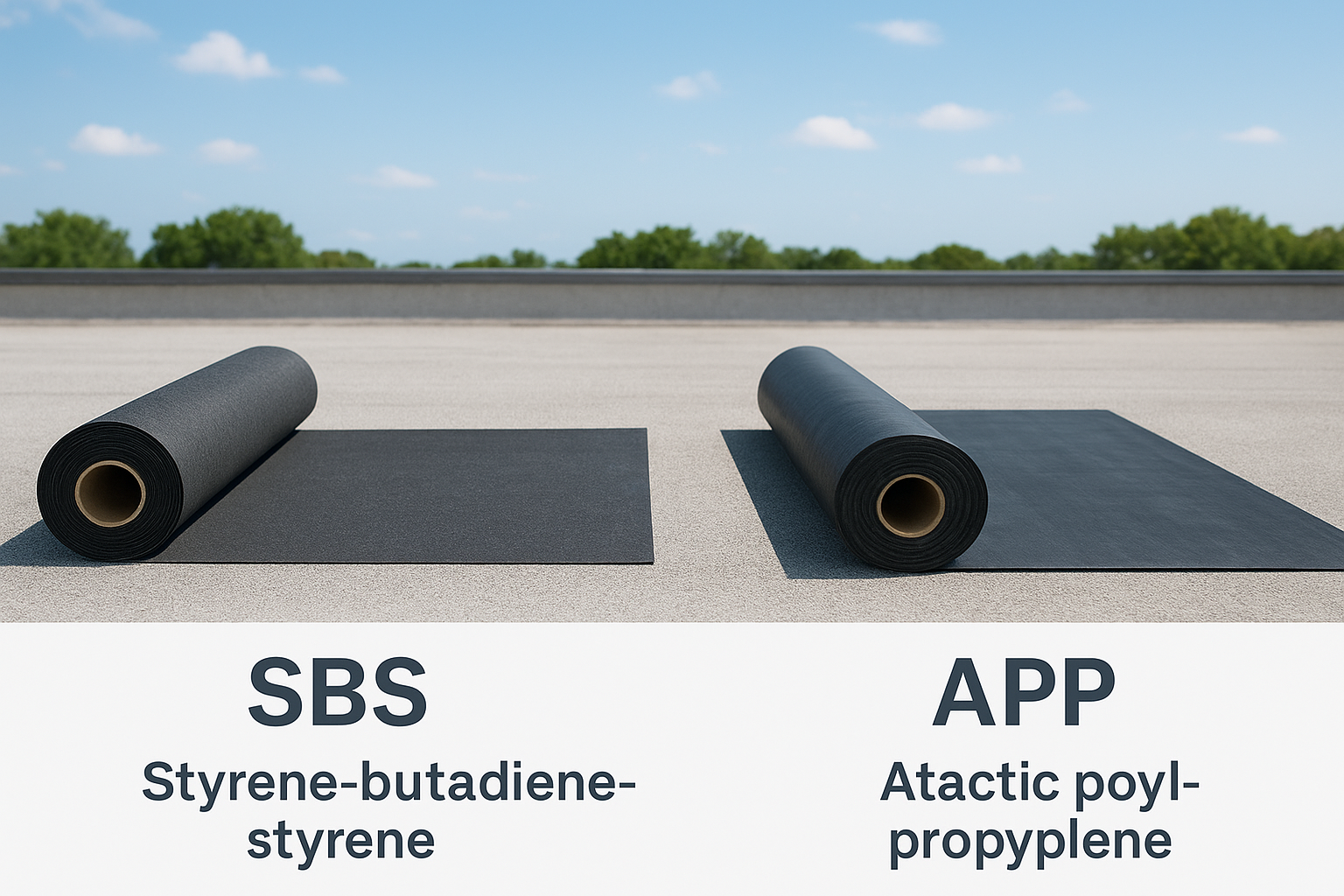
SBS: built for flexibility
SBS, which stands for styrene-butadiene-styrene, uses a rubber-based modifier that lets the membrane stretch and recover under stress. It performs especially well in colder climates where repeated freeze-thaw cycles would crack a rigid surface.
- Best for: cold and moderate climates
- Common install methods: torch-applied or cold adhesive
SBS is the better pick when your roof needs to handle movement from foot traffic, settling, or thermal expansion without cracking over time.
APP: built for heat and UV resistance
APP, or atactic polypropylene, uses a plastic-based modifier that produces a harder, more rigid membrane. This type handles high heat and UV exposure better than SBS and suits warmer climates well.
- Best for: hot, sunny climates
- Install method: torch-applied only
These membranes bond tightly during installation and create a dense surface that holds up under sustained sun exposure with minimal upkeep required between inspections.
Installation methods and what to expect on-site
When you ask what is modified bitumen roofing and how it gets installed, the answer depends on the membrane type you choose and the condition of your existing roof deck. Each method produces a strong, watertight bond, but they involve different tools, timelines, and safety considerations on-site.
Three ways contractors apply the membrane
Torch-applied installation is the most common method. A contractor uses an open-flame torch to heat the underside of the membrane, melting it directly onto the substrate. This creates a strong, fully adhered bond that performs well under heavy foot traffic and temperature movement.
Torch-applied membranes require a skilled installer, since over-heating or under-heating the membrane during application directly affects long-term performance.
Cold-adhesive installation skips the open flame entirely. Contractors brush or roll a solvent-based adhesive onto the surface, then press the membrane into place. This method suits buildings where open flames pose a fire risk. Self-adhered membranes work similarly, using a peel-and-stick backing that bonds when pressed firmly to the substrate. Expect your contractor to spend one to two days on a standard commercial roof, including prep work, membrane application, and final inspection.
Pros, cons, lifespan, and maintenance needs
If you’re weighing what is modified bitumen roofing against other flat roof options, knowing the full picture of strengths and weaknesses helps you avoid surprises after installation. This section lays out what the system delivers well, where it falls short, and how to keep it performing over time.
Strengths worth noting
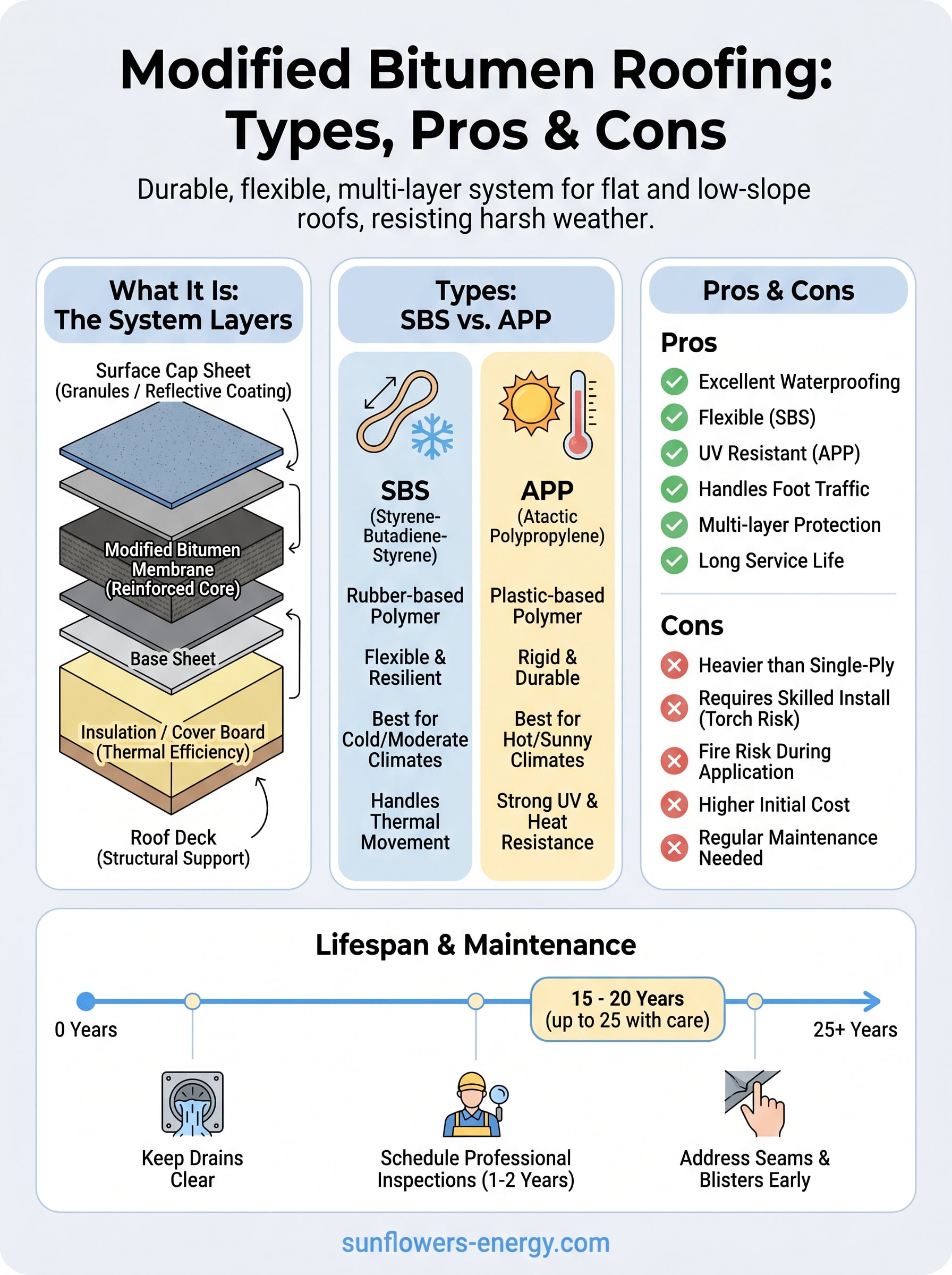
Modified bitumen offers strong waterproofing performance, UV resistance, and flexibility in one package. It tolerates foot traffic better than most single-ply systems, and its layered construction gives it a redundancy that single-layer membranes simply can’t match.
A properly installed mod bit roof handles ponding water, temperature swings, and regular rooftop access without degrading quickly.
Where it falls short
The material is heavier than single-ply alternatives like TPO or EPDM, which can matter on older structures with load limitations. Torch-applied installation also requires a certified and experienced contractor, since improper heat application during the job voids warranties and creates fire risk on-site.
Lifespan and upkeep
You can expect 15 to 20 years from a well-maintained modified bitumen roof, with some systems reaching 25 years when cared for properly. Keep drains clear, schedule professional inspections every one to two years, and address visible seam separation or blistering early to stretch the service life as far as possible.
A clear way to decide if mod bit fits
Now that you understand what is modified bitumen roofing from composition to installation, the decision comes down to three factors: roof slope, climate, and budget. If your building has a flat or low-slope roof, you’re in a region with temperature extremes, and you want a multi-layer system that handles foot traffic and standing water, modified bitumen is a strong candidate. It outperforms single-ply options in durability and redundancy, though it costs more upfront and requires a skilled installer to do the job right.
Your next step is getting a professional inspection to confirm your roof deck can support the system and to get an accurate quote. Skipping that step leads to surprises mid-project that cost more to fix than they would have to prevented. If you’re ready to move forward or just want a clear answer on your options, contact Sunflowers Energy LLC for a free on-site inspection and estimate.