
A new roof is one of the biggest investments you’ll make as a homeowner, and understanding asphalt shingle roof replacement cost before you commit is the smartest move you can make. In 2026, prices have shifted due to material supply changes, labor demand, and regional factors that directly affect what you’ll pay. Knowing current numbers helps you avoid overpaying and plan your budget with confidence.
Most homeowners will spend somewhere between $5,000 and $15,000+ on a full replacement, but that range depends heavily on your home’s square footage, the shingle grade you choose, your roof’s pitch, and where you live. A 1,200-square-foot ranch in the Midwest won’t cost the same as a steep, multi-gabled home on the East Coast. The details matter, and we’ll break all of them down.
At Sunflowers Energy LLC, we handle residential roofing installations daily, from straightforward tear-offs to complex replacements paired with solar panel systems. This guide pulls from that hands-on experience to give you real pricing per square foot, a clear breakdown of what drives costs up or down, and practical ways to get the most value from your investment. We also offer free on-site inspections and estimates, so if you want exact numbers for your specific roof, that option is always on the table.
What drives asphalt shingle roof replacement cost
Before you can plan a budget, you need to understand the specific variables that push your final number up or down. No two roofs are the same, and contractors price jobs based on a combination of factors that are unique to your home and your location. Understanding each one gives you the leverage to ask better questions when you get quotes.
Roof Size and Square Footage
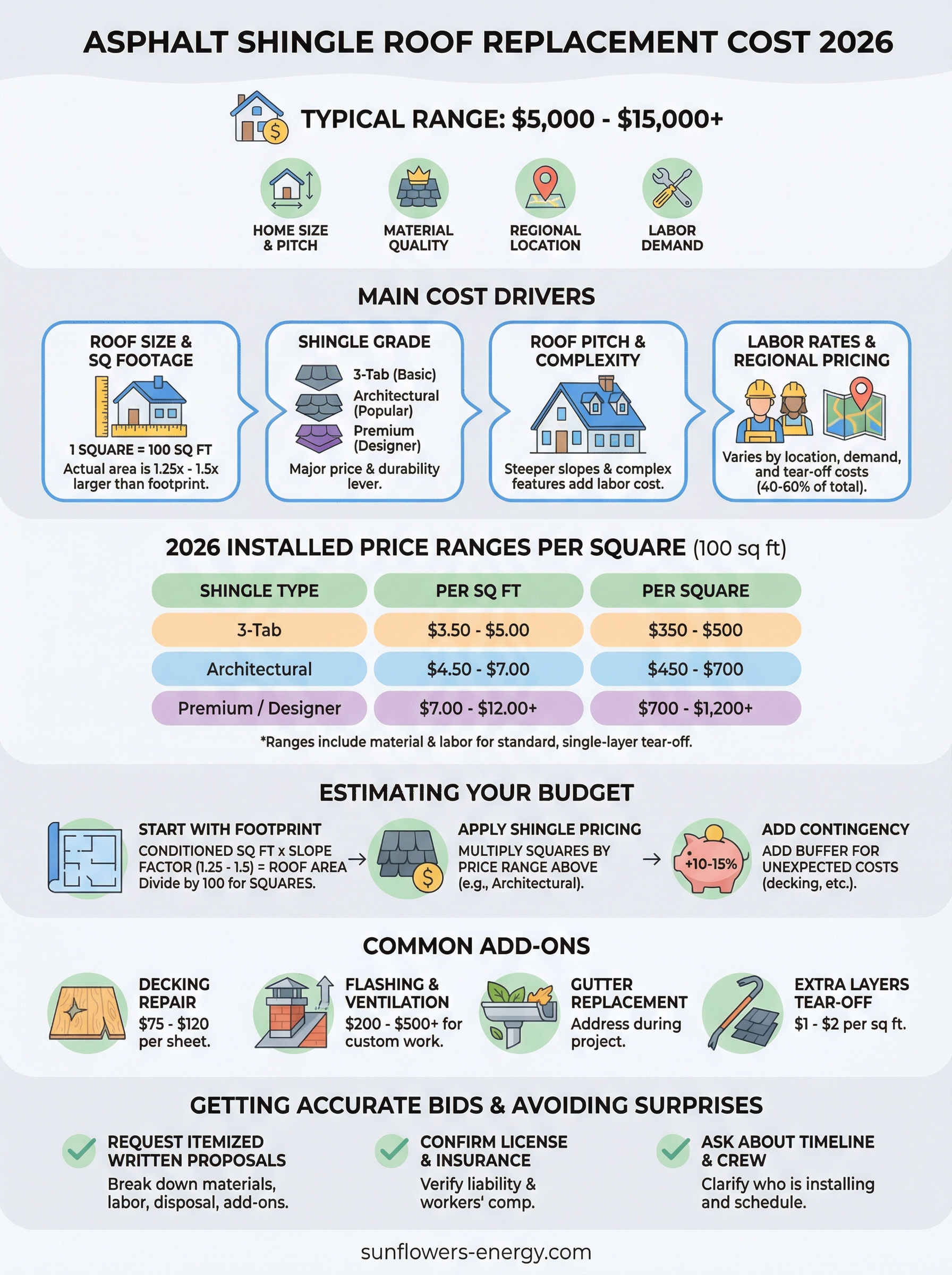
Roofing contractors measure jobs in "squares," where one square equals 100 square feet of roof surface. A 2,000-square-foot home doesn’t have a 2,000-square-foot roof because the roof surface is always larger than the floor plan once you account for slope and overhang. On a standard home, expect the actual roof area to be 1.25 to 1.5 times larger than your home’s footprint. That gap directly affects how many shingles, how much underlayment, and how many labor hours your project requires.
Shingle Grade and Material Quality
The type of shingle you choose is one of the biggest levers in controlling your asphalt shingle roof replacement cost. The three main tiers are 3-tab shingles, architectural (dimensional) shingles, and premium designer shingles, and each carries a meaningfully different price point per square.
Architectural shingles are the most popular choice for residential replacements because they balance durability, appearance, and price better than any other option on the market.
3-tab shingles are the least expensive but also the least durable, typically rated for 20 to 25 years. Architectural shingles run thicker, provide a dimensional appearance, and carry warranties of 30 years or more. Premium or designer options like impact-resistant shingles cost significantly more but can reduce your homeowner’s insurance premium, which is worth factoring into your long-term math.
Roof Pitch and Complexity
A roof’s pitch, meaning how steep it is, has a direct impact on labor cost. Steeper roofs require more safety equipment, take longer to install, and are physically harder to work on. Most contractors apply a pitch factor surcharge once the slope exceeds a 6:12 ratio (meaning the roof rises 6 inches for every 12 inches of horizontal run).
Beyond pitch, complexity adds cost. A simple gable roof with two planes and no interruptions is the cheapest to replace. Add valleys, dormers, skylights, chimneys, or multiple roof sections and the labor hours climb quickly because each transition point requires additional flashing, cutting, and sealing work.
Labor Rates and Regional Pricing
Labor typically accounts for 40 to 60 percent of a total roofing bill, which means where you live matters enormously. Contractors in the Northeast and on the West Coast charge more per square than those in the Midwest or the South, reflecting local wage rates, cost of living, and market demand. Storm seasons in certain regions also spike pricing temporarily because contractor availability tightens when many homeowners need repairs at the same time.
Tear-off and disposal costs are a related labor factor that many homeowners overlook. If your existing roof has multiple layers of old shingles, contractors must remove them before installing new ones, and that extra labor and disposal fee can add $1 to $2 per square foot to your final invoice.
2026 price ranges per square foot and per square
Real numbers help you filter out contractors who are overcharging or cutting corners. The asphalt shingle roof replacement cost in 2026 falls within a range that varies primarily by shingle grade, but you also need to account for your region and roof complexity on top of material pricing. Use these figures as a baseline, not a guarantee, because your specific conditions will move the final number.
Per Square Foot and Per Roofing Square
Most contractors quote you by the roofing square (100 sq ft) rather than per square foot, so understanding both units keeps you from getting confused when you compare bids. The table below shows current 2026 installed price ranges, meaning they include both materials and labor for a standard single-layer tear-off and replacement.
| Shingle Type | Per Sq Ft (Installed) | Per Square (Installed) |
|---|---|---|
| 3-Tab | $3.50 – $5.00 | $350 – $500 |
| Architectural | $4.50 – $7.00 | $450 – $700 |
| Premium / Designer | $7.00 – $12.00+ | $700 – $1,200+ |
These ranges assume a standard pitch roof with no significant complexity. Add pitch surcharges, extra layers to tear off, or custom flashing work and each number climbs accordingly.
On most residential replacements, architectural shingles deliver the best combination of long-term value and upfront cost, which is why they account for the majority of installations.
What These Numbers Mean for a Typical Home
A 1,500-square-foot home typically has a roof surface area between 1,700 and 2,200 square feet once slope and overhang are factored in, putting it at roughly 17 to 22 squares. At architectural shingle pricing, that home would likely run between $7,650 and $15,400 installed in 2026, depending on complexity and location.
Larger homes with steep pitches, multiple dormers, or premium shingles can easily push past $20,000 to $25,000. Knowing this range upfront lets you identify quotes that fall suspiciously low, which often signals shortcuts on materials, underlayment, or disposal that will cost you more down the road.
How to estimate your roof replacement budget
Getting a rough number before you call a contractor puts you in a much stronger position during the bidding process. You don’t need a professional measurement to build a working budget; you just need your home’s footprint, a multiplier for slope, and the per-square pricing from the section above. Running your own estimate also helps you spot bids that fall far outside the expected range, whether suspiciously low or unusually high.
Start with Your Home’s Square Footage
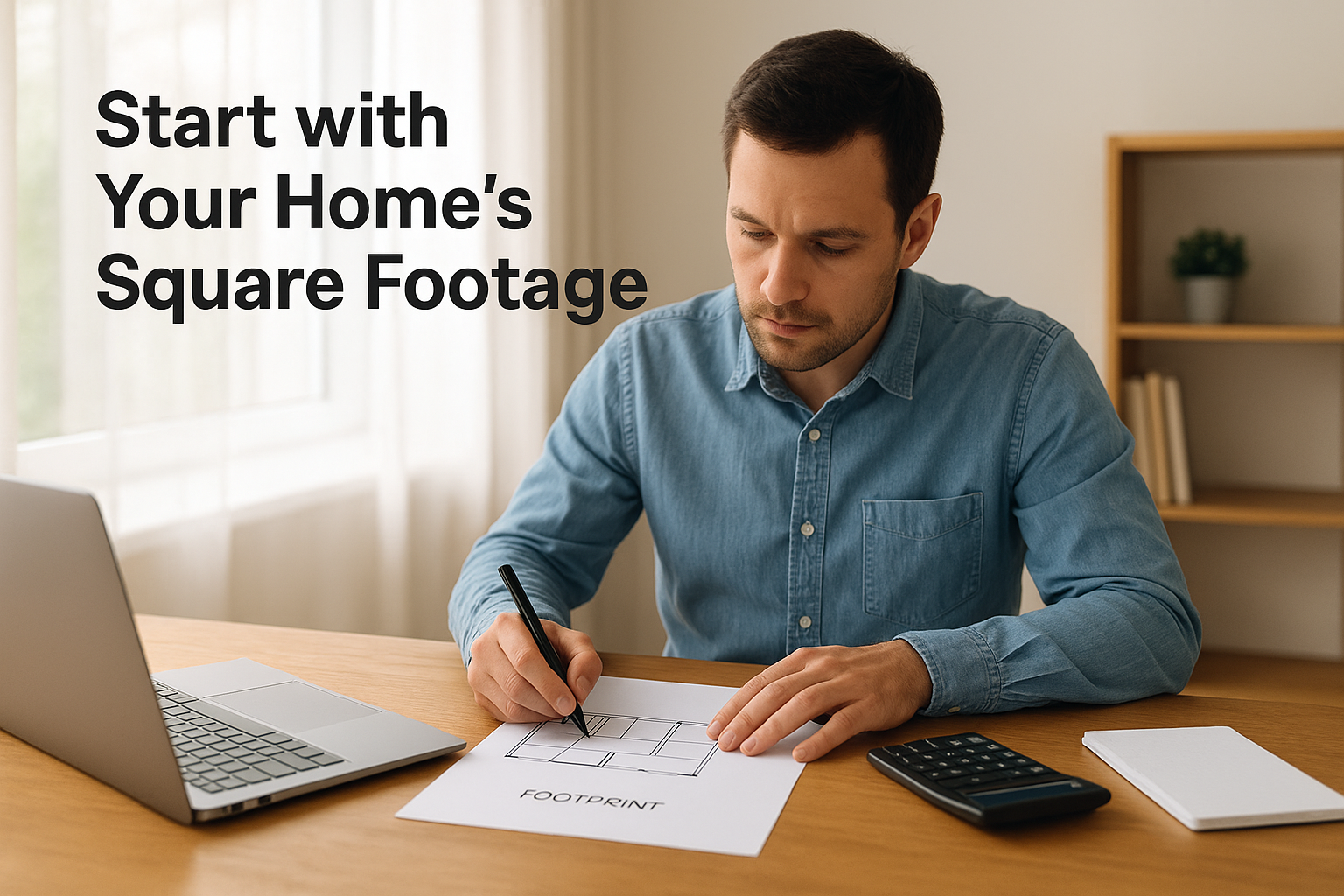
Pull up your home’s floor plan, county property records, or your purchase paperwork to find the total conditioned square footage of your home. That figure represents your footprint. From there, multiply by a slope factor: use 1.25 for a low-pitch roof, 1.35 for a moderate pitch, and 1.5 or higher for a steep roof. The result is a reasonable estimate of your actual roof surface in square feet. Divide that number by 100 to convert it to roofing squares.
For example, a 1,800-square-foot home with a moderate pitch would calculate like this:
- Footprint: 1,800 sq ft
- Slope multiplier: 1.35
- Estimated roof area: 2,430 sq ft
- Roofing squares: approximately 24
Apply Your Shingle Grade Pricing
Once you have your square count, multiply it by the installed price range for the shingle grade you want. Using the 2026 price ranges from the previous section, a 24-square roof with architectural shingles would run between $10,800 and $16,800 before any add-ons. That range gives you a realistic baseline budget to bring into contractor conversations rather than walking in without a reference point.
Running your own estimate before requesting bids gives you a benchmark that makes it much harder for a contractor to inflate pricing without you noticing.
Add a Contingency for the Unexpected
No estimate survives first contact with the actual job. Decking damage, rotted fascia, or extra shingle layers you didn’t know about can push the final asphalt shingle roof replacement cost beyond your initial projection. Add a 10 to 15 percent buffer on top of your baseline estimate to account for these surprises, and treat that buffer as part of your real budget from the start.
Common add-ons that change the final price
Your base estimate covers shingles, underlayment, labor, and tear-off on a standard job. But most real-world replacements include at least one additional line item that wasn’t part of the original quote. Knowing which add-ons are common, and roughly what they cost, keeps your final asphalt shingle roof replacement cost from catching you off guard when the contractor hands you a revised invoice.
Decking Replacement and Structural Repairs
The decking is the wooden sheathing that sits beneath your shingles, and contractors can’t inspect it fully until the old roof comes off. Rotted or damaged decking must be replaced before new shingles go down, and most contractors charge per sheet of plywood removed and replaced. Expect to pay $75 to $120 per sheet, depending on your region. A significant amount of decking damage can add several hundred dollars to your total.
Fascia and soffit repairs fall into a similar category. If your fascia boards are rotted or pulling away from the structure, replacing them at the same time as your roof makes practical sense because the alternative is paying for a return visit later.
Flashing, Ventilation, and Gutters
Flashing is the metal material that seals transitions around chimneys, skylights, vents, and valleys. Old or corroded flashing should be replaced during a full roof replacement, and most contractors include basic flashing work in their standard quote. Complex chimney flashing or custom step flashing on multiple dormers, however, often carries an additional charge of $200 to $500 or more.
Replacing flashing at the same time as your shingles costs far less than having a contractor return later to fix a leak caused by failed flashing.
Ventilation upgrades and gutter replacements are two more items that often come up during a roofing project. Ridge vents, intake vents, and attic ventilation systems directly affect how long your new shingles last by reducing heat and moisture buildup. Gutters that are damaged or undersized for your roofline are also worth addressing while the crew is already on-site, since the mobilization cost is already covered.
How to get accurate bids and avoid surprises
Getting multiple quotes is the single most effective way to protect yourself during the bidding process. Contacting at least three licensed local contractors gives you a real picture of the current market rate for your specific job, and it immediately reveals outliers on both ends of the price spectrum. A quote that comes in 30 percent below everyone else is rarely a bargain; it usually signals that something is missing from the scope.
Request Itemized Written Proposals
A verbal quote is not a real quote. When you ask contractors to bid your job, request a written proposal that breaks out material costs, labor, tear-off and disposal, and any known add-ons separately. That level of detail makes it much easier to compare bids side by side because you can see exactly where each contractor is spending your money. A contractor who refuses to provide an itemized written proposal is a contractor worth skipping.
Comparing line-by-line also lets you catch omissions that can inflate your asphalt shingle roof replacement cost after the work starts. If one bid excludes flashing replacement or disposal fees that the others include, the lower-looking number may actually be higher once those costs appear on your final invoice.
An itemized bid protects you far more than a low headline number ever will.
Confirm Licensing, Insurance, and Warranties
Before you sign anything, verify that each contractor carries current general liability insurance and workers’ compensation coverage. A roofing accident on your property can become your financial problem if the contractor isn’t properly insured. Most states publish contractor license lookups online where you can confirm an active license in a few minutes.
Manufacturer warranties and workmanship warranties are two separate things, and both matter. A manufacturer warranty covers the shingles themselves against defects, while a workmanship warranty covers the contractor’s installation. Ask each bidder to clarify the length and terms of both warranties in writing before you commit to any contract.
Ask About the Installation Timeline and Crew
Find out who will actually show up on your roof on installation day. Some contractors subcontract the work to crews they don’t directly manage, which can affect quality control. Knowing the expected project timeline and how the crew handles daily cleanup also tells you a lot about how professionally the company operates.
Next steps
You now have a clear picture of what shapes asphalt shingle roof replacement cost in 2026, from shingle grade and roof complexity to regional labor rates and common add-ons. Use the estimating method in this guide to build a realistic baseline budget before you contact a single contractor, and bring that number into every conversation you have during the bidding process. Knowing the numbers in advance shifts the entire dynamic in your favor.
Your next move is to get an accurate quote for your specific roof. At Sunflowers Energy LLC, we offer free on-site inspections and no-obligation estimates for residential roofing projects. Our team walks your roof, measures the actual surface area, identifies any decking or flashing concerns, and gives you a written, itemized proposal. You get real pricing based on your actual conditions, not a rough phone estimate that changes once work begins.