Managing a commercial property often means grappling with rising energy costs and growing sustainability expectations from tenants and corporate leadership. As property managers search for smarter solutions, many are discovering that commercial solar power can dramatically reduce monthly expenses while demonstrating real environmental responsibility. This guide sheds light on how solar technologies like photovoltaics and concentrating solar-thermal power are transforming unused rooftops into powerful assets and helping businesses achieve both financial and sustainability goals worldwide.
Table of Contents
- What Commercial Solar Power Means
- Types of Commercial Solar Systems Explained
- Steps in a Commercial Solar Installation
- Costs, Savings, and Financial Incentives
- Maintenance Needs and Common Pitfalls
Key Takeaways
| Point | Details |
|---|---|
| Commercial Solar Power Offers Cost Savings | Businesses can significantly reduce monthly energy expenses and gain predictable energy costs through solar investments. |
| Diverse Solar System Options | There are various solar systems, including PV and CSP, each suited for different business needs and energy requirements. |
| Importance of Detailed Planning | A thorough assessment and strategic planning phase are critical for successful solar installations and maximizing return on investment. |
| Need for Ongoing Maintenance | Regular maintenance and monitoring are essential to ensure optimal performance and extend the lifespan of solar systems. |
What Commercial Solar Power Means
Commercial solar power represents a transformative approach to electricity generation for businesses seeking sustainable and cost-effective energy solutions. Photovoltaic technologies enable companies to capture sunlight and convert it directly into usable electrical power, dramatically reducing operational expenses and environmental impact.
At its core, commercial solar power involves installing large-scale solar panel systems specifically designed for business premises. These systems typically feature multiple interconnected photovoltaic panels that capture solar radiation and transform it into electricity through semiconductor materials. Unlike residential installations, commercial solar setups are engineered to meet significantly higher energy demands, often covering entire rooftops or dedicated ground spaces.
The benefits of commercial solar power extend far beyond simple electricity generation. Businesses can expect substantial advantages, including:
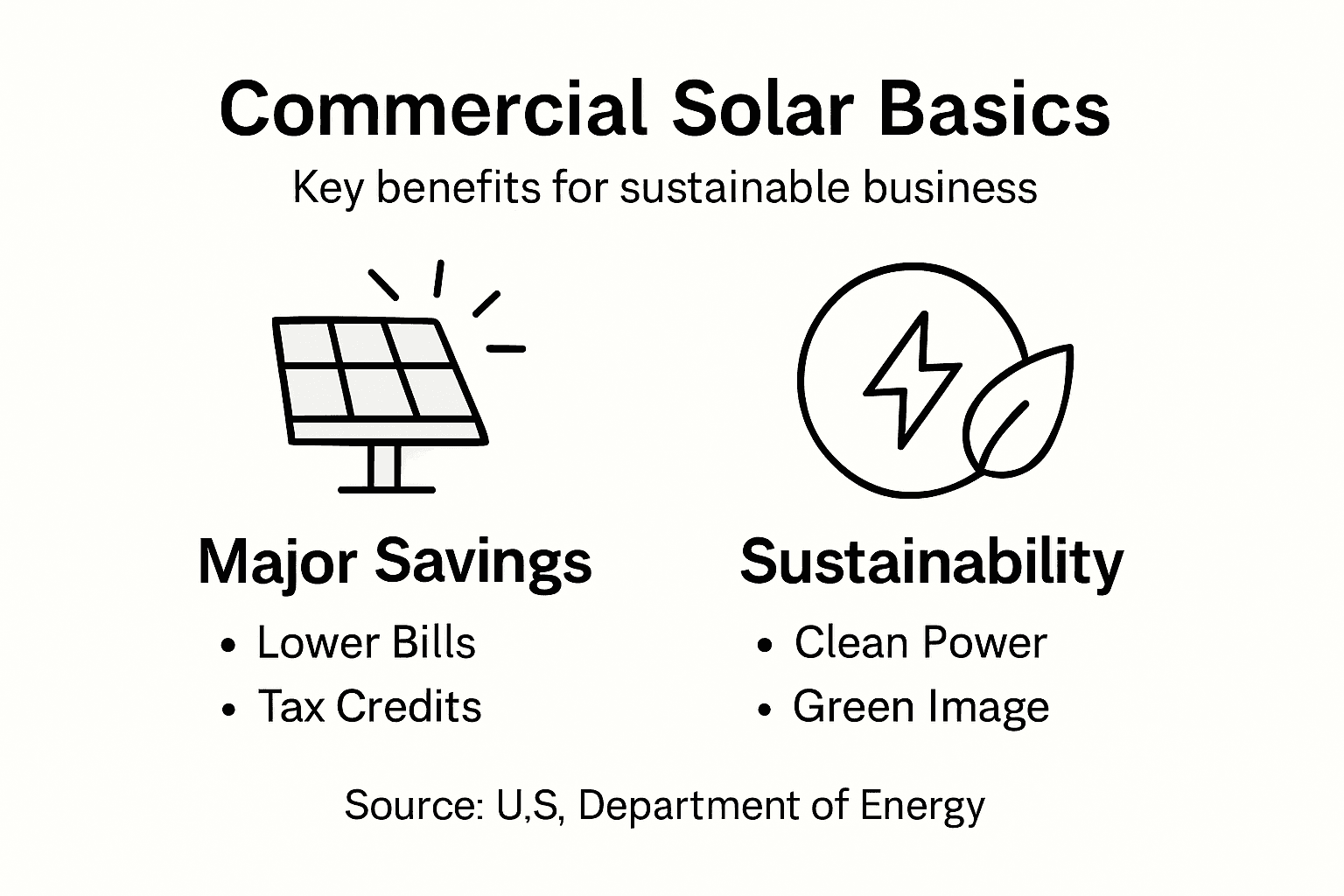
- Dramatic reduction in monthly energy expenses
- Increased energy independence from traditional power grids
- Significant improvements in corporate sustainability credentials
- Potential tax incentives and renewable energy credits
- Long-term predictable energy costs
Commercial solar represents more than an energy solution – it’s a strategic business investment in sustainability and financial efficiency.
Solar technology enables businesses to transform unused roof or ground spaces into productive energy-generating assets. By converting sunlight into electrical power, companies can offset traditional energy consumption, reduce carbon emissions, and demonstrate environmental responsibility.
Pro tip: Conduct a comprehensive energy audit before solar installation to maximize your system’s potential efficiency and return on investment.
Types of Commercial Solar Systems Explained
Commercial solar systems represent a diverse array of technologies designed to meet the complex energy needs of modern businesses. Solar energy conversion technologies primarily fall into two fundamental categories: photovoltaic (PV) systems and concentrating solar-thermal power (CSP) systems, each offering unique advantages for commercial applications.
Photovoltaic (PV) Solar Systems are the most common commercial solar solution, utilizing semiconductor panels that directly convert sunlight into electrical energy. These systems can be strategically deployed in multiple configurations:
- Rooftop solar arrays
- Ground-mounted solar installations
- Carport and parking lot solar canopies
- Building-integrated photovoltaic (BIPV) systems
Concentrating Solar-Thermal Power (CSP) Systems operate differently, using advanced mirror technologies to concentrate sunlight and generate heat, which then drives turbines to produce electricity. While less common in smaller commercial settings, these systems are particularly effective for large-scale industrial energy production.
Commercial solar technologies transform unused spaces into powerful energy-generating assets, offering businesses unprecedented opportunities for sustainability and cost management.
The selection of a solar system depends on several critical factors, including available space, energy requirements, budget constraints, and local climate conditions. Some businesses might benefit from hybrid approaches that combine multiple solar technologies to maximize energy generation and efficiency.
Pro tip: Consult with solar engineering professionals to conduct a comprehensive site assessment and determine the most appropriate solar system configuration for your specific business needs.
Here’s a comparison of main commercial solar system types and their ideal use cases:
| System Type | Energy Conversion Method | Best For | Typical Installation Scale |
|---|---|---|---|
| Photovoltaic (PV) Systems | Direct sunlight-to-electricity | Office buildings | Small to large commercial rooftops |
| Concentrating Solar-Thermal | Mirrors focus sunlight to heat | Manufacturing facilities | Large-scale, industrial sites |
| Hybrid Solar Systems | Combines PV and thermal approaches | Mixed-use business parks | Sites with diverse energy needs |
Steps in a Commercial Solar Installation
Commercial solar installations follow a structured, systematic approach designed to maximize efficiency and minimize potential complications. Project development involves multiple critical stages that transform a business’s sustainable energy vision into a functional reality.
Initial Assessment and Planning represents the foundational phase of any commercial solar project. During this crucial stage, businesses must:
- Evaluate current energy consumption patterns
- Analyze available roof or ground space
- Determine potential solar system configurations
- Assess financial feasibility and potential return on investment
- Review local zoning and electrical regulations
The design phase follows initial assessment, where solar engineers create a customized system blueprint tailored to the specific energy requirements and structural constraints of the commercial property. This involves:
- Conducting detailed structural evaluations
- Calculating precise energy generation potential
- Selecting appropriate solar panel technologies
- Developing electrical integration strategies
Successful commercial solar installations require meticulous planning, expert engineering, and a strategic approach to energy transformation.
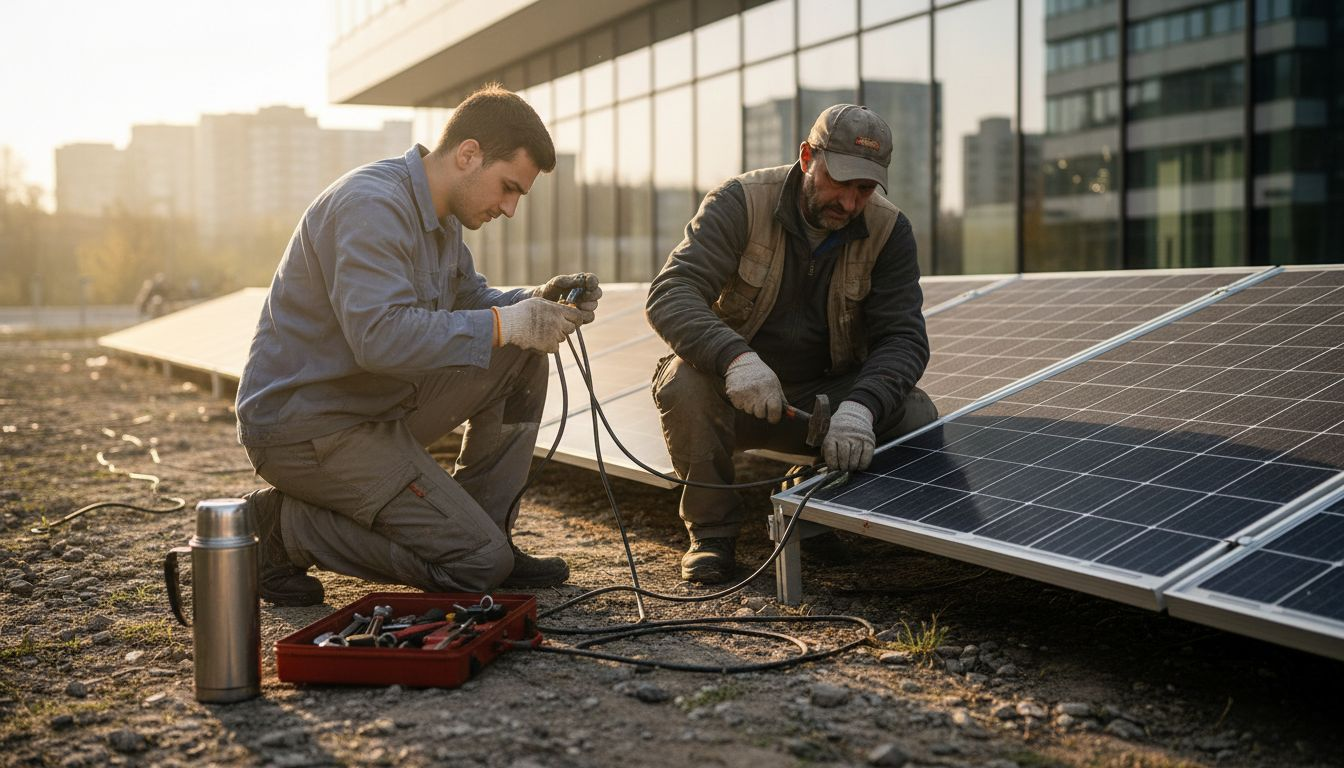
Installation and Commissioning involve the physical implementation of the solar system. Certified technicians will mount solar panels, install inverters, connect electrical systems, and perform comprehensive testing to ensure optimal performance. This phase demands precision and adherence to strict safety and technical standards.
Pro tip: Always engage certified solar professionals who can provide comprehensive documentation and guarantees throughout the installation process.
Costs, Savings, and Financial Incentives
Commercial solar investments represent a strategic approach to reducing operational expenses while simultaneously advancing sustainability goals. Commercial solar power costs have dramatically decreased over the past decade, making renewable energy more accessible than ever for businesses of all sizes.
Financing Options for commercial solar projects are diverse and flexible, allowing businesses to choose strategies that align with their financial capabilities:
- Cash purchases with direct ownership
- Solar loans with varying term lengths
- Equipment leasing arrangements
- Power Purchase Agreements (PPAs)
- Comprehensive solar financing packages
Financial Incentives play a crucial role in making solar investments more attractive. These include:
- Federal Investment Tax Credit (ITC)
- State-level solar rebates
- Accelerated depreciation benefits
- Performance-based incentives
- Local utility solar credit programs
Strategic solar investments can transform energy expenses from a recurring cost into a long-term financial asset for businesses.
The economic advantages of commercial solar extend beyond immediate tax benefits. Businesses can expect significant reductions in monthly energy expenses, increased property values, and enhanced corporate sustainability credentials. Modern solar technologies offer predictable energy costs and protection against future utility rate fluctuations.
Pro tip: Consult with a tax professional to maximize available solar investment tax credits and financial incentives specific to your business location and industry.
The following table summarizes common commercial solar financing approaches and their key business impacts:
| Financing Method | Business Ownership | Upfront Costs | Long-Term Benefit |
|---|---|---|---|
| Cash Purchase | Full | High | Maximum ROI and savings |
| Solar Loan | Full after payoff | Moderate | Own system, flexible terms |
| Lease | None | Low to none | Lower risk, stable payments |
| Power Purchase Agreement | None | Minimal | Purchase energy, not panels |
Maintenance Needs and Common Pitfalls
Commercial solar systems require strategic and consistent maintenance to ensure optimal performance and maximize long-term investment returns. Solar operations and maintenance practices are critical for preventing performance degradation and extending system lifespan.
Common Maintenance Requirements for commercial solar installations include:
- Regular panel cleaning to remove dust and debris
- Comprehensive electrical connection inspections
- Inverter performance monitoring
- Annual structural and mounting system assessments
- Thermal imaging to detect potential hot spots
Potential Pitfalls that businesses must proactively address involve several key areas:
- Neglecting routine system inspections
- Delaying minor repairs that can escalate into major issues
- Failing to monitor system performance consistently
- Inadequate documentation of maintenance activities
- Ignoring environmental factors affecting panel efficiency
Preventive maintenance is significantly more cost-effective than reactive repairs in commercial solar systems.
Modern solar technology includes advanced monitoring systems that can help businesses track performance in real-time, quickly identifying potential issues before they become significant problems. These systems provide detailed insights into energy production, system health, and potential maintenance needs.
Pro tip: Develop a comprehensive, documented maintenance schedule with professional solar technicians to ensure consistent system performance and maximize long-term energy production.
Empower Your Business with Expert Commercial Solar Solutions
Are soaring energy costs and the challenge of sustainability holding your business back? Discover how commercial solar power can radically reduce your monthly expenses while enhancing your company’s green credentials. At Sunflowers Energy, we specialize in transforming commercial rooftops and spaces into efficient solar power hubs with cutting-edge photovoltaic technology that matches the high energy demands outlined in “Commercial Solar Basics: Powering Business Sustainability.” Our experienced team ensures a smooth transition from thorough site assessments to seamless installation, all while maximizing your long-term savings and environmental impact.
Take the first step toward energy independence and financial efficiency now. Learn more about our proven commercial solar systems in 1win Brazil – Sunflowers Energy LLC A Roofing and Solar Companys and explore how our comprehensive services at Sunflowers Energy can help protect and power your business. For personalized guidance tailored to your unique energy needs, contact us today for a free onsite inspection and discover the potential savings waiting for your business.
Frequently Asked Questions
What are the benefits of commercial solar power for businesses?
Commercial solar power provides numerous benefits, including significant reductions in monthly energy costs, increased energy independence, enhanced corporate sustainability credentials, and the potential for tax incentives and renewable energy credits.
How do photovoltaic (PV) systems work in commercial setups?
PV systems use semiconductor panels to convert sunlight directly into electricity. They can be installed in various configurations, such as rooftop arrays, ground-mounted installations, and carport canopies, to meet the higher energy demands of businesses.
What are the common types of commercial solar systems?
The main types of commercial solar systems include Photovoltaic (PV) systems, which convert sunlight directly into electricity, and Concentrating Solar-Thermal Power (CSP) systems, which use mirrors to concentrate sunlight to generate heat that drives turbines for electricity production.
How can businesses maximize the efficiency of their solar installations?
To maximize efficiency, businesses should conduct a comprehensive energy audit before installation, engage certified solar professionals for design and installation, and establish a documented maintenance schedule to ensure optimal performance and prevent potential issues.
Recommended
- 7 Essential Solar Installation Tips for Businesses – Sunflowers Energy LLC A Roofing and Solar Companys
- What Is Commercial Solar and Why It Matters – Sunflowers Energy LLC A Roofing and Solar Companys
- What Is Solar Energy and Why It Matters – Sunflowers Energy LLC A Roofing and Solar Companys
- Solar Energy Efficiency Guide for Maximized Home Savings – Sunflowers Energy LLC A Roofing and Solar Companys