
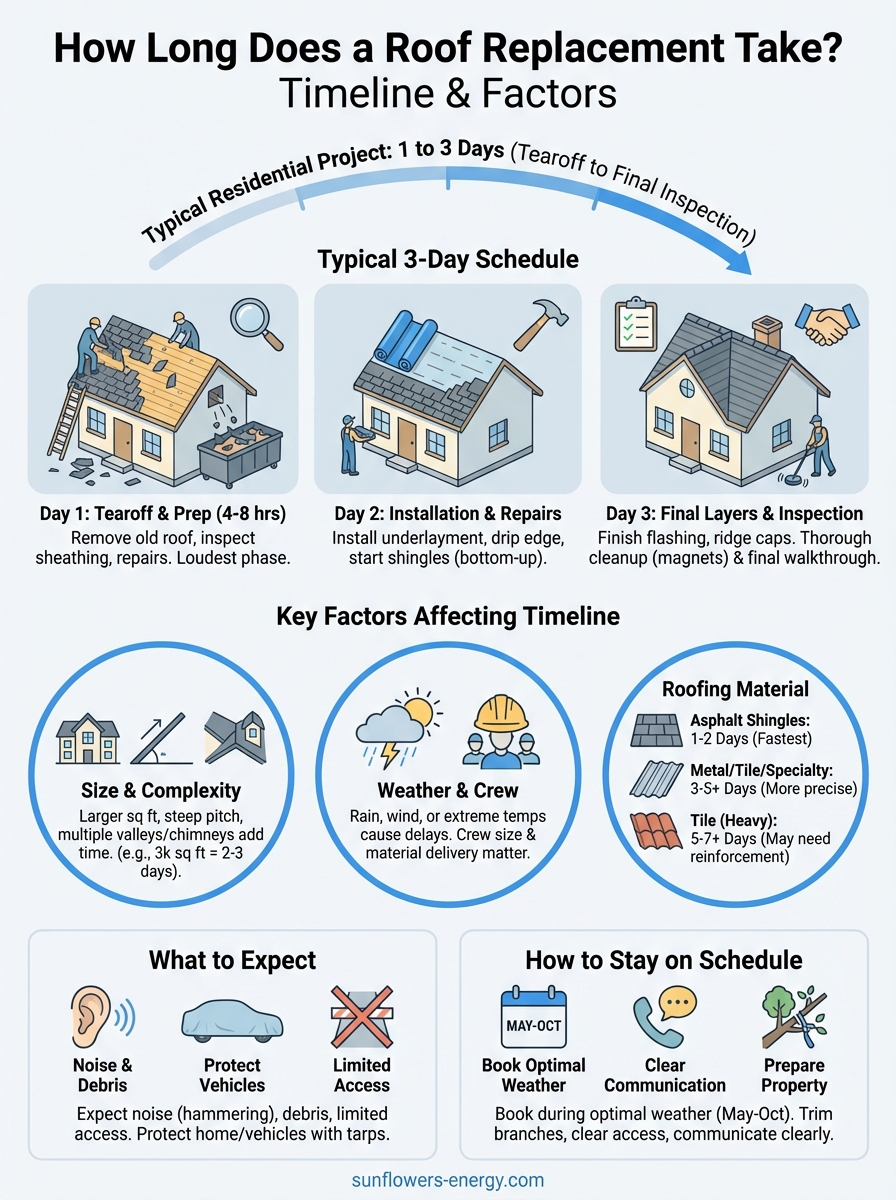
Planning a new roof means planning your life around it, arranging time off work, moving vehicles, and possibly dealing with noise and disruption. So how long does a roof replacement take? For most residential projects, you’re looking at 1 to 3 days from tearoff to final inspection.
That said, the actual timeline depends on several key variables: your home’s square footage, the roofing material you select, current weather conditions, and whether contractors discover any underlying damage once the old shingles come off. Understanding these factors upfront helps you set realistic expectations and schedule the project around your life, not the other way around.
At Sunflowers Energy LLC, we’ve handled roof replacements of all sizes across homes and commercial properties. This guide walks you through realistic timelines for different scenarios and explains exactly what can speed things up or slow them down, so you can move forward with a clear picture of what to expect.
What the typical roof replacement timeline looks like
Most standard residential roof replacements follow a predictable three-day schedule, though smaller homes sometimes wrap up in one to two days. Your contractor removes the old roof, installs new underlayment and shingles, then handles cleanup and final inspection. Each phase builds on the previous one, so delays in one stage push back everything that follows.
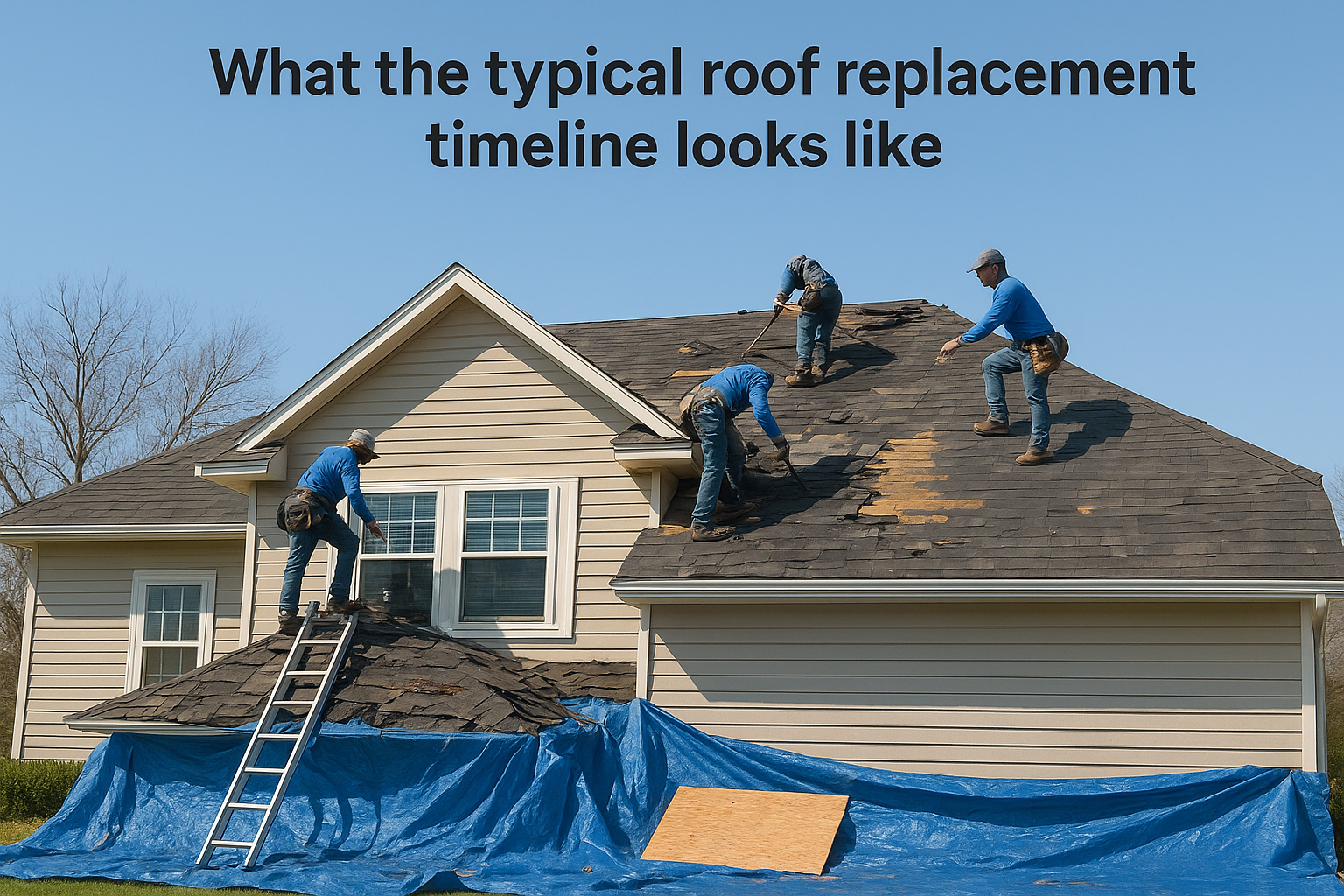
Day 1: Tearoff and preparation
Crews arrive early and start by setting up ground protection like tarps and plywood sheets around your home’s perimeter. They remove all existing shingles, flashing, and damaged underlayment, which creates the bulk of the noise and debris. This tearoff phase typically takes 4 to 8 hours depending on how many layers need removal and whether your old roof used nails or adhesive.
Once the deck is bare, the team inspects the wood sheathing for rot or damage. Soft spots or water-stained areas get replaced immediately. Contractors also check that your roof structure can support the weight of new materials, particularly if you’re upgrading from lightweight asphalt to heavier options.
Day 2: Installation and decking repairs
Day two focuses on laying the water-resistant underlayment across your entire roof deck. This synthetic or felt barrier acts as your home’s first line of defense against moisture. Crews then install drip edge along the eaves and rakes, followed by ice and water shield in vulnerable areas like valleys and around chimneys.
Shingle installation begins from the bottom edge and works upward in overlapping rows. Professional teams maintain consistent exposure (the visible portion of each shingle) and ensure proper nailing patterns. This methodical approach prevents future leaks and extends your roof’s lifespan.
Quality underlayment installation matters as much as the shingles themselves, since it provides critical backup protection during storms.
Day 3: Final layers and inspection
The final day covers ridge caps, hip shingles, and all flashing details around vents, skylights, and chimneys. Crews seal every penetration and verify that water will flow correctly off your roof. They conduct a thorough cleanup, using magnetic sweepers to collect stray nails from your driveway and yard.
Your contractor performs a final walkthrough with you, checking workmanship and answering questions about maintenance. Some jurisdictions require a building inspector to sign off before the project closes, which adds a few hours but ensures everything meets local code.
What can change the timeline
Several factors determine how long does a roof replacement take beyond the standard one-to-three-day window. Your specific project might finish faster or take additional days depending on conditions the contractor encounters once work begins.
House size and roof complexity
Square footage directly impacts completion time, with larger homes requiring proportionally more labor hours. A 1,000-square-foot ranch typically finishes in one day, while a 3,000-square-foot two-story home needs two to three full days for tearoff and installation. Complex architectural features like multiple valleys, dormers, or steep pitches slow progress because crews work more carefully around these details.
Roof pitch steepness also affects timeline. Crews navigate 4:12 or lower pitches relatively quickly, but 12:12 or steeper slopes require safety equipment and cautious movement that adds hours to each phase. Multiple chimneys, skylights, or solar panels mean more flashing work and sealing, extending your project by several hours or a full day.
Weather conditions and crew availability
Rain or high winds halt roofing work immediately, since exposed sheathing can’t get wet and workers can’t safely operate on slippery surfaces. Summer and fall offer the most predictable weather, while spring storms and winter freezes frequently delay projects by days or weeks. Your contractor reschedules when conditions turn unsafe, protecting both your home and their team.
Weather delays frustrate everyone, but attempting to work through storms compromises your roof’s long-term performance and worker safety.
Crew size and material delivery timing also shift schedules. A full six-person team completes work faster than a smaller crew, though quality matters more than speed alone.
Timeline by roofing material
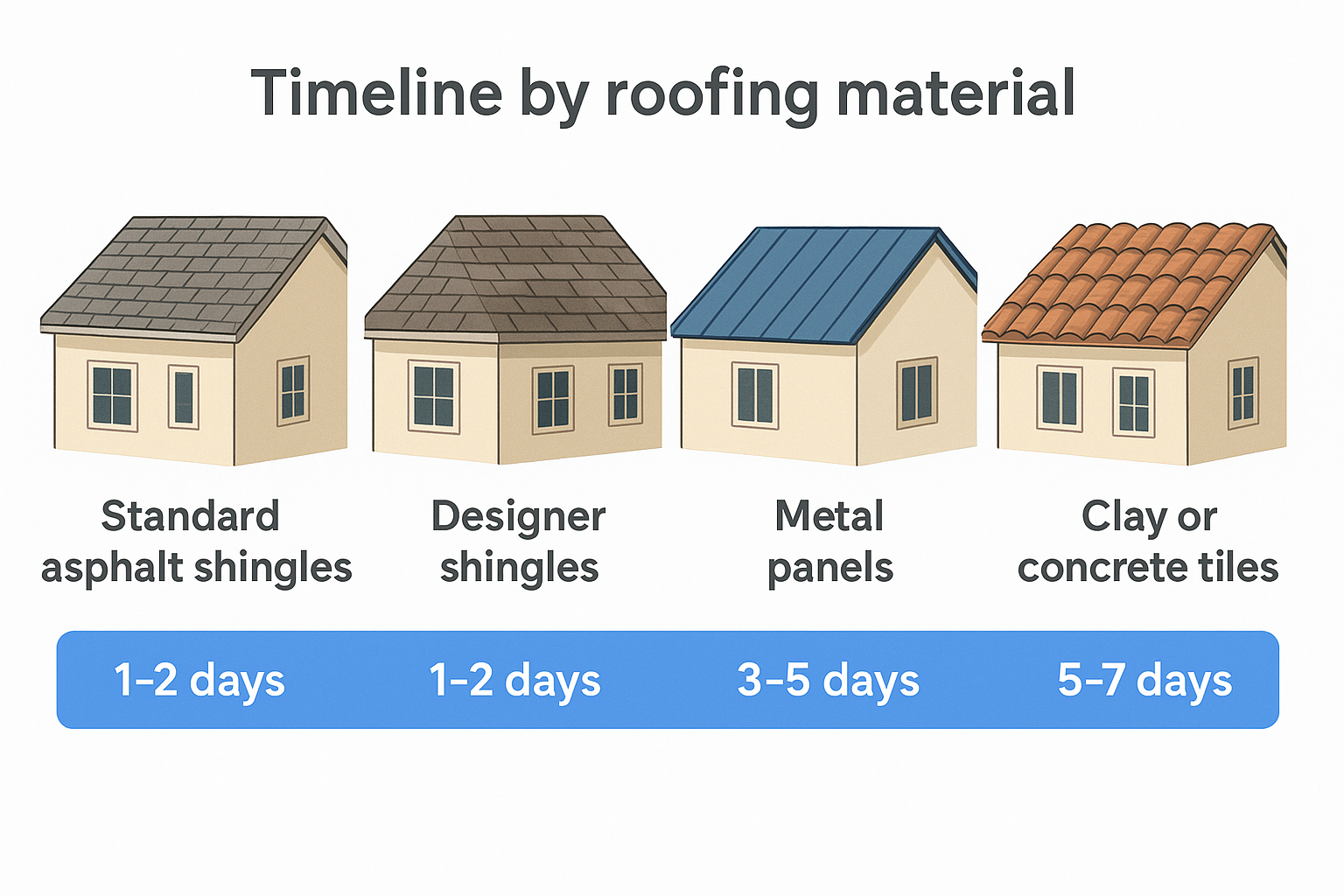
Material choice significantly affects how long does a roof replacement take, since different products require distinct installation techniques and handling procedures. Asphalt shingles move fastest because crews work with familiar materials and straightforward processes, while metal panels, tile, and specialty products demand more precision and expertise.
Standard asphalt shingles
Three-tab and architectural shingles represent the quickest installation option, typically completing in one to two days for average-sized homes. Crews cut and nail these flexible materials rapidly, adjusting around obstacles without specialized equipment. The lightweight composition also means no structural reinforcement delays before installation begins.
Designer shingles with enhanced thickness or specialized patterns add 4 to 8 hours to your timeline because installers maintain precise alignment for visual consistency. These premium asphalt products still finish faster than most alternatives, making them practical when you need your roof completed quickly without sacrificing appearance.
Metal, tile, and specialty materials
Metal roofing panels extend timelines to three to five days due to careful measurement, cutting, and fastening requirements. Installers ensure proper overlaps and seal every seam to prevent leaks, work that demands methodical attention. Standing-seam systems take longer than corrugated panels because of their complex interlocking edges.
Clay or concrete tile installations require five to seven days minimum, since each tile gets individually positioned and secured. The substantial weight often requires structural reinforcement before crews can begin, adding another day or two to your project schedule.
Material upgrades deliver longer-lasting protection, but you need realistic timelines when planning around vacations or events that can’t be postponed.
What to expect during tear-off, install, and cleanup
Understanding the day-to-day realities of how long does a roof replacement take means knowing what happens around your home during each phase. Roofing work creates noise, debris, and activity that affects your daily routine, but professional contractors minimize disruption through careful planning and safety protocols.
Noise, debris, and daily disruptions
Tearoff generates the loudest sounds as crews rip away old shingles and hammer loose stubborn flashing. Expect consistent banging and scraping from 7 or 8 a.m. until late afternoon, with brief breaks for lunch and equipment adjustments. Your walls vibrate during this phase, making it difficult to work from home or keep young children napping.
Installation produces rhythmic hammering as nail guns secure thousands of shingles to your deck. This phase runs quieter than tearoff but continues throughout the workday. Debris accumulates in dumpsters or trailers positioned in your driveway, and crews sweep regularly to prevent nails from spreading across your property.
Professional teams use magnetic rollers across your yard and driveway after cleanup to capture stray nails that standard sweeping misses.
Protecting your home and vehicles
Contractors place protective tarps over landscaping, air conditioning units, and ground-level windows before work begins. You should relocate vehicles from your driveway and garage to prevent damage from falling materials. Close all windows to keep dust and debris from entering your home, and cover attic items with plastic sheeting if your space lacks a finished ceiling.
Plan for limited driveway access during the entire project, since equipment and material staging require that space.
How to keep your roof replacement on schedule
Proactive planning prevents most timeline extensions when you understand how long does a roof replacement take and which factors you control. Your preparation decisions made weeks before installation begins determine whether your project finishes on time or faces avoidable delays.
Book during optimal weather windows
Schedule your roof replacement between May and October in most U.S. regions, when dry conditions and moderate temperatures create ideal installation environments. Contractors complete work faster during these months because they lose fewer days to rain delays and work safely without ice or extreme heat slowing progress.
Contact roofing companies three to six weeks before your preferred start date, giving them time to order materials and schedule crews without rushing. Last-minute bookings often mean waiting for the next available slot, which could push your project into less favorable weather months.
Booking during peak season means competition for crew availability, so earlier planning secures better scheduling flexibility.
Clear communication with your contractor
Confirm your contractor’s communication protocol before work starts, establishing how they’ll notify you about delays, material updates, or unexpected repairs. Daily check-ins keep you informed without creating unnecessary interruptions, and contractors appreciate clients who respect their workflow while staying engaged.
Prepare your property in advance by trimming overhanging branches, relocating outdoor furniture, and ensuring clear driveway access for delivery trucks. These simple steps eliminate delays that occur when crews arrive and can’t immediately begin work. Ask about material delivery timing and verify everything arrives before your scheduled start date, preventing idle days while teams wait for supplies.
Next steps
Understanding how long does a roof replacement take helps you plan your project with confidence and realistic expectations. Most residential roofs complete in one to three days, but your specific timeline depends on home size, material choice, weather conditions, and roof complexity. Booking during optimal weather windows and maintaining clear communication with your contractor keeps delays minimal and ensures smooth project completion from start to finish.
Start by getting quotes from experienced local contractors who can assess your roof’s current condition and provide accurate timeline estimates based on your specific property characteristics. Professional roofers walk your property, identify potential complications like hidden water damage or structural concerns, and explain how different material choices affect both installation speed and long-term performance. They also help you understand permit requirements and inspection schedules that factor into your total timeline.
Contact Sunflowers Energy LLC for your free on-site inspection and detailed timeline estimate tailored to your home’s unique needs. Our team handles residential and commercial roofing projects throughout the region, combining superior materials with efficient installation practices that respect your schedule and protect your property investment.