
Most roof problems don’t announce themselves. By the time you notice a water stain on your ceiling or shingles scattered across your yard, the damage has already been building for months, sometimes years. That’s exactly why knowing how often should you get a roof inspection matters more than most homeowners realize. A routine check catches small issues like cracked flashing or lifted shingles before they turn into expensive repairs or full replacements.
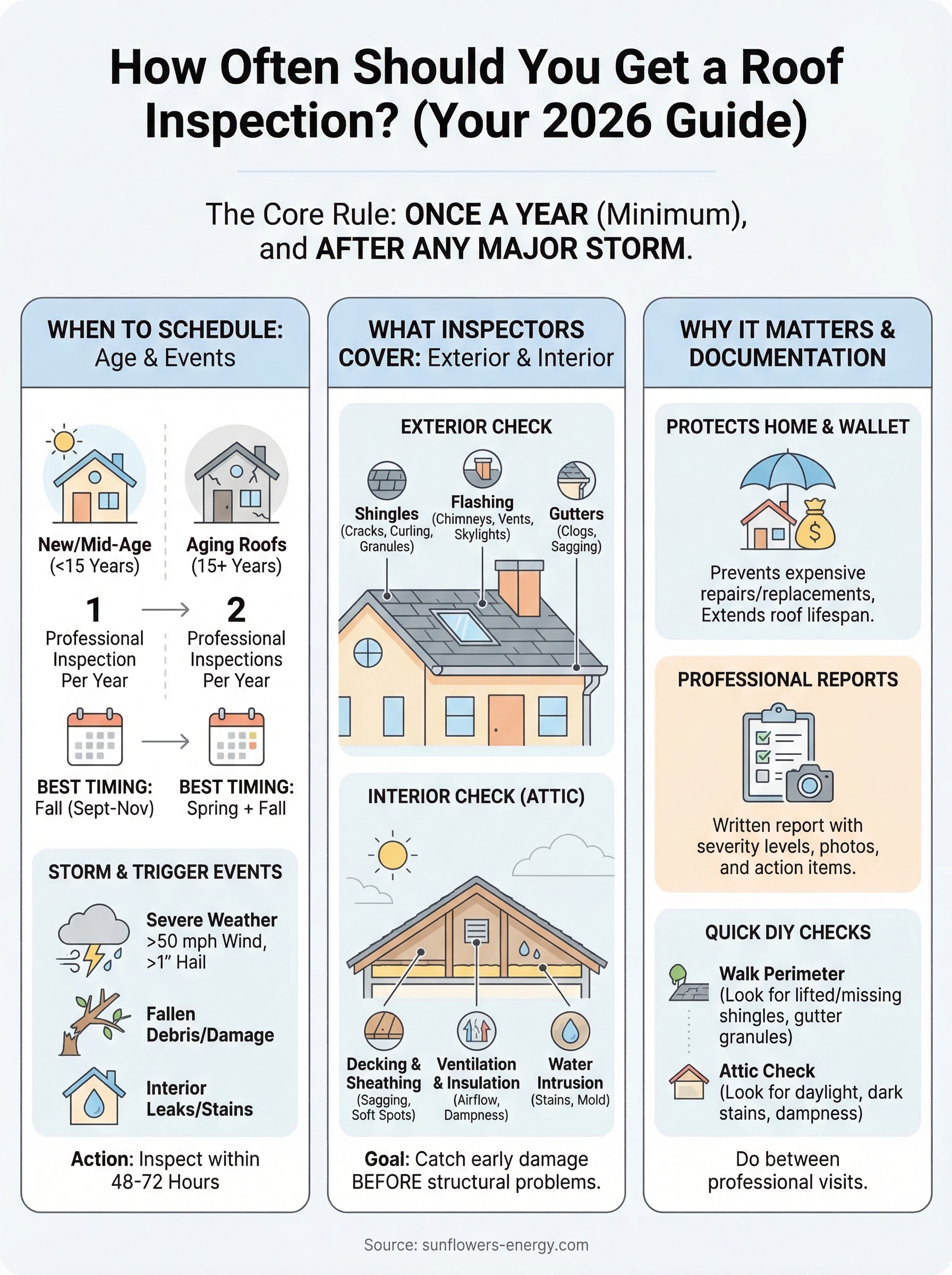
The short answer? At least once a year, and after any major storm. But the real answer depends on your roof’s age, material, local weather patterns, and whether you’ve had previous damage. At Sunflowers Energy LLC, we inspect roofs daily across residential and commercial properties, and we see firsthand how a proactive inspection schedule protects both your home and your wallet.
This guide breaks down exactly when and how often to schedule inspections, what professionals look for during each one, and the warning signs that mean you shouldn’t wait. Whether your roof is brand new or pushing past its 15-year mark, you’ll walk away with a clear, actionable plan to keep it in top shape.
What a roof inspection covers
A professional roof inspection is more than a quick walk-around. Trained inspectors examine every major component of your roofing system from the outside in, and they know what early-stage damage looks like before it becomes a structural problem. Understanding what gets checked helps you ask better questions and verify that you’re actually getting a thorough job.
The exterior: shingles, flashing, and gutters
The exterior is where most visible damage starts. Your inspector checks every shingle for cracking, curling, blistering, or missing granules, which signal that the protective layer is breaking down. They also examine flashing around chimneys, skylights, and vents, since flashing failures are one of the most common causes of interior leaks.
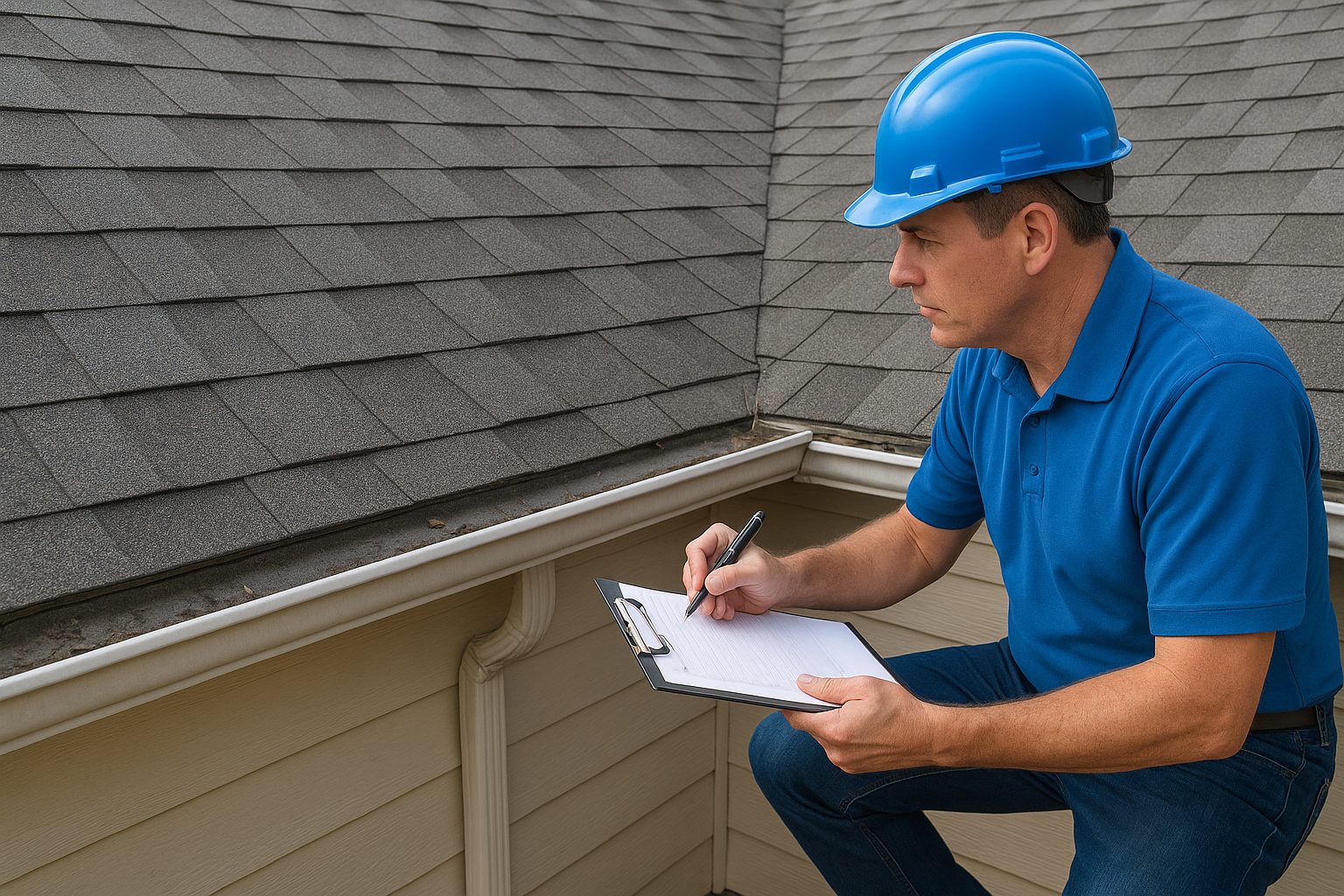
Beyond the surface material, gutters and downspouts get a close look too. Clogged or sagging gutters cause water to back up under the roofline and accelerate wood rot along the fascia boards. Your inspector will also scan the roof’s edge, soffit, and any penetrations for signs of water intrusion or pest activity.
Flashing failures and clogged gutters together account for a large share of preventable water damage, so never skip the exterior check even if the shingles look fine from the street.
The interior: attic and structural components
Many homeowners overlook the attic, but it tells inspectors a lot about how well your roof is actually performing. A professional enters the attic space to check for daylight coming through the decking, signs of moisture or mold, and the condition of the insulation and ventilation system. Poor ventilation traps heat and moisture, which shortens your shingles’ lifespan from the inside out.
Structural integrity matters just as much as surface condition. Sagging rafters, soft sheathing, or water-stained wood in the attic confirm that moisture has already compromised the decking beneath your shingles. Catching this early prevents a simple repair from turning into a full deck replacement.
What the inspector documents
After a thorough inspection, you should receive a written report that clearly lists every finding, its severity level, and recommended next steps. A solid report separates urgent repairs from items to monitor over time. Knowing how often should you get a roof inspection also becomes easier when you can compare findings across multiple reports. Here is what a basic inspection report typically covers:
| Item Inspected | Condition Found | Recommended Action | Priority |
|---|---|---|---|
| Shingles | 3 cracked, 1 missing | Replace affected shingles | High |
| Flashing (chimney) | Minor lifting | Re-seal and secure | Medium |
| Gutters | Debris buildup | Clean within 30 days | Low |
| Attic ventilation | Adequate airflow | Monitor annually | None |
| Decking/sheathing | No soft spots detected | No action needed | None |
Keeping a dated copy of each report lets you track your roof’s condition over time and gives you solid documentation to support insurance claims if storm damage ever occurs.
Set your inspection schedule
Building a consistent inspection schedule keeps you ahead of damage instead of reacting to it. Most roofing professionals recommend one professional inspection per year as a baseline, and that applies to nearly every home regardless of location. When you ask how often should you get a roof inspection, roof age and material type are the two factors that most directly shape your answer.
New and mid-age roofs (under 15 years)
If your roof is under 15 years old and was installed correctly, one professional inspection per year is typically enough to catch minor issues before they grow. Schedule it in late fall, between September and November, so you have time to complete any repairs before freezing temperatures make exterior work difficult. A fall timing also means your roof enters winter in its best possible condition, which is the season that punishes weak spots the hardest.
Scheduling your annual inspection in fall gives you the best window to finish repairs before cold weather locks you out of exterior work for months.
Aging roofs (15 years and older)
Older roofs need more attention because material breakdown accelerates significantly past the 15-year mark, even on well-maintained surfaces. Move up to two professional inspections per year, one in spring to assess any winter damage and one in fall before temperatures drop again. Use this table as a quick reference to lock in your schedule:
| Roof Age | Inspections Per Year | Best Timing |
|---|---|---|
| Under 15 years | 1 | Fall (Sept-Nov) |
| 15 to 20 years | 2 | Spring + Fall |
| Near end of lifespan | 2+ | Every 6 months |
Logging each inspection date and its findings in a simple home maintenance calendar helps you spot patterns over time and gives you clear documentation if you ever need to file an insurance claim.
Inspect after storms and other triggers
Annual inspections set your baseline, but specific events should push you to call an inspector outside your regular schedule. Storms, fallen debris, and even nearby construction can damage your roof in ways that aren’t visible from the ground. Waiting until your next annual visit after one of these events risks turning a small, fixable problem into a much larger repair.
After severe weather
A major storm is the clearest trigger for an unscheduled inspection. High winds can lift shingle edges and loosen flashing, while hail leaves dents and cracks that strip away granules and expose the underlayer beneath. After any storm that brings winds above 50 mph, hail larger than an inch, or heavy snow accumulation, schedule a professional inspection within 48 to 72 hours if possible.
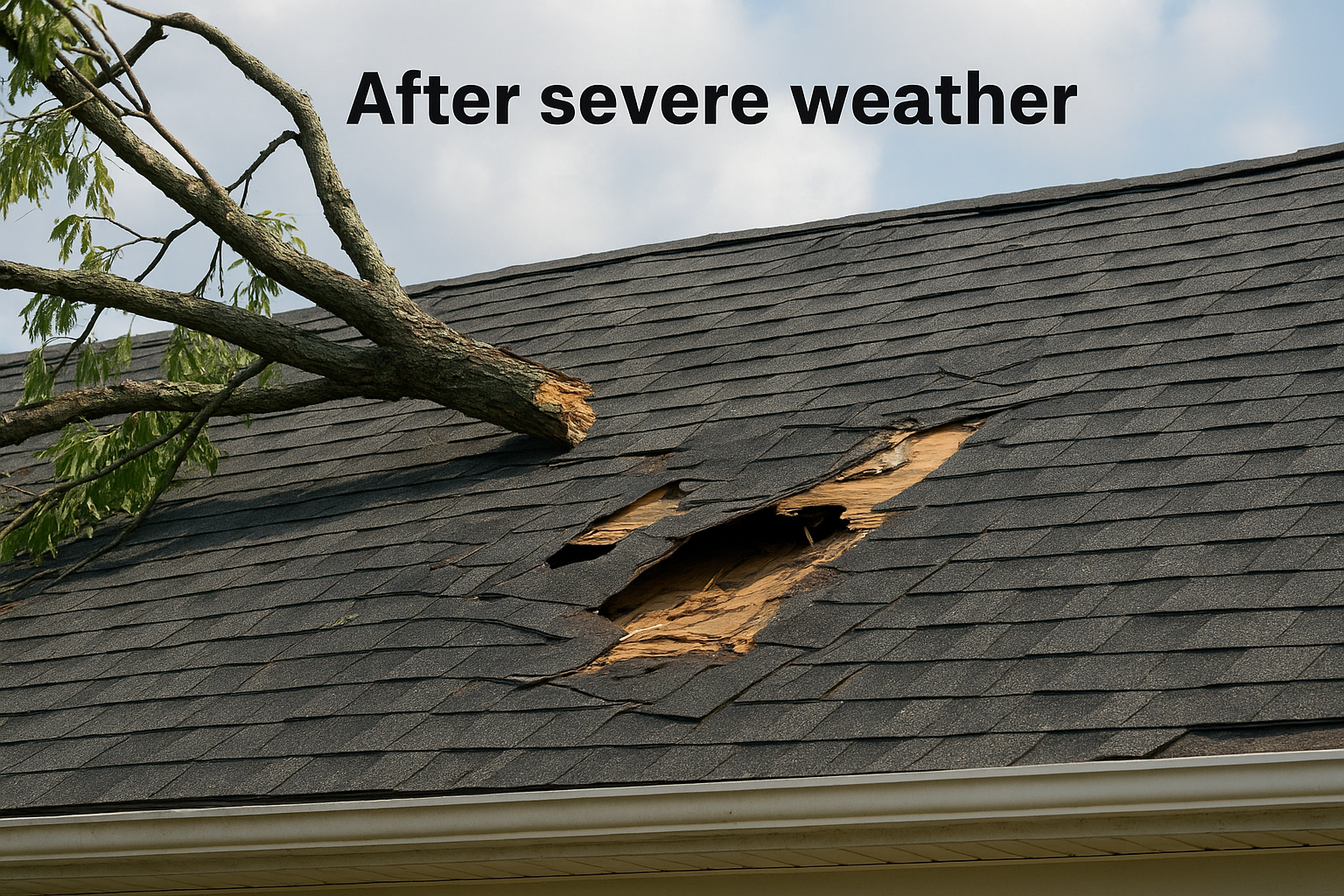
Getting an inspection on record immediately after storm damage strengthens your insurance claim and prevents adjusters from attributing pre-existing wear to the storm event.
Other triggers that call for an unscheduled inspection
Storm damage gets most of the attention, but several non-weather events also warrant an inspection before your next scheduled visit. Knowing how often should you get a roof inspection means recognizing these situations as soon as they arise. Here are the most common triggers to watch for:
- Large tree branch falls on or near the roofline
- Sudden spike in energy bills that suggests compromised insulation or ventilation
- Interior water stains appear on ceilings or walls
- Missing or visibly damaged shingles spotted from the ground after any event
- Recent purchase of a home where inspection records are unavailable
Each of these situations puts your roof at risk for hidden damage that only a trained inspector will catch. Responding quickly limits the scope of any needed repairs and keeps your documentation current for future insurance or resale purposes.
Do quick DIY checks between visits
Professional inspections give you the full picture, but you can catch early warning signs yourself between scheduled visits without ever stepping on the roof. These ground-level and interior checks take less than 30 minutes and help you decide whether something needs a professional’s attention sooner than planned. Knowing how often should you get a roof inspection also means knowing when to act before your next scheduled visit.
Walk the perimeter from the ground
Start outside with a pair of binoculars and walk the full perimeter of your home, scanning the roofline from multiple angles. You’re looking for shingles that appear lifted, buckled, or missing entirely, and any areas where the roofline sags or dips. Pay close attention to the flashing around chimneys, vents, and skylights, since those are the spots most likely to show visible gaps or rust before problems spread inward.
If you spot anything unusual from the ground, photograph it with your phone and send it to your roofer immediately rather than waiting for your next annual visit.
Check your gutters at the same time. Granules collecting in the gutter channels signal that your shingles are shedding their protective coating, which is an early sign of accelerated aging. Use this quick checklist each time you do a ground-level walkthrough:
- Missing or visibly cracked shingles
- Lifted flashing along any roof penetration
- Sagging sections along the roofline or ridge
- Granule buildup in gutters or downspouts
- Moss or algae growth on the surface
Check inside your home
Your attic and ceilings reveal problems that the exterior won’t show yet. Every few months, step into your attic with a flashlight and look for any daylight coming through the decking boards, damp insulation, or dark water stains on the wood. Inside your living spaces, scan ceilings and upper walls for discoloration, bubbling paint, or soft drywall, all of which point to active moisture intrusion that needs immediate attention.
Choose the right inspector and document results
Knowing how often should you get a roof inspection only gets you halfway there. Who performs the inspection and how you record the results matter just as much as the frequency. A thorough inspector combined with organized documentation gives you a complete picture of your roof’s health over time.
What to look for in a roofing inspector
Not every roofer who offers inspections brings the same level of knowledge. Licensed, insured contractors with verifiable local experience are your safest choice, since they understand the regional weather patterns and building codes that affect your specific area. Ask directly whether the inspection covers both the exterior surface and the attic interior, because a check that skips the attic misses half the picture.
Verify that your inspector carries both general liability insurance and workers’ compensation before anyone sets foot on your roof.
References from previous customers and a clear written scope of work before the inspection starts are also strong indicators of a professional operation. Avoid any contractor who quotes repairs aggressively during a first visit without providing a written inspection report to back up their recommendations.
How to document inspection results
Keeping organized records turns each inspection into a useful data point rather than a forgotten service call. Request a written report after every visit, and store it alongside your home maintenance records in a dedicated folder, either physical or digital. This documentation becomes critical when filing an insurance claim or listing your home for sale.
Use this simple template to log each inspection:
| Date | Inspector Name | License Number | Key Findings | Repairs Completed | Next Scheduled Visit |
|---|---|---|---|---|---|
| MM/DD/YYYY | Name | License # | Summary | Yes / No / Pending | MM/DD/YYYY |
Photographing any flagged areas yourself after the inspector points them out adds an extra layer of evidence that supports both repair quotes and future insurance claims.
Next steps for your roof
You now have a clear answer to how often should you get a roof inspection: once a year at minimum, twice a year for roofs over 15 years old, and after any significant storm or trigger event. Your next move is to put that schedule on the calendar today rather than waiting until something goes wrong.
Start by checking the date of your last professional inspection. If it’s been more than 12 months, or if you can’t find any record of one, schedule an inspection this week. Pull out your home maintenance folder and set a recurring reminder for fall each year so the appointment never slips through the cracks.
When you’re ready to book a thorough inspection or address any damage you’ve already spotted, get a free roof inspection from Sunflowers Energy LLC and receive a clear, written assessment with no obligation attached.

One Response