How to choose solar panels for your home in 2026
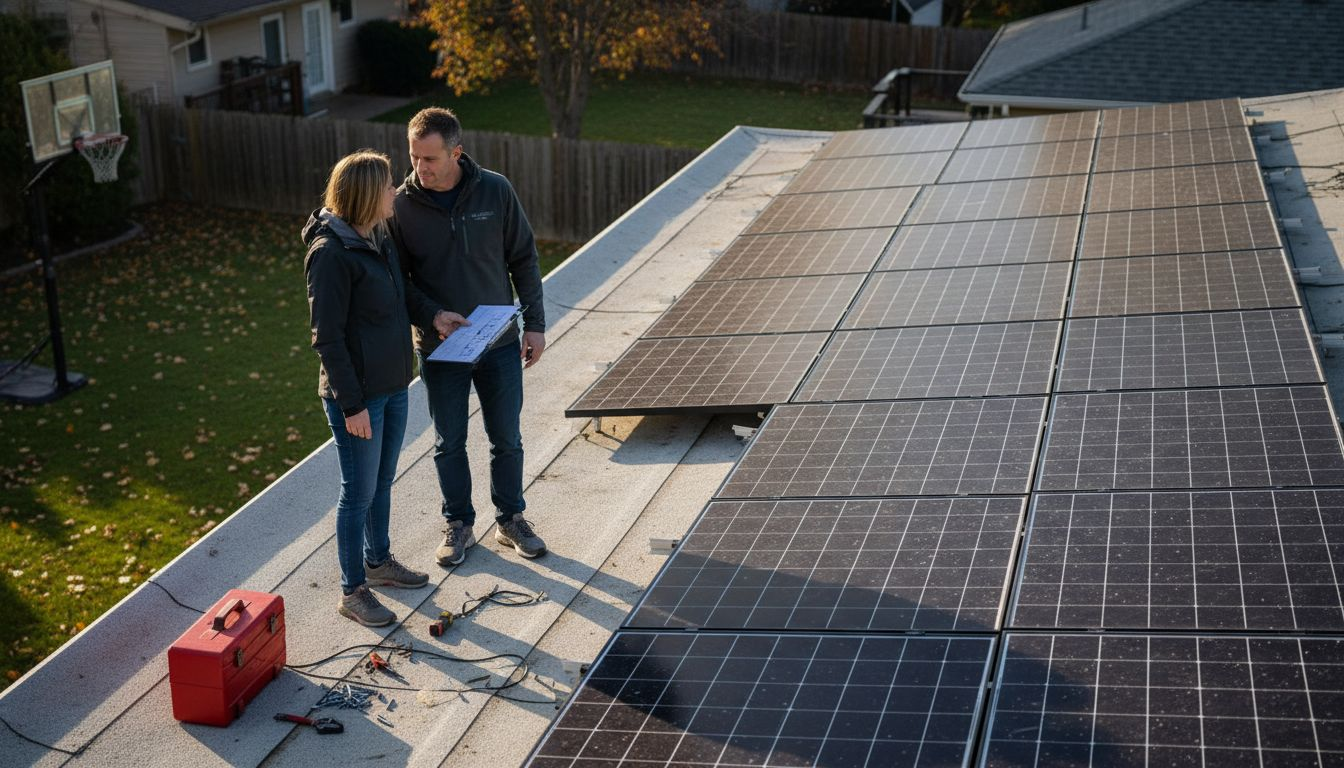
Selecting the right solar panels can save thousands in energy costs, yet many homeowners and property managers make costly mistakes during the selection process. Poor choices lead to efficiency losses exceeding 20%, unexpected installation delays, and reduced return on investment. This guide delivers actionable criteria and step-by-step advice to confidently choose solar panels that maximize energy production, fit your budget, and meet your property’s unique requirements in 2026.
Table of Contents
- Understanding Solar Panel Types And Efficiency
- Evaluating Property And Environmental Factors
- Cost Considerations And Expected ROI
- Installation Prerequisites And Regulatory Compliance
- Common Mistakes And Troubleshooting Tips
- Maintenance And Longevity For Maximizing Performance
- Expected Results And How To Measure Success
- How Sunflowers Energy Can Help You Choose And Install Solar Panels
- Frequently Asked Questions
Key takeaways
| Point | Details |
|---|---|
| Panel type matters | Monocrystalline, polycrystalline, and thin-film panels differ significantly in efficiency, cost, and ideal applications. |
| Property factors impact performance | Roof orientation, shading, structural capacity, and climate conditions directly affect solar output and panel selection. |
| Balance cost with ROI | Higher efficiency panels cost more upfront but require fewer units and deliver faster payback periods. |
| Compliance prevents delays | Proper permits, structural assessments, and code compliance avoid fines and project setbacks. |
| Maintenance extends lifespan | Regular cleaning and inspections reduce power losses by up to 5% and extend system life beyond 25 years. |
Understanding solar panel types and efficiency
Choosing the right panel type establishes the foundation for your entire solar investment. Each technology offers distinct advantages depending on your property constraints, budget, and performance goals.
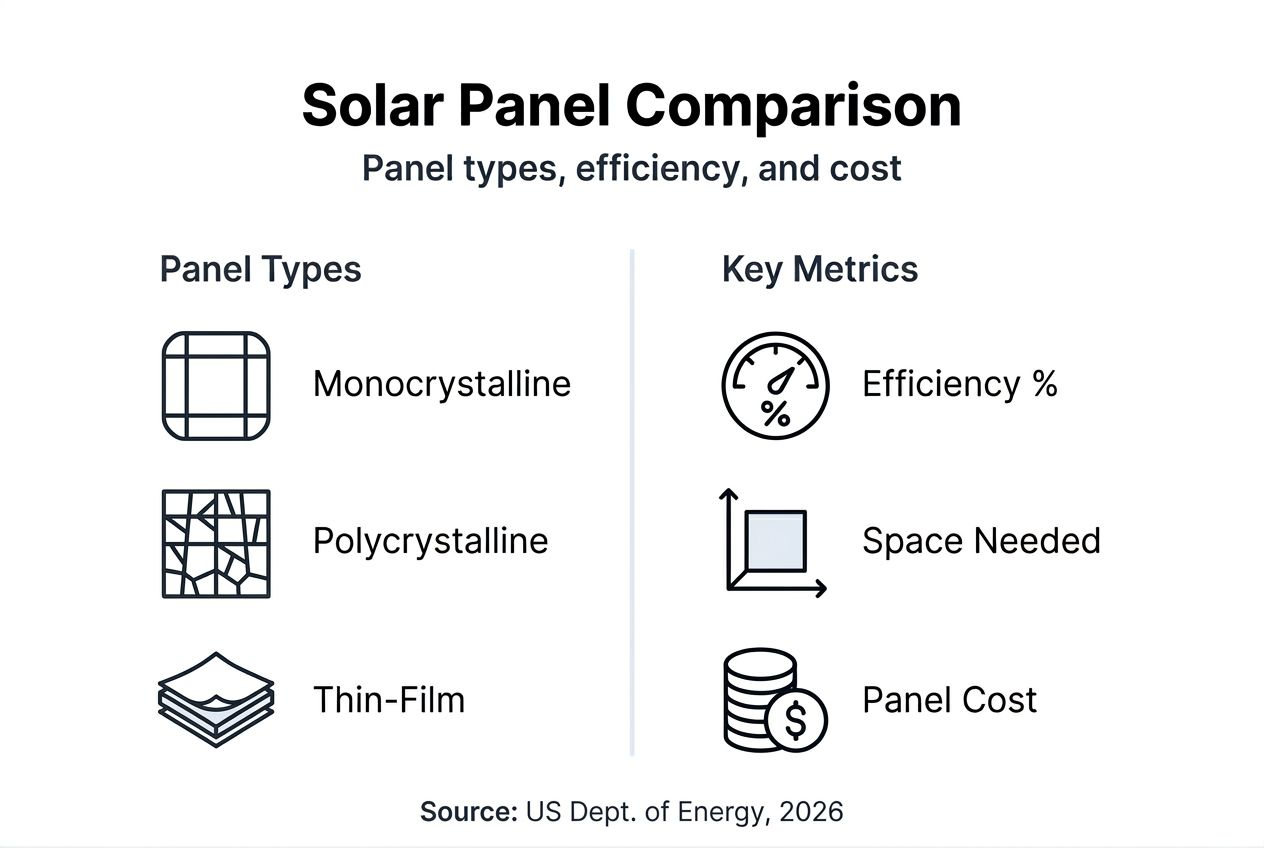
Monocrystalline panels offer 20-22% efficiency with premium pricing, making them ideal for properties with limited roof space where maximum output per square foot matters. Polycrystalline panels deliver moderate efficiency at lower costs, suitable for larger roofs with flexible budgets. Thin-film panels provide 11-13% efficiency but offer exceptional flexibility for irregular roof shapes or specialized applications.
Space constraints often dictate panel selection more than budget alone. A compact urban roof may require monocrystalline panels to generate sufficient power, while a sprawling commercial building can leverage polycrystalline panels for cost savings without sacrificing total energy production.
| Panel Type | Efficiency Range | Cost Level | Best For | Durability |
|---|---|---|---|---|
| Monocrystalline | 20-22% | High | Limited roof space, maximum output | 25-30 years |
| Polycrystalline | 15-17% | Medium | Larger roofs, budget-conscious projects | 20-25 years |
| Thin-Film | 11-13% | Low | Irregular surfaces, flexible installations | 15-20 years |
Key factors when comparing solar panel types explained:
- Temperature coefficient: How performance drops in heat
- Warranty coverage: Power output guarantees over decades
- Aesthetic appearance: Black monocrystalline vs blue polycrystalline
- Weight considerations: Structural load on existing roofs
Pro Tip: Calculate total system cost by dividing panel price by efficiency rating, not just comparing sticker prices. A $300 panel at 22% efficiency delivers better value than a $200 panel at 15% efficiency when you account for installation costs per watt.
Evaluating property and environmental factors
Your building’s specific conditions determine which panels perform optimally and whether modifications are necessary before installation. Ignoring these factors causes performance shortfalls that no amount of panel quality can overcome.
Roof orientation and tilt angle dramatically impact energy capture. South-facing roofs in the Northern Hemisphere maximize annual production, while east or west orientations reduce output by 15-20%. Flat roofs require mounting systems to achieve optimal tilt angles, adding installation complexity and cost.
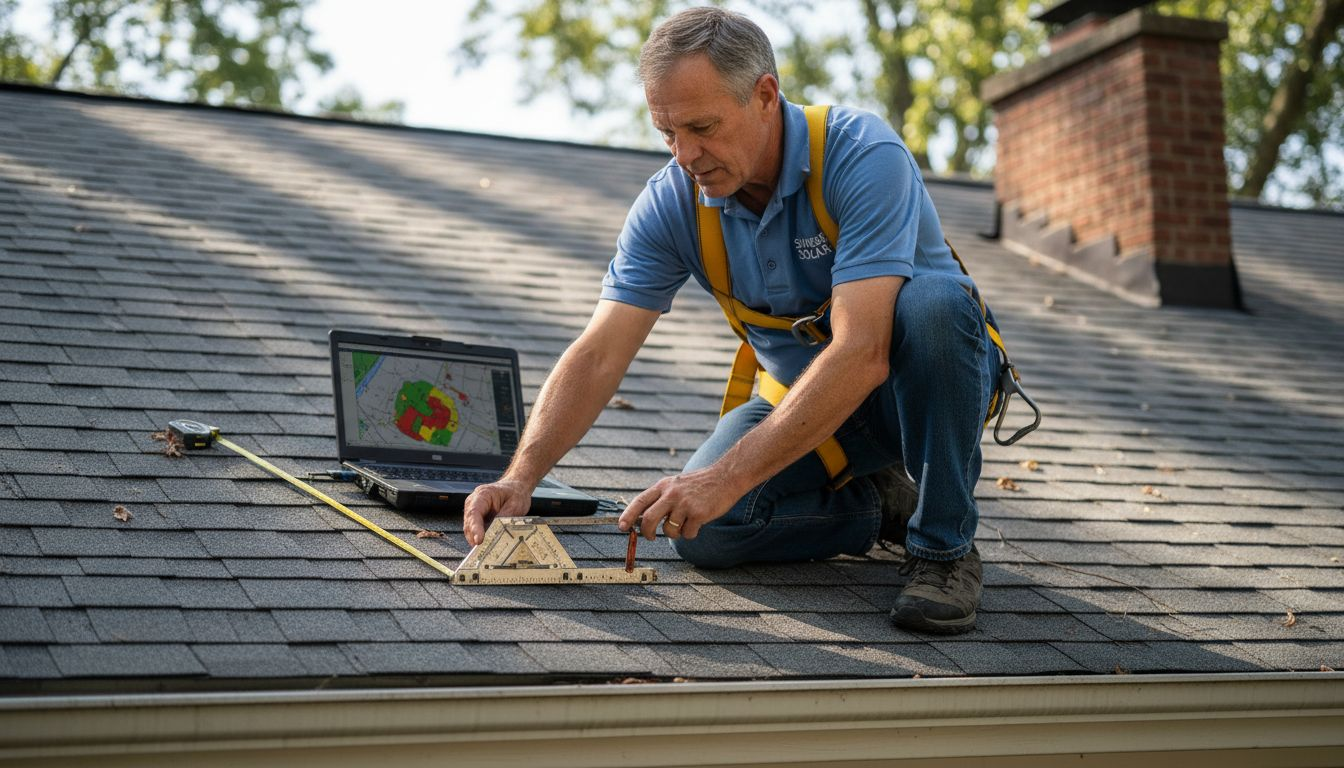
Shading represents the most underestimated efficiency killer. Homeowners often underestimate professional shading analysis, causing up to 20% annual energy loss when unaddressed. Even partial shading from chimneys, trees, or neighboring structures cascades through panel strings, reducing entire array output disproportionately.
Structural capacity determines whether your roof can support additional panel weight without reinforcement. Standard asphalt shingle roofs typically handle 3-4 pounds per square foot, sufficient for most installations. Older structures or damaged roofs may require costly repairs before panel mounting.
Critical environmental factors to assess:
- Annual sun exposure hours in your climate zone
- Snow load requirements for winter accumulation
- Wind rating compliance for hurricane or tornado regions
- Salt air corrosion resistance near coastal properties
- Heat buildup from dark roof surfaces affecting panel efficiency
Pro Tip: Schedule your solar installation steps assessment during different seasons if possible. Winter sun angles reveal shading issues that summer foliage might hide, preventing costly post-installation discoveries.
Cost considerations and expected ROI
Financial planning determines project feasibility and influences panel quality tradeoffs. Understanding total costs beyond panel prices prevents budget surprises and enables accurate payback calculations.
Typical solar panel installation costs range from $15,000 to $25,000 for standard residential systems, with ROI commonly achieved within 6 to 10 years. Premium monocrystalline systems cost 20-30% more than polycrystalline alternatives but recover costs faster through higher energy production.
Panel efficiency directly affects installation economics. A 22% efficient system requires 20% fewer panels than an 18% system for identical power output, reducing mounting hardware, labor hours, and roof space consumption. This efficiency advantage often justifies higher per-panel costs when calculating total project expenses.
| Panel Type | System Cost | Annual Savings | Payback Period | 25-Year Value |
|---|---|---|---|---|
| Monocrystalline | $20,000-$25,000 | $2,500-$3,000 | 7-8 years | $60,000-$75,000 |
| Polycrystalline | $15,000-$20,000 | $2,000-$2,500 | 8-10 years | $50,000-$62,500 |
| Thin-Film | $12,000-$16,000 | $1,500-$2,000 | 9-11 years | $37,500-$50,000 |
Major cost components beyond panels:
- Installation labor: 30-40% of total project cost
- Permit fees and inspections: $500-$2,000 depending on location
- Inverter and electrical equipment: $2,000-$5,000
- Mounting hardware and racking: $1,000-$3,000
- Annual maintenance and cleaning: $200-$400
Financing options significantly impact net costs. Cash purchases maximize long-term savings, while solar loans spread costs over time with interest charges. Leasing arrangements eliminate upfront costs but reduce total savings and complicate property sales. Explore the full breakdown in our solar panel costs guide for detailed financial comparisons.
Installation prerequisites and regulatory compliance
Proper preparation prevents expensive delays and legal complications that derail solar projects. Skipping prerequisite steps creates cascading problems during installation and operation.
Roof condition and load capacity must be verified before purchasing panels. A professional structural assessment identifies necessary repairs or reinforcements, preventing mid-project surprises. Roofs older than 15 years often require replacement or strengthening to support 25-year solar system lifespans.
Local permits and regulations vary dramatically by jurisdiction. Some municipalities require multiple inspections, environmental reviews, and homeowner association approvals that extend timelines by weeks or months. Non-compliance risks 30% project delays and potential fines exceeding $5,000 in strict jurisdictions.
Essential preparatory steps before panel selection:
- Obtain professional roof structural evaluation and load capacity report
- Research local solar permitting requirements and average approval timelines
- Verify property deed restrictions and HOA solar installation policies
- Schedule utility company interconnection application review
- Confirm contractor licensing, insurance, and local code expertise
- Document existing roof condition with photos for insurance purposes
- Plan temporary power arrangements during installation periods
Electrical system upgrades often accompany solar installations. Older homes with 100-amp service panels may require 200-amp upgrades to handle bidirectional power flow, adding $1,500-$3,000 to project costs. Factor these requirements into initial budgets rather than treating them as surprises.
Work exclusively with installers demonstrating current knowledge of National Electrical Code requirements and local amendments. Following our comprehensive solar installation steps guide ensures you cover every regulatory checkpoint systematically.
Common mistakes and troubleshooting tips
Avoiding frequent errors protects your investment and maintains system performance throughout its operational life. Learning from others’ mistakes proves far less expensive than correcting your own.
Panel and inverter mismatches create bottlenecks that waste potential energy production. Undersized inverters clip peak power output during optimal conditions, while oversized inverters operate inefficiently during low-light periods. Proper system design matches inverter capacity to panel array output within 5-10% tolerance.
Frequent selection and installation errors:
- Ignoring micro-shading from vents, pipes, or satellite dishes
- Purchasing panels without verifying warranty transferability for resale
- Skipping permit applications to save fees, risking forced removal
- Accepting lowest bid without verifying contractor qualifications
- Installing panels before replacing aging roof materials
- Neglecting to document baseline energy consumption for comparison
Pro Tip: Request detailed electrical diagrams showing exact panel-to-inverter connections before installation begins. This documentation proves invaluable for troubleshooting performance issues and planning future expansions.
Shading analysis failures represent the costliest preventable mistake. Professional assessments using specialized software model sun paths throughout seasons, identifying problems invisible during initial site visits. This $300-$500 investment prevents thousands in lost production over system lifetime.
Code compliance shortcuts create liability exposure extending beyond financial penalties. Improperly installed systems void insurance coverage and create fire hazards or electrical dangers. Review our guide on common solar installation mistakes for detailed prevention strategies and remediation approaches.
Maintenance and longevity for maximizing performance
Proper upkeep preserves efficiency and extends system lifespan well beyond minimum warranty periods. Neglected systems lose performance unnecessarily, eroding financial returns.
Solar panels degrade at 0.5% to 1% annually, reducing output gradually over decades. Quality panels maintain 85-90% original capacity after 25 years, while economy models may drop to 75-80%. Factor realistic degradation into ROI calculations rather than assuming constant output.
Regular cleaning and preventive maintenance reduce power losses by up to 5%, extending efficiency and lifespan. Dust, pollen, bird droppings, and environmental debris accumulate quickly, blocking sunlight and creating hot spots that accelerate panel deterioration.
Essential maintenance tasks for optimal performance:
- Clean panel surfaces quarterly in dusty climates, biannually in cleaner environments
- Inspect mounting hardware for corrosion or loosening after severe weather
- Monitor inverter displays for error codes or unusual performance drops
- Trim vegetation preventing shading or debris accumulation
- Schedule professional electrical inspections every 3-5 years
- Document system output monthly to establish performance baselines
Pro Tip: Clean panels during early morning or late evening when surfaces are cool. Spraying cold water on hot panels risks thermal stress cracks, potentially voiding warranties and requiring expensive replacements.
Premium materials justify higher costs through extended durability. Corrosion-resistant frames, tempered glass surfaces, and robust junction boxes withstand decades of temperature cycling and weather exposure better than budget alternatives. Our solar panel maintenance guide provides seasonal checklists and professional service recommendations.
Expected results and how to measure success
Setting realistic expectations and tracking performance metrics validates your solar investment and identifies problems requiring attention. Systematic monitoring transforms vague impressions into actionable data.
Typical payback periods span 6-10 years depending on installation costs, local electricity rates, available incentives, and system efficiency. Properties with high energy consumption and expensive utility rates recover costs faster than low-use buildings in cheap-electricity regions.
Key performance indicators revealing system health:
- Monthly kilowatt-hour production compared to installer projections
- Cost savings percentage relative to previous utility bills
- System availability uptime excluding maintenance periods
- Degradation rate tracking year-over-year output decline
- Maintenance cost trends identifying developing problems
Post-installation energy output and financial returns vary by panel technology and local conditions:
| Metric | Monocrystalline | Polycrystalline | Thin-Film |
|---|---|---|---|
| Annual kWh Production | 10,000-12,000 | 8,000-10,000 | 6,000-8,000 |
| Year 1 Savings | $2,500-$3,000 | $2,000-$2,500 | $1,500-$2,000 |
| 10-Year Total Savings | $27,000-$33,000 | $22,000-$27,500 | $16,500-$22,000 |
| Break-Even Timeline | 7-8 years | 8-10 years | 9-11 years |
Conduct quarterly performance reviews comparing actual production against weather-adjusted projections. Significant deviations signal maintenance needs, equipment failures, or new shading sources requiring remediation. Modern monitoring systems provide real-time data through smartphone apps, simplifying performance tracking.
Document baseline energy consumption from the year before installation to calculate accurate savings. Lifestyle changes affecting usage patterns can obscure solar system contributions without proper before/after comparisons. Learn comprehensive tracking methods in our solar energy efficiency guide.
How Sunflowers Energy can help you choose and install solar panels
Navigating solar panel selection requires expertise spanning structural engineering, electrical systems, and financial analysis. Sunflowers Energy brings decades of combined experience helping homeowners and property managers optimize their solar investments from initial assessment through long-term maintenance.
Our team conducts comprehensive property evaluations identifying optimal panel types, placement strategies, and system sizing for your specific conditions. We handle permitting complexities, structural assessments, and utility interconnections, eliminating common delay sources that frustrate DIY approaches. From understanding detailed solar installation steps to exploring our solar energy efficiency guide, we provide resources covering every decision point. Whether you need guidance on residential solar system types or custom commercial solutions, Sunflowers Energy transforms solar complexity into confident action.
Frequently asked questions
What factors most affect solar panel efficiency for my property?
Shading conditions, panel type selection, roof orientation, and installation quality represent the primary efficiency determinants. Professional shading analysis identifies productivity killers invisible during casual site inspection. South-facing roofs with minimal obstruction deliver optimal results, while east or west orientations reduce output by 15-20%.
How can I estimate the return on investment for solar panels?
Calculate ROI by dividing total installation costs by annual electricity savings, accounting for degradation rates and maintenance expenses. Most residential systems achieve payback within 6-10 years depending on local utility rates and system efficiency. Professional financial modeling tools incorporate tax incentives, electricity rate inflation, and financing costs for precise projections.
What maintenance do solar panels require to stay efficient?
Quarterly cleaning removes dust and debris blocking sunlight, while annual professional inspections identify developing problems before they cause failures. Monitor inverter displays for error codes and track monthly production against baselines. Proper maintenance reduces power losses by up to 5% and extends system life beyond warranty minimums.
Are there common installation mistakes I should avoid?
Panel-inverter mismatches, inadequate shading analysis, and permit shortcuts represent frequent costly errors. Always verify contractor licensing and local code expertise before signing contracts. Avoid installing solar panels before replacing aging roof materials, as panel removal for roof work doubles labor costs unnecessarily.
Recommended
- Why Choose Solar Panels in 2026: Cut Costs by 70% & Boost Value – Sunflowers Energy LLC A Roofing and Solar Companys
- 6 Types of Solar Panels Explained for Urban Homeowners – Sunflowers Energy LLC A Roofing and Solar Companys
- Cómo elegir sistema solar ideal para tu hogar paso a paso – Sunflowers Energy LLC A Roofing and Solar Companys
- Solar Energy Efficiency Guide for Maximized Home Savings – Sunflowers Energy LLC A Roofing and Solar Companys
- Aurinkosuojalla saavutettava energiansäästö Helsingissä 2026 – Tiimixi