
A hailstorm rolls through, and twenty minutes later you’re standing in your yard wondering how to tell if hail damaged your roof. The problem is, most hail damage isn’t obvious from the ground. Dents in shingles, cracked granules, and compromised flashing can all go unnoticed until a small leak turns into a costly repair bill months down the road.
At Sunflowers Energy LLC, we inspect roofs after storms every week. We’ve seen firsthand how quickly undetected hail damage leads to interior water damage, mold, and structural issues, problems that could have been caught early with a proper assessment. Our storm damage and roof repair teams know exactly what to look for, and we help homeowners navigate the insurance claim process from start to finish.
This article breaks down five clear ways to identify hail damage on your roof so you can act fast, document what matters, and protect your home before things get worse.
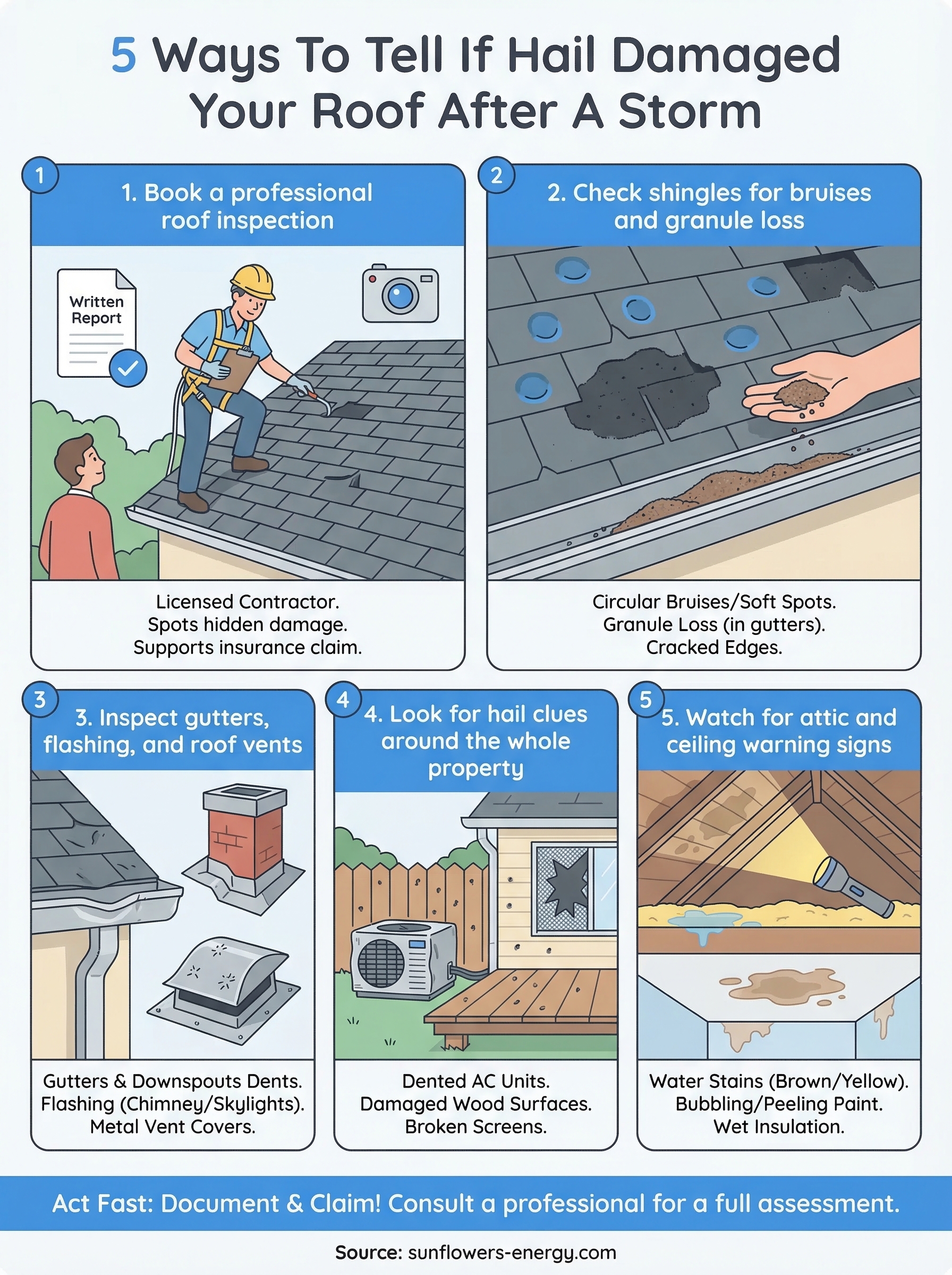
1. Book a professional roof inspection
The single most reliable way to know how to tell if hail damaged your roof is to have a licensed roofing contractor walk it for you. Professionals carry the training to spot damage that’s nearly invisible from the ground, and they know exactly what insurance adjusters look for when processing a storm claim.
Why it matters
Hail damage doesn’t always punch through shingles on impact. It often weakens the mat beneath the granule layer, which accelerates aging and leaves your roof vulnerable to leaks over the next few years. Without a trained eye, you can look directly at a damaged shingle and see nothing wrong.
A roof that looks intact from the street can still have significant hidden damage that only shows up during a close-up physical inspection.
What to look for
A qualified inspector checks for circular impact marks on shingles, dents on metal components like vents and flashing, and granule loss that exposes the underlying asphalt. They also document everything with timestamped photos and written notes, giving you a solid record that supports your insurance claim from day one.
How to check safely
You don’t need to climb the roof yourself. Schedule a professional inspection and let the contractor handle all close-range work. If you want to observe from ground level, binoculars can help you spot obvious dents or missing shingles, but always leave the detailed assessment to someone with the proper safety gear and training.
What to do next
Once the inspection wraps up, ask for a written report with photos before any repair work starts. Share that report with your insurance company right away because many policies carry strict deadlines for filing storm-related claims, and waiting too long can put your coverage at risk.
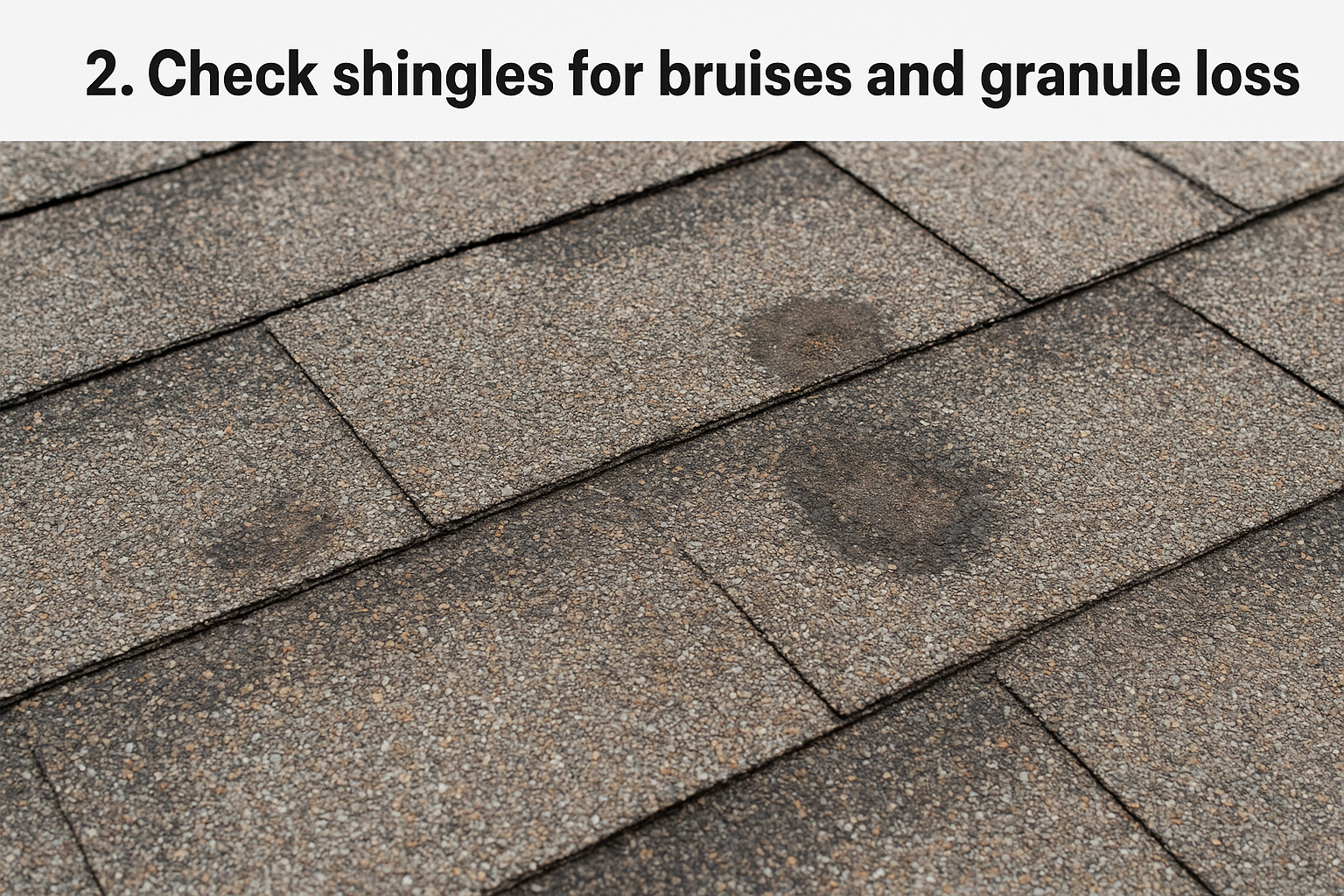
2. Check shingles for bruises and granule loss
Shingles are your roof’s first line of defense, and hail hits them directly. Learning how to tell if hail damaged your roof often starts right here at the shingle surface, where the most visible clues show up after a storm.
Why it matters
Granules protect the asphalt layer beneath your shingles from UV exposure and moisture. When hail knocks them loose, that layer degrades faster, cutting years off your roof’s lifespan even when no leak appears immediately.
What to look for
Scan the shingles for circular bruises or soft spots where hail has dented the mat underneath. You may also spot the following signs of impact damage:
- Dark patches where bare asphalt is exposed after granule loss
- Cracked or split shingle edges along the impact points
- Small indentations that feel soft when pressed at the eave line
Granule loss from a single storm can strip a roof of years of remaining life, making early detection critical.
How to check safely
Use binoculars from ground level to scan for dark patches or uneven texture across the surface. Avoid walking on the roof without proper safety equipment; a ladder at the eave line gives you a closer look without the risk.
What to do next
Collect granules that have washed into your gutters and photograph them alongside any visible shingle damage. That physical evidence directly supports your insurance claim and ties the damage to the storm.
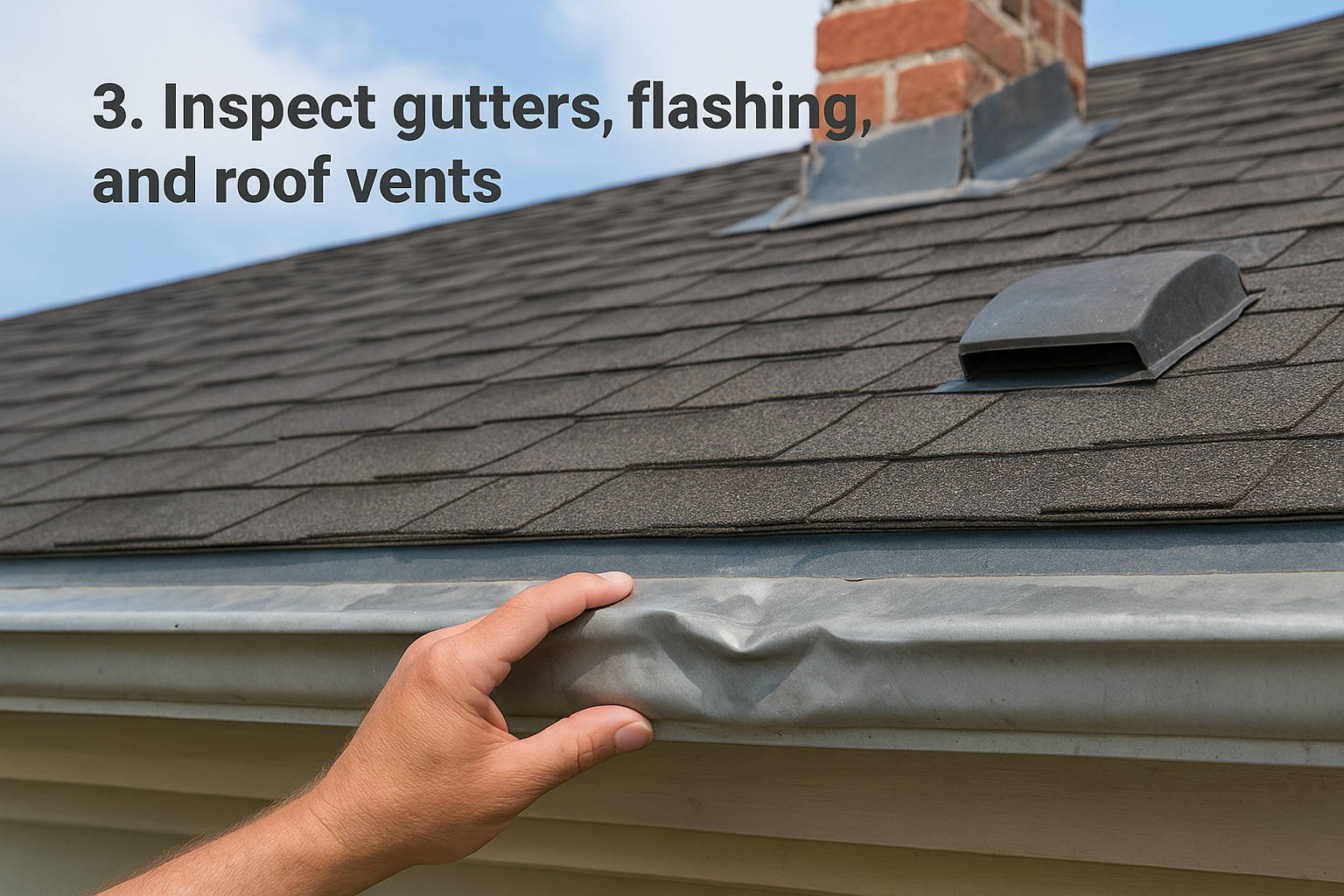
3. Inspect gutters, flashing, and roof vents
Shingles get most of the attention after a storm, but gutters, flashing, and roof vents reveal just as much about hail impact. These metal components dent on contact, making them one of the clearest signs of how to tell if hail damaged your roof without ever climbing up.
Why it matters
Flashing seals the joints where your roof meets walls, chimneys, and skylights. When hail bends or cracks it, water infiltrates those seams and causes hidden interior damage long before you spot a leak inside your home.
What to look for
Walk the perimeter and check for these specific signs:
- Dents or dings along gutters and downspouts
- Bent or lifted flashing around chimneys or skylights
- Cracked paint or impact marks on metal vent covers
Dents on soft metals like aluminum gutters are some of the clearest proof of hail size and intensity during a storm.
How to check safely
Stay on the ground and visually scan your gutters for obvious denting or separation from the fascia. For flashing, a ladder at the roofline gives you a safe, close-up view without stepping onto the surface.
What to do next
Photograph every dent and damaged metal component you find. Those images strengthen your insurance claim by showing the full extent of impact across multiple areas of your roof system.
4. Look for hail clues around the whole property
Your roof isn’t the only surface that records a storm’s impact. Hail hits everything outside, and checking the full property gives you a broader picture of storm severity that directly supports the case for roof damage.
Why it matters
Hail that damages your car, fence, or AC unit almost certainly hit your roof with equal or greater force. These secondary impact sites help you confirm that a storm was strong enough to cause structural damage, which matters when you’re documenting how to tell if hail damaged your roof for an insurance claim.
What to look for
Walk the property and check for dents on your AC condenser, pockmarks on wood deck surfaces, and broken window screens. Each of these surfaces records hail size and direction, giving you concrete supporting evidence alongside your roof inspection findings.
Damage to soft metals and wood surfaces elsewhere on your property tells the same story as damage to your roof.
How to check safely
Stay on solid ground and photograph every impact mark you find across the yard, driveway, and outbuildings. Natural light works best, so check shortly after the storm clears for the sharpest contrast in photos.
What to do next
Send those property-wide photos to your insurance adjuster along with your roof inspection report. Showing damage across multiple surfaces reinforces the claim and makes it harder to dispute the storm’s intensity.
5. Watch for attic and ceiling warning signs
The inside of your home holds some of the clearest evidence of storm damage. Knowing how to tell if hail damaged your roof isn’t limited to outdoor checks because your attic and ceiling often reveal water intrusion before it spreads into your living spaces.
Why it matters
Water that enters through hail-compromised shingles or flashing travels downward fast. If you catch moisture in the attic early, you stop it from spreading to insulation, framing, and drywall before the repair costs climb significantly.
What to look for
Grab a flashlight and inspect your attic for water stains, wet insulation, or soft spots on the decking. Inside your home, scan ceilings for these warning signs:
- Brown or yellow stains on drywall or plaster
- Bubbling or peeling paint that signals trapped moisture
- Sagging sections in the ceiling surface
Water stains on your ceiling after a hailstorm are a direct sign that your roof’s protective layers have been breached.
How to check safely
Stay inside and use a bright flashlight to scan attic rafters and the underside of the roof decking. Avoid touching any area that looks soft or structurally compromised.
What to do next
Document every stain and soft spot with clear, well-lit photos and share them with your roofing contractor and insurance adjuster right away.
Next steps after you spot hail damage
Now that you know how to tell if hail damaged your roof, acting quickly is what separates a manageable repair from a costly replacement. Document every sign of damage with clear, timestamped photos before anything changes, and pull out your homeowner’s insurance policy to review your storm damage coverage and filing deadlines right away.
Contact a licensed roofing contractor as soon as possible. A professional inspection gives you a written report that carries real weight with your insurance adjuster, and it protects you from missing hidden damage that only a trained eye can catch. Many insurers require an adjuster visit before approving repair work, so start the claims process early to avoid coverage disputes and long delays.
Schedule a free on-site inspection with Sunflowers Energy LLC and let our team walk your roof, document the damage, and guide you through every step of the insurance claim.