Storms can leave roofs vulnerable, but for American homeowners focused on energy efficiency and sustainability, this is also an opportunity. Taking stock of your home’s electricity consumption and roof condition is the first step toward optimizing solar panel installations. A thorough assessment unlocks more effective upgrades, from maximizing savings to increasing durability with solar solutions and professional roofing that stand up to future weather. Explore how a well-prepared roof and accurate energy assessment lead to up to 30 percent more efficient solar energy production while adding long-term value to your home.
Table of Contents
- Step 1: Assess Current Energy Usage And Roof Condition
- Step 2: Choose Optimal Solar System And Materials
- Step 3: Install Panels With Energy Efficiency Best Practices
- Step 4: Optimize System Performance And Monitor Usage
- Step 5: Verify Savings And Maintain Solar Efficiency
Quick Summary
| Key Point | Explanation |
|---|---|
| 1. Assess energy usage accurately | Analyze the past year’s electricity bills to understand consumption patterns and identify efficiency opportunities. |
| 2. Choose the right solar panels | Select solar panel types based on efficiency, roof space, and budget to enhance energy savings and overall performance. |
| 3. Ensure professional installation | Work with certified installers to guarantee optimal panel placement, reducing shading and maximizing energy capture. |
| 4. Monitor system performance regularly | Track daily and monthly energy production to identify efficiency drops and maintain peak solar system performance. |
| 5. Maintain solar system efficiency | Schedule regular maintenance and inspections to ensure consistent energy savings and prolong the system’s lifespan. |
Step 1: Assess Current Energy Usage and Roof Condition
Before diving into solar panel installation, you need a comprehensive understanding of your home’s current energy consumption and roof condition. Investigating energy usage is the critical first step in maximizing your potential solar savings.
Start by reviewing your past 12 months of electricity bills to understand your average monthly energy consumption. Look for patterns in your usage – peak times, seasonal variations, and total kilowatt-hour (kWh) consumption. This data helps determine the appropriate solar system size for your specific needs. Consider these key assessment strategies:
- Collect utility bills from the past year
- Calculate your average monthly energy consumption
- Identify peak usage periods and potential efficiency opportunities
- Note the direction and angle of your roof
- Assess any potential shading from nearby trees or structures
Your roof’s condition and orientation play a crucial role in solar panel performance. Roof suitability significantly impacts system design, so a thorough inspection is essential. Look for signs of damage, check the structural integrity, and evaluate the roof’s age. Ideally, you want a roof with at least 10-15 years of remaining life before installing solar panels.
A well-prepared roof and accurate energy assessment can lead to up to 30% more efficient solar energy production.
Pro tip: Consider hiring a professional energy auditor who can provide a detailed analysis of your home’s energy efficiency and solar potential.
Step 2: Choose Optimal Solar System and Materials
Selecting the right solar system is a critical decision that directly impacts your energy efficiency and long-term savings. Choosing solar panel types requires careful consideration of your specific energy needs, roof characteristics, and budget constraints.
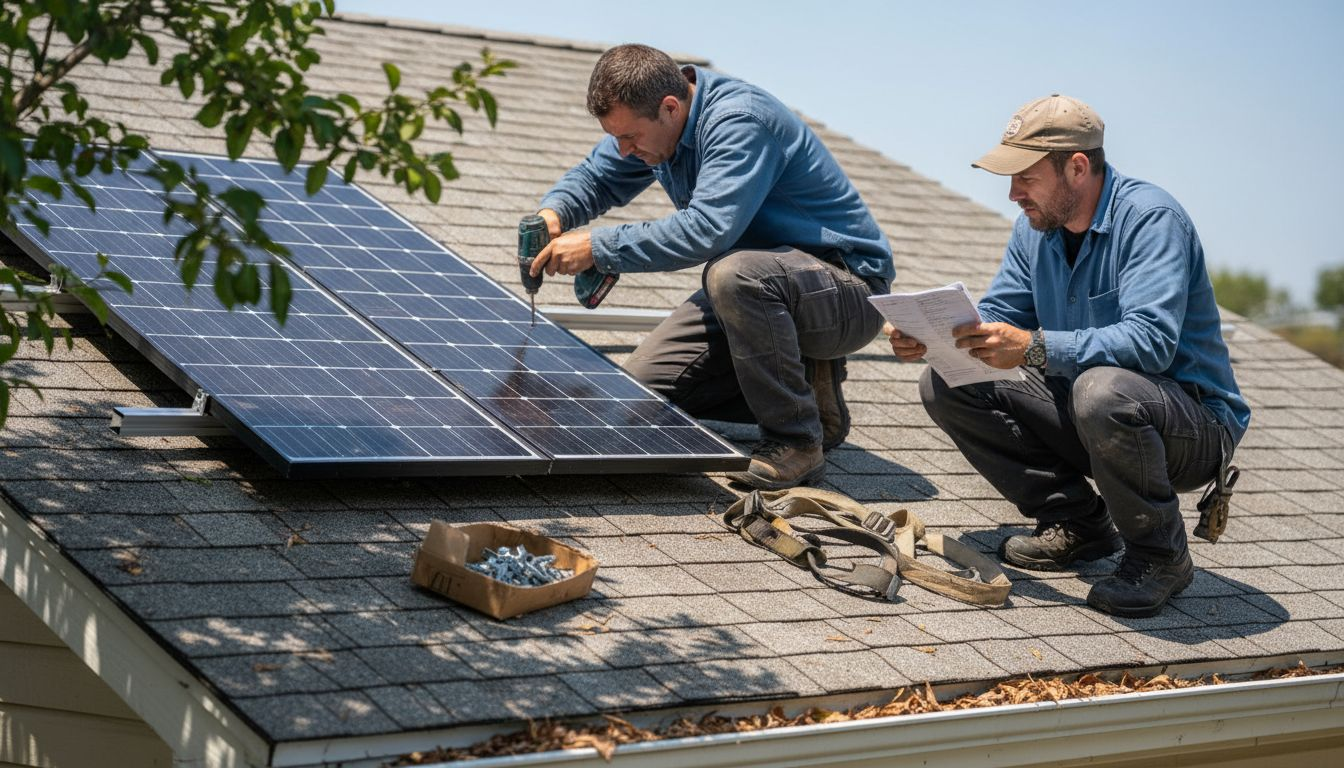
Modern solar technology offers several panel options, each with unique advantages. The most common types include:
Here is a quick comparison of common residential solar panel types and their typical use cases:
| Panel Type | Typical Efficiency | Best Use Case |
|---|---|---|
| Monocrystalline | 18-22% | Limited roof space |
| Polycrystalline | 15-17% | Larger roofs, lower cost |
| Thin-film | 10-13% | Irregular roofs, low weight need |
- Monocrystalline panels: Most efficient, ideal for limited roof space
- Polycrystalline panels: More affordable, slightly lower efficiency
- Thin-film panels: Flexible and lightweight, best for unique roof configurations
Material selection plays a crucial role in solar system performance. Photovoltaic cell materials like crystalline silicon, CIGS, and CdTe each offer different efficiency levels and cost profiles. When evaluating system components, consider inverter quality, mounting hardware durability, and overall system compatibility.
The right solar system can reduce your electricity costs by up to 70% and increase your home’s market value.
Beyond panel selection, factor in your local climate, available sunlight, and potential tax incentives. Some regions offer significant rebates for solar installations, which can offset initial investment costs. Consult with certified solar professionals who can provide personalized recommendations tailored to your home’s unique characteristics.
Pro tip: Request detailed performance estimates from multiple installers to compare long-term energy production and return on investment.
Step 3: Install Panels With Energy Efficiency Best Practices
Successful solar panel installation requires precision, expertise, and a strategic approach to maximize your home’s energy potential. Professional installation practices are critical to ensuring optimal system performance and long-term reliability.
Key considerations during installation include:
- Precise panel orientation: Align panels to capture maximum sunlight
- Minimize shading: Avoid obstructions that reduce energy production
- Optimal mounting angle: Adjust based on your geographic latitude
- High-quality electrical connections: Ensure robust and efficient wiring
- Professional certification: Work with NABCEP-certified installers
When preparing for installation, detailed site assessments become crucial. These evaluations help identify potential challenges like roof structural integrity, potential shading from nearby trees or structures, and the most efficient panel placement strategy. Modern inverter technology and smart monitoring systems can further enhance your solar system’s overall performance.
Proper installation can increase solar panel efficiency by up to 25% and extend system lifespan by several years.
Additionally, consider integrating energy storage solutions and smart monitoring systems that allow you to track real-time energy production and consumption. These technologies provide valuable insights into your system’s performance and help you optimize energy usage.
Pro tip: Request a comprehensive written report detailing panel placement, expected energy production, and potential system improvements before final installation.
Step 4: Optimize System Performance and Monitor Usage
Maintaining peak solar system performance requires consistent monitoring and proactive management. Solar system monitoring techniques are essential for identifying potential efficiency issues and maximizing your energy production.
Key strategies for ongoing system optimization include:
- Track daily energy production: Monitor kilowatt-hour output
- Analyze performance data: Identify potential efficiency drops
- Check for physical obstructions: Remove debris or trim nearby vegetation
- Inspect panel cleanliness: Regular cleaning maintains maximum efficiency
- Review monthly energy reports: Compare actual vs. expected production
Performance estimation tools can help you understand your system’s expected output and quickly identify any deviations. Modern solar systems typically include smartphone apps and web-based platforms that provide real-time insights into energy generation, consumption patterns, and potential maintenance needs.
Consistent monitoring can improve solar system efficiency by up to 15% and extend equipment lifespan.
Additionally, consider integrating smart home energy management systems that allow you to track and optimize your overall energy consumption. These technologies can help you understand your usage patterns, identify potential savings opportunities, and maximize the financial benefits of your solar investment.
Pro tip: Schedule quarterly professional inspections to catch and address any performance issues before they significantly impact your system’s efficiency.
Step 5: Verify Savings and Maintain Solar Efficiency
Tracking and validating your solar system’s performance is crucial for maximizing long-term energy savings. Solar performance verification requires a comprehensive approach to understanding your energy production and consumption patterns.
Key strategies for verifying solar savings include:
- Compare utility bills: Track monthly electricity costs before and after installation
- Calculate energy production: Use monitoring systems to measure kilowatt-hour output
- Analyze seasonal variations: Understand how performance changes throughout the year
- Review financial impact: Assess return on investment and actual savings
- Check system efficiency: Monitor performance metrics and identify potential improvements
System health tracking helps ensure your solar investment continues delivering optimal results. Modern monitoring tools provide real-time insights into energy generation, allowing you to quickly identify and address any performance drops or maintenance needs.
Consistent monitoring can help you recover up to 20% more energy output compared to unchecked systems.
Additionally, regular maintenance is essential for sustaining your solar system’s efficiency. This includes periodic panel cleaning, electrical component inspections, and addressing any shading or damage that might impact performance. By staying proactive, you can protect your investment and maximize long-term energy savings.
Pro tip: Create a digital maintenance log to track system performance, repairs, and efficiency trends for future reference and potential warranty claims.
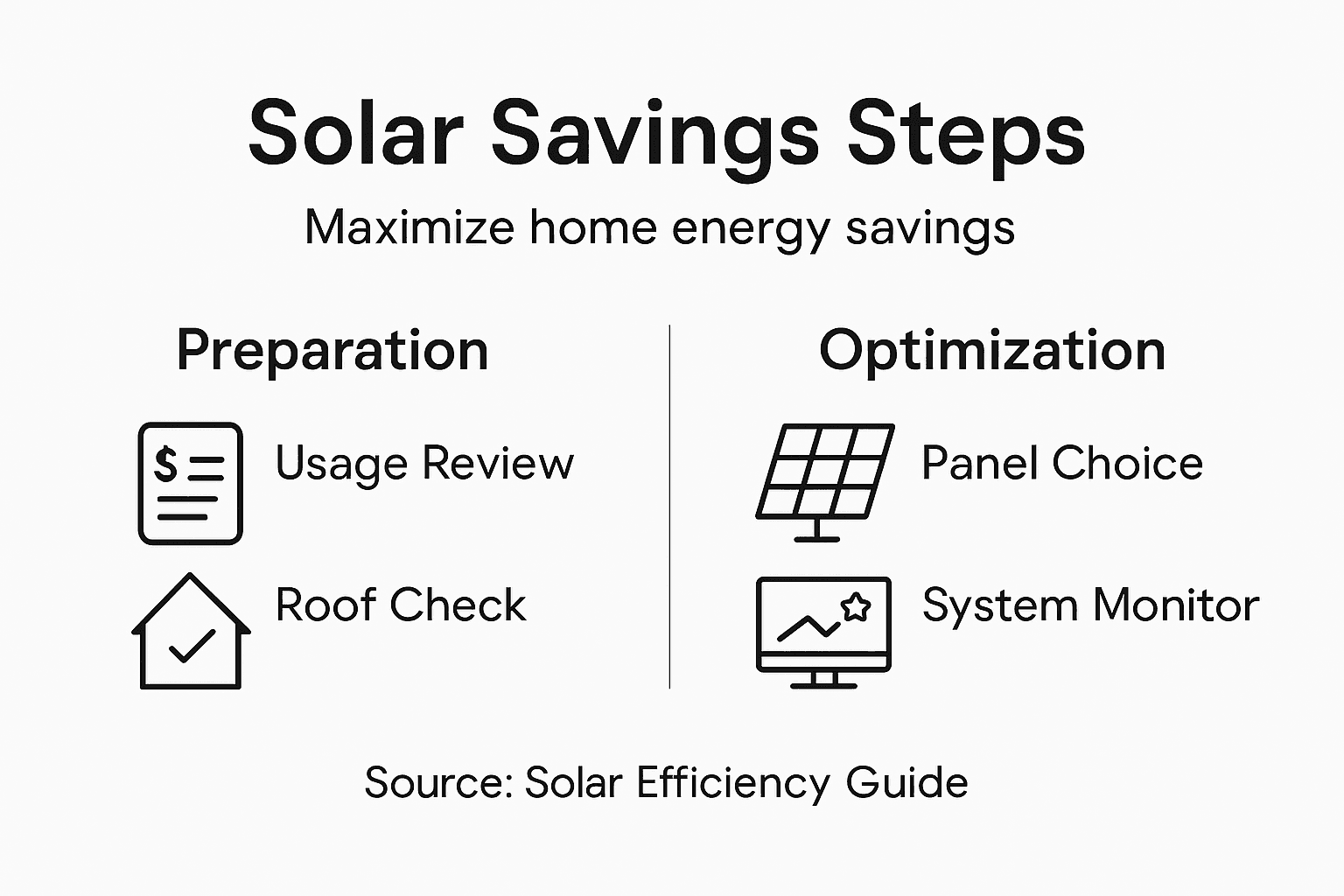
Review the following summary of steps to maximize your solar investment:
| Step | Primary Goal | Key Outcome |
|---|---|---|
| Assess Energy & Roof | Analyze energy and roof readiness | Optimal system sizing |
| Select System & Materials | Match technology to needs and budget | Increased efficiency and savings |
| Professional Installation | Ensure optimal placement and connections | Enhanced performance, long life |
| Monitor & Optimize | Track production, maintenance, cleaning | Sustained peak efficiency |
| Verify & Maintain | Assess impact, schedule upkeep | Maximized long-term savings |
Maximize Your Home’s Solar Energy Savings with Expert Solutions
Understanding your home’s energy usage and roof condition is vital for improving solar energy efficiency and achieving significant cost savings. If you want to transform these insights into real benefits, Sunflowers Energy offers tailored residential solar panel installations designed to match your unique needs. We focus on premium materials, expert installation, and ongoing performance optimization to help you fully capture the advantages of solar energy.
Ready to enhance your home’s sustainability and reduce energy costs now? Explore our comprehensive residential solar solutions and discover how Sunflowers Energy can support you with expert roofing and solar services. Visit our main site Sunflowers Energy to schedule your free onsite inspection and receive a personalized quote today.
Frequently Asked Questions
How can I assess my home’s current energy usage before installing solar panels?
To assess your home’s energy usage, review the past 12 months of electricity bills to determine your average monthly consumption. Aim to identify peak usage periods and any seasonal variations, as this data will help you size your solar system effectively.
What factors should I consider when choosing solar panel types for my home?
When selecting solar panel types, consider your energy needs, the characteristics of your roof, and your budget. Compare options such as monocrystalline, polycrystalline, and thin-film panels to find the best fit for your specific situation, especially regarding efficiency and installation space.
What are the best practices for installing solar panels to ensure efficiency?
To ensure efficiency during installation, focus on precise panel orientation and minimizing shading from nearby objects. Work with certified professionals who can guarantee optimal placement and high-quality electrical connections, which can enhance your system’s performance significantly.
How can I monitor my solar system’s performance after installation?
Monitor your solar system’s performance by tracking daily energy production and comparing it against your expected output. Conduct regular inspections to check for debris or shading and consider using monitoring tools to ensure your system operates at peak efficiency.
What steps can I take to verify the savings from my solar installation?
Verify your solar savings by comparing your electricity bills from before and after installation, and calculating your total energy production. Regularly review performance metrics and financial impacts to understand how much you’re saving and whether there are opportunities for improvement.
How often should I perform maintenance on my solar panels?
Perform maintenance on your solar panels at least twice a year to ensure they’re cleaned and checked for operational issues. Regular maintenance can maximize efficiency and prolong the lifespan of your solar system, potentially increasing energy output by up to 20%.
Recommended
- Solar Panel Efficiency Explained: Maximize Energy Savings – Sunflowers Energy LLC A Roofing and Solar Companys
- Is Solar Worth It? A Comprehensive Guide to Home Solar Panel Costs – Sunflowers Energy LLC A Roofing and Solar Companys
- What Is Solar Energy and Why It Matters – Sunflowers Energy LLC A Roofing and Solar Companys
- 7 Essential Solar Installation Tips for Businesses – Sunflowers Energy LLC A Roofing and Solar Companys
- Solar Panels and EPC Ratings – Key Effects Explained
- 7 Key Advantages of Home Solar Systems for UK Homeowners – Skyenergi
- Increasing KWH Cost: Here we give you 7 tips to save energy | LED Supply & Fit

3 Responses