
How to estimate roofing costs accurately for 2026
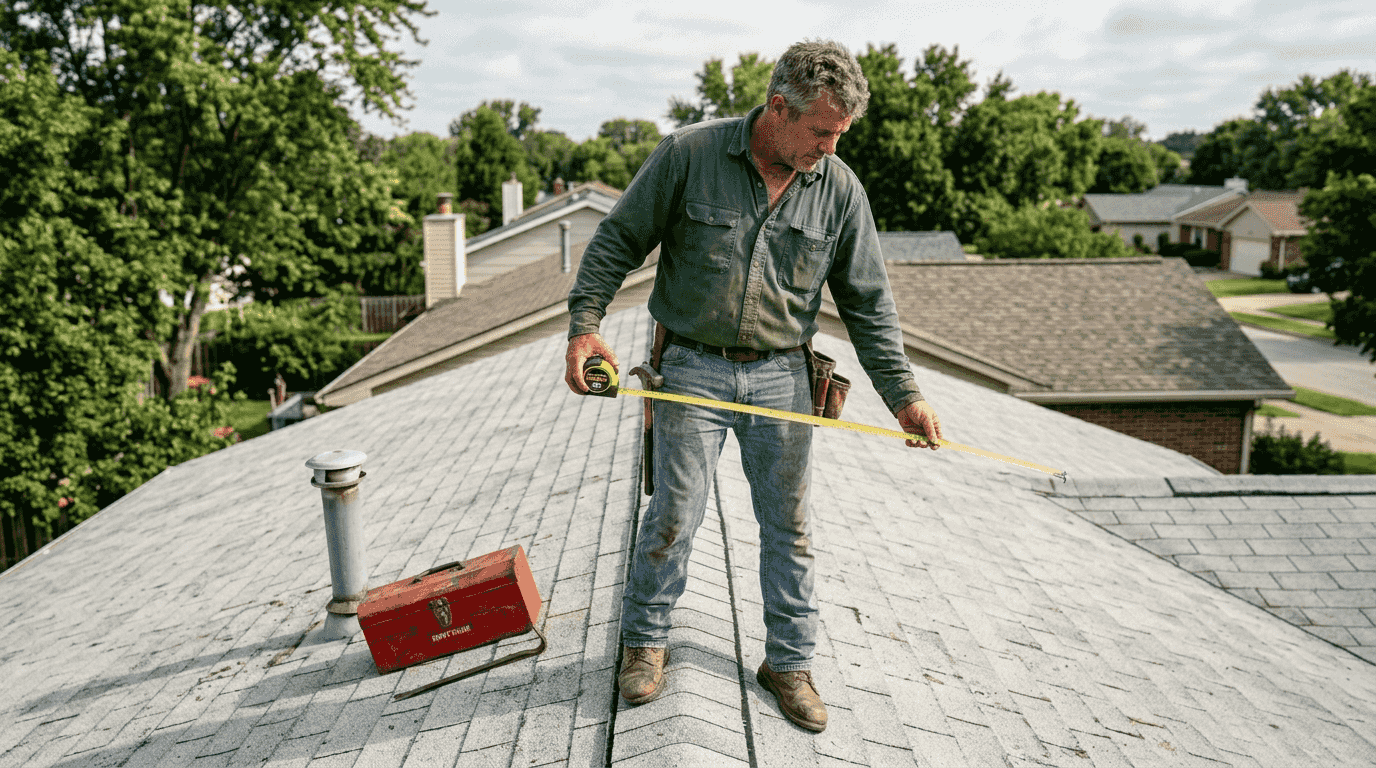
Estimating roofing costs can feel overwhelming when you’re facing a replacement or major repair project. Without proper knowledge of the factors that drive pricing, you risk budget overruns, contractor disputes, and project delays. This guide walks you through the essential steps to calculate roofing costs accurately for 2026, covering measurements, material choices, labor considerations, and hidden expenses. You’ll learn how to request transparent quotes, compare contractors effectively, and plan for sustainable upgrades that protect your investment long term.
Table of Contents
- Understanding Essential Roofing Cost Factors
- Preparing Accurate Measurements And Detailed Quotes
- Step-By-Step Guide To Estimating Roofing Costs
- Common Pitfalls And Verifying Your Roofing Cost Estimate
- Explore Expert Roofing And Solar Solutions For Your Project
- Frequently Asked Questions
Key takeaways
| Point | Details |
|---|---|
| Accurate roof measurements | Precise measurements prevent material waste and costly ordering mistakes |
| Line-item quotes | Itemized estimates reveal hidden costs and enable fair contractor comparisons |
| Labor dominates costs | Labor comprises roughly 60% of total roofing expenses in 2026 |
| Material choice matters | Asphalt shingles to slate vary widely in price and lifespan |
| Plan for extras | Permits, removal, repairs, and disposal add significant costs |
Understanding essential roofing cost factors
Roof size directly determines how much material and labor you’ll need. A 2,000 square foot roof requires double the shingles, underlayment, and installation time compared to a 1,000 square foot roof. Roof replacement costs depend on location, roof size and complexity, materials, and contractor, making it essential to understand each component before requesting quotes.
Complex roofs with multiple slopes, dormers, valleys, or chimneys increase labor time substantially. Installers work slower on steep pitches and intricate layouts, driving up hourly costs. Simple gable roofs cost less per square foot than hip roofs with multiple intersecting planes. Every additional feature requires careful flashing, cutting, and fitting that adds hours to the project timeline.
Labor now accounts for roughly 60% of total project costs, regardless of roofing material. Inflation and workforce shortages have pushed wages higher in 2026, making labor the single largest expense category. Experienced crews command premium rates, but their efficiency and quality often justify the investment. Cutting corners on labor rarely saves money long term.
Location influences every aspect of pricing. Urban areas typically charge higher labor rates than rural regions. Local building codes dictate permit requirements and inspection fees. Climate affects material selection, with hurricane zones requiring impact-resistant shingles and cold regions needing ice and water barriers. Regional material availability also impacts costs, as shipping expenses add up quickly for specialty products.
Materials range from budget-friendly asphalt shingles at $100 to $150 per square to premium slate costing $1,000 or more per square. Metal roofing falls in the middle, offering excellent durability at moderate prices. Your choice affects not just upfront costs but also maintenance expenses and replacement frequency over decades. Estimating roof replacement costs requires balancing initial investment against lifecycle value.
Additional costs often surprise homeowners who focus only on materials and labor. Permit fees vary by jurisdiction but typically range from $200 to $500. Removing old roofing adds $1 to $5 per square foot depending on layers and material type. Structural repairs for damaged decking, rafters, or trusses can add thousands to the final bill. Haul-away and disposal fees for old materials typically run $50 to $150 per ton. Understanding sustainable roofing benefits helps you evaluate long-term cost savings from energy-efficient upgrades.
Pro Tip: Request quotes that separate removal, disposal, and repair costs from base installation pricing to identify where contractors build in profit margins.
Preparing accurate measurements and detailed quotes
Measure roof area including pitch to calculate material quantities correctly. Accurate roof area measurements help contractors avoid mistakes when ordering roofing materials and planning replacement projects. Start by measuring the length and width of each roof section from ground level or using satellite imagery tools. Multiply length by width for each plane, then add all sections together for total square footage.
Calculate pitch using rise over run formulas or digital tools. Pitch affects the actual surface area because steeper roofs have more material coverage than their horizontal footprint suggests. A 6/12 pitch roof has 6 inches of rise for every 12 inches of horizontal run. Online calculators convert pitch measurements into multiplier factors that adjust your base square footage to true surface area. This precision prevents material shortages that delay projects and increase costs.
Request line-item, itemized quotes detailing materials, labor, permit fees, and haul-away costs. Lump-sum quotes hide where contractors allocate expenses and make comparison shopping nearly impossible. Detailed breakdowns reveal whether you’re paying premium prices for standard materials or reasonable rates for quality workmanship. Insist on separate line items for underlayment, flashing, ventilation, and accessories.
Compare quotes by reviewing individual cost components rather than total prices alone. One contractor might charge less overall but use inferior materials. Another might include comprehensive warranties and disposal services that justify higher pricing. Side-by-side comparison tables help you spot inconsistencies and negotiate effectively. Look for unusual markups on specific items that suggest padding or inexperience.
Ensure quotes include potential repair or removal costs and local permitting requirements. Many contractors provide base estimates that exclude common extras, leading to change orders and budget overruns. Ask explicitly about decking replacement allowances, chimney flashing repairs, and skylight resealing. Verify that permit fees match local building department published rates. Schedule a free roof inspection to identify hidden damage before finalizing estimates.
Pro Tip: Take photos of your roof from multiple angles and share them with contractors during initial consultations to improve estimate accuracy and reduce site visit requirements.
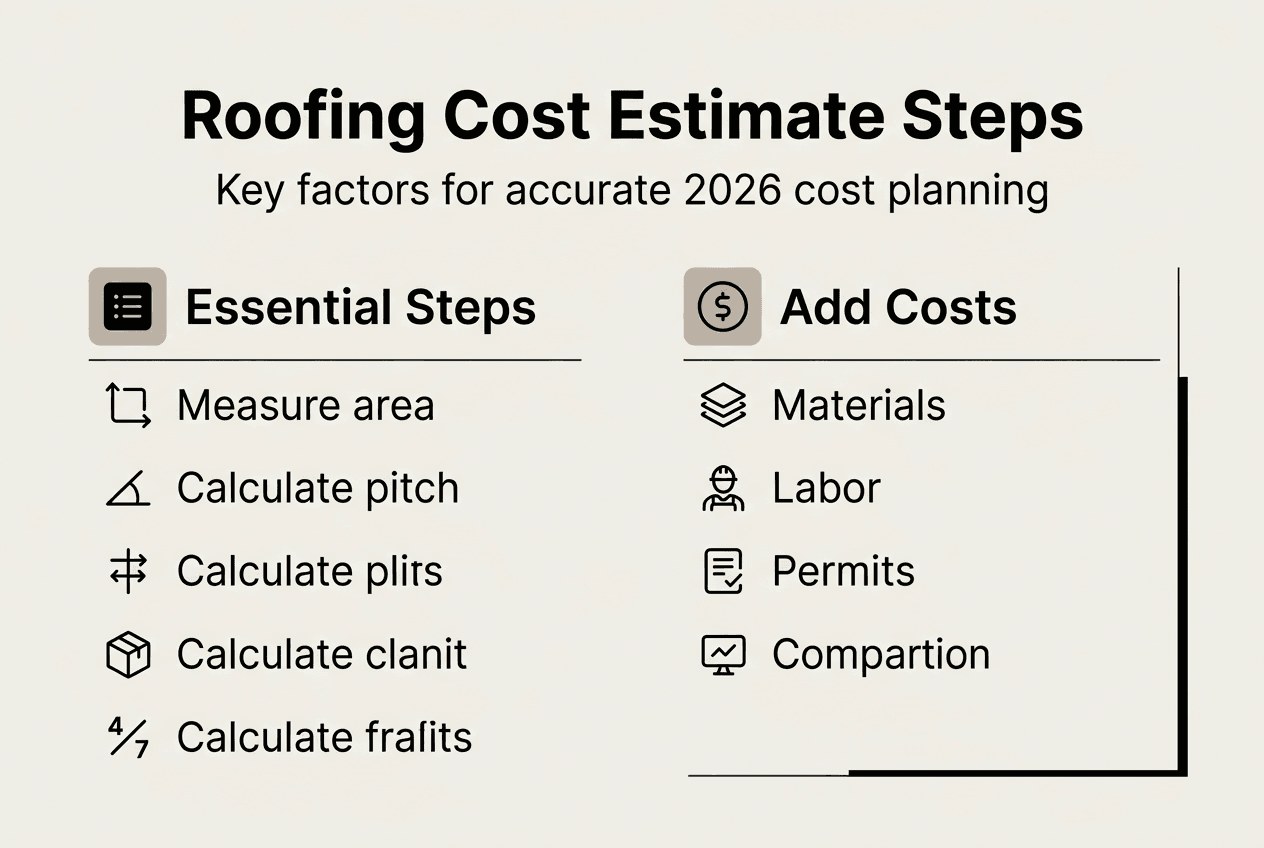
Follow this preparation sequence for best results:
- Measure all roof sections including overhangs and calculate total square footage
- Determine pitch for each section using a level and measuring tape or smartphone apps
- Research local permit requirements and typical fees through your building department
- Request quotes from at least three licensed contractors with detailed line-item breakdowns
- Verify that quotes include removal, disposal, repairs, and all applicable fees
Understanding asphalt shingle roof installation requirements helps you evaluate whether contractor estimates align with industry standards for your chosen material.
Step-by-step guide to estimating roofing costs
Calculate total roof area accounting for pitch to determine accurate material needs. Multiply your base square footage by the pitch multiplier to get true surface area. For example, a 2,000 square foot footprint with 6/12 pitch becomes approximately 2,236 square feet of actual roofing surface. This 12% increase matters significantly when ordering materials and comparing contractor quotes.
Estimate materials cost based on chosen roofing material price per square foot. Asphalt shingles typically cost $1.50 to $3.00 per square foot installed, while metal roofing runs $7.00 to $12.00 per square foot. Multiply your pitch-adjusted square footage by the material rate to calculate base material expenses. Remember that every roofing quote should include materials, labor, roof pitch, and haul-away expenses to determine total amounts accurately.

Add labor costs considering that labor accounts for roughly 60% of total costs in 2026. If your material estimate comes to $8,000, expect labor to add approximately $12,000, bringing your subtotal to $20,000 before additional fees. Labor rates vary by region and contractor experience, but this 60/40 split provides a reliable baseline for initial budgeting. Complex roofs with steep pitches or multiple features push labor percentages higher.
Include haul-away, permit, and any repair or removal fees in your total estimate. Permit fees typically add $200 to $500 depending on jurisdiction and project scope. Removal of one layer of asphalt shingles costs $1 to $2 per square foot, while multiple layers or heavy materials like slate increase removal expenses substantially. Disposal fees depend on local landfill rates and material type. Budget an additional 10% to 15% of your subtotal for these extras to avoid surprises.
| Material Type | Cost per Sq Ft | Lifespan (Years) | Best For |
|---|---|---|---|
| Asphalt Shingles | $1.50 to $3.00 | 15 to 30 | Budget-conscious homeowners |
| Metal Roofing | $7.00 to $12.00 | 40 to 70 | Long-term value seekers |
| Tile | $10.00 to $18.00 | 50 to 100 | Hot, dry climates |
| Slate | $15.00 to $30.00 | 75 to 200 | Premium, historic properties |
Factor in sustainable options like insulation boards and solar readiness costs when planning your project. Adding rigid foam insulation beneath roofing materials costs $2 to $4 per square foot but reduces energy bills substantially over time. Solar-ready installations include reinforced decking and conduit pathways that cost less to install during initial roofing than as retrofits. Understanding the role of roofing in energy efficiency helps you evaluate whether upfront investments deliver long-term savings.
Pro Tip: Calculate lifecycle costs by dividing total project cost by expected lifespan in years to compare materials fairly. A $25,000 metal roof lasting 50 years costs $500 annually, while a $12,000 asphalt roof lasting 20 years costs $600 annually.
Roof replacement prices vary widely depending on roof type and complexity, so use these steps as a framework rather than absolute pricing. Regional variations, seasonal demand, and contractor availability all influence final costs.
Common pitfalls and verifying your roofing cost estimate
Avoid estimating from vague or lump-sum quotes that hide cost allocation. A vague, one-page document leaves you with unanswered questions and potential surprise costs during project execution. Contractors who resist providing detailed breakdowns often pad estimates or plan to charge for extras later. Insist on transparency before signing contracts.
Beware of missing elements like permit fees, roof repairs, and haul-away costs that contractors sometimes exclude from initial quotes. These items can add 15% to 25% to your total project cost if not identified upfront. Ask explicitly about each potential expense and request written confirmation of what’s included versus excluded. Review contracts carefully for language about change orders and additional charges.
Verify that labor cost assumptions align with current 2026 inflation and workforce availability. Roofing companies are raising wages and turning down work they can’t staff properly, affecting project costs and timelines. Quotes based on outdated labor rates may not hold when you’re ready to start work. Confirm that estimates remain valid for at least 30 to 60 days and include escalation clauses if material prices fluctuate.
| Quote Element | Contractor A | Contractor B | Contractor C |
|---|---|---|---|
| Materials | $8,500 | $7,200 | $9,100 |
| Labor | $11,000 | $13,500 | $10,800 |
| Removal/Disposal | $1,800 | Included | $2,200 |
| Permits | $400 | $400 | Not listed |
| Repairs Allowance | $1,500 | $2,000 | $500 |
| Total | $23,200 | $23,100 | $22,600 |
Compare quotes side-by-side using tables to spot inconsistencies or missing items. The example above shows Contractor C appears cheapest but excludes permits and provides minimal repair allowance. Contractor B includes disposal but charges premium labor rates. Contractor A offers the most balanced and transparent breakdown. This analysis reveals that apparent savings often disappear when you account for all necessary expenses.
Consult multiple contractors to triangulate reliable cost ranges for your specific project. Three to five quotes provide enough data to identify outliers and industry-standard pricing. Extremely low bids often indicate inexperience, poor materials, or plans to upsell during installation. Extremely high bids may reflect premium service or simple overpricing. The middle range typically represents fair market value.
Plan contingencies for unexpected conditions found during roof replacement. Hidden rot, inadequate ventilation, or code violations discovered after removal can add thousands to final costs. Budget an extra 10% to 20% beyond your estimate for these scenarios. Discuss contingency protocols with contractors before starting work to avoid disputes over unexpected charges.
Pro Tip: Ask contractors about warranties and maintenance requirements that affect long-term value. A 50-year material warranty means little if the contractor offers only a one-year workmanship guarantee.
Recognize signs you need a roof replacement early to plan projects during off-peak seasons when contractors offer better pricing and availability. Consider infrared roof inspection costs for older roofs to identify hidden moisture damage before obtaining replacement estimates.
Explore expert roofing and solar solutions for your project
Working with experienced providers streamlines project planning and ensures you receive accurate, transparent estimates from the start. Professional roofing services combine quality materials with skilled installation teams who understand how to handle complex projects efficiently. When you integrate solar installation during roofing replacement, you maximize property value while minimizing disruption and long-term costs.

Scheduling a comprehensive assessment before finalizing your budget reveals potential issues that affect pricing accuracy. Expert inspectors identify structural concerns, ventilation deficiencies, and energy efficiency opportunities that generic estimates miss. Understanding proper solar panel maintenance requirements helps you evaluate total ownership costs when considering integrated renewable energy systems during your roofing project.
Frequently asked questions
What is the most accurate way to measure my roof for cost estimation?
Use pitch-adjusted square footage calculations by measuring length, width, and slope of each roof section. Multiply base measurements by pitch multiplier factors to account for actual surface area rather than horizontal footprint. Professional roof inspection services provide precise measurements using laser tools and drone imagery that eliminate estimation errors.
Why do roofing quotes vary so much between contractors?
Variations arise from differences in labor rates, material quality, scope inclusions, overhead expenses, and profit models. Some contractors use premium materials and experienced crews that justify higher pricing, while others cut costs through efficiency or lower-grade products. Line-item quotes improve transparency and enable direct comparison of individual cost components rather than total prices alone. Review detailed roof replacement cost estimation guides to understand fair pricing ranges.
What additional expenses should I budget for beyond materials and labor?
Include permit fees, removal of existing roofing, structural repairs, disposal costs, and haul-away charges in your total budget. Permits typically cost $200 to $500, while removal adds $1 to $5 per square foot depending on layers and material type. Damaged decking or framing repairs can add $1,000 to $5,000 or more to final costs. Consider investing in insulation upgrades and energy-efficient features that deliver long-term savings through reduced utility bills. Exploring sustainable roofing benefits helps you evaluate whether additional upfront investments provide worthwhile returns.
Recommended
- Roof Replacement Cost: How To Estimate Yours Step By Step – Sunflowers Energy LLC A Roofing and Solar Companys
- Roof Replacement With Solar Panels Cost: 2026 Price Guide – Sunflowers Energy LLC A Roofing and Solar Companys
- Infrared Roof Inspection Cost: 2026 Price Range & Factors – Sunflowers Energy LLC A Roofing and Solar Companys
- How to Choose Solar Roofing for Maximum Savings – Sunflowers Energy LLC A Roofing and Solar Companys

2 Responses