
What is roof repair? A 2026 guide for homeowners
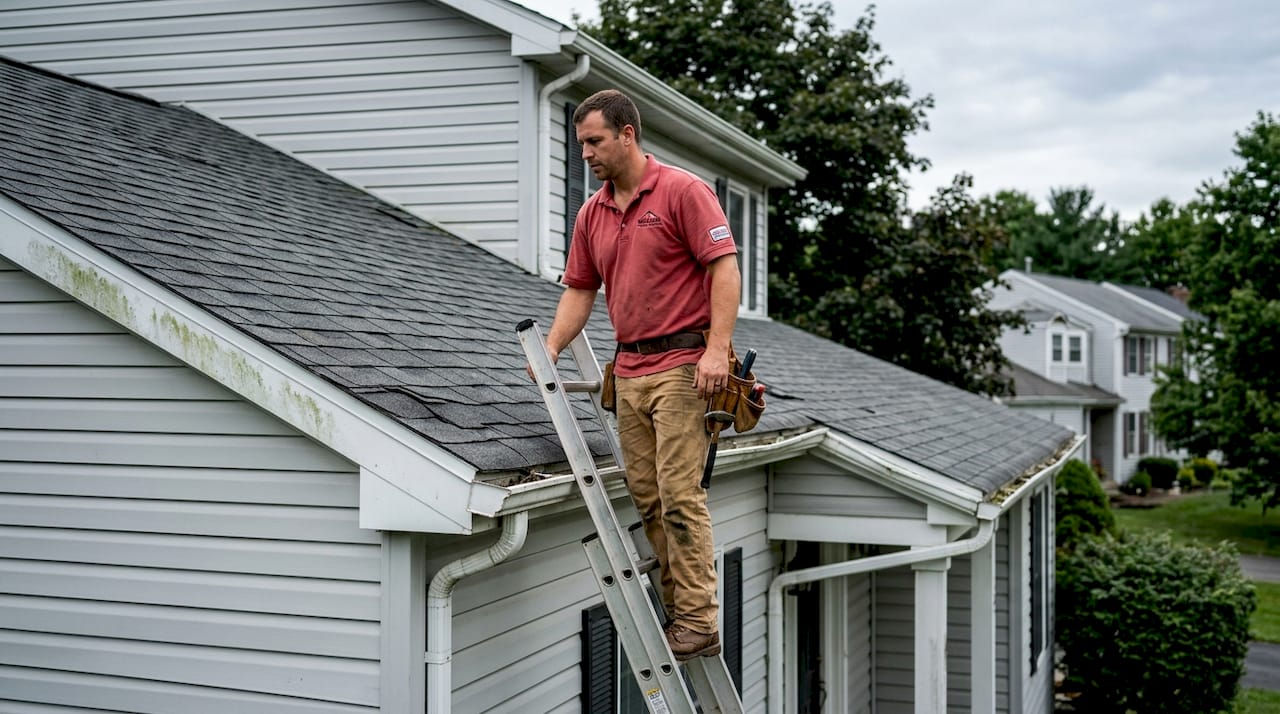
Many homeowners mistakenly believe that a few missing shingles or a small leak can wait until next season. That delay often transforms a simple fix into thousands of dollars in water damage, mold remediation, and structural repairs. Understanding what roof repair truly involves, when to act, and how to combine fixes with energy upgrades empowers you to protect your home while cutting utility bills. This guide walks you through repair basics, common methods, decision criteria, and sustainable solar options that maximize your investment and safeguard your property for years to come.
Table of Contents
- What Is Roof Repair And Why It Matters
- Common Methods And Materials Used In Roof Repair
- Knowing When To Repair, Replace, Or Call A Pro
- Sustainable Roof Repair And Solar Energy Upgrades
- Explore Professional Roofing And Solar Solutions
- Frequently Asked Questions
Key takeaways
| Point | Details |
|---|---|
| Definition | Roof repair addresses localized damage like broken shingles or flashing to restore waterproofing without replacing the entire roof. |
| Methods | Common techniques include shingle replacement, sealing cracks with asphalt cement, flashing repair, and emergency tarping for temporary protection. |
| Decision criteria | Repair suits roofs under 15 years old with damage covering less than 10 percent of the surface; larger or structural issues require professional replacement. |
| Sustainability | Pairing roof repair with solar panels and insulation upgrades can reduce energy use by 40 percent and deliver long-term savings. |
What is roof repair and why it matters
Roof repair is the process of addressing localized damage to restore waterproofing, distinct from full replacement. When a storm tears off a handful of shingles or a flashing seal cracks, you fix those specific trouble spots rather than stripping the entire roof down to the decking. This targeted approach saves money and extends the life of your existing system when the underlying structure remains sound.
The purpose of any repair is to stop water infiltration before it rots rafters, ruins insulation, or spawns mold colonies in your attic. A single unsealed gap can channel hundreds of gallons into wall cavities during heavy rain, leading to drywall replacement and potential health hazards. Early intervention keeps minor issues from snowballing into major renovations.
Full replacement involves tearing off all shingles, underlayment, and sometimes decking, then installing a brand-new roofing system. Repair, by contrast, leaves most of the roof intact and focuses on damaged zones. You might replace a dozen shingles around a chimney or reseal a valley flashing without touching the rest of the surface. Understanding this distinction helps you budget accurately and avoid unnecessary expense.
Many homeowners assume that because their roof looks fine from the curb, it must be fine overall. That mindset ignores hidden leaks that start small and grow silently. By the time stains appear on your ceiling, water has already soaked insulation and framing for weeks or months. Scheduling annual inspections and addressing damage immediately prevents that cascade of problems.
Pro Tip: Mark your calendar for a spring inspection after winter storms and a fall check before snow season. Catching issues early means simpler repairs and lower costs.
Common misconceptions include thinking that a patch job is a permanent fix or that DIY repairs always save money. While minor shingle replacements on low slopes can be homeowner-friendly, steep pitches, structural sag, or extensive damage demand professional expertise. Misjudging your skill level or the scope of damage often leads to botched repairs that cost more to redo than hiring a pro from the start. For a deeper dive into roofing fundamentals, explore our what is a roofing system 2026 guide homeowners resource.
Common methods and materials used in roof repair
Common methodologies include shingle replacement, sealing cracks with asphalt roofing cement, flashing resealing, and emergency tarping. Each technique suits different damage types and severity levels. Shingle replacement works for wind-blown tabs or hail-cracked pieces. You pry up the damaged shingle, slide out the old nails, slip a new shingle into place, and secure it with roofing nails and a dab of cement. This method restores the weatherproof barrier without disturbing surrounding materials.
Sealing cracks with asphalt roofing cement addresses small splits in shingles or gaps around penetrations like vent pipes. You clean the area, apply a generous bead of cement, and smooth it to create a watertight seal. This approach stops leaks quickly but is best suited for hairline cracks rather than large tears. Flashing resealing targets the metal strips around chimneys, skylights, and valleys where two roof planes meet. Over time, the sealant under flashing degrades, allowing water to seep behind the metal. You lift the flashing edge, apply fresh sealant, and press it back down to restore the barrier.
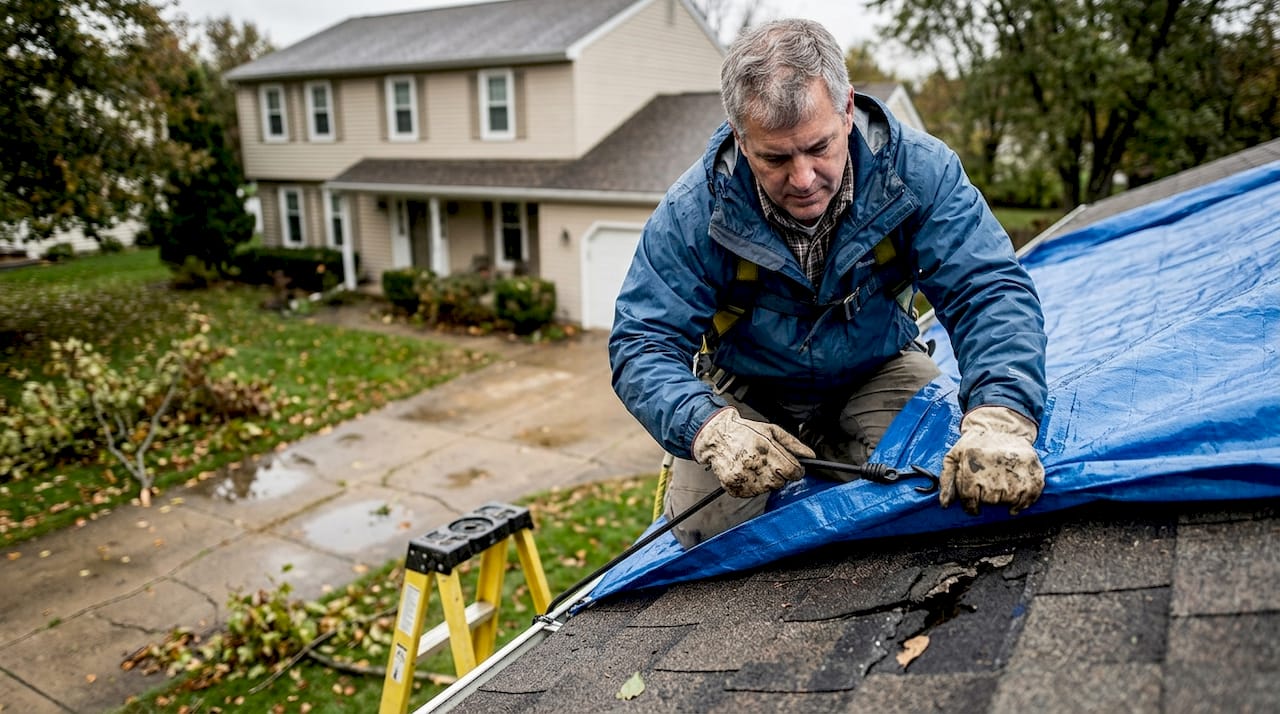
Emergency tarping provides temporary protection after severe storm damage. You stretch a heavy-duty tarp over the damaged section, anchor it with boards and sandbags, and leave it in place until permanent repairs can happen. Tarps prevent further water intrusion but are not a long-term solution. Wind can tear them loose, and UV rays degrade the material within weeks.
Materials you will encounter include replacement shingles that match your existing roof color and style, asphalt roofing cement for sealing, galvanized roofing nails that resist rust, metal flashing pieces, and tarps rated for outdoor use. Keeping a small stockpile of these items lets you handle minor emergencies before a contractor arrives.
Shingle replacement suits damage under 10 square feet on slopes less steep than 6:12. Patches typically last one to five years depending on application quality and weather exposure. If your roof has a steep pitch, multiple leak points, or damage exceeding that threshold, professional help is essential. Attempting complex repairs without proper safety gear or experience risks injury and substandard work that fails during the next storm.
Pro Tip: Always buy a few extra shingles when installing a new roof and store them in your garage. Having exact color matches on hand simplifies future repairs and avoids the hassle of hunting for discontinued products.
Here is a quick comparison of repair methods and their typical use cases:
| Method | Best for | Longevity | DIY friendly |
|---|---|---|---|
| Shingle replacement | Wind or hail damage under 10 sq ft | 5 to 10 years | Yes, on low slopes |
| Asphalt cement sealing | Hairline cracks, small gaps | 1 to 3 years | Yes |
| Flashing reseal | Penetration leaks, valley seepage | 3 to 7 years | Moderate skill |
| Emergency tarping | Storm damage awaiting permanent fix | Days to weeks | Yes |
For storm-related damage, check out our repair storm-damaged roof safely 2026 guide for step-by-step safety protocols and insurance claim tips.
Knowing when to repair, replace, or call a pro
Age benchmarks matter when deciding between repair and replacement. Roofs under 15 years old with localized damage are prime candidates for repair, especially if the underlying decking and structure remain solid. Beyond 15 years, asphalt shingles lose granules and flexibility, making patches less effective. At that point, you are often better off replacing the entire system to avoid a cycle of repeated repairs that never quite solve the problem.
Damage thresholds also guide your choice. If less than 10 to 15 percent of your roof surface shows issues, repair makes financial sense. Once damage exceeds that range, the cost of multiple patches approaches replacement pricing, and you lose the warranty benefits and uniform appearance of a new roof. Multiple leaks scattered across different zones often signal systemic failure rather than isolated incidents.
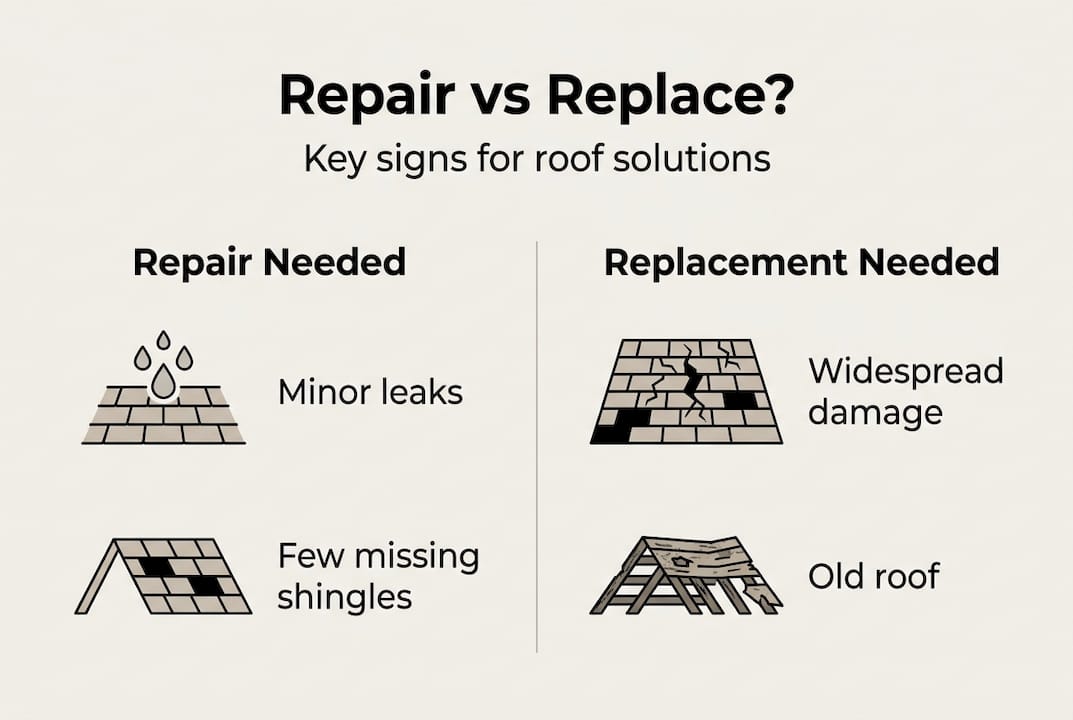
DIY repairs suitable only for minor asphalt shingle damage on low slopes where you can safely access the work area. Steep pitches, tile or metal roofing, structural sag, or extensive water damage require professional assessment and execution. Attempting repairs beyond your skill level risks falls, improper installation, and voided warranties. Contractors carry liability insurance and use harnesses, scaffolding, and specialized tools that most homeowners lack.
Professional inspection becomes critical when you notice sagging ridge lines, multiple ceiling stains, or daylight visible through roof boards in the attic. These symptoms point to structural compromise that no amount of shingle patching will fix. A certified inspector can identify hidden rot, inadequate ventilation, or code violations that DIY eyes miss. Spending a few hundred dollars on an inspection often saves thousands by catching major issues before they escalate.
Cost versus benefit calculations hinge on your roof’s remaining lifespan. If a repair costs 500 dollars and buys you three more years from a roof that would otherwise need replacing next season, that is money well spent. If the same repair costs 2,000 dollars on a roof nearing the end of its life, you might invest that sum toward a new system instead. Factor in energy efficiency gains from modern materials and potential insurance discounts for impact-resistant shingles when weighing your options.
Pro Tip: Request a written assessment from your contractor detailing repair costs, expected lifespan extension, and a comparison to replacement pricing. Transparent data helps you make an informed choice without sales pressure.
For more guidance on replacement timing, visit our signs you need a roof replacement article.
Sustainable roof repair and solar energy upgrades
Combining roof repair with solar PV and insulation upgrades reduces energy use by 40 percent and avoids costly leaks. When you are already investing in roof work, adding solar panels and improving attic insulation creates a synergy that amplifies savings. Solar arrays generate clean electricity to offset grid consumption, while better insulation reduces heating and cooling loads. Together, they slash utility bills and shrink your carbon footprint.
Typical energy reductions from this integrated approach range from 35 to 45 percent depending on home size, climate, and system capacity. Payback periods for solar installations average 12 to 18 years, but federal tax credits and state incentives can shorten that timeline significantly. In 2026, the federal solar investment tax credit remains at 30 percent, making it an opportune moment to bundle roof repair with renewable energy upgrades.
Environmental benefits extend beyond your household budget. A residential solar system offsets roughly three to four tons of carbon dioxide annually, equivalent to planting 100 trees each year. Pairing that with energy-efficient insulation cuts fossil fuel demand for heating and cooling, compounding your positive impact. Homeowners who prioritize sustainability often find that these upgrades boost property values and appeal to eco-conscious buyers when it is time to sell.
Solar-ready roof repair practices ensure your structure can support panel installation without compromising waterproofing. Contractors reinforce mounting points, verify decking integrity, and apply flashing around panel supports to prevent leaks. If your roof needs repair anyway, addressing these details upfront avoids tearing into a brand-new solar array later to fix underlying issues. Coordinating roofing and solar work under one project timeline also reduces labor costs and minimizes disruption.
Here is a comparison of standard roof repair versus sustainable upgrades:
| Aspect | Standard repair | Sustainable upgrade |
|---|---|---|
| Primary goal | Stop leaks, restore function | Stop leaks plus energy savings |
| Materials | Asphalt shingles, basic flashing | Cool-roof shingles, solar mounts, added insulation |
| Energy impact | None | 35 to 45 percent reduction |
| Upfront cost | Lower | Higher, offset by incentives |
| Long-term savings | Minimal | Substantial via lower utility bills |
| Environmental benefit | None | Reduced carbon emissions |
Pro Tip: Schedule a free energy audit before starting roof work. Identifying air leaks and insulation gaps lets you bundle fixes with your roofing project for maximum efficiency gains.
For detailed strategies on maximizing energy savings, explore our solar energy efficiency guide and learn how roofing boosts energy savings.
Explore professional roofing and solar solutions
After understanding repair fundamentals and upgrade benefits, partnering with experts ensures you achieve optimal outcomes without the trial-and-error risks of DIY approaches. Professional roofing and solar integration demands precision that only certified contractors deliver. Proper installation extends system lifespan, maximizes energy production, and protects your home investment.

Sunflowers Energy specializes in seamless roofing repairs paired with advanced solar solutions tailored to your home’s unique needs. Our team conducts thorough inspections to identify hidden damage, structural vulnerabilities, and energy inefficiencies that standard checks miss. Whether you need emergency storm repairs or a full solar upgrade, we provide transparent quotes and handle permitting, installation, and warranty registration from start to finish. Explore our roofing services at Sunflowers Energy to see how premium materials and cutting-edge techniques deliver lasting protection. Dive into our solar energy efficiency guide for actionable tips on reducing bills, and schedule your free roof inspection today to get an accurate assessment of your roof’s health and solar potential.
Frequently asked questions
What is roof repair?
Roof repair is the targeted fix of localized damage such as broken shingles, cracked flashing, or small leaks to restore waterproofing without replacing the entire roof. It preserves the existing system while addressing specific trouble spots.
How often do roofs need maintenance or repair?
Most roofs benefit from annual inspections, ideally in spring and fall, to catch minor issues before they escalate. Repairs become necessary when storms, wind, or age cause visible damage like missing shingles or water stains.
What does a typical roof repair cost?
Minor shingle replacements range from 200 to 600 dollars, while flashing reseals or larger patches can run 500 to 1,500 dollars depending on damage extent and roof accessibility. Emergency tarping costs 300 to 800 dollars for temporary protection.
Is DIY roof repair safe for homeowners?
DIY repairs work for minor asphalt shingle damage on low-slope roofs where you can safely access the area. Steep pitches, structural issues, or extensive damage require professional contractors with proper safety equipment and expertise.
What are the benefits of timely roof repair?
Prompt repairs prevent water infiltration that leads to mold, insulation damage, and structural rot, saving thousands in remediation costs. Addressing issues early also maintains energy efficiency by keeping your home envelope sealed. For storm-specific guidance, visit our storm-damaged roof repair 2026 resource.
Recommended
- How to repair storm-damaged roof safely in 2026 – Sunflowers Energy LLC A Roofing and Solar Companys
- What is a roofing system? A 2026 guide for homeowners – Sunflowers Energy LLC A Roofing and Solar Companys
- How Often Should You Get a Roof Inspection? (2026 Guide) – Sunflowers Energy LLC A Roofing and Solar Companys
- Patch It Up: Your Guide to the Best Wet Roof Sealants – Sunflowers Energy LLC A Roofing and Solar Companys

One Response