
Solar panels are a significant investment, so it makes sense that one of the first questions homeowners ask is how long do solar panels last. The short answer: most panels are built to produce electricity for 25 to 30 years, and many continue performing well beyond that mark. But lifespan alone doesn’t tell the full story.
How much power your panels generate over time depends on factors like degradation rates, material quality, local climate, and how well the system is maintained. Warranties also play a major role in protecting your investment, and not all warranties are created equal. Understanding what’s covered (and what isn’t) can save you thousands of dollars down the road.
At Sunflowers Energy LLC, we install residential solar systems using superior materials and proven technology because we know our customers want panels that hold up for decades, not just years. In this article, we’ll break down what determines solar panel lifespan, how degradation actually works, what to look for in warranty coverage, and when related components like inverters may need replacement before the panels themselves.
The real lifespan of solar panels
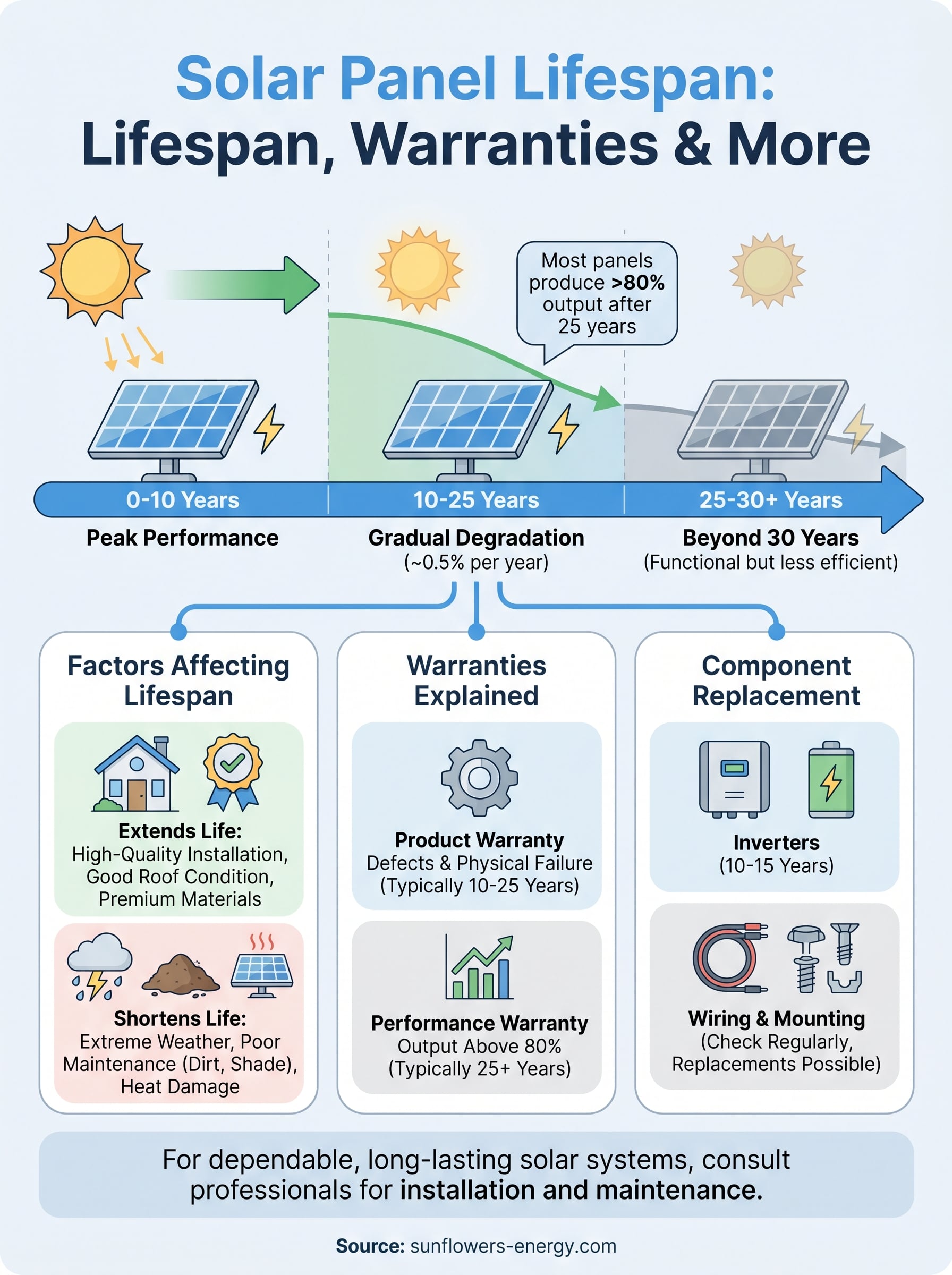
When people ask how long do solar panels last, the standard answer points to 25 to 30 years as the productive lifespan. But that number doesn’t mean your panels stop working the moment they hit year 25. It means their power output gradually decreases to a level where some homeowners consider upgrading rather than running a less efficient system. The physical panels themselves can sit on your roof and generate electricity for 35 years or more.
What "lifespan" actually means for solar panels
Solar panels don’t have a hard expiration date stamped on them. What happens over time is a slow reduction in electricity output, a process the industry calls degradation. A panel rated at 400 watts when it was new won’t produce 400 watts in year 25, but it will still produce electricity. Manufacturers and the broader industry consider a panel "past its useful life" when output falls below 80% of its original rated capacity, which also happens to be the threshold most performance warranties are built around.
Understanding that distinction helps you set realistic expectations. Your system isn’t built to run perfectly for 25 years and then fail. It’s built to decline slowly over decades while still delivering meaningful savings on your energy bills throughout that entire window.
The 80% output threshold is a practical benchmark, not a cliff: panels producing at 79% are still functional, just less efficient than when new.
How long panels last in real-world conditions
Field data backs up those 25 to 30 year projections in a concrete way. Panels installed in the early 1990s are still generating electricity today, giving researchers and manufacturers decades of real-world performance data to study. Modern panels benefit from improved cell technology, more durable encapsulants, and tempered glass that older units didn’t have, which means panels installed today are likely to outperform those earlier benchmarks.
Past the standard lifespan window, many homeowners keep their systems running for 35 years or more. At that point, the decision to replace them is driven by output efficiency compared to the cost of newer panels, not by physical failure. A well-installed system using quality materials in a moderate climate can stay productive well into its fourth decade, which makes the upfront investment look even stronger over time.
What shortens or extends panel life
Knowing how long do solar panels last in theory is useful, but your specific system’s lifespan depends on a mix of controllable and environmental factors. Some of those variables are within your control, and others come down to where you live and how your roof was built before the panels ever went up.
Factors that cut panel life short
Extreme weather is one of the biggest threats to panel longevity. Repeated exposure to hail, heavy snow loads, and high winds puts physical stress on the panels, the mounting hardware, and the wiring connections. Panels installed on poorly ventilated roofs also tend to run hotter than designed, and sustained high temperatures accelerate cell degradation faster than normal outdoor conditions would.
Neglect compounds the problem. Dirt, debris, and shade from nearby tree growth reduce output over time and, if left unchecked, can cause localized overheating in specific cells. That heat damage can permanently affect sections of a panel well before it reaches the end of its natural lifespan.
Regular visual inspections once or twice a year catch small problems before they turn into expensive ones.
Factors that extend panel life
High-quality installation is the single biggest driver of long-term performance. Panels mounted with proper spacing for airflow, secured with corrosion-resistant hardware, and wired by a licensed electrician are far less likely to develop problems between years 10 and 25.
Your roof condition matters just as much. Installing panels on a roof that already needs work shortens the functional life of the entire system, because you will need to remove and reinstall the array whenever repairs come up. Starting with a solid roof surface protects both investments at once.
Warranties, degradation, and expected output
When thinking about how long do solar panels last, degradation rate is the number that matters most for your long-term energy output. Most modern panels degrade at roughly 0.5% per year, meaning a panel producing 400 watts today will produce around 350 watts by year 25. That figure still sits well above the 80% threshold most performance warranties are built to protect, so you keep meaningful savings on your energy bill throughout the entire lifespan of the system.
How degradation actually works
Degradation isn’t dramatic or sudden. Sunlight exposure, temperature swings, and moisture all cause microscopic changes inside the solar cells over time, slowly reducing their ability to convert light into electricity. Premium panels from established manufacturers typically hold degradation to 0.5% or below annually, while lower-quality panels can degrade at 1% or more per year, cutting your usable output significantly before you reach year 20.
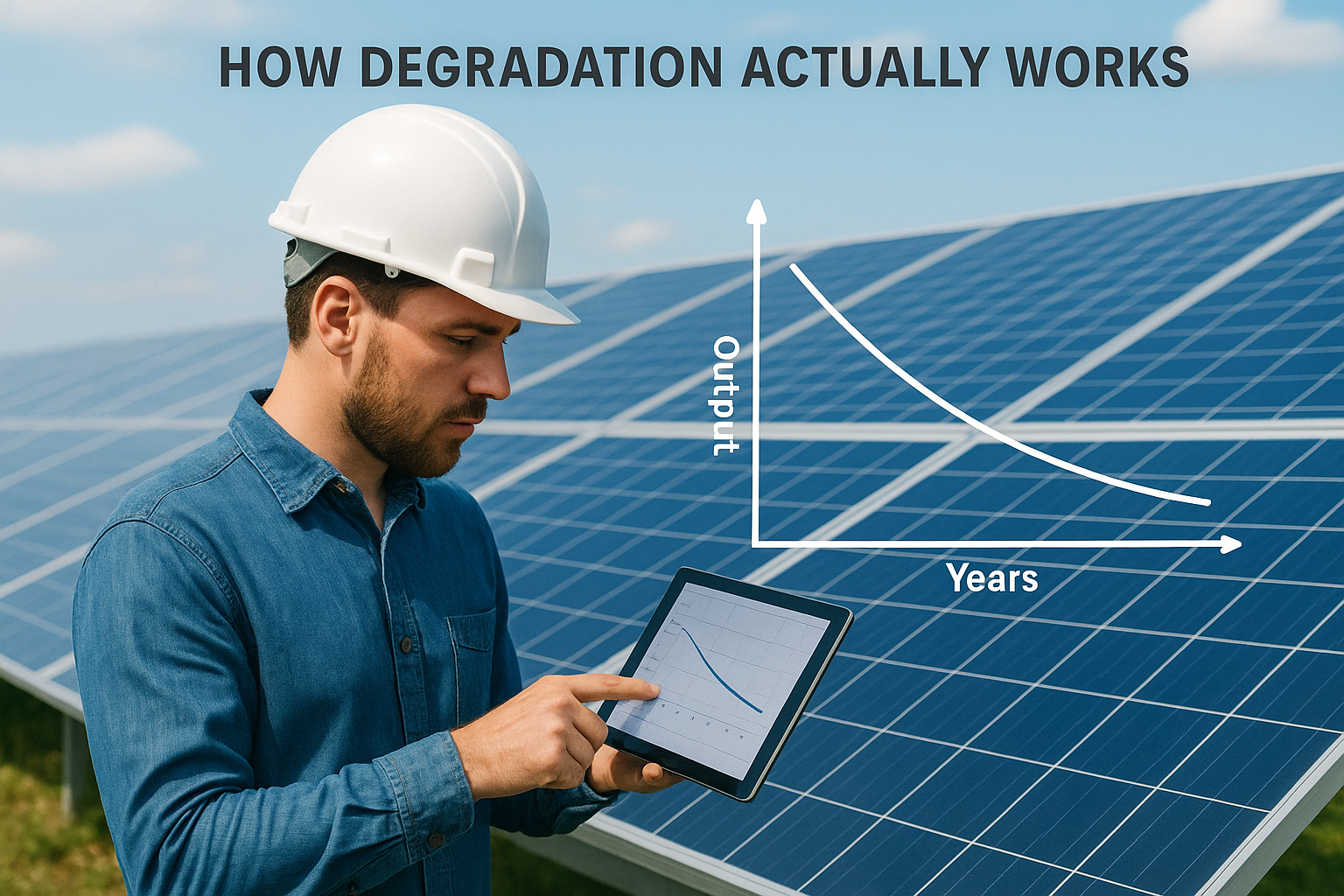
| Annual Degradation Rate | Output at Year 25 (% of original) |
|---|---|
| 0.5% | ~88% |
| 0.8% | ~82% |
| 1.0% | ~78% |
Choosing a panel with a lower degradation rate directly determines how much electricity your system generates over its full lifetime.
What warranty coverage actually protects
Most reputable manufacturers offer two separate warranties: a product warranty covering defects and physical failure (typically 10 to 25 years), and a performance warranty guaranteeing output stays above 80% of rated capacity for 25 years. Read both documents before you commit. A short product warranty on a system you plan to run for three decades leaves you exposed to out-of-pocket replacement costs that can add up fast, so comparing warranty terms across manufacturers is worth the extra time before installation.
Components that wear out before panels
When you think about how long do solar panels last, the panels themselves often outlive the other parts of your system. Understanding which components wear out first helps you plan maintenance costs realistically and avoid being caught off guard by a repair bill midway through your system’s productive life.
Inverters
Your inverter converts the DC electricity your panels produce into the AC electricity your home actually uses. String inverters, the most common type, typically last 10 to 15 years before needing replacement, which means most homeowners replace theirs at least once during the full lifespan of their panels. Microinverters and power optimizers tend to last longer, often 20 to 25 years, and carry warranties that reflect that difference.
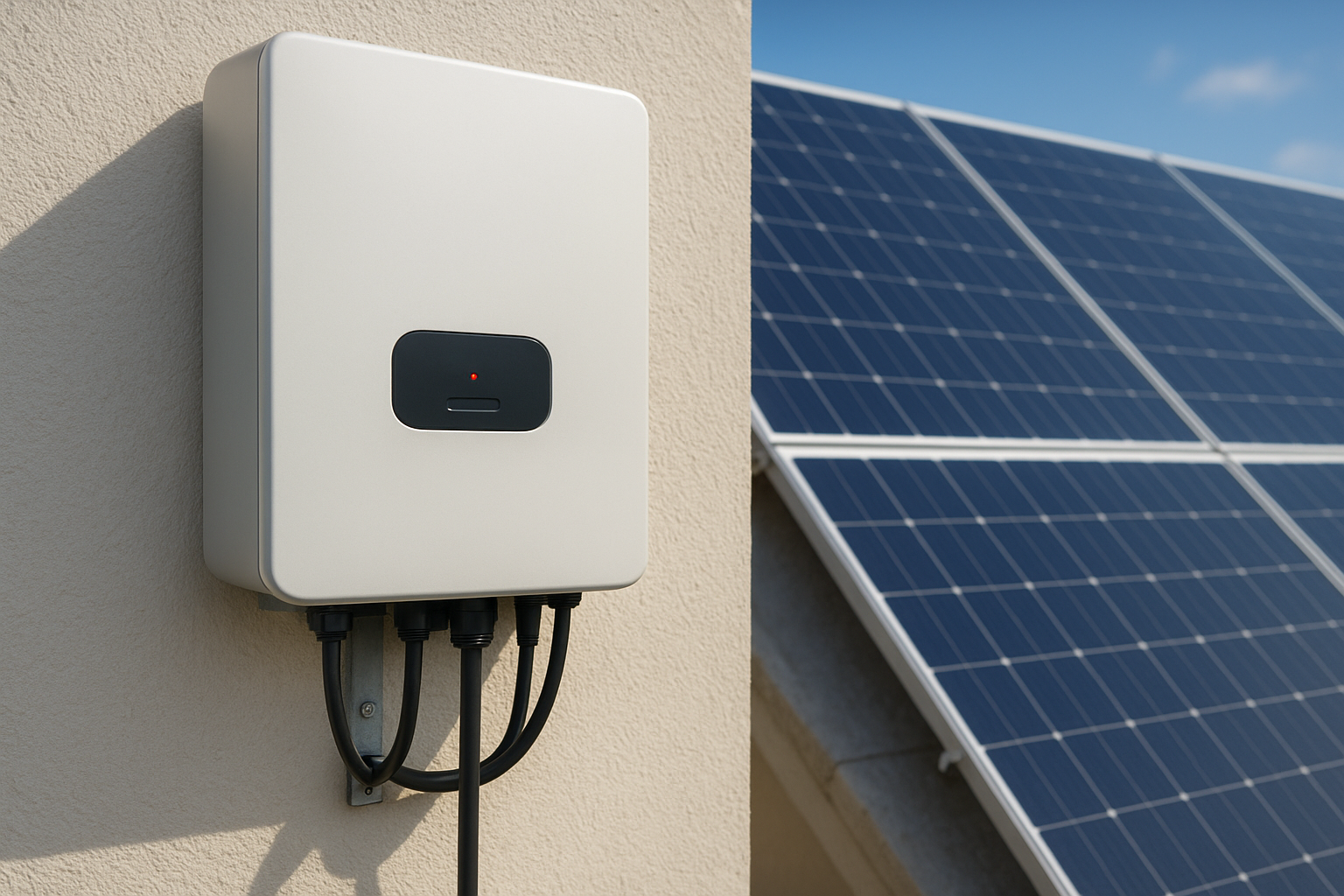
Budgeting for an inverter replacement around year 12 to 15 is a smart move that keeps your system running efficiently without a major surprise cost.
Wiring and mounting hardware
Outdoor wiring and electrical connectors degrade over time from UV exposure, temperature cycling, and moisture. Loose or corroded connections reduce output and, in worst cases, create fire hazards. Inspecting the visible wiring and junction boxes every few years catches these issues early before they affect your panels or your roof.
Mounting hardware holds your panels in place through decades of wind, rain, and thermal expansion. Low-quality racking systems can loosen or corrode well before the panels above them need replacement. Choosing corrosion-resistant aluminum racking and having a professional verify the mounting integrity every several years protects both your panels and your roof structure.
When to repair, replace, or upgrade
Knowing how long do solar panels last gives you a useful baseline, but your real decision point comes down to specific performance signals and cost comparisons. Not every drop in output means you need to pull panels off your roof. Some issues are minor fixes, while others signal that the math on replacement starts to work in your favor.
When repair is the right call
If your system shows a sudden output drop rather than a slow, gradual decline, the cause is usually a fixable component like a faulty inverter, a damaged connector, or a single underperforming panel. Localized damage from a storm or debris typically falls into repair territory too, especially if the rest of the array is performing well and your panels are under 20 years old.
A sudden 20% output drop on a 10-year-old system almost always points to a component failure, not the end of your panel life.
When replacement or upgrade makes sense
Replacement starts making financial sense when your panels have passed the 25-year mark and output has fallen noticeably below 80% of their original rated capacity. At that point, newer panel technology offers significantly higher efficiency ratings than what was available when your original system was installed, which means you get more electricity from the same roof space.
Upgrading also makes sense if your energy needs have grown substantially since installation, whether from adding an electric vehicle, a home addition, or other high-draw appliances. Running a larger system on updated equipment often delivers better long-term value than patching an aging setup that no longer covers your usage.
Final takeaways
The answer to how long do solar panels last comes down to more than a single number. Most panels deliver reliable output for 25 to 30 years, and many keep producing electricity well past that mark. What determines your system’s actual performance over time is a combination of panel quality, installation workmanship, climate conditions, and how well you maintain the components around the panels.
Your inverter will likely need replacement before your panels do, and your roof condition at installation sets the foundation for everything above it. Watching for sudden output drops rather than gradual decline helps you catch fixable problems early. When your panels approach the 25-year mark and output falls below 80%, newer technology will almost always give you better value.
Ready to build a system that performs for decades? Get a free solar estimate from Sunflowers Energy LLC and find out what the right setup looks like for your home and energy goals.