
A functioning roof vent does more than most homeowners realize, it regulates attic temperature, prevents moisture buildup, and extends the lifespan of your entire roofing system. When a vent fails or shows signs of deterioration, replacing it quickly matters. But before you pick up the phone, you probably want to know: what does roof vent replacement cost in 2026? That’s a fair question, and the answer depends on several variables that we’ll break down here.
Pricing for roof vent replacement can range from under $100 for a simple static vent swap to well over $1,000 for powered or ridge vent installations. Material type, roof accessibility, labor rates in your region, and whether your existing roofing needs repair around the vent opening all play a role in your final bill. Without understanding these factors, it’s easy to overpay, or worse, underpay for a job done poorly.
At Sunflowers Energy LLC, we handle residential and commercial roofing projects daily, including vent replacements that come up during our free on-site roof inspections. This guide pulls from that hands-on experience to give you realistic cost expectations, a breakdown of vent types and their price ranges, and the key factors that shift your estimate up or down.
What roof vent replacement cost includes
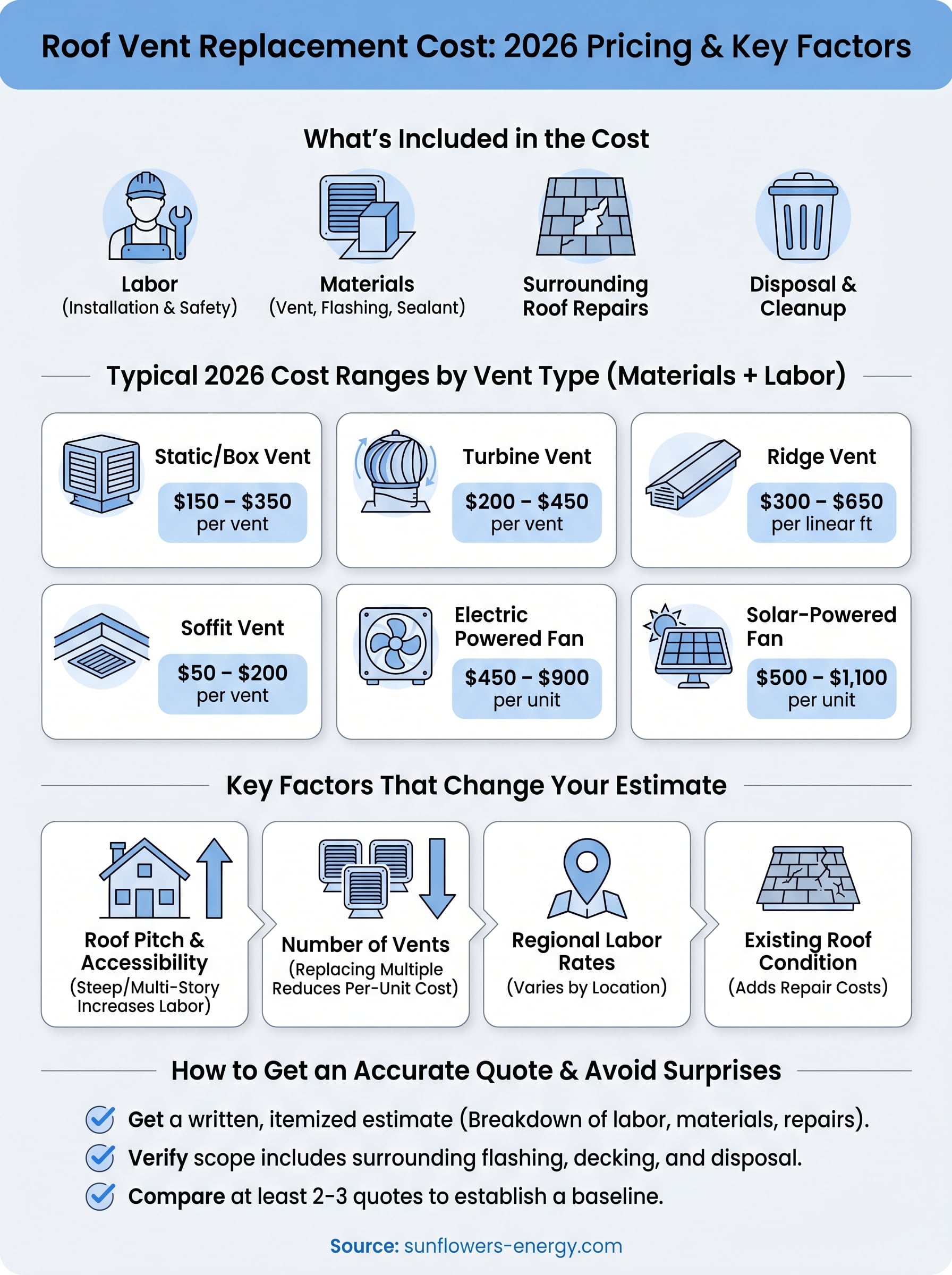
When you receive a quote for roof vent replacement, the number on paper reflects more than just swapping one vent for another. A full replacement job typically bundles labor, materials, and any corrective work needed on the surrounding roof deck or flashing. Knowing what each line item covers helps you spot when a contractor is overcharging, underquoting, or leaving something critical out of their estimate.
Labor charges
Labor is usually the largest portion of your roof vent replacement cost, and for good reason. A roofing crew needs to access your roof safely, remove the old vent without disturbing surrounding shingles or membrane, seal the new vent correctly, and clean up afterward. Most contractors bill labor at an hourly rate between $50 and $100, though some price the job as a flat fee per vent.
The complexity of your roof affects labor time significantly. A steep-pitch roof or a multi-story home requires more safety equipment and takes longer to navigate, which drives up the labor charge. In contrast, a single-story home with a walkable slope is faster to work on, so you’ll typically see a lower labor number on your estimate.
Steep or complex rooflines can easily double the labor portion of your estimate compared to a standard single-story home.
Material and vent unit costs
The vent unit itself accounts for a meaningful share of the total price, and costs vary widely based on vent type and material quality. A basic plastic static vent cap might run $10 to $30 at a hardware store, while a solar-powered or electric attic fan can cost $150 to $500 or more before installation. Flashing kits, roofing nails, sealant, and underlayment patches are additional materials that factor into the final invoice.
Some contractors include all materials within a single project price, while others itemize each component separately. Ask for a breakdown if yours doesn’t provide one. Knowing the cost of each part lets you verify that the materials being used match what you’re paying for, and it protects you from substitutions with lower-grade products.
Repairs to the surrounding roof area
Replacing a vent rarely happens in isolation. When a vent fails, it often signals that the surrounding shingles, flashing, or roof deck have also degraded, especially if the vent has been leaking for any period of time. Any damaged material needs to be addressed simultaneously, or you risk a new vent failing prematurely because the substrate beneath it is compromised.
Your contractor should inspect the area around each vent before finalizing a quote. Rotted decking, cracked flashing, or lifted shingles all add cost, but skipping those repairs now leads to a more expensive job later. At Sunflowers Energy, our free on-site inspection always includes a review of the surrounding roof zone so you get an accurate picture before any work begins.
Disposal and cleanup
This line item is easy to overlook, but it’s a real part of the job. Removing old vents, deteriorated flashing, and damaged shingles generates debris that needs to be disposed of properly. Many contractors include disposal in their base quote, but some treat it as a separate charge that only appears on the final invoice.
Always confirm whether debris removal is included before signing anything. A job that looks cheaper on paper can end up costing the same or more once a $50 to $150 disposal fee gets added that wasn’t disclosed from the start.
Typical 2026 price ranges by vent type
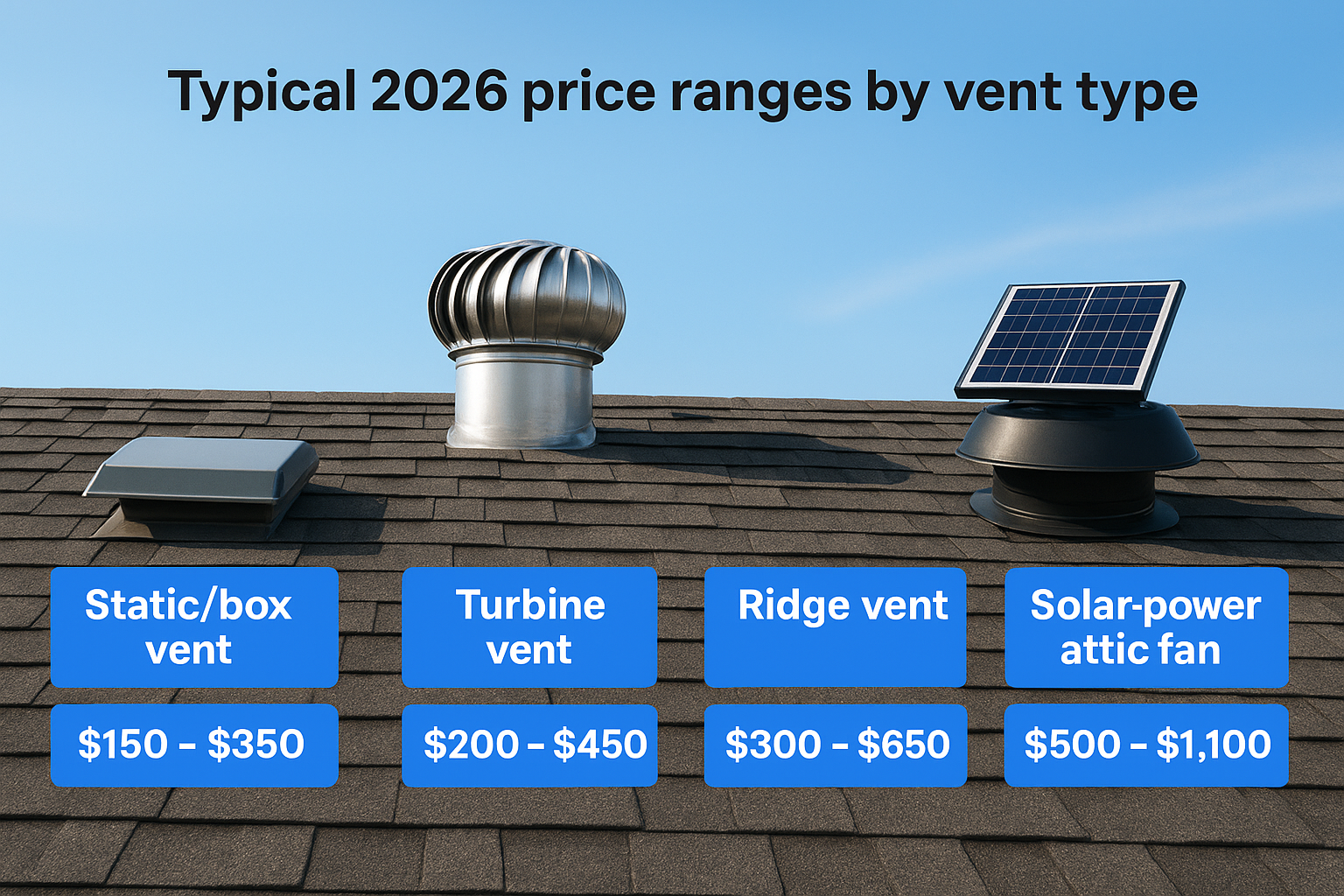
Not all vents carry the same price tag, and the type you need has a bigger impact on your total roof vent replacement cost than most homeowners expect. The table below gives you a quick reference for what each vent type typically costs in 2026, including materials and labor for a standard installation.
| Vent Type | Typical Cost Range (Materials + Labor) |
|---|---|
| Static/box vent | $150 – $350 per vent |
| Turbine vent | $200 – $450 per vent |
| Ridge vent | $300 – $650 per linear foot (installed) |
| Soffit vent | $50 – $200 per vent |
| Electric powered attic fan | $450 – $900 per unit |
| Solar-powered attic fan | $500 – $1,100 per unit |
Static and box vents
Static vents are the most common and the most affordable option for most residential roofs. They have no moving parts, require minimal maintenance, and a straightforward replacement typically runs $150 to $350 per vent when you include professional labor. If your roof has several static vents that are all aging at the same pace, replacing them in a single visit can reduce the per-unit labor cost since the crew is already on the roof.
Turbine vents
Turbine vents use wind-driven rotation to pull hot air out of the attic. Replacement costs generally fall between $200 and $450 per unit, depending on the size of the turbine and how accessible the roof is. One important detail: turbines have bearings that can seize or squeak as they age, so if yours is making noise before it fully fails, replacing it before it stops spinning entirely saves you from the moisture and heat buildup that follows.
A seized turbine vent is essentially a capped hole in your roof, meaning your attic loses all active ventilation from that unit.
Ridge vents
Ridge vents run along the peak of the roof and provide continuous ventilation across the entire attic span. Because of their length, pricing is quoted per linear foot rather than per unit, and installed costs typically land between $300 and $650 per linear foot in 2026. This makes ridge vent replacement one of the pricier projects on this list, but it also delivers the most even airflow compared to individual point vents.
Powered attic fans
Electric and solar-powered attic fans sit at the top of the price range. Electric models typically cost $450 to $900 installed, while solar-powered units run $500 to $1,100 or more depending on panel output and brand. The higher upfront cost reflects the added electrical or wiring work involved, but powered fans are often the right call for attics that routinely overheat despite adequate static or ridge ventilation.
Key factors that change your estimate
Several variables can push your roof vent replacement cost significantly higher or lower than the typical price ranges listed above. Understanding what drives those swings lets you evaluate quotes with more confidence and ask the right questions before committing to a contractor.
Roof pitch and accessibility
Steep roofs require additional safety equipment and take longer to work on, both of which increase the labor portion of your estimate. A roof with a pitch above 6:12 is generally considered steep by industry standards, and contractors factor that into their pricing from the start. Multi-story homes compound this further because crews need longer ladders and more time to move materials and equipment up and down safely.

On a steep or multi-story roof, labor costs alone can add $100 to $300 to a single vent replacement compared to a standard walkable roof.
Number of vents being replaced
Replacing multiple vents during a single visit almost always costs less per unit than scheduling separate jobs for each one. The crew is already on your roof, the equipment is already staged, and the travel and setup time gets distributed across the whole project. If your roof has several aging vents at the same stage of wear, grouping the replacements together is one of the most straightforward ways to reduce your overall cost.
Your contractor can usually advise you on which remaining vents are likely to fail within the next one to three years. Replacing those at the same time as your current problem vent saves you another service call and another labor charge down the road.
Regional labor rates
Labor rates vary considerably depending on where you live. Roofing contractors in high cost-of-living metros like New York, Los Angeles, or Chicago typically charge more per hour than contractors in smaller markets or rural areas. Material costs can also shift by region based on supply chain logistics and local demand, particularly for specialty items like solar-powered fans or custom ridge vent systems.
Roof age and existing condition
The overall condition of your roof shapes the scope of work more than most people expect. An older roof is more likely to have damaged decking, deteriorated flashing, or brittle shingles surrounding the vent opening, all of which need to be addressed before the new vent goes in. Skipping those repairs to save money short-term typically leads to premature vent failure, water intrusion, and a more expensive fix within a few seasons. A thorough inspection before any vent work begins is the only reliable way to catch those hidden costs upfront.
How to get an accurate quote and avoid surprises
Getting an accurate estimate for roof vent replacement cost starts before you ever speak with a contractor. Doing a little preparation upfront saves you from the most common sources of billing surprises: vague scope, missing line items, and undisclosed fees that show up on the final invoice. The steps below walk you through how to approach the process the right way.
Get a written, itemized estimate
Every reputable roofing contractor should be willing to provide a written estimate that breaks down labor, materials, and any additional repair costs separately. A single lump-sum number tells you very little about what you’re actually paying for. Request itemized pricing before agreeing to any work, and verify that disposal and cleanup are explicitly included rather than treated as an aftercharge.
If a contractor hesitates to provide a written breakdown, treat that as a signal to keep looking. A professional who stands behind their pricing has no reason to keep the details vague.
A written, itemized estimate is your clearest protection against scope creep and unexpected charges once work begins.
Ask the right questions before signing
Asking direct questions during the estimate process gives you a much clearer picture of what the job actually involves. Before signing anything, confirm the following with your contractor:
- Is the surrounding flashing and decking included in the inspection and repair scope, or priced separately?
- What brand and quality of vent unit will be installed?
- Does the quote cover debris disposal, or is that billed after the fact?
- How long has the company been operating, and do they carry current liability insurance and worker’s compensation?
These questions also help you compare quotes from different contractors on a level playing field, since two estimates at the same price can represent very different scopes of work.
Watch out for common pricing red flags
Unusually low quotes deserve as much scrutiny as unusually high ones. A bid that comes in well below the typical price range for your vent type often signals that something is being left out, whether that’s proper flashing, quality materials, or repair work that will need to be addressed shortly after. Pressure to accept a quote on the spot, without time to review it, is another warning sign worth paying attention to.
Getting at least two or three quotes for any vent replacement project is a straightforward way to establish a reasonable baseline for your area. Comparing those estimates side by side, with itemized breakdowns in hand, gives you the information you need to make a confident decision.
Next steps
You now have a complete picture of roof vent replacement cost in 2026, from what goes into a typical estimate to the vent types, price ranges, and factors that shift your final number. The most important takeaway is that accurate pricing starts with a thorough inspection, not just a quick glance at the problem vent from the ground.
Before calling contractors, know which vent type you have, note any visible signs of damage around the vent opening, and commit to getting written, itemized estimates from at least two or three roofing professionals. That preparation alone puts you in a much stronger position to evaluate what you’re being quoted and why.
If you’re in our service area and want an honest assessment with no sales pressure, schedule a free on-site roof inspection with Sunflowers Energy LLC. Our team inspects the full vent system, identifies any surrounding damage, and gives you a clear quote before any work begins.