
Roof flashing sits at some of the most vulnerable points on your roof, around chimneys, vents, skylights, and wall intersections. When it fails, water finds its way in fast, and the damage adds up even faster. Understanding the roof flashing replacement cost before you call a contractor puts you in a much stronger position to budget accurately and avoid overpaying.
Prices vary quite a bit depending on the flashing material, the location on your roof, and how much labor is involved. A simple drip edge replacement doesn’t cost the same as re-flashing a chimney, and the type of metal used, aluminum, copper, galvanized steel, shifts the number significantly. Knowing what drives these costs helps you make a smarter decision when you get quotes.
At Sunflowers Energy LLC, we handle roofing projects across residential and commercial properties, including flashing repairs and full replacements. We see firsthand how proper flashing installation protects everything underneath it. This guide breaks down 2026 pricing by flashing type, material, and labor so you know exactly what to expect when it’s time to get the work done.
What roof flashing is and why it fails
Roof flashing is thin strips of metal, sometimes rubber or plastic, installed at every point where your roof meets a vertical surface or where two roof planes intersect. Its sole job is to seal those joints so water runs off the roof instead of penetrating the structure beneath. Without it, every chimney, vent pipe, skylight, and wall junction becomes a direct entry point for water to damage your home’s framing, insulation, and interior.
What flashing actually does
Flashing works by directing water away from vulnerable joints and toward the rest of the roof surface, where it can drain off safely. Contractors install it at transitions because those spots collect far more water than flat sections do, and a small gap is all it takes to start a persistent leak. You’ll find it in several forms: step flashing runs along walls in overlapping pieces, counter flashing wraps over step flashing at chimneys, and valley flashing sits in the V-shaped channels where two roof planes meet.
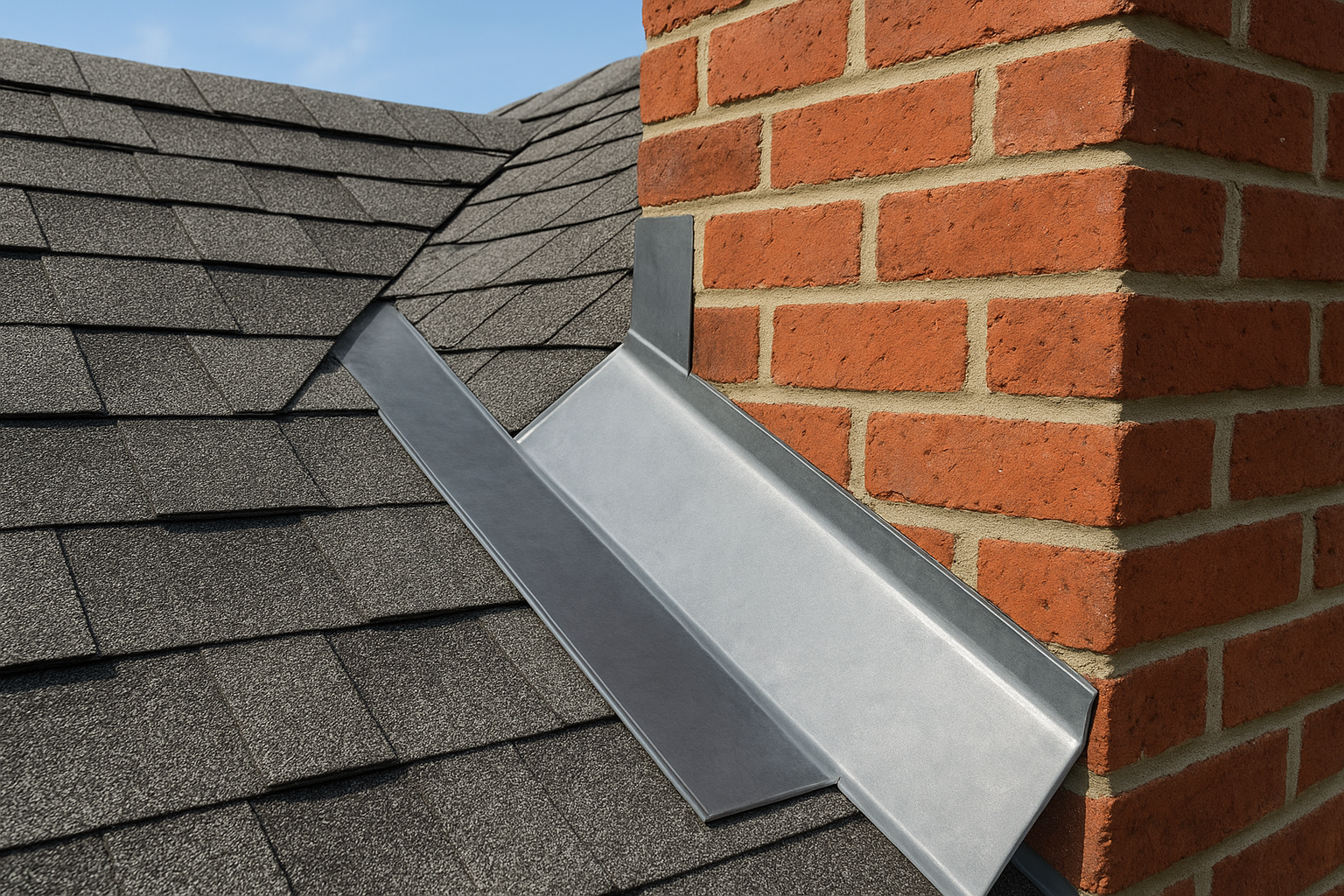
Properly installed flashing is one of the most important factors in how long your roof stays leak-free, and it’s often the first thing inspectors check when tracing water damage back to its source.
Each type handles water differently, but all flashing shares the same vulnerability: the seal between the metal and the surrounding roofing material degrades over time. Understanding this directly affects how you interpret the roof flashing replacement cost you’ll see when you start gathering quotes, since location and failure type drive the price as much as material does.
The most common reasons flashing fails
Age is the most straightforward cause. Metal expands and contracts with every temperature swing, and over the years, that constant movement loosens the seal at the edges. Sealant dries out, cracks develop, and water finds those gaps quickly. Most flashing lasts between 20 and 30 years, but poor original installation shortens that lifespan significantly, sometimes to less than a decade.
Storm damage speeds things up further. High winds can lift or pull flashing away from the roof surface, and hail leaves dents that disrupt normal water flow. Rust is another common problem, especially with galvanized steel flashing in regions with high humidity or heavy rainfall. Once rust sets in, it weakens the metal and creates small holes that often go unnoticed until water damage appears on your ceiling or walls.
2026 roof flashing replacement cost ranges
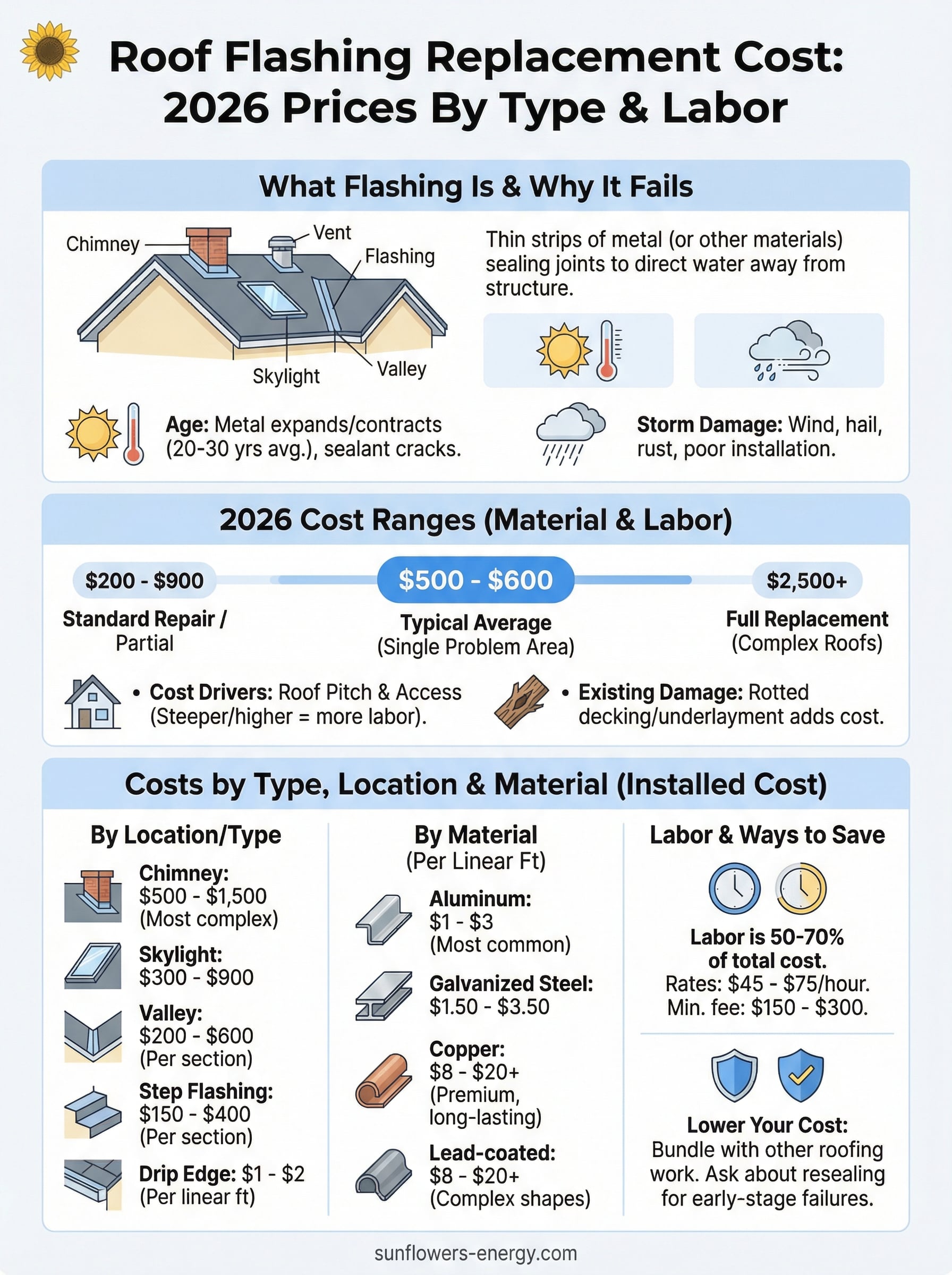
Most homeowners pay between $200 and $900 for a standard flashing repair or partial replacement. Full replacements on complex roofs, such as those with multiple chimneys or skylights, can push that number closer to $2,500 or more. The national average for a typical roof flashing replacement cost lands around $500 to $600 for a single problem area with moderate labor involvement.
What the national averages actually cover
The numbers below give you a realistic baseline before you contact a contractor. Keep in mind these reflect material and labor combined for common residential projects.
| Project Scope | Typical Cost Range |
|---|---|
| Minor flashing repair (sealant + patch) | $75 – $200 |
| Single flashing section replacement | $200 – $500 |
| Chimney flashing replacement | $500 – $1,500 |
| Skylight flashing replacement | $300 – $900 |
| Full roof flashing replacement | $1,000 – $2,500+ |
The gap between a minor repair and a full replacement is significant, so getting a professional inspection first helps you avoid paying for more work than your roof actually needs.
Why prices vary so much from one job to the next
Roof pitch plays a large role. Steeper roofs require more safety equipment and slower work, which increases labor time directly. Accessibility matters too: a two-story home costs more to work on than a single-story ranch.
The extent of existing water damage also affects your final bill. If a contractor finds rotted sheathing or damaged underlayment beneath the old flashing, that repair work adds to the total before any new flashing goes down.
Costs by flashing type and roof location
Where flashing sits on your roof determines how complex the installation is, and that complexity drives the roof flashing replacement cost more than most homeowners expect. A flat drip edge section is straightforward, but a chimney with multiple angles and counter flashing layers requires far more time and precision.
Chimney and skylight flashing
Chimney flashing is typically the most expensive single location because it involves multiple flashing components: step flashing, counter flashing, and often a saddle or cricket behind the chimney to redirect water. You can expect to pay $500 to $1,500 for a chimney flashing replacement, depending on chimney size and the number of sides involved. Skylight flashing runs slightly lower, between $300 and $900, since the geometry is simpler, but any surrounding shingle removal adds labor time.
Valley and step flashing
Valley flashing covers the channels where two roof planes meet, and your cost will typically range from $200 to $600 for a standard section. Because these areas carry a high volume of runoff, contractors need to remove and reinstall surrounding shingles carefully, which adds to the labor portion of your bill.
Step flashing is installed piece by piece alongside each course of shingles along a wall, and replacing it almost always means disturbing the existing shingles in that area.
Step flashing replacement costs between $150 and $400 per section. Drip edge flashing is the most budget-friendly location, typically running $1 to $2 per linear foot installed.
Costs by material and price per linear foot
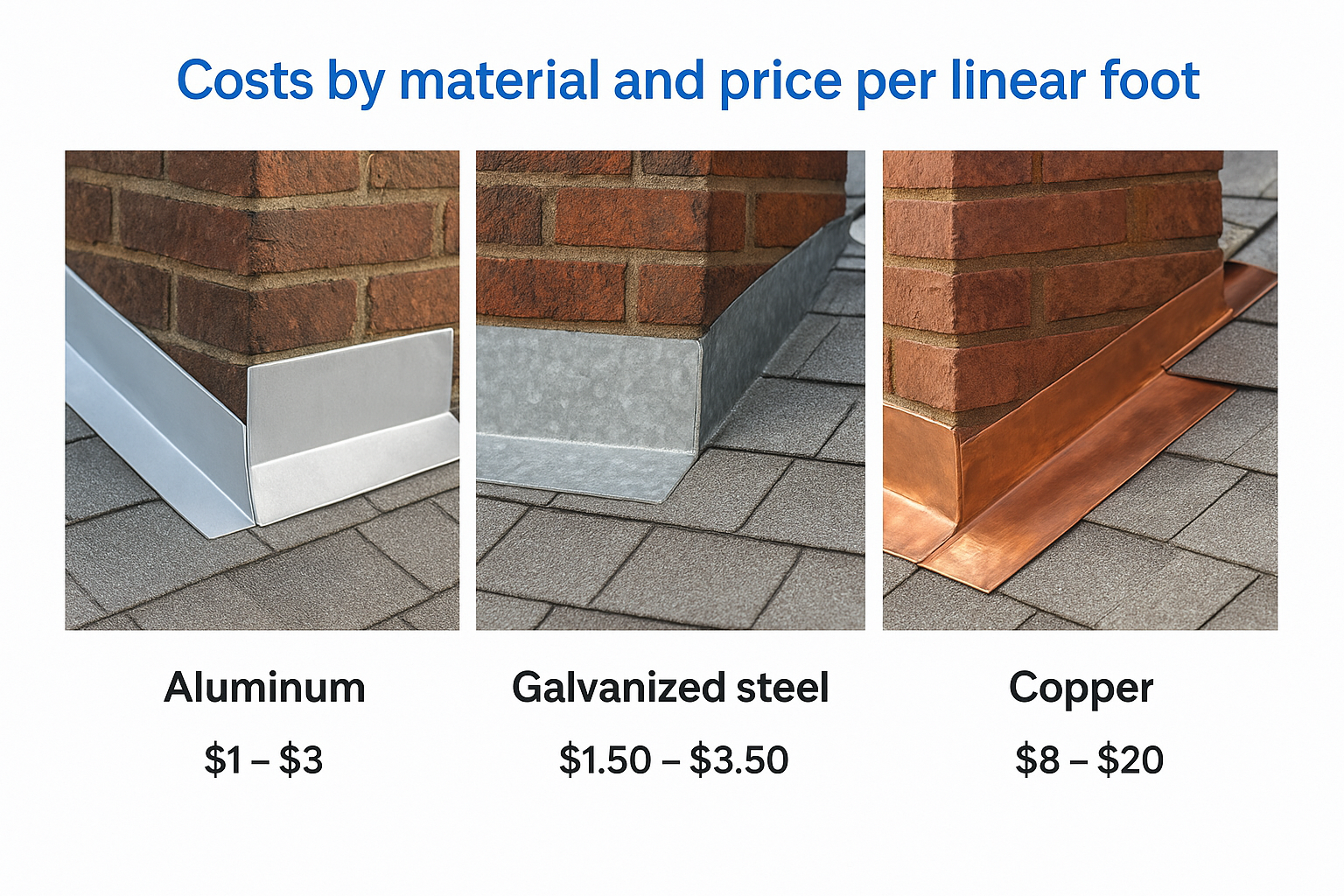
The material you choose affects your roof flashing replacement cost more than most homeowners expect. Aluminum and galvanized steel sit at the affordable end of the range, while copper adds a premium that can triple your material bill for the same linear footage.
Aluminum and galvanized steel
These two metals cover the majority of residential flashing jobs across the United States. Aluminum is the most common choice, priced between $1 and $3 per linear foot installed, because it’s lightweight, rust-resistant, and compatible with most roof types. Galvanized steel runs slightly higher, typically $1.50 to $3.50 per linear foot installed, and holds up better in areas with heavy wear.
| Material | Installed cost per linear foot |
|---|---|
| Aluminum | $1 – $3 |
| Galvanized steel | $1.50 – $3.50 |
In coastal or high-humidity regions, aluminum often outlasts galvanized steel because it doesn’t corrode the same way when exposed to salt air or persistent moisture.
Copper and lead-coated flashing
Copper is the premium flashing material, running $8 to $20 per linear foot installed. It lasts 50 years or more without corroding and requires almost no maintenance over its lifespan. The tradeoff is a much higher upfront cost: a full chimney re-flash in copper can reach $2,000 or more by itself.
Lead-coated copper sits in a similar price range and offers exceptional malleability, which makes it a practical choice for complex shapes around curved surfaces or intricate chimney geometry. Both copper options make the most financial sense on high-value roofs where you plan to stay in the home long-term.
Labor, add-ons, and ways to lower the total
Labor typically accounts for 50 to 70 percent of your total roof flashing replacement cost. Most contractors charge between $45 and $75 per hour, though rates run higher in urban markets or on steep pitches that require additional safety equipment on-site.
What labor and add-ons typically cost
On a simple single-section replacement, expect one to three hours of work. A chimney re-flash can take four to six hours or more. Contractors often set a minimum job fee of $150 to $300, so small repairs rarely come in at the low end of any quoted range.
Getting at least three written quotes before you commit lets you spot outliers and get a realistic picture of local labor rates for your specific job.
Several line items can push your invoice above the initial estimate. Shingle removal and reinstallation adds $1 to $3 per square foot in many cases, and if a contractor finds rotted decking or damaged underlayment beneath the old flashing, those repairs add both material and labor costs before any new flashing goes down.
How to reduce what you pay
Bundling flashing work with a larger roofing project is one of the most effective ways to reduce the per-unit cost. Contractors already mobilized on your roof charge less to handle multiple issues in a single visit than they would for a separate trip.
You can also ask whether resealing is a viable option before committing to a full material replacement. Some early-stage failures respond well to a professional sealant application at a fraction of the full replacement cost.
Next steps
Now you have a clear picture of what drives roof flashing replacement cost, from the type of metal you choose to where the flashing sits on your roof. Gathering multiple written quotes and understanding each line item puts you in control of the conversation before a contractor ever sets foot on your property.
Start by noting any visible warning signs: staining on interior ceilings, lifted metal edges at the chimney, or cracked sealant around vent pipes. Acting on those early signals costs far less than waiting until water damage works into your framing or insulation. A small repair now can prevent a much larger bill later.
When you’re ready to get a professional opinion, contact Sunflowers Energy LLC for a free on-site inspection and estimate. Our team handles flashing repairs and complete roof replacements across residential and commercial properties, and we’ll give you a clear, honest quote with no obligation attached.