
If you’re replacing your roof in 2026, there’s a good chance you’ve landed on the metal roof vs asphalt shingles debate. It’s the most common decision homeowners face when a roof needs replacing, and honestly, both options have real strengths worth considering. The right choice depends on your budget, your goals, and how long you plan to stay in your home.
At Sunflowers Energy LLC, we install residential roofing systems every day and walk homeowners through this exact decision. We’ve seen firsthand how each material performs over time, through Texas heat, hailstorms, and everything in between. That experience shapes the way we advise our clients.
This guide breaks down cost, durability, energy efficiency, maintenance, and long-term return on investment for both materials. By the end, you’ll have the clarity you need to pick the roof that actually makes sense for your home and your budget, not just what sounds good on paper.
Why the metal vs asphalt choice matters in 2026
Choosing between a metal roof and asphalt shingles isn’t the same decision it was five years ago. Material prices, energy costs, and insurance markets have all shifted in ways that make the metal roof vs asphalt shingles comparison more consequential than it used to be. What feels like a straightforward roofing question actually affects your monthly utility bills, your insurance premiums, and your home’s resale value for decades.
Material costs have shifted since the pandemic
Supply chain disruptions from 2020 through 2023 pushed the price of nearly every building material higher, and roofing was no exception. Asphalt shingles rely on petroleum-based products, which means their price tracks closely with oil markets. When oil prices spike, shingle costs follow. Metal roofing materials, by contrast, have become more competitively priced as domestic steel and aluminum production expanded. The cost gap between the two options has narrowed in many markets, which changes the value calculation in a real way.
The price difference between metal and asphalt has closed enough that long-term cost, not upfront price, is now the smarter place to focus your decision.
Your best move is to get actual quotes for both materials in your area before assuming one is out of reach. What was true about pricing in 2019 may not reflect what contractors are bidding today.
Energy efficiency carries more weight now
Residential energy costs have climbed steadily, and that shift changes how you should evaluate your roof. Metal roofs reflect solar heat rather than absorbing it, which can reduce your cooling load during summer months. The U.S. Department of Energy has noted that reflective roofing materials can meaningfully lower attic temperatures and reduce strain on your HVAC system. Asphalt shingles, particularly dark-colored ones, absorb heat and can push attic temperatures significantly higher on a hot afternoon.
Your roof choice also matters if you’re thinking about adding solar panels. Metal roofs handle mounting hardware and prolonged weather exposure far better than asphalt, which often needs replacement before a solar system reaches the end of its useful life, adding an unexpected cost to your solar investment.
Storm risk has changed how insurers price your roof
Hailstorms, high winds, and severe weather events have increased across much of the United States, and insurance companies have adjusted their pricing to match. Metal roofs carry higher impact resistance ratings than standard asphalt shingles, and some insurers offer premium discounts when you install one. Asphalt shingles, especially three-tab versions, remain more vulnerable to hail damage and wind uplift, which can affect both your claim history and your annual premium over time in ways that quietly add up.
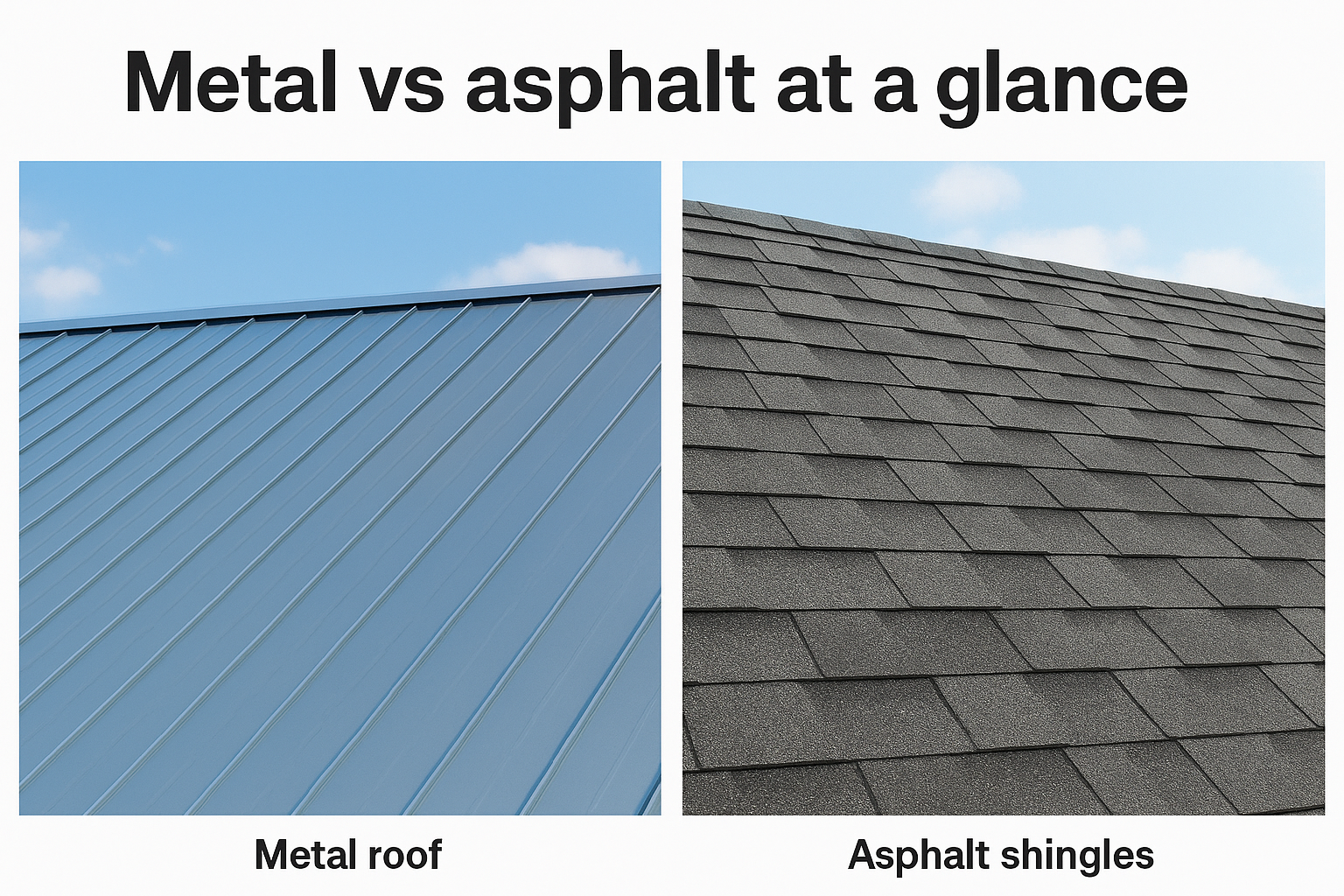
Metal vs asphalt at a glance
Before you get into the fine details, a quick side-by-side view of the metal roof vs asphalt shingles comparison helps you see where the two materials actually differ. Both are proven roofing solutions, but they serve different homeowner priorities depending on your budget, timeline, and long-term goals.
| Factor | Metal Roof | Asphalt Shingles |
|---|---|---|
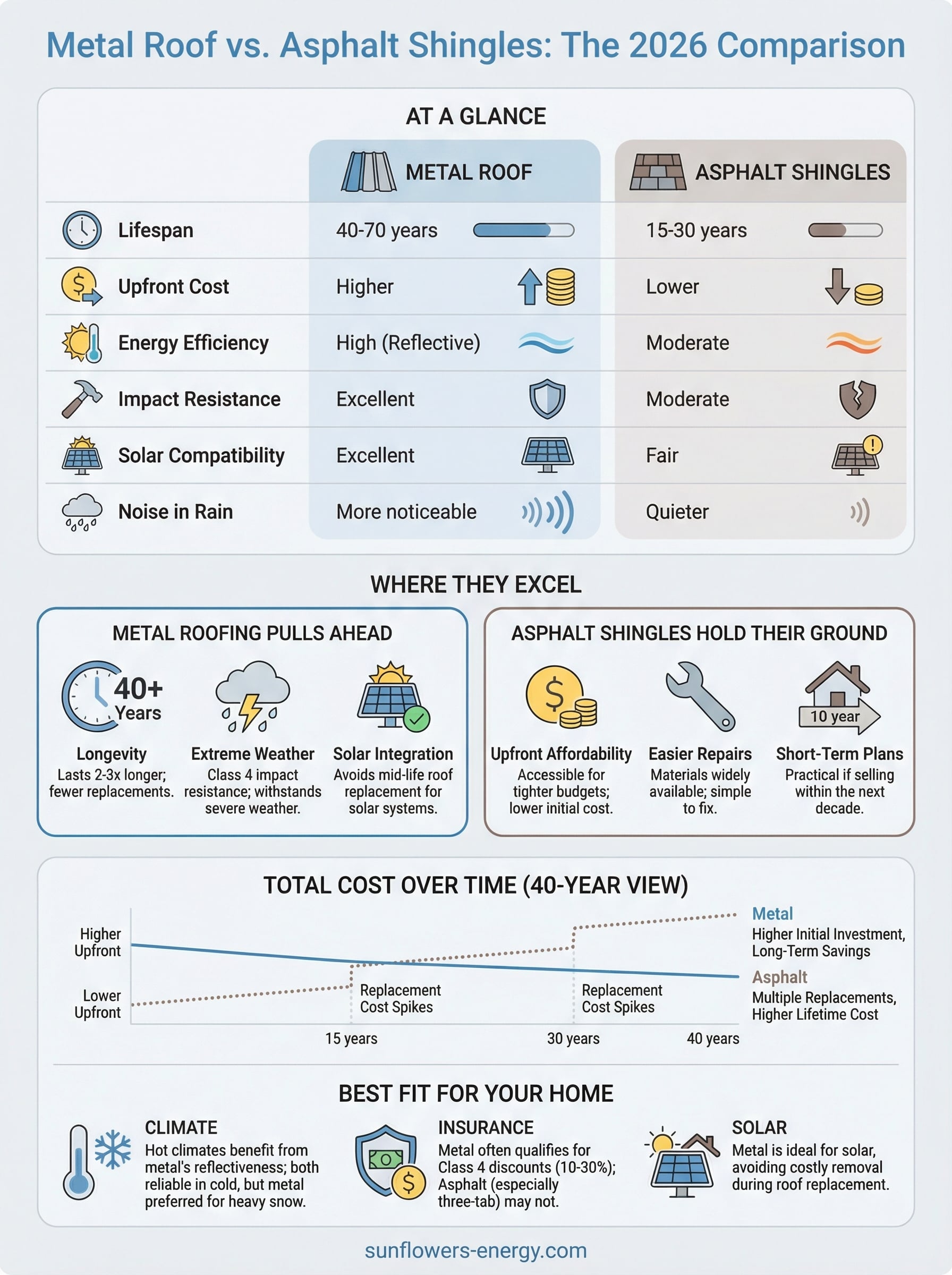
| Lifespan | 40-70 years | 15-30 years |
| Upfront cost | Higher | Lower |
| Energy efficiency | High (reflective) | Moderate |
| Impact resistance | Excellent | Moderate |
| Solar compatibility | Excellent | Fair |
| Noise in rain | More noticeable | Quieter |
Where metal roofing pulls ahead
Metal roofing wins on longevity and overall durability. A properly installed metal roof can last two to three times longer than asphalt, which reduces how many full replacements you’ll pay for over the life of your home. Metal also handles extreme weather conditions more reliably, earns stronger impact resistance ratings, and integrates with solar panel systems without the risk of needing a costly reroof before the panels reach the end of their useful life.
If you plan to stay in your home for more than 15 years, the long-term math on metal roofing tends to work strongly in your favor.
Where asphalt shingles hold their ground
Asphalt shingles remain the most widely installed residential roofing material in the United States for a straightforward reason: lower upfront cost and faster installation make them accessible to homeowners working within tighter budgets. Repairs are also simple and inexpensive since replacement shingles are stocked by most contractors across the country. For homeowners who plan to sell within the next decade or need a cost-effective solution without a large capital outlay, asphalt is a practical choice that still delivers solid protection.
Total cost over time: price, lifespan, resale value
When you compare metal roof vs asphalt shingles on cost, the upfront number is only part of the picture. A metal roof typically costs $10,000 to $20,000 for an average home, while asphalt shingles run closer to $5,000 to $10,000. That gap feels significant until you account for how many times you’ll replace each material over the course of owning your home.
Upfront cost vs. lifetime cost
Asphalt shingles last 15 to 30 years depending on your climate and how well you maintain them. A metal roof can last 40 to 70 years. If you stay in your home for 40 years, you’ll likely pay for two or three asphalt replacements, stacking up costs that eventually exceed what you’d spend on a single metal installation.
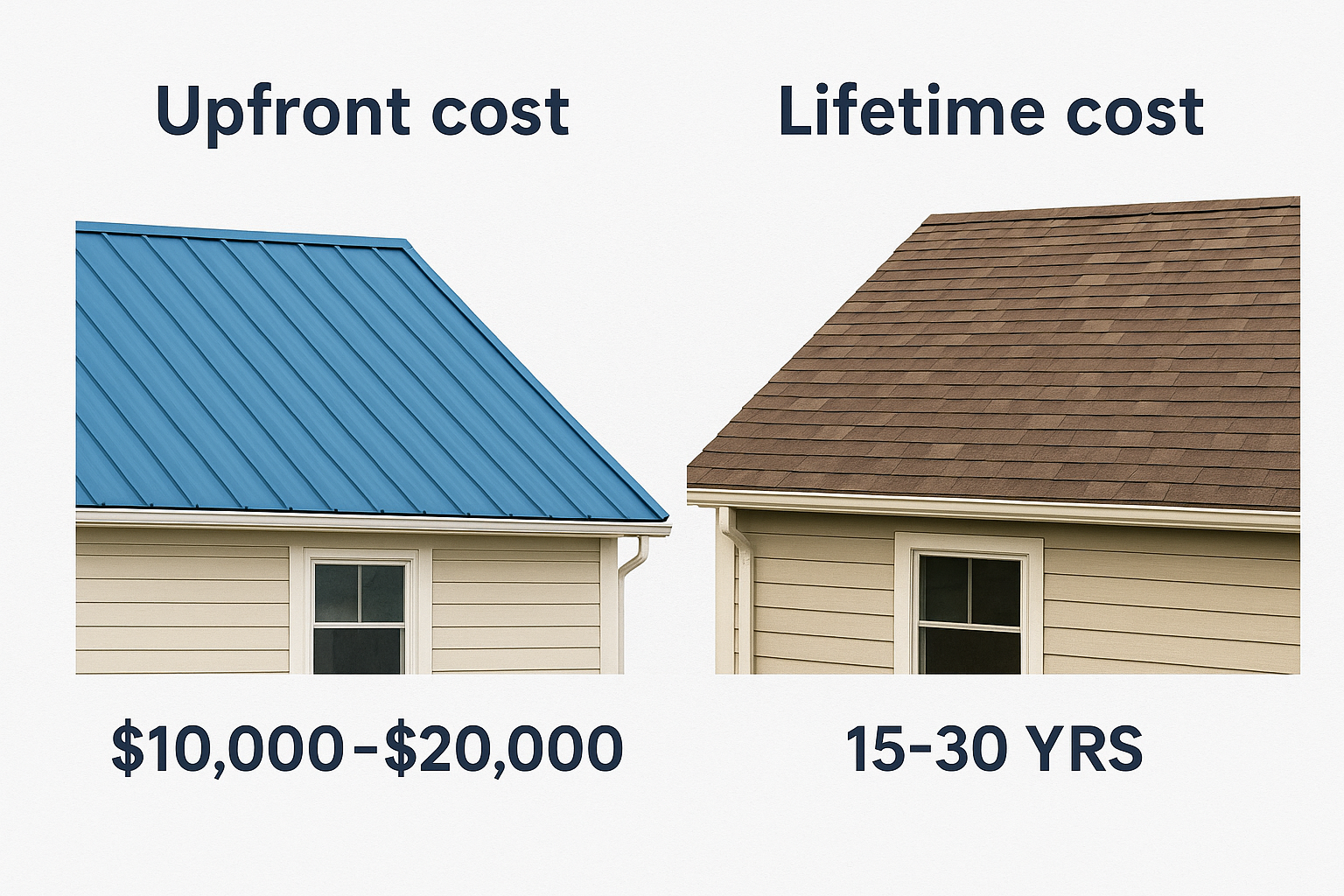
Over a 40-year period, the total cost of owning asphalt shingles often surpasses metal when you factor in multiple replacements and rising labor costs.
Your cooling costs also factor into this equation. Metal roofs reflect solar heat rather than absorbing it, which reduces the load on your HVAC system. That energy savings compounds year over year, especially in warmer climates where your air conditioner runs for months at a time.
What your roof does for resale value
Your roof directly influences how buyers and appraisers value your home. A metal roof signals long remaining useful life and lower maintenance demands, which carries real weight with buyers. According to the National Association of Realtors, exterior upgrades including roofing rank among the highest-return projects when it comes time to sell.
Asphalt shingles near the end of their lifespan can work against you at closing, since buyers often negotiate a price reduction or request replacement before signing. A newer asphalt roof still adds value, but metal holds that value longer without raising questions about when the next replacement is due.
Performance and maintenance: weather, noise, repairs
When you put metal roof vs asphalt shingles side by side on performance, the differences show up most clearly in how each material holds up under real conditions. Both will protect your home on a calm day, but extreme weather, heavy rain, and years of sun exposure reveal the gap between them quickly.
How each material handles severe weather
Metal roofing handles wind, hail, and heat far better than asphalt in most situations. Standing seam metal panels carry Class 4 impact resistance ratings, the highest available, which means they absorb hail strikes without cracking or losing granules. Asphalt shingles, particularly three-tab styles, lose granules over time from both UV exposure and impact, which reduces their ability to shed water effectively and accelerates wear.
In hail-prone regions, the difference in storm performance between metal and asphalt can translate directly into fewer insurance claims and lower repair bills over time.
Noise: what to expect from rain and hail
Rain on a metal roof is louder than on asphalt, and that’s a legitimate concern worth addressing. Without proper insulation and solid sheathing underneath, a metal roof can amplify rain noise noticeably inside your home. However, most modern metal roofing installations include underlayment and insulation layers that significantly dampen sound to a level most homeowners find acceptable. Asphalt remains the quieter option by default.
Repair costs and long-term maintenance
Asphalt shingles are easy and inexpensive to repair because the materials are widely available and most local roofers work with them daily. If a few shingles blow off, a repair call is straightforward. Metal roofing requires fewer repairs overall, but when work is needed, it costs more and requires a contractor familiar with the specific panel system you have installed. Routine maintenance on either material involves keeping gutters clear and inspecting flashing around penetrations once a year.
Best fit for your home: climate, insurance, solar
The metal roof vs asphalt shingles decision isn’t one-size-fits-all. Your location, your insurance situation, and your plans for solar energy all play a direct role in which material makes the most sense for your home. Understanding how each factor tilts the scale helps you land on a choice you won’t second-guess years from now.
Your climate shapes the decision
Hot climates with long cooling seasons favor metal roofing because its reflective surface reduces heat transfer into your attic. If you live in the South or Southwest, that reduction in cooling load adds up quickly over a summer. Colder climates present a more balanced picture since asphalt performs reliably through freeze-thaw cycles, though metal still holds the edge in regions prone to heavy snow loads or ice damming.
If you live somewhere that regularly sees hail, high winds, or extreme heat, metal roofing’s performance advantage becomes difficult to overlook.
Insurance discounts and coverage differences
Many insurance carriers now offer premium discounts for Class 4 impact-resistant roofing, which metal roofing typically qualifies for. That discount can run anywhere from 10% to 30% annually depending on your insurer and your state. Asphalt shingles, particularly standard three-tab varieties, generally don’t qualify for those same discounts and can trigger higher premiums in storm-heavy markets.
Call your insurance provider before you commit to a material. Ask specifically what rating and certification your roof needs and what discounts apply to Class 4 alternatives. That one conversation can shift the long-term cost comparison in a meaningful way.
Solar compatibility changes the math
If adding solar panels is part of your plan, metal roofing gives you a clear advantage. Metal roofs outlast most solar systems, so you avoid the cost of removing and reinstalling panels for a mid-life roof replacement. Asphalt roofs nearing the 15-year mark often need replacement right when a solar system hits its stride, creating an avoidable expense that can run several thousand dollars.
Final take
The metal roof vs asphalt shingles decision comes down to your timeline and priorities. If you need to keep upfront costs manageable and plan to sell within the next decade, asphalt shingles remain a practical, proven choice. If you’re staying long-term, want to add solar, or live in a storm-heavy climate, metal roofing pays for itself through lower energy bills, fewer repairs, and insurance savings that add up year after year.
Both materials will protect your home when properly installed. The real difference lies in how much protection you get, for how long, and at what total cost across the full life of your roof.
At Sunflowers Energy LLC, we help homeowners work through this decision with a free on-site inspection and straightforward recommendations based on your home’s specific conditions, not a sales pitch. Schedule your free roofing consultation and get a clear picture of which option actually makes sense for your home.

One Response