
If you’re thinking about going solar, your roof’s condition matters just as much as the panels themselves. Installing a solar system on a roof that’s nearing the end of its lifespan means you’ll likely pay to remove those panels, replace the roof, and reinstall them, all within a few years. That’s why understanding roof replacement with solar panels cost upfront can save you from an expensive mistake. The good news: bundling both projects together typically cuts labor, material, and overall project costs compared to handling them separately.
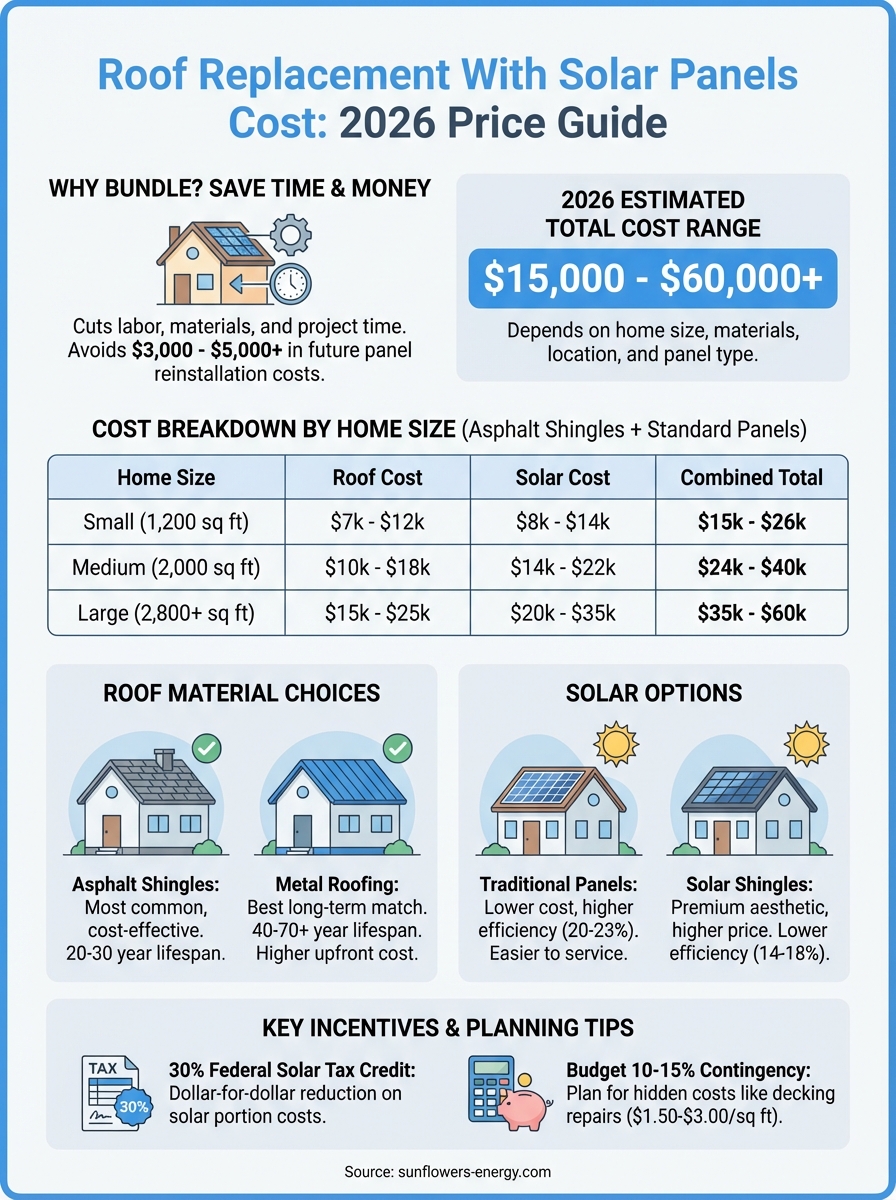
In 2026, homeowners can expect to pay anywhere from $15,000 to $50,000+ for a combined roof replacement and solar installation, depending on roof size, materials, panel type, and location. That’s a wide range, so we’ll break it down piece by piece, covering average costs for each component, how bundling saves money, and what influences your final price tag.
At Sunflowers Energy LLC, we handle both roofing and solar under one roof (literally). We see firsthand how coordinating these two projects together eliminates redundant labor costs and simplifies the process for homeowners. This guide draws from that hands-on experience to give you realistic 2026 pricing, comparison breakdowns between traditional solar panels and solar shingles, financing options, and the key factors that will shape your total investment.
Why roof and solar timing matters
When you install solar panels on a worn-out roof, you create a problem for yourself down the road. Solar panel systems typically last 25 to 30 years, but if your roof is already 15 years old at installation, you’ll need to tear those panels down and reinstall them within a decade. That reinstallation adds $3,000 to $5,000 in extra labor costs you could have avoided entirely by addressing both projects together from the start. Timing these two investments correctly is one of the most practical decisions you can make as a homeowner.
The real cost of poor timing
Doing your roof and solar as separate projects doesn’t just cost more money; it also costs more time and creates more friction. Each project requires its own permits, contractor coordination, and inspection schedule, which means you’re doubling your administrative workload right from the beginning. When a roofing crew and a solar installation team aren’t coordinating with each other, you also risk scheduling gaps and miscommunication that lead to one contractor’s work creating problems for the other.
Coordinating a combined roof and solar project under one contractor can cut your total project time nearly in half compared to running two separate jobs back to back.
Beyond the scheduling headache, there’s a real physical risk to running these projects out of sequence. Every time panels get removed and reinstalled, you risk damage to the panels themselves, to the mounting hardware, and to the underlying roof surface. That risk drops to zero when you plan both jobs together from day one.
How roof age determines your solar timeline
Most solar installers won’t put panels on a roof with less than 10 years of remaining life. If your roof is older than that threshold, you’ll either get turned away by an installer or face the scenario where you install solar now and then pay again to remove and reinstall those same panels when the roof finally gives out. Knowing your roof’s current age and condition before requesting solar quotes puts you in a much stronger position to plan your total budget accurately.
A professional roof inspection tells you exactly where your roof stands. Asphalt shingle roofs typically last 20 to 30 years, so a 15-year-old roof in good shape might still qualify for solar if it’s been well-maintained. But a roof showing granule loss, curling shingles, or active leaks needs to be addressed before any solar work begins. Getting that inspection done early allows you to roll roof replacement with solar panels cost into one unified budget and avoid paying separately for labor twice.
Why one contractor for both jobs simplifies everything
When a single company manages your roofing and solar installation, the entire project becomes far easier to navigate. One point of contact means one set of permits, one inspection timeline, and one warranty conversation if something goes wrong later. You also eliminate the finger-pointing that happens when two separate contractors disagree about who is responsible for a leak or a mounting problem.
Beyond the logistics, a contractor experienced in both trades knows how to plan the roof installation with solar in mind from day one, including where to position structural supports and how to route conduit cleanly before the roofing material goes down. That level of upfront coordination is precisely what prevents the surprise costs that derail so many combined projects after work has already started.
2026 cost ranges and real-world price examples
Understanding typical price ranges helps you build a realistic budget before you call a single contractor. The total roof replacement with solar panels cost in 2026 depends heavily on your home’s square footage, your region, and the materials you select. Here’s how the numbers break down across small, medium, and large residential projects so you can anchor your planning from the start.
Cost breakdown by home size
Your home’s square footage is the single biggest driver of your combined project cost. Roofing labor and materials scale directly with the size of your roof deck, and your solar system size typically tracks your energy consumption, which tends to be higher in larger homes. The table below gives you realistic 2026 estimates for three common project sizes, assuming standard asphalt shingles and conventional monocrystalline panels.
| Home Size | Roof Replacement Cost | Solar Installation Cost | Combined Total |
|---|---|---|---|
| Small (1,200 sq ft) | $7,000 – $12,000 | $8,000 – $14,000 | $15,000 – $26,000 |
| Medium (2,000 sq ft) | $10,000 – $18,000 | $14,000 – $22,000 | $24,000 – $40,000 |
| Large (2,800+ sq ft) | $15,000 – $25,000 | $20,000 – $35,000 | $35,000 – $60,000 |
These numbers reflect average labor markets across the US. Premium materials, steep roof pitches, or complex roof layouts will push your final number toward the higher end of each range, sometimes beyond it.
What bundling actually saves you
Scheduling roofing and solar as a single project saves money in ways that aren’t obvious at first glance. Shared site visits, combined permitting fees, and coordinated inspections reduce the overhead that each project would otherwise carry independently. A homeowner who runs these two projects separately on a 2,000-square-foot home might pay $3,000 to $6,000 more in total labor compared to bundling them under one contractor.
Bundling roofing and solar into one project typically reduces your total labor bill by 15% to 25% compared to running the two projects back to back.
Regional pricing also shifts these figures noticeably. Labor costs in California, New York, and the Pacific Northwest run 20% to 40% above the national average, while homeowners in the Southeast and Midwest frequently land near the lower end of these ranges for identical scopes of work.
What drives the total cost of a combined project
Your roof replacement with solar panels cost doesn’t come from a single variable. Several factors stack on top of each other to produce your final number, and understanding each one helps you identify where you have flexibility and where costs are fixed before you sit down with a contractor.
Roof size, pitch, and complexity
Your roof’s total square footage determines how much material and labor the roofing portion requires. Contractors measure roofing in "squares," where one square equals 100 square feet of roof surface. A simple, single-story gable roof on a 2,000-square-foot home might cover around 20 to 25 squares, while a complex multi-section roof with multiple valleys, dormers, or skylights can push that number significantly higher even on a similarly sized home.
Pitch matters just as much as size. Steeper roofs require specialized safety equipment and slower installation paces, which drives up labor costs by 20% to 50% compared to a low-pitch roof of identical size. A roof with penetrations, chimneys, or unusual angles also adds to material waste and labor time, both of which show up directly in your final invoice.
Solar system size and panel efficiency
Your energy consumption determines your solar system size, and system size is the primary cost driver on the solar side of the project. A home using 1,000 kilowatt-hours per month typically needs an 8 to 12 kilowatt system to reach near-full offset, while a lower-consumption household can often get by with 5 to 7 kilowatts. Higher-efficiency panels produce more power per square foot, which can reduce the total number of panels you need, but they carry a higher per-panel price that doesn’t always cancel out the savings.
Local permitting and utility requirements
Your location can shift the final project cost by tens of thousands of dollars before a single shingle or panel gets installed.
Permit fees, inspection schedules, and utility interconnection requirements vary widely by city and state. Some jurisdictions charge flat-rate permit fees under $500, while others require multiple inspections with fees that climb past $2,000. Your local utility’s interconnection process also affects timeline and sometimes adds engineering review fees that neither your roofer nor your solar installer controls.
Roof replacement choices that work best with solar
Not every roofing material works equally well as a foundation for solar panels. Your choice of roofing material directly affects installation complexity, long-term panel performance, and your total roof replacement with solar panels cost. Choosing the right material upfront means your roof and solar system reach the end of their lifespans together, which is exactly what you want when bundling both projects.
Asphalt shingles pair well with standard panel systems
Asphalt shingles are the most common roofing material used with traditional solar panel installations, and for good reason. They’re cost-effective, widely available, and easy for solar installers to work with when attaching mounting hardware. Most flashing and racking systems sold in the US are designed specifically around asphalt shingle installations, which keeps your mounting costs lower and your installation timeline shorter.
Choosing asphalt shingles with a 30-year warranty gives your solar system a roof that can outlast most panel manufacturer warranties without requiring a mid-term teardown and reinstall.
Architectural (dimensional) shingles are the preferred option within the asphalt category because they offer better wind resistance and longer warranties than three-tab alternatives. If you’re replacing your roof as part of a bundled solar project, architectural shingles strike the best balance between upfront cost and the lifespan alignment you need with a solar system.
Metal roofing offers the best long-term match for solar
Standing seam metal roofs are widely considered the gold standard for solar panel compatibility because they allow installers to clamp panels directly to the seams without drilling through the roof surface. That means no penetrations, no potential leak points, and no sealants that can degrade over time. The result is a cleaner installation with fewer long-term maintenance concerns.
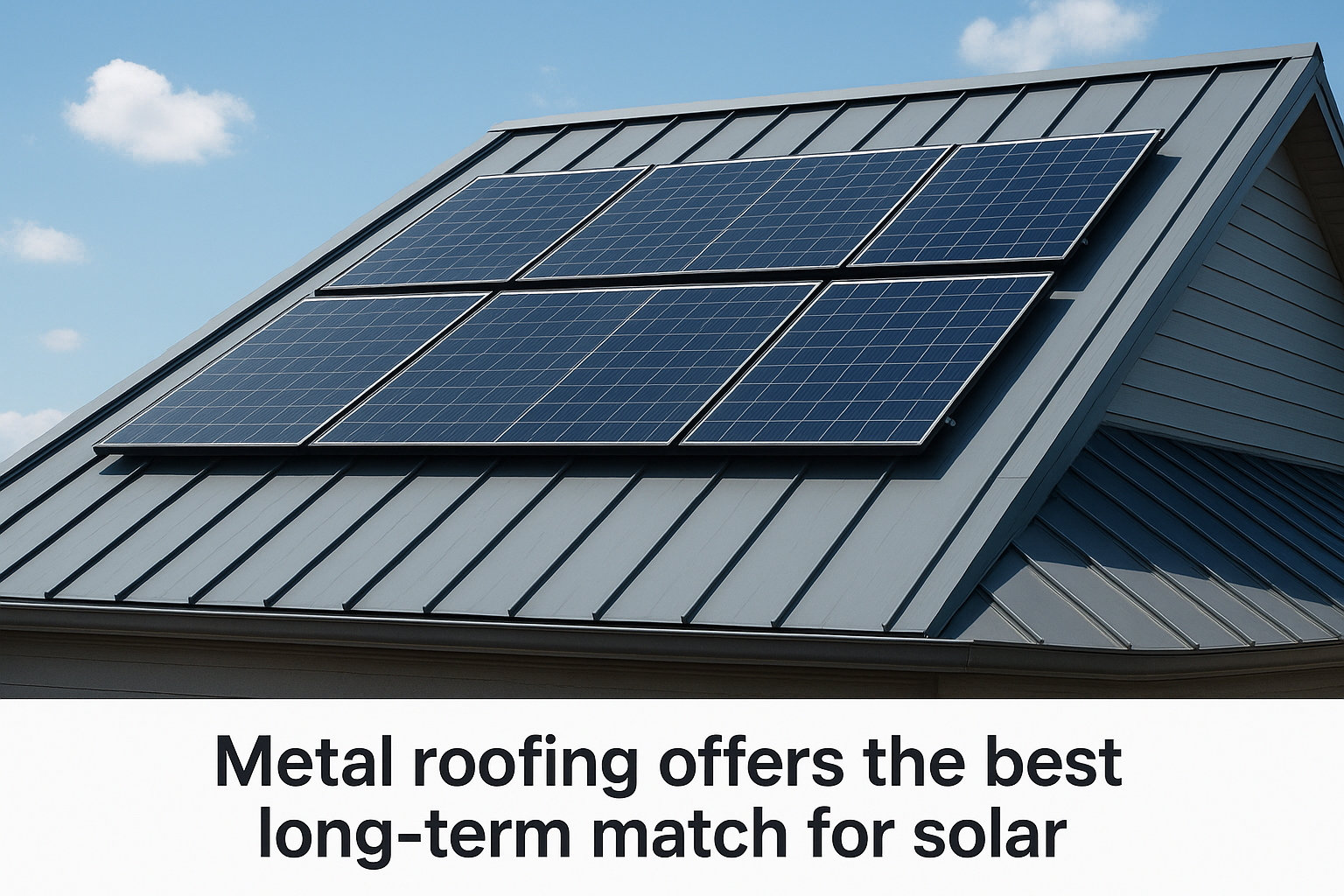
Metal roofs typically last 40 to 70 years, which means a standing seam roof installed alongside a solar system today will almost certainly outlast the panels themselves. The higher upfront cost of metal roofing compared to asphalt is real, often adding $8,000 to $15,000 to your total project, but the elimination of any future panel removal and reinstallation costs makes it worth running the numbers carefully before deciding.
Solar panels vs solar shingles cost comparison
When you’re planning your roof replacement with solar panels cost, one of the biggest decisions you’ll face is whether to go with traditional rack-mounted solar panels or integrated solar shingles. Both generate electricity from sunlight, but they differ significantly in price, aesthetics, installation complexity, and long-term value. Understanding what you’re actually comparing helps you make the right call for your home and budget.
Traditional solar panels: lower upfront cost, faster payback
Rack-mounted solar panels remain the most cost-effective way to add solar to a new or existing roof. On a medium-sized home, a complete panel system including equipment, labor, and racking typically runs $14,000 to $22,000 before incentives. Panels sit above the roof surface on aluminum rails, which makes them easier to service, replace, or upgrade individually without disturbing the roofing material beneath them.
Traditional solar panels convert sunlight at efficiency rates between 20% and 23% for premium monocrystalline models, which means you get more power output per dollar spent compared to most solar shingle products currently on the market.
Installation time for a panel system on a freshly replaced roof is generally two to four days, which keeps your overall project timeline tight when bundling with a roofing job.
Solar shingles: premium aesthetics at a premium price
Solar shingles replace your roofing material entirely, acting as both the weatherproof barrier and the electricity-generating layer in one product. That dual function sounds appealing, but it comes at a cost. A full solar shingle installation on a medium-sized home typically runs $25,000 to $45,000 before incentives, roughly double what you’d pay for a comparable panel system.
The higher price reflects both the premium materials involved and the specialized labor required to install a product that must perform as a roof and a power system simultaneously. Solar shingles also carry lower efficiency ratings than top-tier panels, typically in the 14% to 18% range, which means you may need more roof coverage to hit the same energy output target. If your roof has limited south-facing surface area, that gap in efficiency can push your total system cost even higher.
Incentives, tax credits, and financing basics
Incentives and financing options significantly reduce what you actually pay out of pocket for your combined project. Before you let the sticker price of roof replacement with solar panels cost stop you from moving forward, it’s worth understanding what the government, your state, and lenders are willing to contribute toward that total.
The federal solar tax credit
The federal Residential Clean Energy Credit lets you deduct 30% of your solar installation costs directly from your federal tax bill, not just as a deduction from your taxable income, but as a dollar-for-dollar reduction in what you owe. On a $20,000 solar installation, that’s a $6,000 reduction in your federal taxes. You claim this credit through IRS Form 5695 when you file your return for the year the system was placed into service.

The 30% federal tax credit applies to the solar portion of your project, including panels, inverters, mounting hardware, and labor directly tied to the solar installation.
Many states layer additional incentives on top of the federal credit, including state-level tax credits, property tax exemptions that exclude your solar system’s added value from your property tax assessment, and sales tax exemptions on solar equipment purchases. Your local utility may also offer rebates for installing a qualifying system. Checking the Database of State Incentives for Renewables and Efficiency gives you a full picture of what’s available in your state.
Financing options that work for combined projects
If paying the full project cost upfront isn’t realistic, you have several practical financing paths worth considering. A home equity loan or home equity line of credit typically offers lower interest rates than unsecured personal loans because your home serves as collateral. Many solar installers also partner with specialized solar lending programs that offer fixed-rate financing with terms ranging from 5 to 25 years.
Some lenders offer FHA Title I or PACE financing programs specifically designed for home improvement and energy upgrade projects. These programs vary by state and lender, so ask your contractor which options they’ve worked with before and whether they can connect you directly with a lending partner during your estimate appointment.
How to plan the project and avoid surprise costs
Planning your combined project carefully upfront prevents the cost overruns that derail so many roofing and solar jobs. Before any work starts, you need a clear picture of what’s included in your contract, what’s excluded, and where unexpected costs tend to appear. Treating your roof replacement with solar panels cost as one unified budget from day one gives you the control to make informed decisions when variables shift during the job.
Get a detailed written scope before signing
A vague contract is the most common source of surprise costs in combined roofing and solar projects. Your written proposal should itemize every component separately: roofing materials and labor, solar equipment and labor, permit fees, utility interconnection costs, and any structural reinforcement the roof deck may need. If a contractor hands you a single lump-sum number without line items, ask for the full breakdown before you sign anything.
A detailed, line-item contract protects you from price disputes and gives you a clear benchmark if a change order comes through mid-project.
Ask specifically whether permit fees are included in the quoted price or billed separately at cost. Many contractors quote project labor and materials cleanly but then pass permit and inspection fees through as extras. The same applies to utility interconnection fees, which vary by local utility and aren’t always predictable when the initial quote goes out.
Budget for what you can’t see until work begins
Roof decking damage is the most frequent source of unexpected costs in any roofing project. Once the old shingles come off, a contractor may find rotted or soft decking that must be replaced before new material goes down. That repair typically adds $1.50 to $3.00 per square foot to your total, which on a 2,000-square-foot home could mean $3,000 to $6,000 in costs you didn’t anticipate.
Building a 10% to 15% contingency buffer into your initial budget accounts for these discoveries without causing a crisis when they appear. If you budget $40,000 for your combined project, set aside an additional $4,000 to $6,000 in reserve before the crew shows up. Most homeowners who build that buffer in don’t end up needing all of it, but the ones who skip it often wish they hadn’t.
Key takeaways and next steps
Combining your roof replacement and solar installation into one project saves money, reduces labor duplication, and eliminates the costly panel removal and reinstallation you’d face if you addressed each job separately down the road. Your roof replacement with solar panels cost in 2026 will likely fall between $15,000 and $60,000 depending on home size, materials, and location, but federal tax credits, state incentives, and smart financing can bring that number down significantly. Asphalt shingles and standing seam metal roofs both work well with traditional panels, and solar shingles offer an aesthetic alternative at a higher price point. Budget a 10% to 15% contingency, get a line-item contract, and confirm permit fees are included before you sign anything.
Your next step is getting a professional assessment of both your roof and your energy needs from one team. Schedule a free inspection with Sunflowers Energy and get a unified quote that covers both projects from start to finish.