Solar Panel Maintenance Checklist 2026: Boost Output 20%
Homeowners across the United States face a common challenge: maintaining solar panel efficiency without knowing where to start. Routine cleaning can improve energy yield by up to 20% in dusty or polluted areas, yet many systems lose performance simply from neglect. Regular maintenance extends your system’s lifespan and prevents costly repairs down the road. This article provides a tailored checklist designed specifically for U.S. homeowners, helping you protect your investment and maximize energy savings year after year.
Table of Contents
- Top 5 Selection Criteria For Solar Panel Maintenance
- Detailed Solar Panel Maintenance Checklist
- Professional Maintenance Vs Diy: Pros, Cons, And Cost Implications
- Seasonal Maintenance And Climate Considerations
- Summary Comparison Table And Situational Recommendations
- Maximize Your Solar Investment With Sunflowers Energy Llc
- Frequently Asked Questions
Key Takeaways
| Point | Details |
|---|---|
| Regular cleaning improves efficiency | Energy yield can increase by up to 20% with proper cleaning in dusty areas. |
| Professional service offers long-term savings | Despite higher upfront costs, professional maintenance saves 15% over time by catching issues early. |
| Climate determines maintenance frequency | Depending on your environment, panels need cleaning 2 to 4 times yearly. |
| Comprehensive checklist is essential | Effective maintenance covers inspection, cleaning, and performance monitoring. |
| DIY requires safety awareness | Homeowners choosing DIY must use correct tools and follow safety protocols to avoid injury. |
Top 5 Selection Criteria for Solar Panel Maintenance
Choosing the right maintenance approach starts with understanding five critical factors that determine how you should care for your solar investment.
1. Cleaning Frequency Based on Environment
Your local climate dictates how often panels need attention. Cleaning frequency is the highest priority factor when determining maintenance effectiveness. Dusty regions, areas with heavy pollen, or locations near highways require more frequent cleaning than mild climates. Urban environments with pollution also accelerate panel soiling.
2. Thorough Visual Inspection Protocol
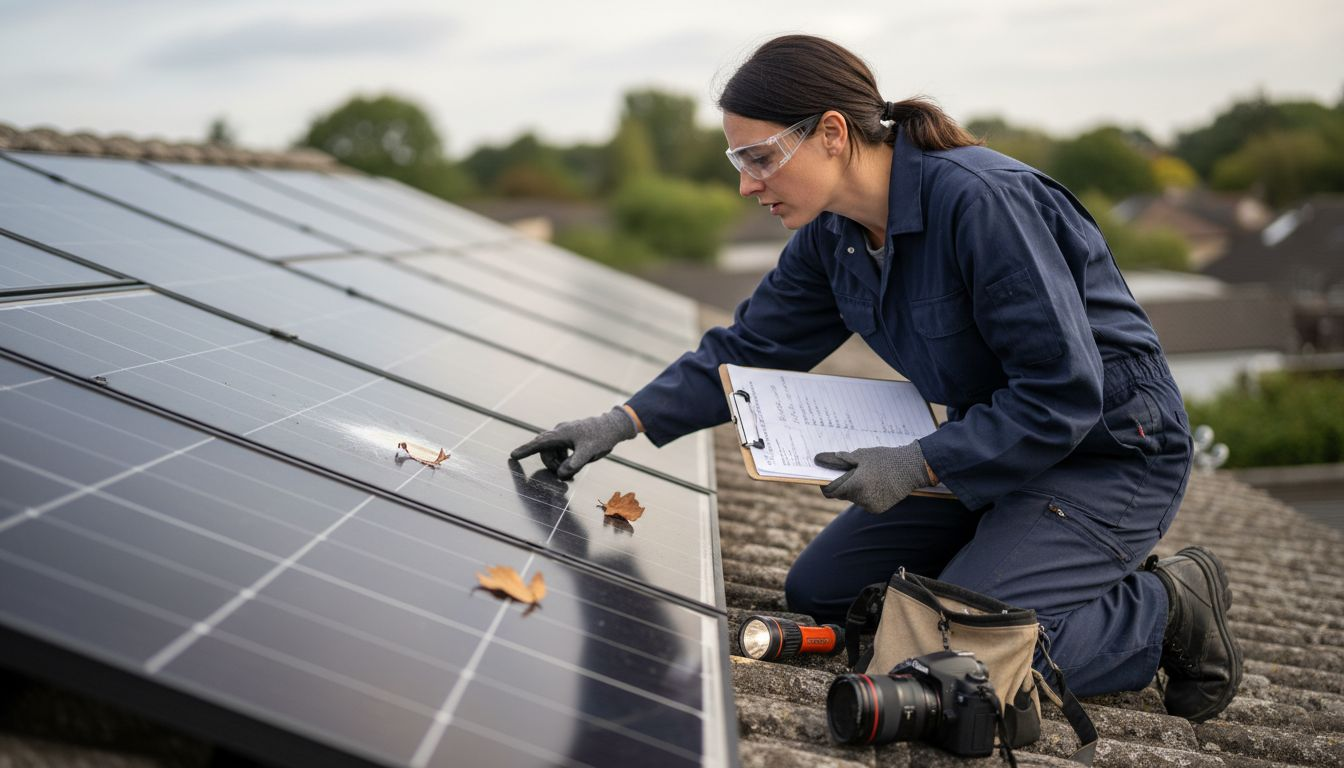
Beyond cleaning, regular inspections catch problems before they escalate. Check for physical damage like cracks or chips in the glass surface. Examine wiring for fraying or loose connections. Inspect mounting hardware for rust or instability that could compromise system integrity.
3. Safe Cleaning Tools and Methods
Using the wrong equipment damages panels and voids warranties. Stick to soft brushes, microfiber cloths, and squeegees designed for delicate surfaces. Never use abrasive materials, pressure washers, or harsh chemicals. Water pH between 6 and 8 prevents etching and mineral buildup that reduces light absorption.
4. Energy Output Monitoring
Tracking performance reveals efficiency drops before they become severe. Monitor your system’s output monthly through your inverter display or monitoring app. A sudden decrease of 10% or more signals potential issues requiring immediate attention. Compare output to previous months and seasonal baselines.
5. Cost-Benefit Analysis of Service Options
Weigh DIY savings against professional expertise. DIY maintenance costs less upfront but carries safety risks if you’re uncomfortable on roofs. Professional services provide thorough inspections, early fault detection, and warranty compliance. Your decision depends on experience level, system complexity, and comfort with heights.
Pro Tip: Start by assessing your comfort level with roof work and your local climate conditions. These two factors alone will clarify whether DIY or professional maintenance makes sense for your situation.
For homeowners seeking solar panel maintenance efficiency tips, understanding these criteria creates a foundation for effective decision making.
Detailed Solar Panel Maintenance Checklist
A systematic approach ensures nothing gets overlooked during your maintenance routine.
Visual Inspection Steps
- Examine each panel for cracks, chips, or discoloration in the glass
- Check all visible wiring for damage, fraying, or loose connections
- Inspect mounting brackets and rails for rust, corrosion, or loosening
- Look for debris accumulation, bird nests, or pest damage around arrays
- Verify inverter displays show normal operation without error codes
Cleaning Protocol
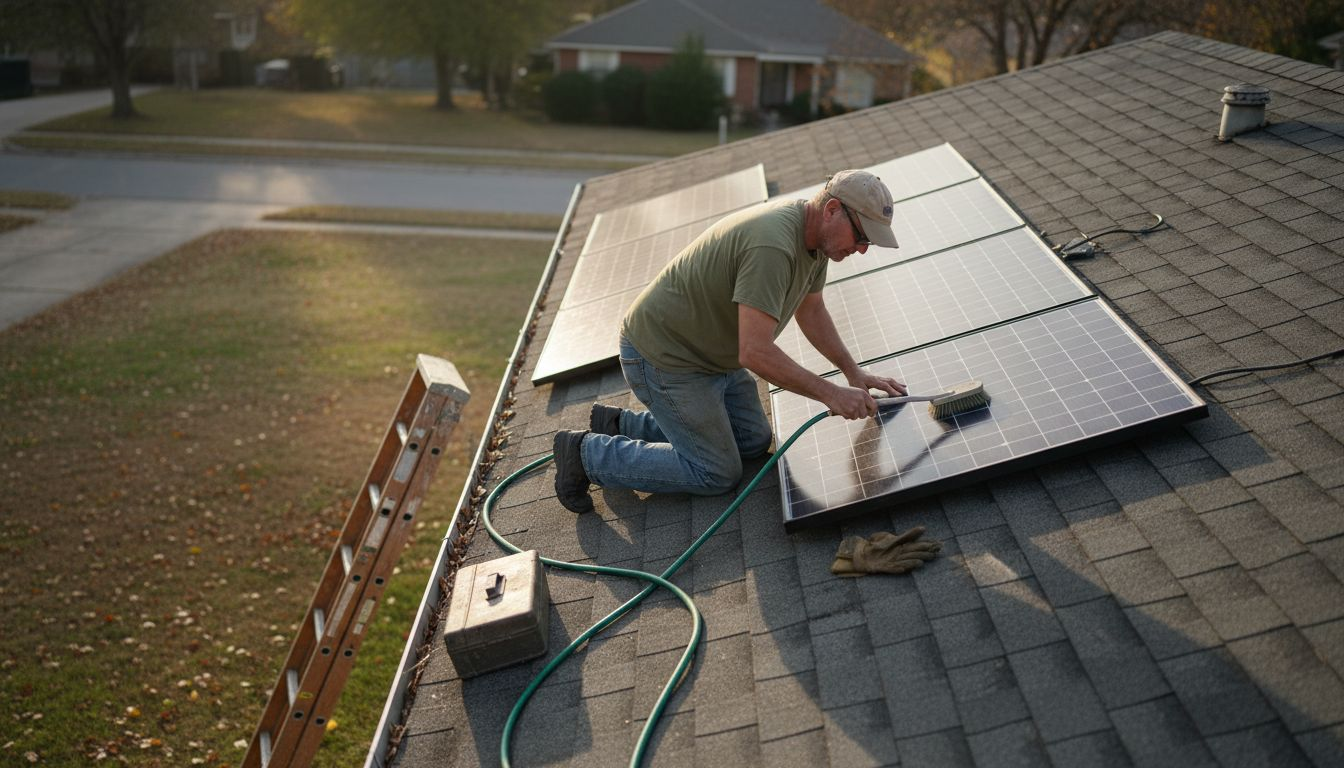
Timing matters when cleaning panels. Early morning or late evening works best because cooler temperatures prevent water from evaporating too quickly and leaving streaks. Twice yearly cleaning with soft brushes and pH-neutral water is minimum, with quarterly cleanings recommended for dusty environments.
- Use a soft brush or microfiber cloth with gentle pressure
- Rinse panels with clean water using a garden hose with moderate flow
- Squeegee excess water to prevent mineral deposits
- Never walk directly on panels or use abrasive scrubbing pads
- Avoid cleaning during peak sun hours when panels are hot
Performance Monitoring Schedule
Check your system output monthly to establish performance baselines. Record daily production totals and compare them to previous months accounting for seasonal variations. A gradual decline over several months suggests soiling, while sudden drops indicate potential equipment failure.
Safety Equipment Required
- Non-slip footwear with good traction
- Safety harness if roof pitch exceeds 6:12
- Stable extension ladder rated for your weight plus equipment
- Ground fault circuit interrupter (GFCI) for any electrical connections
Pro Tip: Mark your calendar with maintenance dates based on your climate zone. Setting reminders ensures you don’t skip critical cleaning windows during high pollen or dust seasons.
Homeowners can find detailed guidance on the solar panel cleaning process to maintain optimal efficiency throughout the year.
Professional Maintenance vs DIY: Pros, Cons, and Cost Implications
Deciding between professional service and DIY maintenance requires understanding the trade-offs in cost, safety, and long-term system health.
DIY Maintenance Benefits
- Lower immediate costs with no service fees
- Flexibility to clean on your own schedule
- Hands-on familiarity with your system
- Satisfaction of self-sufficiency
DIY Maintenance Drawbacks
Safety risks top the list of concerns. Working on roofs poses fall hazards, especially on steep pitches or wet surfaces. Electrical shock risks exist if you accidentally contact exposed wiring. You might miss subtle problems that trained technicians spot immediately. Equipment damage from improper techniques can void manufacturer warranties.
Professional Service Advantages
Professional upkeep leads to 15% long-term cost savings by catching issues early and reducing expensive repair risks. Technicians use specialized equipment like thermal imaging cameras to detect hidden hot spots indicating cell failure. They understand electrical systems and warranty requirements. Insurance coverage protects you from liability during service.
Professional Service Considerations
Higher upfront costs range from $150 to $300 per cleaning depending on system size and location. You need to schedule appointments in advance. Not all service providers offer the same quality, so research and reviews matter.
| Factor | DIY Approach | Professional Service |
|---|---|---|
| Initial Cost | Low (equipment only) | Higher ($150-$300 per visit) |
| Safety Risk | Higher (falls, electrical) | Lower (insured technicians) |
| Problem Detection | Basic visual only | Comprehensive with tools |
| Time Investment | 2-4 hours per cleaning | Minimal (technicians work) |
| Long-Term Savings | Variable | 15% average reduction in costs |
| Warranty Compliance | May void coverage | Maintains warranty terms |
Your choice depends on several factors: experience with roof work, physical ability, system complexity, and local service availability. Simple ground-mounted systems suit DIY better than complex roof installations.
For comprehensive information on maintaining system performance, explore our solar panel service and repair guide and review the solar roofing checklist for integrated approaches.
Seasonal Maintenance and Climate Considerations
Your regional climate and seasonal patterns directly impact how often and when you should maintain your solar panels.
Preparing for Winter
Cold weather brings unique challenges. Snow accumulation blocks sunlight and adds weight stress to mounting systems. Ice formation can damage seals and wiring. Before winter arrives, clean panels thoroughly and inspect for any damage that cold temperatures might worsen. Most panels shed light snow naturally due to their smooth surface and tilt angle, but heavy accumulation requires gentle removal.
Spring Pollen Season
Pollen creates a sticky film that significantly reduces light transmission. Maintenance frequency varies from twice to four times yearly depending on pollen, dust, and other environmental exposures. Schedule a thorough cleaning after peak pollen season ends in your region, typically late spring.
Summer Dust and Heat
Hot, dry conditions increase dust accumulation while reducing cleaning effectiveness as water evaporates quickly. Pre-summer cleaning ensures maximum output during peak production months. Inspect mounting hardware for heat-related expansion issues and check for wildlife nesting in cooler areas beneath arrays.
Fall Preparation
Leaves, seeds, and organic debris accumulate as trees shed. Clean panels before winter to prevent material from freezing onto surfaces. Check drainage channels and ensure nothing blocks water flow that could lead to ice dams.
Climate-Specific Factors
- Coastal areas: Salt spray accelerates corrosion, requiring quarterly inspections of metal components and more frequent rinsing
- Desert regions: Dust storms necessitate post-storm cleaning and monthly monitoring for sand accumulation
- Urban environments: Pollution and particulate matter create stubborn films requiring specialized cleaning solutions
- Humid climates: Mold and mildew growth on frames and seals needs attention during inspections
Pro Tip: Keep a maintenance log noting weather events, cleaning dates, and performance readings. Patterns emerge over time that help you optimize your schedule for maximum efficiency and minimal effort.
Homeowners can learn more about solar panel maintenance in varied climates and review solar installation steps for system optimization.
Summary Comparison Table and Situational Recommendations
Making the right maintenance choice becomes clearer when you match your situation to specific recommendations.
| Climate/Situation | Recommended Frequency | Best Approach | Key Considerations |
|---|---|---|---|
| Mild, low-dust | Twice yearly | DIY suitable | Minimal safety risk, simple cleaning |
| Dusty/urban | Quarterly | Professional preferred | Higher soiling rate, pollution concerns |
| Snowy regions | 3 times yearly | Professional for winter | Snow removal expertise, safety critical |
| Coastal areas | Quarterly | Professional preferred | Corrosion monitoring, salt damage risk |
| First-time owners | Initial professional | Transition to DIY | Learn proper techniques, assess comfort |
| Complex roof pitch | Professional | Professional only | Safety risk too high for DIY |
| Ground-mounted | DIY friendly | DIY acceptable | Easy access, lower fall risk |
| Large commercial | Professional | Professional required | Scope and liability considerations |
Recommendations by Experience Level
If you’re comfortable on roofs and have basic tool skills, DIY works for simple residential systems in mild climates. Start with professional service once to observe proper techniques, then transition to DIY for routine cleaning while scheduling professional inspections annually.
Homeowners with limited mobility, steep roofs, or multi-story installations should use professional services exclusively. The safety risks outweigh any cost savings.
Budget Considerations
Tight budgets benefit from DIY cleaning between professional annual inspections. This hybrid approach balances cost control with expert oversight. Comparing maintenance options by climate and experience clarifies the best choice for long-term value.
Invest in quality cleaning tools if choosing DIY: soft brushes, squeegees, and extendable poles cost $50 to $100 but last years. Factor in safety equipment costs including proper footwear and potentially a harness system.
For comprehensive energy optimization strategies, review our solar energy efficiency guide covering system performance beyond basic maintenance.
Maximize Your Solar Investment with Sunflowers Energy LLC
Protecting your solar investment requires expertise and reliable service. Professional maintenance enhances panel performance and catches problems before they become expensive repairs. Whether you need expert installation optimizing your home’s energy savings or ongoing maintenance support, experienced technicians ensure your system operates at peak efficiency year after year.
Our team specializes in comprehensive solar panel maintenance services tailored to your climate and system requirements. From initial solar installation services to ongoing performance optimization, we help homeowners maximize returns on their renewable energy investments. Contact our solar and roofing service team today for a free consultation and discover how professional care extends system life while boosting output.
Frequently Asked Questions
How often should I clean my solar panels in a dusty area?
Dusty environments require quarterly cleaning to maintain optimal output. Monitor your system’s performance monthly, and if you notice a 10% or greater drop between cleanings, increase frequency to every two months during peak dust seasons.
What tools are safest for DIY solar panel cleaning?
Use only soft-bristle brushes, microfiber cloths, and rubber squeegees with extendable handles. Garden hoses with moderate pressure work well for rinsing. Never use pressure washers, abrasive pads, or harsh chemicals that damage protective coatings and void warranties.
Can I tell if my solar panels need maintenance just by looking?
Visual inspection reveals obvious issues like cracks, debris, or heavy soiling, but performance monitoring provides the complete picture. Check your inverter display or monitoring app monthly for output trends, as efficiency drops often occur before visible problems appear.
Is professional maintenance really worth the extra cost?
Professional service pays off through early problem detection, warranty compliance, and safety. The 15% long-term cost savings from preventing major repairs typically outweighs higher upfront service fees, especially for complex roof installations or systems in harsh climates.
How do seasonal changes affect my solar panel maintenance schedule?
Seasonal factors dictate cleaning timing: post-pollen cleanup in late spring, pre-winter preparation in fall, and post-storm inspections after severe weather. Adjust frequency based on local conditions, with coastal and desert regions requiring more attention than temperate climates.
Recommended
- Solar Panel Maintenance: Maximizing Efficiency and Savings – Sunflowers Energy LLC A Roofing and Solar Companys
- Master the Solar Panel Cleaning Process for Maximum Efficiency – Sunflowers Energy LLC A Roofing and Solar Companys
- Solar Panel Efficiency Explained: Maximize Energy Savings – Sunflowers Energy LLC A Roofing and Solar Companys
- Solar Energy Efficiency Guide for Maximized Home Savings – Sunflowers Energy LLC A Roofing and Solar Companys
- Ultimate Commercial Building Maintenance Checklist 2025 – Mats4U USA
- 7 Essential Rental Property Maintenance Checklist Tips – Rental Income Insurance