
How technology is revolutionizing roofing for energy efficiency
TL;DR:
- Modern smart roofs can reduce energy use by up to 40 through sensors and automation.
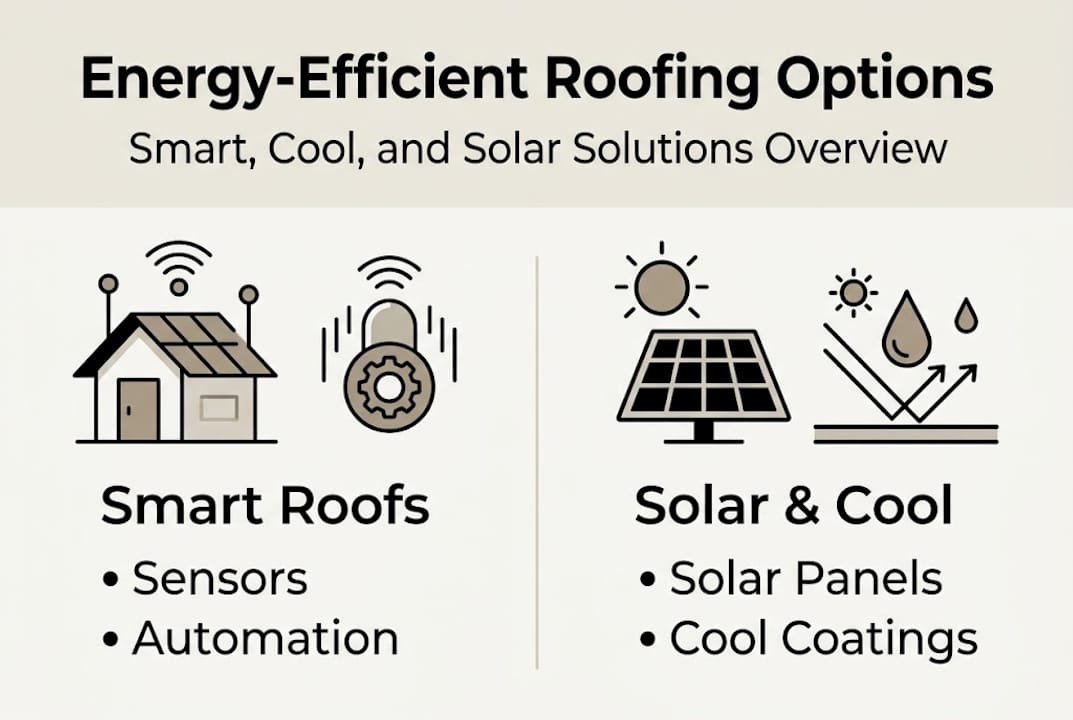
- Combining cool coatings, solar, and smart tech enhances energy efficiency and long-term savings.
- Prioritizing staged upgrades and long-term planning yields better value than seeking quick payback.
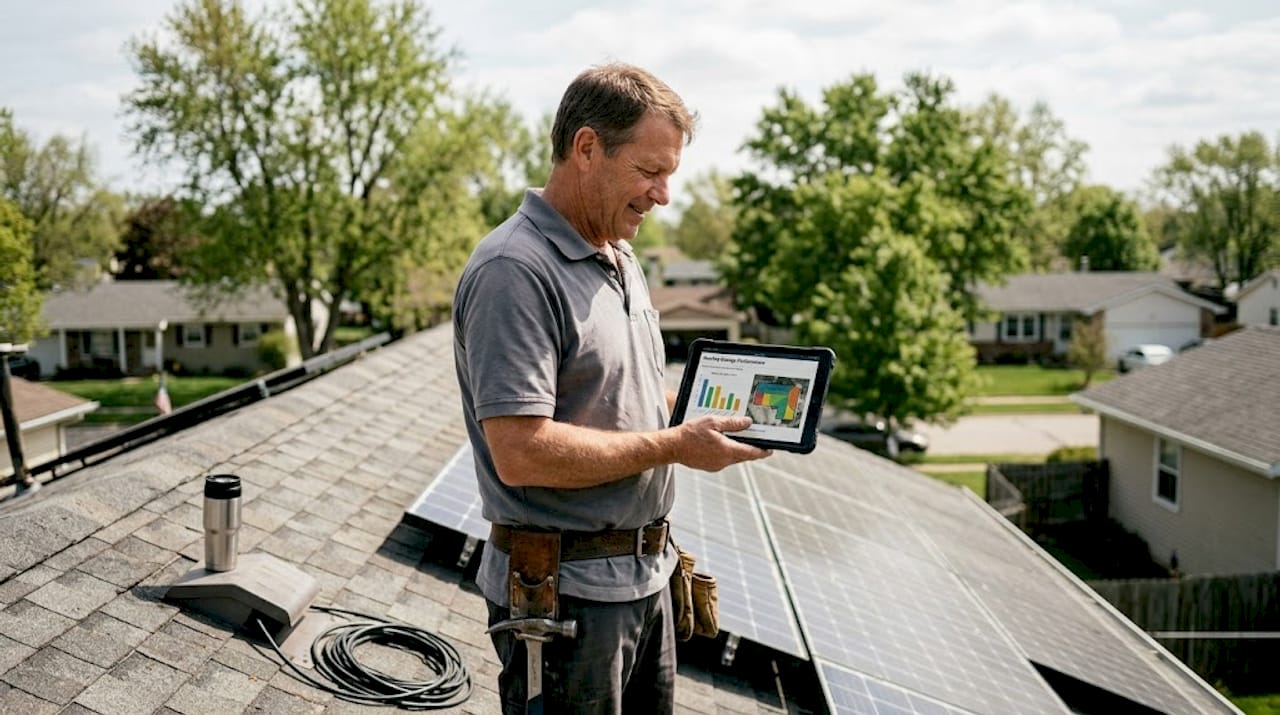
Your roof does far more than keep rain out. Today’s tech-enabled roofs can cut energy use by up to 40%, outpacing traditional upgrades like new insulation or replacement windows. That’s a remarkable shift, and it changes how you should think about your next roofing decision. This guide breaks down the most impactful innovations available right now: smart monitoring systems, solar integration, cool roof coatings, and strategic combinations of all three. Whether you manage a single-family home or a portfolio of commercial properties, you’ll walk away with a clear picture of what works, what pays back fastest, and what’s worth the long-term investment.
Table of Contents
- The evolution of roofing technology: more than just shingles
- Smart roofs: sensing, automation, and predictive maintenance
- Cool roofs vs. solar-integrated roofs: which saves more energy?
- Solar roofing: integration mechanics and financial reality
- The winning formula: pairing smart tech, solar power, and cool coatings
- Our take: why quick payback isn’t always the smartest choice
- Take the next step with advanced roofing solutions
- Frequently asked questions
Key Takeaways
| Point | Details |
|---|---|
| Smart roofs cut costs | Embedded sensors and automation can reduce utility bills and extend roof life significantly. |
| Cool roofs offer fast ROI | Reflective coatings can pay for themselves in less than two years, especially in warm climates. |
| Solar integration needs planning | Traditional solar panels often yield quicker returns than premium solar roofs, which may take decades to pay off. |
| Best results combine solutions | Layering cool roof tech with solar power and smart features delivers the highest efficiency overall. |
The evolution of roofing technology: more than just shingles
For most of history, a roof had one job: keep the weather out. It was a passive barrier, nothing more. That model held for centuries, with materials evolving from thatch to clay tile to asphalt shingles, but the function stayed the same. What’s changed in the past decade is fundamental. Roofs are now active energy management systems, and the shift is accelerating fast.
Understanding your roofing system basics helps you appreciate how much has changed. Today’s high-performance roofing platforms can incorporate:
- Embedded sensors that detect moisture, leaks, and temperature changes in real time
- IoT-connected controls that link your roof’s performance data to your phone or building management system
- Photovoltaic (PV) panels and BIPV materials that generate electricity directly from the roof surface
- Cool roof coatings that reflect solar radiation and reduce heat absorption
- Automated smart vents that regulate attic temperature and airflow without manual adjustment
For homeowners and property managers, this means your roof is no longer just a cost center. It becomes a tool that actively lowers utility bills, flags problems before they become expensive, and contributes to your building’s overall energy performance.
“Smart roofs equipped with embedded sensors for leak and moisture detection, temperature monitoring, and IoT-driven predictive maintenance can reduce a building’s energy consumption by up to 40%.”
That kind of performance is hard to ignore. And it’s not reserved for new construction. Many of these technologies can be layered onto existing roofs, making them accessible to a much wider range of property owners than most people realize.
Smart roofs: sensing, automation, and predictive maintenance
A smart roof turns your building’s most overlooked surface into an intelligent caretaker. The core idea is simple: instead of waiting for a leak to show up on your ceiling or a utility bill to spike, your roof tells you what’s happening before problems escalate.
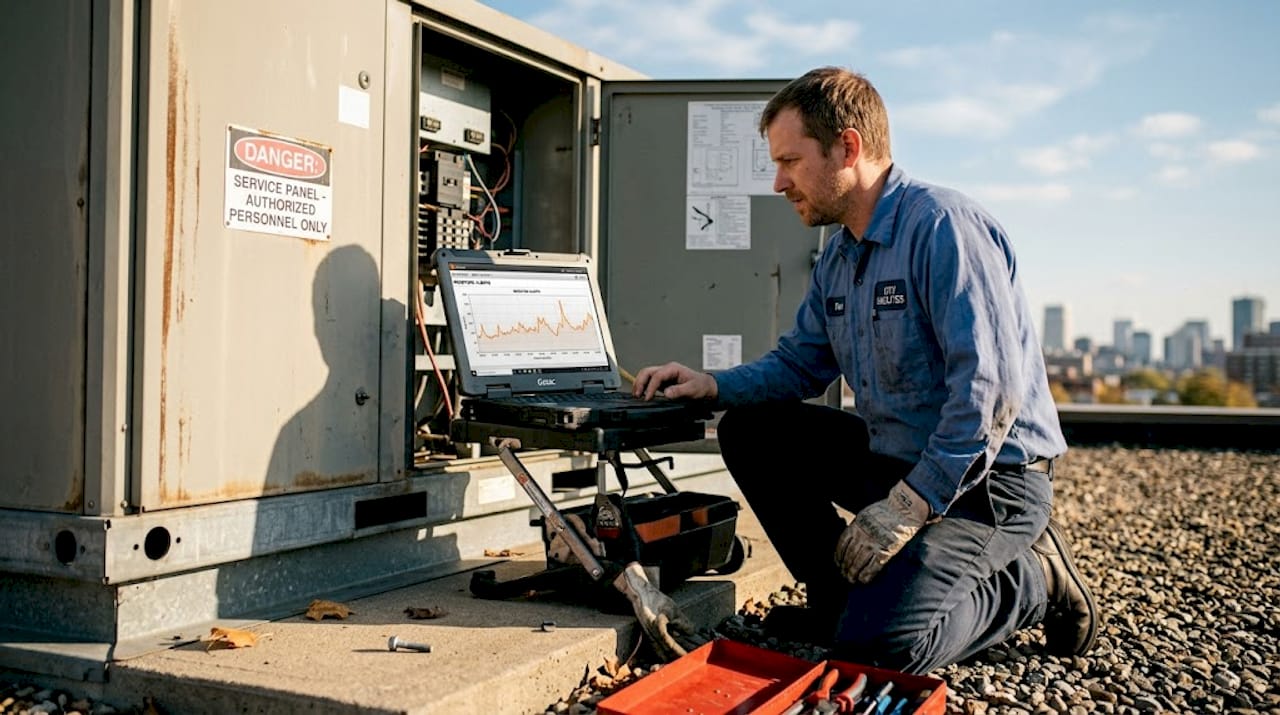
Smart roofs use embedded sensors for leak and moisture detection, temperature monitoring, and IoT-connected predictive maintenance. Here’s how the main components work in practice:
- Leak sensors placed at vulnerable points, like flashing, valleys, and penetrations, detect moisture intrusion within hours, not weeks.
- Temperature sensors track heat buildup in the attic and roof deck, alerting you when ventilation is underperforming or insulation is failing.
- Automated ventilation systems respond to temperature data in real time, opening or closing vents to maintain optimal airflow without any manual input.
- IoT-connected controls push all this data to a dashboard or mobile app, giving you a live view of your roof’s health from anywhere.
The financial case for smart roofing is straightforward. Water damage from undetected leaks is one of the most expensive repairs a homeowner faces. Avoiding even one major incident can offset the cost of a full sensor system. Beyond damage prevention, automated ventilation consistently reduces cooling loads during summer months, which directly lowers your energy bills.
Pro Tip: Configure your sensor alerts to notify you immediately when moisture or temperature thresholds are exceeded. Most roof failures are caught at the early warning stage, long before any visible damage appears inside your home.
Smart technology also extends the service life of your roof. Proactive maintenance, guided by real data rather than guesswork, means fewer emergency repairs and a longer gap between full replacements. Avoiding common roof repair mistakes becomes much easier when your system is flagging issues early rather than after the damage is done.
Cool roofs vs. solar-integrated roofs: which saves more energy?
This is the question most homeowners ask once they decide to upgrade. The honest answer depends on your climate, budget, and how long you plan to stay in the property. Let’s look at the numbers directly.
| Feature | Cool roofs | Traditional PV solar | BIPV (integrated solar) |
|---|---|---|---|
| Energy savings | 6.5 kWh/m²/yr | 139 kWh/m²/yr | Similar to PV |
| Payback period | 1.75 to 2.2 years | 7.6 to 10.9 years | 10 to 20+ years |
| Best climate | Hot, sunny regions | Most climates | New construction |
| Upfront cost | Low to moderate | Moderate | High |
| Primary benefit | Reduced cooling load | Electricity generation | Aesthetic integration |
Cool roofs reflect sunlight rather than absorbing it, which cuts cooling loads by up to 15 to 30% in warm climates. Their payback period of under two years is hard to beat. However, their energy savings are modest compared to solar generation. Understanding the full picture of cool roofing and energy costs helps you set realistic expectations.
Solar-integrated roofs generate far more energy per square meter, but the upfront investment is significantly higher and the payback window is longer. Here’s a quick guide to choosing:
- Choose cool roofs if you’re in a hot climate, need fast payback, or are working with a tighter budget
- Choose traditional PV panels if you want strong energy generation with a proven 6 to 10 year payback
- Choose BIPV if you’re doing new construction and want seamless aesthetics with long-term generation
- Combine both if you want to maximize cooling efficiency and generation output on the same building
For a deeper look at how these choices affect your monthly costs, the energy-efficient roofing options available today offer a clear path to lower bills regardless of your starting point.
Solar roofing: integration mechanics and financial reality
If solar integration is on your radar, it pays to understand exactly how these systems differ and what to expect from each financially.
Traditional solar panels are mounted above your existing roof surface on racking systems. They’re proven, widely available, and offer the fastest return on investment of any solar option. BIPV (building-integrated photovoltaics) are different. They replace roofing materials entirely, functioning as both the weatherproofing layer and the energy generator. BIPV installs like shingles and can withstand wind loads of up to 1,600 Pa, making them structurally competitive with premium roofing materials.
| Feature | Traditional panels | Tesla Solar Roof | BIPV shingles |
|---|---|---|---|
| Payback period | 6 to 10 years | 15 to 25+ years | 10 to 20 years |
| Energy output | High | Moderate to high | Moderate |
| Wind resistance | Moderate | High | High |
| Upfront cost | Moderate | Very high | High |
| Best use | Retrofit installs | New builds, premium market | New builds or full re-roofs |
The financial reality check here is important. Premium integrated products like the Tesla Solar Roof carry a significant cost premium that extends payback well beyond what most homeowners expect. For most existing homes, traditional panels installed on a durable roof deliver a faster, more predictable return. Before committing, review a solid solar roofing checklist and evaluate your roofing materials for solar durability to make sure your structure is ready.
Pro Tip: If your existing roof has more than 5 to 7 years of life left, traditional solar panels are almost always the smarter financial move over a full BIPV replacement. Save the integrated systems for when a full re-roof is already planned.
For more on how smart roof integration is shaping the next generation of solar products, the technology is evolving quickly and worth tracking.
The winning formula: pairing smart tech, solar power, and cool coatings
The smartest property owners don’t pick just one technology. They layer them strategically, and the results compound in ways that single-solution approaches can’t match.
Pairing PV panels on a cool roof is one of the most effective combinations available. Cool roofs lower summertime surface temperatures, which actually improves PV panel efficiency since solar panels perform better when they run cooler. Meanwhile, the PV system generates electricity that offsets your grid consumption year-round. You’re winning on two fronts simultaneously.
Here’s how to think about common pairings and which buildings benefit most:
- Cool coating plus smart sensors: Ideal for flat commercial roofs. The coating reduces heat gain while sensors monitor membrane integrity and moisture.
- Traditional PV plus automated ventilation: Great for residential homes in mixed climates. Solar powers the home while smart vents keep attic temperatures in check.
- BIPV plus IoT monitoring: Best for new construction where aesthetics matter and long-term performance tracking adds value.
- All three combined: Suited for larger commercial properties or homeowners making a planned, decade-long investment in their building envelope.
For most homeowners, the practical path is to start with cool coatings or smart sensors (lower cost, fast payback), then add solar as a second phase. This staged approach, explored in detail in integrated energy strategies, spreads the investment over time and lets each technology prove its value before you commit to the next layer. You can also explore proven energy reduction tips to build a sequenced plan that fits your budget.
Seasonal nuance matters too. In transitional climates where summers are hot and winters are cold, combining technologies gives you year-round performance rather than seasonal benefits. A cool coating helps in July. Your solar system generates in December. Smart sensors protect you every month. Innovations in flat roof technology are making these combinations even more accessible for commercial property managers.
Our take: why quick payback isn’t always the smartest choice
Everyone wants the fastest return on investment. We get it. But in our experience working with homeowners and property managers, chasing the shortest payback period often leads to decisions that look good on a spreadsheet and underperform in real life.
Here’s what experienced property managers do differently: they think in decades, not months. A cool roof coating with a two-year payback is excellent, but if it’s not paired with a plan for solar or smart monitoring, you’re leaving significant long-term value on the table. The real opportunity is in staged, modular upgrades that build on each other over time.
Climate change is also shifting the calculus. Roofs installed today will face more extreme heat events, heavier rainfall, and stronger storms than the ones they replace. Prioritizing long-term sustainability and durability alongside payback time is simply smarter planning. The buildings that perform best over a 20-year horizon are rarely the ones optimized for the fastest two-year return.
Take the next step with advanced roofing solutions
You now have a clear picture of what modern roofing technology can do for your home or property. The next step is putting that knowledge into action with solutions tailored to your specific building, climate, and goals.
At Sunflowers Energy, we specialize in helping homeowners and property managers navigate exactly these decisions. From solar energy efficiency planning to identifying the right roofing upgrades, our team provides free onsite inspections and personalized quotes. Explore our roof repair guide for practical maintenance insights, or visit the Sunflowers Energy home to connect with an expert and get a customized plan built around your property’s needs.
Frequently asked questions
Are smart roofs worth the extra investment?
Yes. Smart roofs can prevent costly water damage and reduce energy use by up to 40%, making the investment worthwhile within a few years for most properties.
Which roofing technology pays back the fastest?
Cool roof coatings typically pay back in 1.75 to 2.2 years, while traditional solar panels take 7.6 to 10.9 years and premium options like the Tesla Solar Roof can take 15 to 25 or more years depending on your energy rates and usage.
Can I install both solar panels and a cool roof?
Absolutely. Combining PV on a cool roof is one of the most effective strategies available, since the cool surface lowers panel operating temperatures and improves overall energy generation efficiency.
Do advanced roofing technologies work for older homes?
Yes. Most smart sensors and traditional solar panels can be retrofitted to older roofs, though a professional condition assessment is essential first to confirm the structure can support the added components. Smart sensors enable predictive maintenance even on existing roofs without requiring a full replacement.
Recommended
- How roofing boosts energy savings and solar efficiency – Sunflowers Energy LLC A Roofing and Solar Companys
- Role of roofing in energy efficiency: reduce costs – Sunflowers Energy LLC A Roofing and Solar Companys
- Why replace old roofing? Boost efficiency and solar potential – Sunflowers Energy LLC A Roofing and Solar Companys
- Role of roofing in sustainability: energy savings in 2026 – Sunflowers Energy LLC A Roofing and Solar Companys

https://shorturl.fm/5aiDq
https://shorturl.fm/oQ6iP
https://shorturl.fm/UpgGF