Top questions to ask solar installers for homeowners
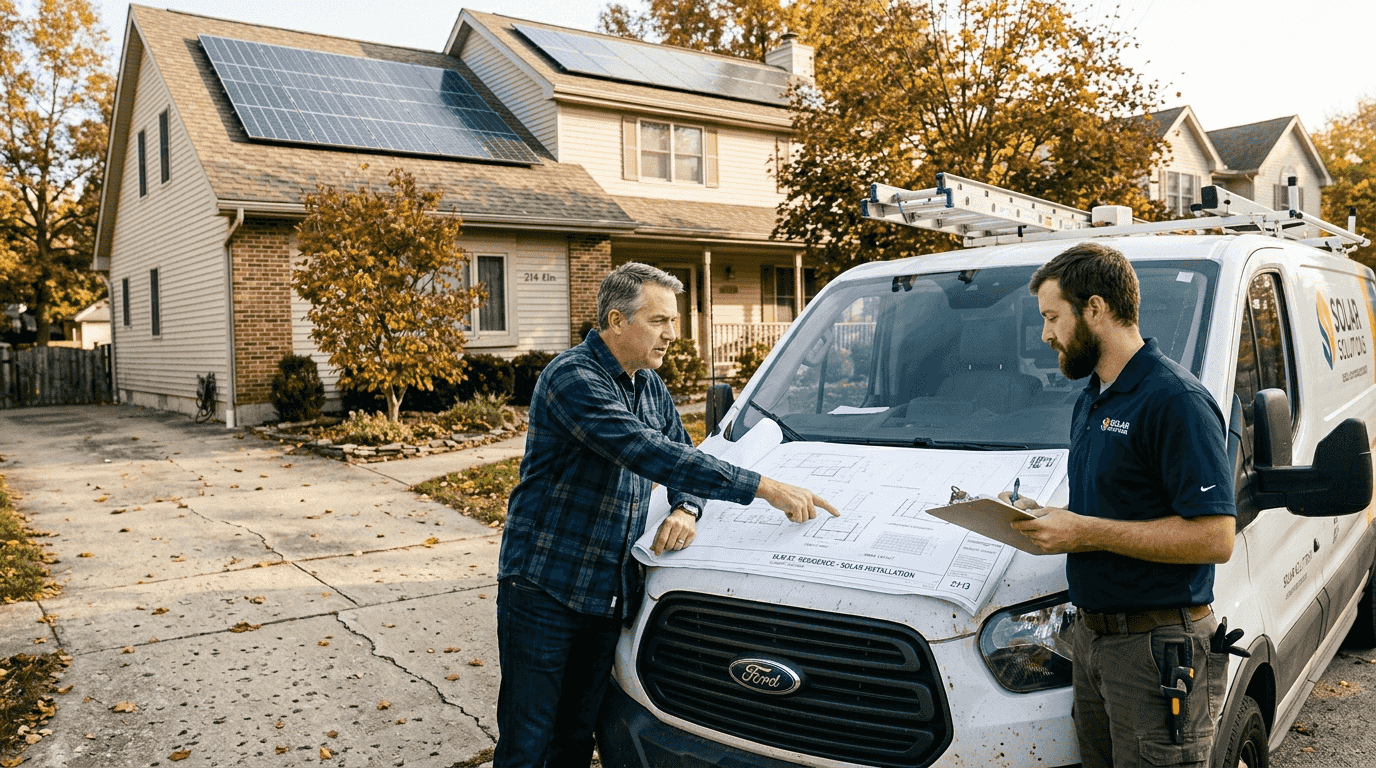
Choosing the right solar installer can feel overwhelming when you’re surrounded by competing quotes and promises. The difference between a reliable installation and costly mistakes often comes down to asking the right questions upfront. This guide walks you through the essential question categories covering credentials, equipment, finances, installation procedures, and long-term support to help you make a confident decision before signing any contract.
Table of Contents
- Installer Credentials: Verifying Expertise And Legitimacy
- Equipment Specifications: Ensuring Quality And Durability
- Financial Considerations: Understanding Costs, Incentives, And Financing
- Installation Procedures: Evaluating Process And Timelines
- Long-Term Support And Maintenance: Securing Your Solar Investment
- How Sunflowers Energy Supports Your Solar Journey
Key takeaways
| Point | Details |
|---|---|
| Verify credentials thoroughly | Confirm NABCEP certification, business licenses, insurance coverage, and relevant experience before proceeding. |
| Examine equipment specifications | Ensure panels include 25-year warranties with minimal degradation and clarify inverter types for your specific conditions. |
| Understand financial details | Ask about total costs, federal tax credits, financing APRs, production guarantees, and expected payback timelines. |
| Confirm installation procedures | Verify permit handling, code compliance, realistic timelines, and proper utility interconnection processes. |
| Secure long-term support | Establish monitoring systems, warranty coverage, maintenance plans, and upgrade options to protect your investment. |
Installer credentials: verifying expertise and legitimacy
Before you discuss pricing or equipment, you need to establish whether your installer has the qualifications to deliver a safe, compliant solar system. Homeowners should ask installers 35 critical questions across five categories, starting with seven questions about installer credentials.
Start by confirming NABCEP certification and valid business licenses in your state. This certification demonstrates professional competence and adherence to industry standards. Ask how many installations the company has completed and request proof of general liability and workers’ compensation insurance to protect yourself from potential liability during the project.

Experience with your local utility company matters significantly. Installers familiar with your utility’s interconnection requirements can navigate approvals faster and avoid costly delays. Understanding their solar installation steps helps you evaluate whether they follow systematic processes.
Key credential questions to ask:
- Does your company hold NABCEP certification and current state licenses?
- How many residential solar installations have you completed in the past year?
- Can you provide proof of general liability and workers’ compensation insurance?
- What experience do you have working with my local utility company?
- Do you guarantee adherence to all local building codes and regulations?
- What is your policy on equipment substitutions after contract signing?
- How long is your workmanship warranty, and what does it cover?
Insist on at least a 5-year workmanship warranty to protect against installation defects. Shorter warranties often signal less confidence in their work quality. Companies willing to stand behind their installations for extended periods demonstrate commitment to customer satisfaction and professional accountability.
Equipment specifications: ensuring quality and durability
Once you’ve verified installer credentials, shift your focus to the solar equipment they plan to install on your property. The quality of panels, inverters, and mounting hardware directly impacts your system’s performance and longevity.
Panel warranties should cover at least 25 years with maximum 0.5% annual degradation rates. These guarantees protect your investment and ensure consistent energy production over decades. Ask specifically about the manufacturer’s financial stability, as warranty claims depend on the company remaining in business.
Inverter selection deserves careful attention. Microinverters offer better performance in partially shaded conditions compared to string inverters, but come at higher upfront costs. Understanding the trade-offs helps you make informed decisions based on your roof’s characteristics and shading patterns throughout the day.
Pro Tip: Request a detailed shading analysis using professional tools like Solmetric devices. Poor panel placement can reduce energy output by 50% or more, turning a promising investment into a disappointing performer.
Critical equipment questions include:
- What panel brands do you install, and what are their degradation rates?
- Can you guarantee no equipment substitutions without my written approval?
- Which inverter type do you recommend for my roof conditions and why?
- What tools will you use to assess shading and optimal panel placement?
- Does your system include animal deterrent features and quality mounting hardware?
- How do you handle equipment failures during the warranty period?
Ask about solar panel degradation specifics and request documentation on performance guarantees. Companies confident in their equipment selection provide detailed specifications without hesitation. When choosing solar panels, prioritize proven manufacturers with strong warranty support over unknown brands offering marginally lower prices.
Financial considerations: understanding costs, incentives, and financing
Transparent financial discussions separate professional installers from those hiding fees in fine print. You need complete clarity on upfront costs, ongoing expenses, available incentives, and realistic return on investment projections.
Start by requesting an itemized breakdown of all costs including equipment, labor, permits, interconnection fees, and any potential hidden charges. Some installers quote attractive prices but add unexpected costs during installation. Understanding federal solar tax credit eligibility requirements and financing APRs helps you maximize available incentives.
Financing options vary dramatically in terms, interest rates, and long-term costs. Compare loans, leases, and power purchase agreements carefully. Zero-down offers sound appealing but often include higher APRs that inflate total costs significantly over time.
| Financing Option | Ownership | Tax Credit Eligibility | Typical Term |
|---|---|---|---|
| Cash Purchase | Immediate | Yes | N/A |
| Solar Loan | Immediate | Yes | 10-25 years |
| Lease | No | No | 20-25 years |
| PPA | No | No | 20-25 years |
Production guarantees provide accountability for system performance. Ask installers to specify minimum annual energy production in kilowatt-hours and remedies if systems underperform. On average, solar investments yield 2.5-3.5% annual energy savings against utility rate increases, making realistic projections essential for financial planning.
Essential financial questions:
- What is the total installed cost with itemized breakdown of all components?
- Am I eligible for the federal solar tax credit and state/local incentives?
- What financing options do you offer, including APRs and loan terms?
- Do you provide production guarantees, and what happens if my system underperforms?
- How long is the estimated payback period based on my energy usage?
- What are the net metering terms and contract duration with my utility?
Explore the financial and environmental impact of solar beyond simple payback calculations. Consider property value increases and energy independence benefits. Review comprehensive details about home solar panel costs to set realistic budget expectations.
Installation procedures: evaluating process and timelines
Understanding the installation process helps you set realistic expectations and identify installers who cut corners. Professional companies follow systematic procedures covering permits, inspections, safety protocols, and utility coordination.
Installation timelines typically range from 2-6 months depending on permit complexity and utility interconnection speed. Request a detailed timeline with specific milestones including site assessment completion, permit acquisition, actual installation dates, inspection scheduling, and final system activation.
Permit handling separates experienced installers from amateurs. Ask who manages permit applications, how long approval typically takes in your jurisdiction, and whether permit costs are included in quoted prices. Non-compliance with local building codes results in fines, voided warranties, and insurance complications that can cost thousands to rectify.
Pro Tip: Verify that your installer will handle all utility interconnection paperwork and follow up until your system receives permission to operate. Delays in this process can leave your completed system sitting idle for weeks.
Installation process questions to address:
- What permits are required, and who handles the application process?
- What is your typical timeline from contract signing to system activation?
- Who manages utility interconnection and grid approval procedures?
- How do you ensure optimal panel placement to minimize shading losses?
- What safety protocols do you follow during installation?
- Does your team’s experience match my project’s complexity?
Review detailed solar installation steps to understand what professional installers should include. Consider using a solar roofing checklist to ensure your installer addresses all critical roof preparation tasks before panel mounting.
Long-term support and maintenance: securing your solar investment
Your relationship with your solar installer extends decades beyond installation day. Companies offering robust post-installation support demonstrate confidence in their work and commitment to customer satisfaction.
Monitoring systems provide real-time performance tracking, alerting you immediately to production issues. Establishing post-installation monitoring and long-term support is crucial for system performance. Ask whether monitoring is included, what platform they use, and whether you receive alerts for system faults or unusual performance drops.
Warranty coverage deserves thorough discussion. Separate workmanship warranties from equipment warranties and understand what each covers. Some installers offer extended warranties for additional fees, which may provide value depending on your risk tolerance and system complexity.
Maintenance requirements vary by location and installation type. While solar panels need minimal maintenance, periodic cleaning, inverter checks, and connection inspections help maintain optimal performance. Experienced installers provide ongoing support to maximize energy savings and system lifespan.
Critical long-term support questions:
- What monitoring system do you provide, and is it included in the installation cost?
- How long are your workmanship and equipment warranties?
- Do you offer routine maintenance services, and what are the costs?
- What is your process for addressing repairs and system faults?
- Can I add battery storage or upgrade inverters in the future?
- Who do I contact for support issues, and what are your response times?
Future upgrade options matter as technology improves and your energy needs evolve. Battery storage integration is becoming increasingly popular for backup power and time-of-use optimization. Confirm whether your proposed system design accommodates future expansions without requiring major modifications.
Explore our solar energy efficiency guide to understand how ongoing optimization maximizes your investment returns throughout your system’s lifetime.
How Sunflowers Energy supports your solar journey
Navigating these critical questions becomes significantly easier when working with experienced professionals who prioritize transparency and customer education. Sunflowers Energy brings certified installers with extensive residential and commercial experience, comprehensive insurance coverage, and proven track records working with major utility companies across the region.
We provide premium solar panels and inverters backed by industry-leading warranties, ensuring your system performs reliably for decades. Our transparent financing guidance helps you understand all available tax credits and incentives while comparing loan options that fit your budget. Every installation follows strict compliance with local regulations, optimal panel placement strategies, and systematic quality checks.
Our commitment extends beyond installation day. We provide ongoing monitoring systems, responsive maintenance support, and clear upgrade paths as your energy needs evolve. Whether you’re exploring solar installation fundamentals, seeking to maximize energy efficiency, or just getting started with solar power basics, our team guides you through every decision with honest answers and practical solutions.
Frequently asked questions
What certifications should a reputable solar installer have?
NABCEP certification is the primary credential installers should have, representing the highest professional standard in the solar industry. Additionally, verify they hold valid state contractor licenses, electrical licenses where required, and comprehensive general liability plus workers’ compensation insurance to protect you from installation-related incidents.
How can I verify the actual performance of solar panels installed?
Post-installation monitoring systems help track real-time solar panel performance through web or mobile platforms. These systems display daily energy production, alert you to faults, and provide historical data for comparing actual output against projected performance. Regular professional maintenance inspections further ensure your system continues operating at peak efficiency.
What common installation mistakes should I avoid?
Poor panel placement and ignoring local building codes cause major efficiency and compliance issues that can permanently reduce system performance. Shading from nearby trees or structures can cut energy production in half, while code violations result in fines, voided warranties, and potential insurance claim denials. Always hire certified professionals who conduct thorough site assessments and follow all regulatory requirements.
How long should I expect the installation process to take?
Typical residential solar installations require 2-6 months from contract signing to final system activation. This timeline includes engineering design, permit applications, equipment procurement, physical installation (usually 1-3 days), utility inspections, and interconnection approval. Delays often occur during permit review or utility processes rather than actual installation work, so choose installers experienced in navigating local bureaucracy efficiently.
What financing option provides the best long-term value?
Cash purchases offer the highest long-term value by avoiding interest charges and qualifying you for full federal tax credits immediately. If cash isn’t available, solar loans with competitive APRs below 5% provide ownership benefits while spreading costs over time. Leases and power purchase agreements eliminate upfront costs but forfeit tax credits, reduce total savings, and may complicate future home sales.
Recommended
- 7-Step Solar Roofing Checklist for Urban Homeowners – Sunflowers Energy LLC A Roofing and Solar Companys
- Solar Installation Steps: Maximizing Home Efficiency – Sunflowers Energy LLC A Roofing and Solar Companys
- 7 Essential Solar Installation Tips for Businesses – Sunflowers Energy LLC A Roofing and Solar Companys
- How to choose solar panels for your home in 2026 – Sunflowers Energy LLC A Roofing and Solar Companys