Rising electricity costs and mounting sustainability goals have many American property owners looking for practical solutions that benefit both their budgets and the environment. Choosing commercial solar energy systems allows businesses to harness advanced photovoltaic technology and reduce reliance on conventional energy sources. This guide breaks down how modern solar solutions can deliver reliable power, significant savings, and lasting environmental impact for commercial facilities across the United States.
Table of Contents
- Defining Commercial Solar Energy Solutions
- Types of Commercial Solar Systems Explained
- How Commercial Solar Installations Work
- Financial Impact And Incentives For Businesses
- Risks, Limitations, And Best Practices
Key Takeaways
| Point | Details |
|---|---|
| Commercial Solar Systems | Utilize photovoltaic technology to harness solar energy, offering various configurations like rooftop, ground-mounted, and carport systems tailored to business needs. |
| Financial Benefits | Commercial solar installations can significantly reduce energy costs, provide tax incentives, and create potential revenue streams, making them strategic financial assets. |
| Risk Management | Effective risk management involves regular system inspections, proactive maintenance, and performance monitoring to ensure long-term economic effectiveness and reliability. |
| System Efficiency | Conduct energy audits and site assessments to maximize the efficiency and return on investment of solar installations tailored to specific commercial energy needs. |
Defining Commercial Solar Energy Solutions
Commercial solar energy represents an innovative approach to powering business operations through sustainable electricity generation. These sophisticated systems leverage photovoltaic technology to convert sunlight directly into electrical power for commercial enterprises, offering a strategic alternative to traditional energy sources.
Commercial solar solutions encompass multiple technological approaches, including:
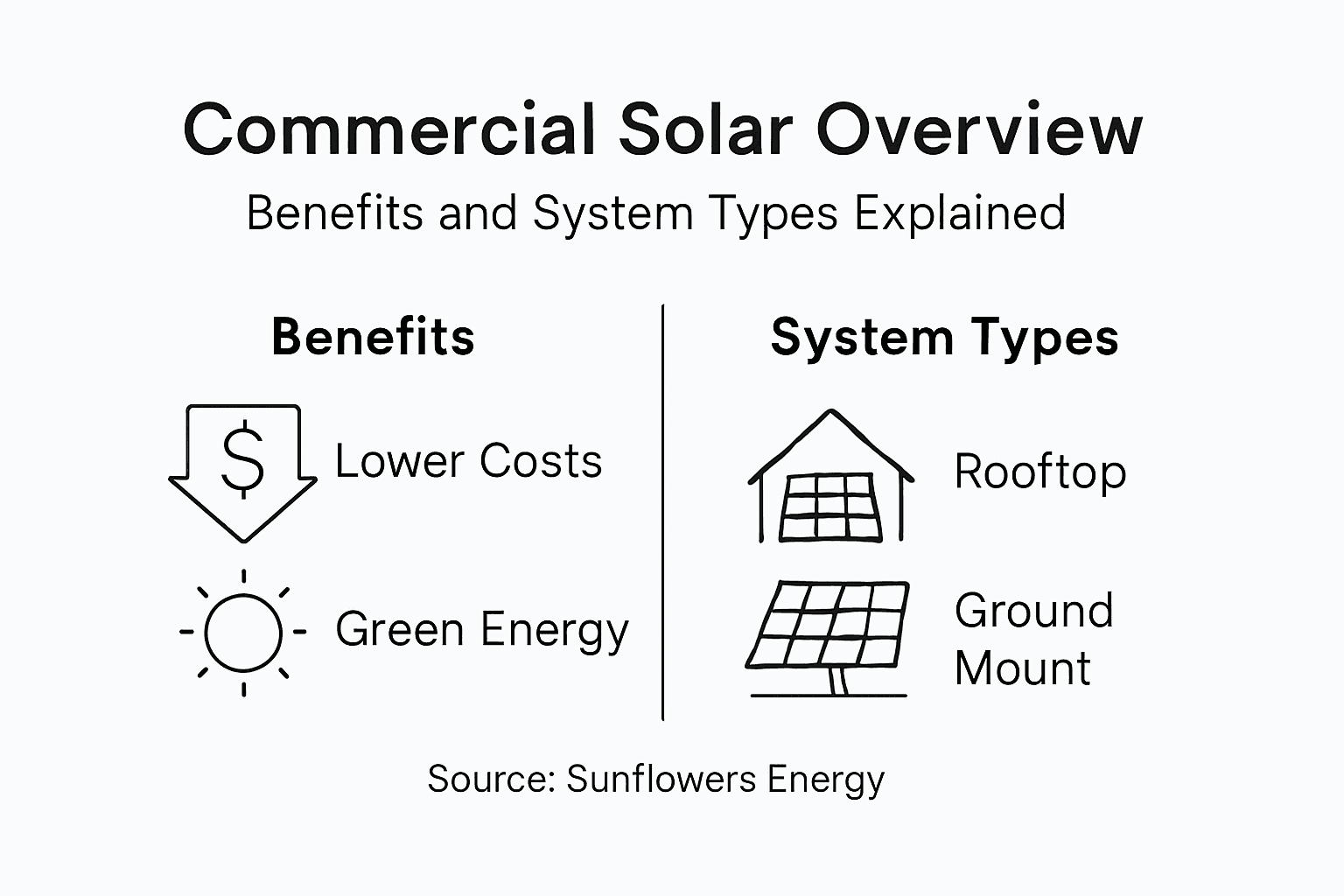
- Rooftop solar panel installations that maximize existing building infrastructure
- Ground-mounted solar arrays for businesses with substantial land availability
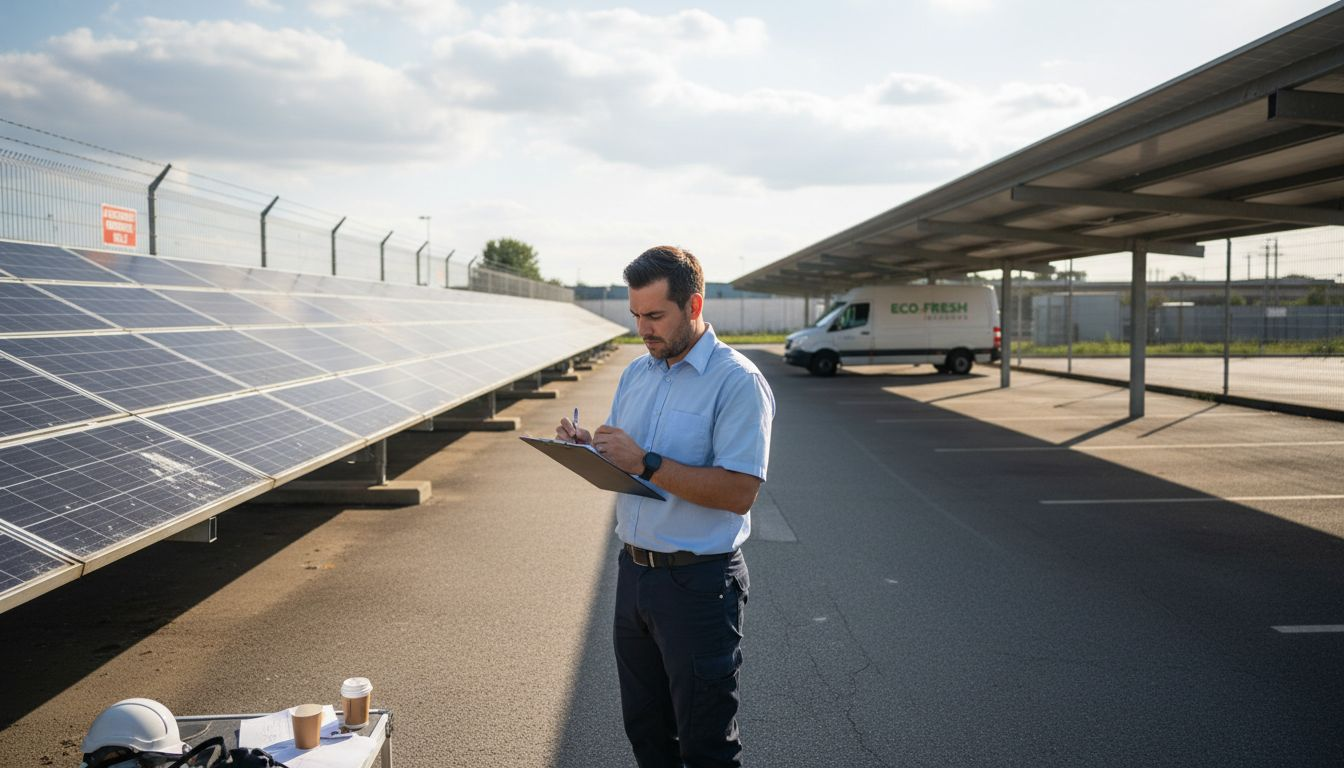
- Solar carport systems that simultaneously generate electricity and provide vehicle shade
The fundamental mechanism involves photovoltaic cells converting solar radiation into usable electrical current. These systems typically integrate several critical components:
- Solar panels to capture solar energy
- Inverters that transform direct current into alternating current
- Mounting structures designed for optimal panel positioning
- Electrical connection systems
Commercial solar energy distinguishes itself from residential solutions through scale, complexity, and strategic financial considerations. Businesses can leverage these systems not just as environmental statements, but as sophisticated financial investments with measurable economic returns.
Commercial solar represents more than an energy solution – it’s a strategic business asset that generates long-term financial and environmental benefits.
Pro tip: Conduct a comprehensive energy audit before designing your commercial solar installation to maximize system efficiency and return on investment.
Types of Commercial Solar Systems Explained
Commercial solar systems represent a diverse range of technological solutions designed to meet varying business energy requirements. Photovoltaic technologies convert sunlight into electrical energy through sophisticated semiconductor configurations that adapt to different commercial contexts.
The primary categories of commercial solar systems include:
-
Rooftop Solar Systems
- Ideal for buildings with substantial roof space
- Minimizes land use requirements
- Typically grid-connected configurations
-
Ground-Mounted Solar Arrays
- Best for businesses with extensive land availability
- Allows larger scale electricity generation
- Flexible positioning for maximum solar exposure
-
Solar Carport Installations
- Dual-purpose systems providing shade and electricity generation
- Excellent for parking lots and commercial facilities
- Adds value through infrastructure optimization
Commercial solar configurations can be categorized by their connection methodology:
- Grid-Connected Systems
- Off-Grid Systems
- Hybrid Systems
Each configuration offers unique advantages depending on specific business energy needs, geographic location, and infrastructure constraints. The selection process involves carefully evaluating electrical consumption, available space, and long-term financial objectives.
To clarify differences between commercial solar system types, see the comparison below:
| System Type | Ideal Setting | Primary Advantage | Typical Limitation |
|---|---|---|---|
| Rooftop Solar | Large, flat roofs | Minimal land use | Roof space constraints |
| Ground-Mounted Arrays | Ample unused land | Scalable energy generation | Requires significant space |
| Solar Carports | Parking lots, open areas | Dual-use infrastructure | Higher installation cost |
Commercial solar systems are not one-size-fits-all solutions, but strategic investments tailored to specific business requirements.
Pro tip: Perform a comprehensive site assessment to determine the most suitable solar system configuration for your specific commercial energy needs.
How Commercial Solar Installations Work
Commercial solar installations represent sophisticated energy systems that transform sunlight into usable electricity through a carefully orchestrated process. Solar panel operations convert sunlight into electrical energy using advanced photovoltaic technologies designed for maximum efficiency.
The core components of a commercial solar installation include:
-
Solar Panels
- Capture solar radiation using photovoltaic cells
- Convert sunlight directly into direct current (DC) electricity
- Strategically positioned for maximum solar exposure
-
Inverter Systems
- Transform DC electricity into alternating current (AC)
- Enable compatibility with commercial electrical systems
- Optimize energy conversion efficiency
-
Mounting and Structural Components
- Provide stable support for solar panel arrays
- Allow precise angle and orientation adjustments
- Designed for durability and long-term performance
The technical workflow of a commercial solar installation follows these critical stages:
- Solar Radiation Capture
- Electrical Energy Conversion
- Grid Integration or Storage
- Continuous Performance Monitoring
Each installation is meticulously designed to match specific business energy requirements, taking into account factors like electrical consumption patterns, available space, and regional solar potential. The modular nature of these systems allows for scalable and adaptable energy solutions that can evolve with business needs.
Commercial solar installations are precision-engineered systems that transform environmental potential into tangible electrical energy.
Pro tip: Conduct periodic performance assessments to ensure your solar installation maintains optimal energy generation and identifies potential maintenance needs.
Financial Impact and Incentives for Businesses
Commercial solar investments represent a strategic financial opportunity for businesses seeking to reduce energy costs and capitalize on substantial economic benefits. Federal tax incentives dramatically reduce the overall cost of solar implementation, making renewable energy increasingly attractive for forward-thinking companies.
Key financial advantages of commercial solar include:
-
Direct Cost Savings
- Significant reduction in monthly electricity expenses
- Protection against rising utility rates
- Long-term predictable energy costs
-
Tax Credit Opportunities
- Investment Tax Credit (ITC) provides dollar-for-dollar tax reductions
- Accelerated depreciation benefits
- State and local renewable energy incentives
-
Alternative Revenue Streams
- Net metering credit programs
- Potential energy selling opportunities
- Enhanced property value
The primary financial incentives for commercial solar adoption encompass multiple strategic benefits:
- Immediate tax credit reductions
- Reduced operational energy expenses
- Long-term return on investment
- Potential additional revenue generation
Businesses can typically expect substantial financial returns, with many solar installations achieving break-even points within 5-7 years and generating consistent savings throughout the system’s 25-30 year lifecycle.
Here is a summary of major financial incentives and returns for commercial solar projects:
| Incentive or Benefit | Description | Typical Business Impact |
|---|---|---|
| Investment Tax Credit | Dollar-based tax credit for solar systems | Significant upfront cost savings |
| Accelerated Depreciation | Faster equipment depreciation options | Quicker tax benefit realization |
| Net Metering Credits | Sell excess energy to utility | Generates extra revenue |
| Predictable Energy Costs | Reduced exposure to price increases | Long-term financial stability |
Commercial solar investments transform energy expenses from a cost center into a strategic financial asset.
Pro tip: Consult with a tax professional to maximize available federal and state solar investment incentives for your specific business structure.
Risks, Limitations, and Best Practices
Commercial solar investments require comprehensive risk management strategies to ensure long-term performance and financial viability. Operation and maintenance practices critically impact system reliability and overall economic effectiveness.
Key risk categories for commercial solar installations include:
-
Technical Performance Risks
- Equipment degradation over time
- Inverter and component failures
- Potential efficiency reductions
-
Environmental Challenges
- Weather-related performance variations
- Potential panel soiling and debris accumulation
- Regional climate impact on system output
-
Financial and Policy Risks
- Changing government incentive structures
- Potential shifts in electricity market dynamics
- Technology obsolescence concerns
Best practices for mitigating commercial solar risks involve:
- Regular comprehensive system inspections
- Proactive maintenance scheduling
- Performance monitoring technologies
- Continuous technological upgrades
Successful risk management requires a holistic approach that combines technical expertise, financial planning, and adaptive strategies. Businesses must develop robust frameworks that anticipate potential challenges and create flexible response mechanisms.
Risk management in commercial solar is not about elimination, but strategic mitigation and continuous optimization.
Pro tip: Develop a comprehensive performance tracking system that allows real-time monitoring and rapid response to potential solar installation challenges.
Unlock the Full Potential of Commercial Solar Energy for Your Business
Understanding “What Is Commercial Solar and Why It Matters” reveals critical challenges like managing rising energy costs and optimizing sustainable investments. If you are a business owner aiming to reduce electricity expenses while enhancing your environmental impact, commercial solar is the strategic solution you need. Key concepts like photovoltaic technology, system configurations, and financial incentives highlight the need for a tailored solar installation designed for your unique energy demands.
Don’t let complex choices hold you back from harnessing solar power efficiently. At Sunflowers Energy, we specialize in comprehensive commercial solar solutions that combine premium technology and expert service to deliver lasting financial benefits. Explore how our offerings at 1win Brazil complement your business goals with advanced solar systems and dependable roofing services.
Take control of your energy future now by visiting Sunflowers Energy. Discover how our proven commercial solar solutions and personalized consultations can turn your business into a leader in sustainability and cost savings. Begin with a free onsite inspection and a custom quote tailored to your needs today. Learn more about the impact commercial solar can make and start transforming your business energy strategy. For additional insights and updates, explore crazy time and keep informed about the latest innovations.
Frequently Asked Questions
What is commercial solar energy?
Commercial solar energy refers to the use of photovoltaic technology to convert sunlight into electricity to power business operations. It serves as a sustainable and strategic alternative to traditional energy sources.
What are the different types of commercial solar systems?
The main types of commercial solar systems include rooftop solar systems, ground-mounted solar arrays, and solar carport installations. Each type has its advantages based on space availability and specific business needs.
How do commercial solar installations work?
Commercial solar installations transform sunlight into usable electricity through a series of steps, including solar radiation capture by panels, conversion to electrical energy by inverters, and integration into the power grid or storage for later use.
What are the financial benefits of investing in commercial solar?
Investing in commercial solar can lead to direct cost savings on electricity bills, tax credits, and potential revenue from selling excess energy. Many businesses see a return on investment within 5-7 years, transforming energy expenses into a strategic financial asset.
Recommended
- service – Sunflowers Energy LLC A Roofing and Solar Companys
- Solar – Sunflowers Energy LLC A Roofing and Solar Companys
- Sunflowers Energy LLC A Roofing and Solar Companys
- Roofing – Sunflowers Energy LLC A Roofing and Solar Companys
- Commercial Solar Explained: Cutting Costs and Emissions
- Solar Calculations | Complete EPC