
Why Roofing Materials Matter: Energy Savings & Sustainability
TL;DR:
- The right roofing material reduces energy costs and supports solar panel efficiency.
- Metal and cool roofs offer high durability, reflectivity, and environmental benefits over asphalt shingles.
- Planning roofing and solar installations together ensures long-term savings and property value.
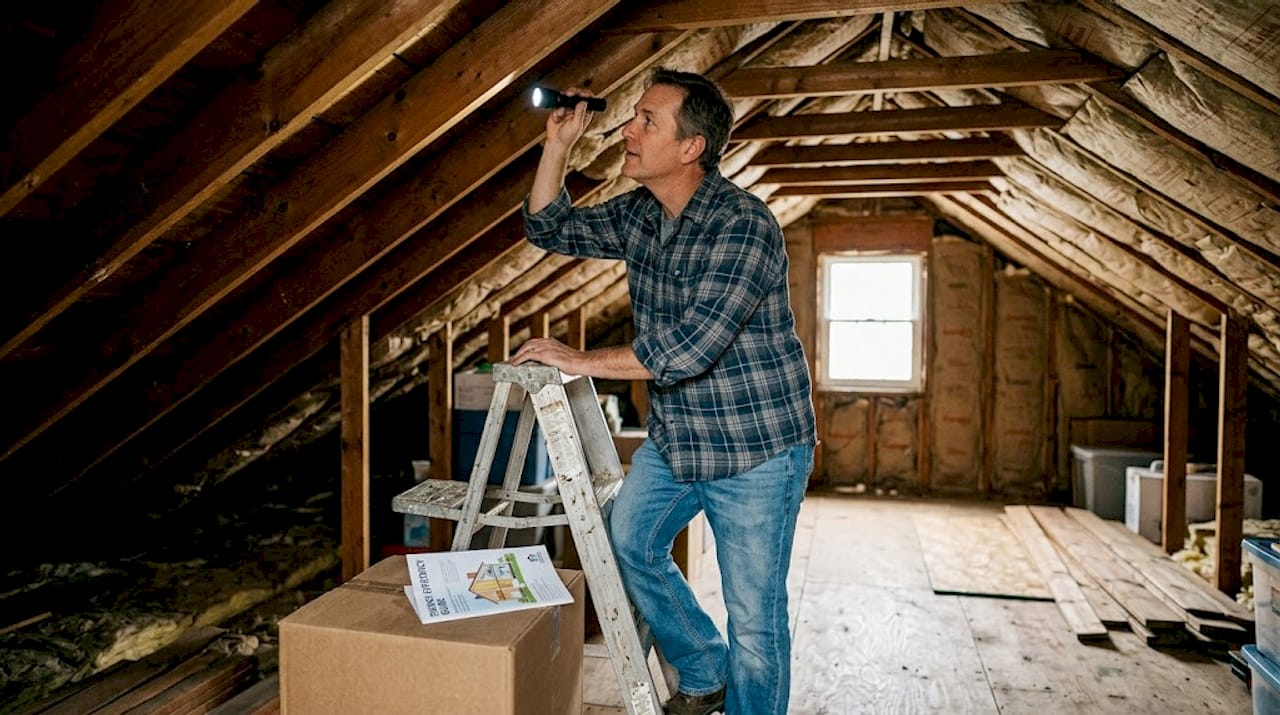
Your roof does a lot more than keep rain out. The material covering your building directly shapes your monthly energy bills, your comfort through every season, and your long-term maintenance costs. Most homeowners and business owners focus on the upfront price tag and move on, but that decision can cost thousands more over the life of the building. The right roofing material can reduce energy use, support solar panel performance, and add lasting value to your property. This article breaks down what you need to know to make a smarter, more sustainable choice.
Table of Contents
- How roofing materials impact energy use and environment
- Comparing roofing materials: durability, costs, and savings
- The link between roofing, solar energy, and efficiency
- Making the right roofing choice for long-term results
- Why most people underestimate roofing choices (and what to do instead)
- Get expert help choosing the right roofing and solar solution
- Frequently asked questions
Key Takeaways
| Point | Details |
|---|---|
| Material choice counts | Picking the right roofing material impacts your energy bills, comfort, and property value. |
| Lifecycle cost matters | Durable options like metal often save more over time than the cheaper up-front choices. |
| Roofing boosts solar gains | Roof compatibility significantly increases the return on solar investments. |
| Plan for long-term results | Balancing budget, climate, and sustainability goals leads to smarter roofing decisions. |
How roofing materials impact energy use and environment
Your roof is not just a protective shell. It is one of the most active parts of your building’s energy system. The material you choose controls how much heat enters in summer, how much warmth escapes in winter, and how hard your HVAC system has to work year-round. That directly affects your utility bills and your carbon footprint.
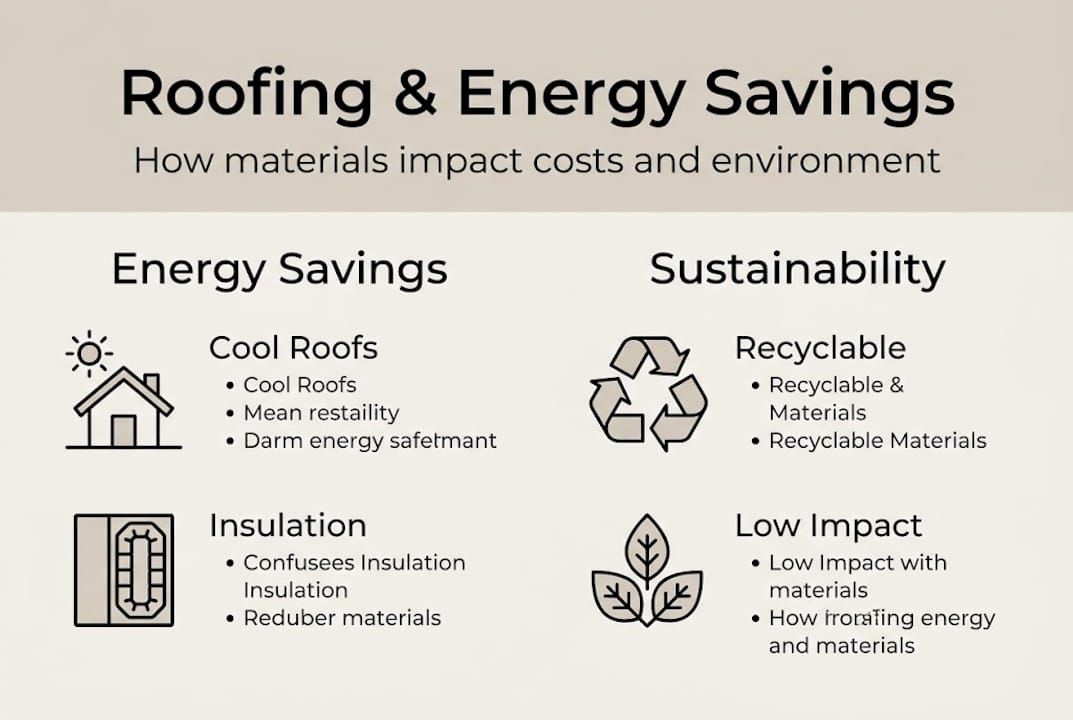
Different materials absorb and reflect heat at very different rates. Dark asphalt shingles, for example, absorb a large amount of solar radiation and transfer that heat into your attic and living spaces. Metal roofing and specially coated cool roofs reflect significantly more sunlight, keeping interior temperatures lower without extra air conditioning. Understanding roofing and energy efficiency is the first step toward making a choice that works for your budget and climate.
Here is what separates high-performing materials from standard options:
- Reflectivity: Metal and cool-roof coatings bounce solar energy away instead of absorbing it
- Insulation value: Thicker, layered systems trap conditioned air inside more effectively
- Thermal mass: Some materials absorb heat slowly and release it at night, reducing peak cooling loads
- Durability under weather stress: Premium materials maintain their energy performance longer, even after storms
- Environmental footprint: Recyclable or sustainably sourced materials reduce lifecycle carbon emissions
The environmental impact goes beyond your own property. Urban areas with high concentrations of dark, heat-absorbing roofs contribute to what researchers call the urban heat island effect. Cool roofs reduce urban heat by 1.2 to 2°C more effectively than green or solar roofs, with annual energy savings reaching up to 16.6%. That is a meaningful difference for both your wallet and your neighborhood.
“The material on your roof is one of the highest-leverage decisions you can make for long-term energy performance. Get it right once, and it pays you back for decades.”
Advanced systems, including insulated roofing assemblies and insulating additions for buildings, add another layer of protection by minimizing heat loss at the roof-wall junction. These upgrades are especially valuable in climates with extreme temperature swings.
Pro Tip: Combining a reflective roofing material with proper attic insulation and ventilation can amplify your energy savings well beyond what either upgrade delivers on its own. Think of them as a system, not separate projects.
Exploring energy-efficient roofing benefits early in your planning process helps you match the right material to your specific climate and building type.
Comparing roofing materials: durability, costs, and savings
Knowing the science is one thing. Comparing real-world material choices is how you make a smart investment. Each major roofing type brings its own trade-offs between upfront cost, lifespan, maintenance needs, and long-term savings.
| Material | Lifespan | Avg. Upfront Cost | Energy Savings Potential | Sustainability |
|---|---|---|---|---|
| Asphalt shingles | 15-30 years | Low | Moderate (with cool coating) | Low (limited recyclability) |
| Metal roofing | 40-70+ years | Medium-High | High (reflective surface) | High (fully recyclable) |
| Green/living roof | 30-50 years | High | High (natural insulation) | Very High |
| Solar-integrated | 25-40 years | High | Very High (generates power) | High |
| Advanced systems (e.g., Cobiax) | 40-60+ years | High | Very High (superior insulation) | Very High |
Metal roofs last 40 to 70+ years compared to asphalt shingles at 15 to 30 years, and lifecycle costs favor metal after just 12 to 18 years of ownership. That means if you plan to stay in your home or building for more than a decade and a half, metal is almost always the smarter financial choice despite the higher initial price.
Key factors to weigh when comparing materials:
- Replacement frequency: Asphalt shingles may need full replacement two or three times over the life of a metal roof
- Maintenance costs: Metal and advanced systems require far less ongoing maintenance than organic or composite materials
- Insurance considerations: Some insurers offer discounts for impact-resistant or metal roofing
- Resale value: Durable, energy-efficient roofing consistently improves property appraisals
Understanding roof material durability for solar is especially important if you plan to add panels. A roof that needs replacement in 10 years will require you to remove and reinstall your solar system, adding significant cost.
For homeowners who prefer a familiar, cost-accessible option, choosing asphalt shingles with a cool-roof coating offers a practical middle ground. You get improved energy performance without the full investment of a metal or advanced system.
Savings reality check: Most homeowners see energy savings between 10% and 30% after upgrading to a high-performance roofing material. The exact figure depends on your climate, existing insulation, and HVAC system. Hotter climates with intense sun exposure tend to see the highest returns from reflective materials.
The link between roofing, solar energy, and efficiency
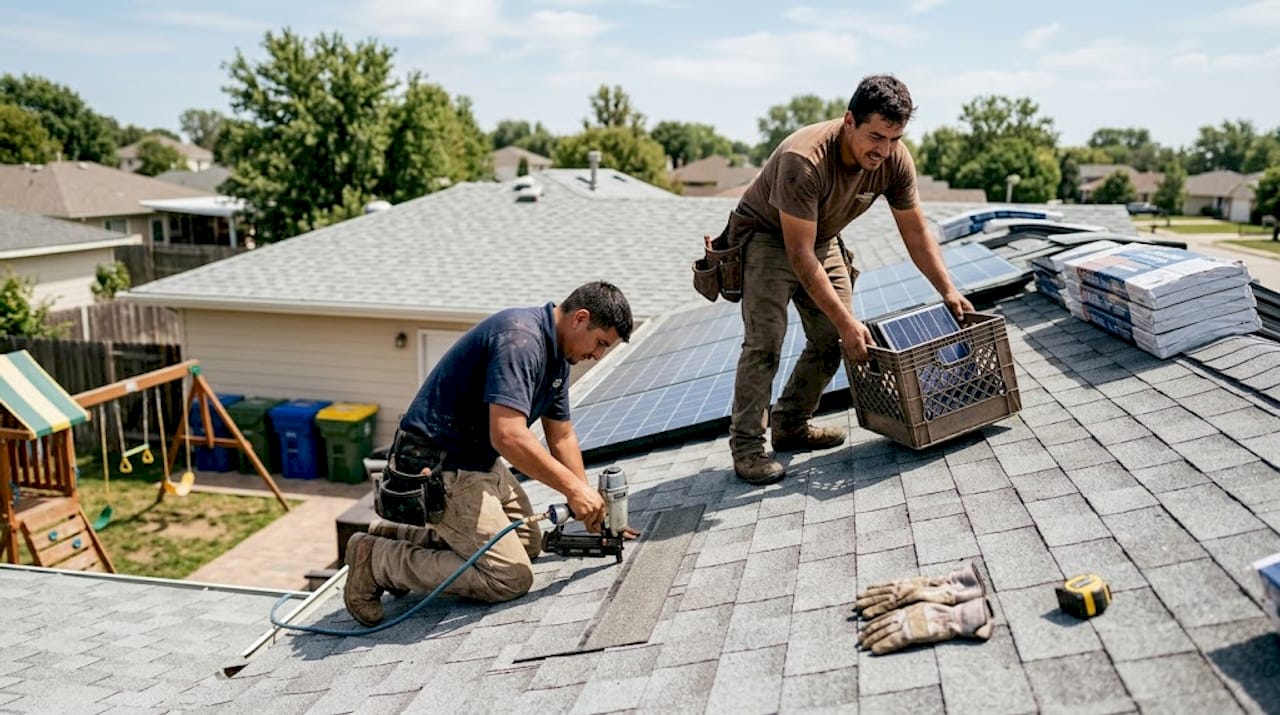
Once you understand your material options, see how they either help or hinder solar energy projects. Your roof is the foundation of any solar installation, and its condition, material, and design directly affect how well your panels perform and how quickly they pay off.
Not every roof is equally solar-ready. Here is what material choice means for your solar investment:
- Structural strength: Metal and advanced composite roofs handle the added weight of panels without stress; aging asphalt may not
- Heat retention: Roofs that stay cooler improve solar panel efficiency, since panels lose output as temperature rises
- Surface lifespan: Panels installed on a roof near the end of its life create expensive removal and reinstallation costs
- Mounting compatibility: Some materials accept solar hardware more easily and securely than others
- Warranty alignment: Premium roofing warranties often align better with solar panel warranties, protecting your full investment
Lifecycle studies show advanced roofing systems like Cobiax offer superior thermal insulation, which complements solar performance by reducing the building’s baseline energy demand. When your roof keeps conditioned air inside more effectively, your solar panels cover a larger share of your total energy use.
Adding a radiant barrier insulation layer beneath your roofing material is another strategy that reduces heat transfer into the attic, lowering cooling loads and boosting the net benefit of your solar system.
Learn more about roofing for solar efficiency and how the right combination of materials can shorten your payback period significantly. Pairing smart roofing with solar is also covered in depth in our guide to energy savings roofing and solar.
Pro Tip: If your roof is more than 10 years old and you are planning a solar installation, replace the roof first or do both projects simultaneously. Coordinating the two saves on labor and avoids the cost of removing panels for a future roof replacement.
Making the right roofing choice for long-term results
With the link between roofing and energy savings clear, let’s make this actionable for your next upgrade. Choosing the right material is not a one-size-fits-all decision. Your climate, budget, solar plans, and long-term ownership goals all shape the best answer for your property.
Follow these steps to guide your decision:
- Assess your climate zone. Hot, sunny regions benefit most from reflective metal or cool-roof systems. Cold climates prioritize insulation value and durability under snow and ice loads.
- Define your timeline. If you plan to own the property for 20 or more years, invest in durability. Lifecycle savings from premium materials far outpace the upfront difference.
- Factor in solar goals. If solar panels are in your future, choose a roof material and structure that supports them from day one.
- Calculate total cost of ownership. Add up expected replacement cycles, maintenance, and energy costs over 30 years, not just the installation invoice.
- Check for incentives. Federal and state programs in 2026 continue to offer tax credits and rebates for energy-efficient roofing and solar installations.
| Priority | Best Material Match | Key Benefit |
|---|---|---|
| Lowest upfront cost | Asphalt shingles | Accessible and widely available |
| Longest lifespan | Metal roofing | 40-70+ years with minimal maintenance |
| Maximum energy savings | Cool roof or solar-integrated | Highest efficiency gains |
| Solar compatibility | Metal or advanced composite | Strong, durable, and panel-ready |
| Environmental impact | Green roof or recyclable metal | Lowest lifecycle carbon footprint |
Upfront cost favors asphalt and traditional materials, but lifecycle analysis consistently favors durable and recyclable options, with benchmarks confirming 10% to 30% savings depending on climate and insulation quality.
Explore how to reduce energy costs with roofing and discover the full range of sustainable roofing value your building can gain from a well-planned upgrade.
Why most people underestimate roofing choices (and what to do instead)
Before you make your final decision, here is the hard-earned truth we see every day in the field. Most homeowners and business owners treat roofing as a reactive expense. The old roof fails, they call for a replacement, and they pick the lowest quote. That approach consistently costs more over time.
The real mistake is treating roofing as isolated from everything else. Your roof connects directly to your energy bills, your solar potential, your insurance premiums, and your property value. Choosing the cheapest material today often means paying for another replacement sooner, losing energy savings every month in between, and potentially having to remove solar panels to fix a roof that was not built to last.
We also see owners wait too long to plan. By the time a roof needs urgent replacement, there is no time to evaluate solar integration or optimize for energy performance. The decision gets rushed, and the opportunity is lost.
The smarter path is to plan roofing and solar together, before either becomes urgent. Review your roofing role in 2026 sustainability goals now, while you have time to make a deliberate, future-ready choice. Energy costs are rising. Solar adoption is accelerating. The value of a durable, efficient roof has never been higher.
Get expert help choosing the right roofing and solar solution
You have the knowledge. Now it is time to put it to work for your property. Choosing the right roofing material and solar setup is a decision that rewards careful planning and professional guidance.
At Sunflowers Energy, we specialize in helping homeowners and business owners evaluate their roofing solutions and solar options together, so every upgrade works as a unified system. Our experts assess your building, climate, and goals to recommend materials that maximize durability, energy savings, and solar compatibility. Use our solar energy efficiency guide to understand your options, then schedule a free roof inspection to get a personalized plan with no obligation. Get a quote today and start protecting your investment from the top down.
Frequently asked questions
Do all roofing materials help with energy efficiency?
Not all roofing materials deliver equal energy performance. Metal, cool roofs save up to 16.6% annually, while standard asphalt shingles without reflective coatings offer only moderate savings.
How long do metal roofs really last compared to shingles?
Metal roofs last 40 to 70+ years while asphalt shingles typically require replacement after 15 to 30 years, making metal the stronger long-term investment for most property owners.
Are advanced roofing systems worth the extra cost?
Yes. Advanced systems like Cobiax deliver superior thermal insulation and sustainability benefits that reduce energy costs and extend building performance well beyond what standard materials can offer.
How does roofing material affect my solar panel efficiency?
Your roofing material affects solar panel output through heat retention, structural support, and surface lifespan. Advanced roofing systems with superior insulation lower your baseline energy demand, allowing solar panels to cover a greater share of your total consumption.
Recommended
- Role of roofing in sustainability: energy savings in 2026 – Sunflowers Energy LLC A Roofing and Solar Companys
- How roofing boosts energy savings and solar efficiency – Sunflowers Energy LLC A Roofing and Solar Companys
- Sustainable roofing benefits: cut costs, boost value – Sunflowers Energy LLC A Roofing and Solar Companys
- The Ultimate Roofing Materials Checklist for Sustainable Homes – Sunflowers Energy LLC A Roofing and Solar Companys

https://shorturl.fm/6OX7j
https://shorturl.fm/medPA