
Why upgrade to solar panels: cut bills by 70% and add 4.1% home value
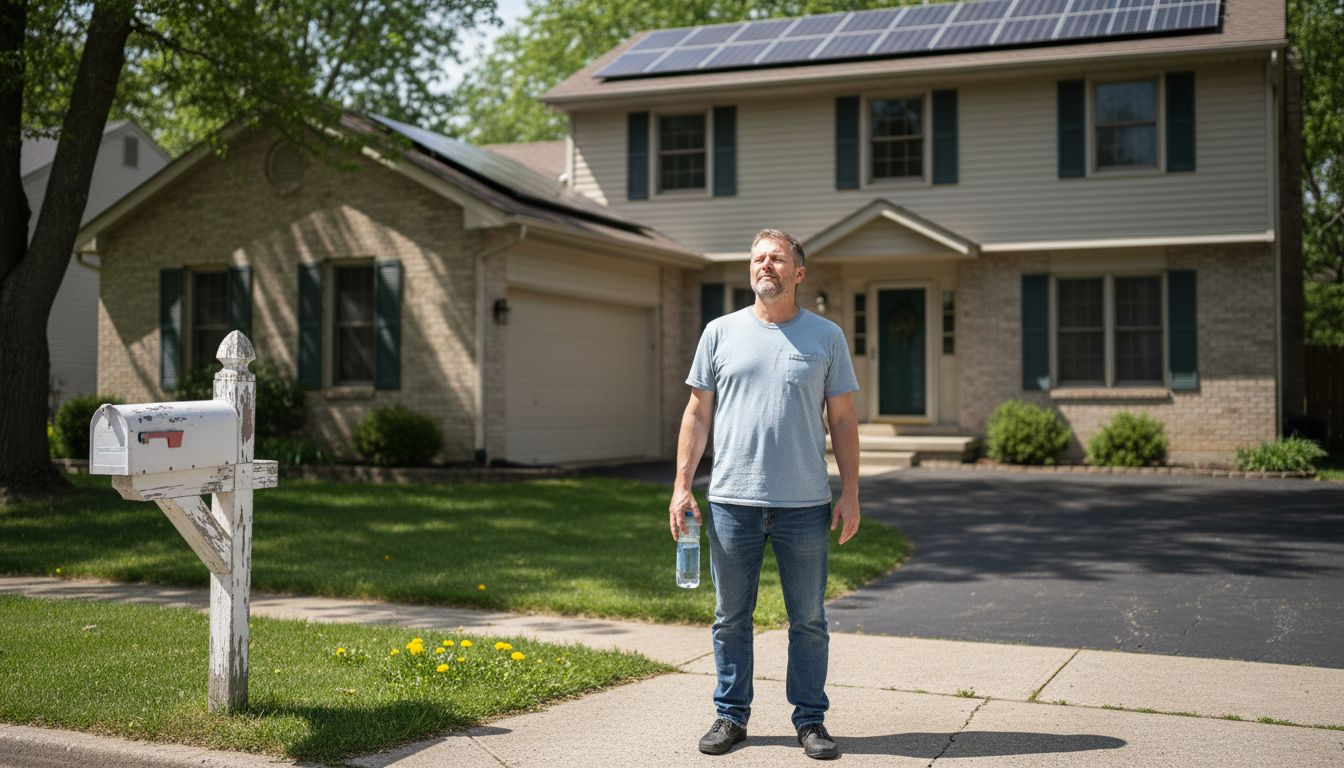
US homeowners face average electricity bills climbing 15% annually, making energy costs a serious financial burden. Solar panel installation has emerged as a leading solution, cutting utility expenses by up to 70% while boosting property values. This comprehensive guide explains the financial benefits, environmental impact, and practical steps for upgrading to residential solar power in 2026.
Table of Contents
- How Solar Panels Reduce Utility Costs
- Financial Incentives And Cost Benefits For Us Homeowners
- Environmental Benefits Of Solar Energy
- Common Misconceptions About Solar Panels
- Impact Of Solar Panels On Home Equity And Marketability
- Comparison Of Residential Solar Panel Options
- Cost-Benefit Timeline And Decision Guidance For Homeowners
- Explore Solar Solutions With Sunflowers Energy
- Frequently Asked Questions About Upgrading To Solar Panels
Key takeaways
| Point | Details |
|---|---|
| Dramatic utility savings | Solar panels reduce monthly electricity bills by 50-70% through self-generated power. |
| Federal tax incentives | The ITC provides a 30% tax credit on total installation costs. |
| Carbon footprint reduction | Each system cuts household CO2 emissions by 3-4 tons annually. |
| Property value boost | Homes gain 4.1% value increase, averaging $17,000 added equity. |
| Fast market sales | Solar-equipped homes sell 20% faster than comparable properties. |
How solar panels reduce utility costs
Solar panels work by converting sunlight into usable electricity through photovoltaic cells, directly powering your home and reducing reliance on grid electricity. This fundamental shift in energy sourcing creates immediate monthly savings. Solar panels reduce electricity costs by generating free electricity from sunlight, cutting monthly utility bills by an average of 50-70% for typical US homes.
Understanding how solar panels work helps homeowners appreciate the technology behind these savings. When sunlight hits the solar cells, it creates an electrical current that flows to an inverter, converting DC power to AC electricity your home can use. Excess power generated during peak sunlight hours feeds back into the grid through net metering programs.
Net metering provides additional financial benefits by crediting your account for surplus energy production. During sunny days when your panels generate more electricity than you consume, the excess power flows to the utility grid. Your electric company issues credits that offset nighttime or cloudy day consumption, maximizing your real cost savings from solar panels.
Key factors affecting your utility cost reduction include:
- System size matched to your household energy consumption patterns
- Geographic location and average annual sunlight exposure hours
- Roof orientation and angle optimized for maximum solar collection
- Local utility rates and net metering policy generosity
- Energy efficiency of your home’s existing appliances and insulation
Proper system sizing requires professional assessment of your energy bills and roof characteristics. Most residential installations range from 5 to 10 kilowatts, with larger homes requiring proportionally bigger systems. By carefully maximizing home savings with solar efficiency, homeowners ensure their investment delivers optimal returns.
Financial incentives and cost benefits for US homeowners
Federal and state programs dramatically reduce solar installation costs, making renewable energy accessible to more households. The federal solar Investment Tax Credit offers a 30% tax credit on the total cost of solar system installation, significantly lowering upfront expenses for US homeowners. This substantial incentive transforms a $20,000 system into a $14,000 net investment after tax benefits.
State and local programs add further savings through rebates, property tax exemptions, and performance incentives. Many states offer additional rebates ranging from $500 to $5,000 depending on system size and location. Some municipalities waive permit fees or provide expedited approval processes for solar installations.
The combination of federal and local incentives shortens payback periods considerably. Without incentives, homeowners might wait 15 to 20 years to recoup their investment. With the 30% federal credit and state programs, typical payback periods drop to just 6 to 10 years. This acceleration makes solar financially attractive even for homeowners planning to move within a decade.
Financial planning considerations include:
- Upfront costs ranging from $15,000 to $30,000 before incentives
- Monthly utility bill elimination or reduction to under $20
- Property value increase offsetting initial investment costs
- Loan options with payments lower than current electric bills
- Tax credit timing coordinated with annual tax filing strategies
Pro Tip: Consult a solar professional before year end to ensure you can claim the full 30% federal tax credit on your next tax return, maximizing immediate savings.
Researching available programs requires checking federal, state, and utility company websites. The financial impacts of solar installation extend beyond direct energy savings to include these incentive programs. Professional installers often assist with paperwork and ensure you capture every available benefit. Use our guide to solar panel costs to estimate your total investment and savings timeline.
Environmental benefits of solar energy
Residential solar power delivers measurable environmental impact beyond household financial gains. Solar panels reduce household carbon emissions by approximately 3-4 tons annually per average system size, contributing substantially to household-level environmental impact reduction. This reduction equals planting about 100 trees each year or taking a car off the road for 12 months.
Every kilowatt-hour generated by solar panels replaces electricity that would otherwise come from fossil fuel power plants. Coal and natural gas plants dominate US electricity generation, releasing significant greenhouse gases during operation. Your home solar system directly displaces this polluting energy with clean renewable power.
National climate goals depend partly on widespread residential solar adoption. The US aims to reduce greenhouse gas emissions by 50% below 2005 levels by 2030. Individual homeowners contribute meaningfully by choosing solar, creating cumulative impact across millions of households. This collective action supports broader sustainability objectives without requiring lifestyle sacrifices.
Environmental advantages include:
- Zero operational emissions after manufacturing and installation
- Reduced air pollution benefiting local and regional air quality
- Decreased water consumption compared to thermoelectric power generation
- Lower strain on electrical grid during peak demand periods
- Support for renewable energy market growth and technology advancement
The environmental impact of solar panels extends to manufacturing considerations as well. Modern production methods have become increasingly efficient, with panel energy payback periods dropping to just 1 to 3 years. After this initial period, your system generates net positive environmental benefits for its remaining 25 to 30 year lifespan.
Choosing solar aligns personal finances with environmental responsibility. You reduce your carbon footprint while cutting utility costs, creating a win-win scenario. Learn more about solar energy home benefits to understand both economic and ecological advantages.
Common misconceptions about solar panels
Myths and misinformation often discourage homeowners from pursuing solar upgrades despite compelling benefits. Addressing these misconceptions with facts helps you make informed decisions based on current technology and market realities.
Efficiency concerns represent the most common myth. Critics claim solar panels convert too little sunlight into electricity to justify installation costs. Modern panels now exceed 22% efficiency, with premium models reaching 24% conversion rates. This efficiency suffices for most residential applications, generating ample power from typical roof space.
Maintenance worries deter some homeowners who fear complex upkeep requirements. Reality proves far simpler. Solar panels require minimal maintenance, typically just 1 to 2 cleanings annually to remove dust and debris. Rain naturally cleans panels in most climates, with occasional hose rinsing sufficient in drier regions. No moving parts means virtually nothing breaks or needs replacement during normal operation.
Property value concerns assume solar panels might reduce home appeal or complicate sales. Market data proves the opposite. Solar panels increase home value by approximately 4.1%, translating to $17,000 added equity for typical properties. Buyers recognize the long-term utility savings and view solar as a premium feature.
Key myths debunked:
- Panels work only in sunny climates (they generate power even on cloudy days)
- Installation damages roofs (proper mounting protects and seals roof surfaces)
- Technology becomes obsolete quickly (panels maintain performance for 25+ years)
- Batteries are required (grid connection provides reliable backup power)
- Removal complicates roof repairs (panels detach easily for maintenance access)
Pro Tip: Request a professional site assessment to get accurate projections for your specific location, roof characteristics, and energy usage patterns rather than relying on general assumptions.
Homes with solar installations sell about 20% faster than comparable properties without renewable energy systems. This speed advantage reflects growing buyer preference for energy-efficient homes with lower operating costs. Visit our solar roofing myths debunked page for additional clarification on common concerns.
Impact of solar panels on home equity and marketability
Solar panel installation represents a substantial home improvement investment that directly enhances property value and market appeal. Real estate research demonstrates consistent value increases across diverse housing markets and geographic regions.
Adding solar panels increases home value by an average of 4.1% in the US, translating to an approximate increase of $17,000 for the typical single-family home. This value boost often equals or exceeds the net installation cost after incentives, effectively making solar a cost-neutral upgrade that pays dividends through utility savings.

Market timing advantages compound the financial benefits. Homes equipped with solar systems attract buyer attention faster and generate more competitive offers. The 20% faster sale rate means less time covering mortgage payments, maintenance, and holding costs during the sales process. Buyers particularly value homes with established solar installations because they inherit the remaining system lifespan without upfront installation expenses.
| Metric | Homes With Solar | Homes Without Solar |
|---|---|---|
| Average Sale Price Premium | +4.1% | Baseline |
| Days on Market | 20% fewer | Standard |
| Buyer Interest Level | High | Moderate |
| Appraisal Consideration | Value-adding improvement | N/A |
Energy-efficient features rank among top buyer priorities in current real estate markets. Millennial and Gen Z homebuyers especially prioritize sustainability and operating cost efficiency. Solar panels signal environmental consciousness while providing quantifiable financial advantages that appeal across demographic groups.
Appraisers increasingly recognize solar installations as value-adding improvements during home valuations. Proper documentation of system specifications, warranty coverage, and utility bill savings helps appraisers assign appropriate value increases. Keep installation records, monitoring data, and maintenance logs organized for future sale preparation.
The solar impact on home value creates a compelling investment case even for homeowners planning to relocate within several years. Combined with utility savings during ownership, the equity boost and faster sale timeline deliver strong returns on solar investments.
Comparison of residential solar panel options
Selecting the right solar panel technology requires understanding the trade-offs between efficiency, cost, and performance characteristics. Three main panel types dominate the residential market, each suited to different homeowner needs and constraints.
Monocrystalline panels represent the premium option, offering highest efficiency ratings around 22% for standard models and up to 24% for advanced versions. These panels feature uniform black appearance and perform best in limited roof space scenarios. Higher upfront costs balance against superior long-term energy production and space efficiency.
Polycrystalline panels provide a budget-friendly alternative with efficiency ratings between 15% and 17%. Their blue-tinted appearance results from the multi-crystal manufacturing process. These panels work well for homeowners with ample roof space who prioritize cost savings over maximum efficiency.
Thin-film panels occupy a niche market segment, offering flexibility and lightweight construction. Efficiency ranges from 10% to 12%, making them suitable mainly for specialized applications or commercial installations. Residential use remains limited due to space requirements and lower output.
| Panel Type | Efficiency | Cost per Watt | Best For | Lifespan |
|---|---|---|---|---|
| Monocrystalline | 22-24% | $1.00-$1.50 | Limited roof space, maximum output | 25-30 years |
| Polycrystalline | 15-17% | $0.70-$1.00 | Budget-conscious, ample roof area | 20-25 years |
| Thin-Film | 10-12% | $0.50-$0.70 | Specialized applications | 15-20 years |
Selection factors beyond efficiency include:
- Available roof space and optimal mounting locations
- Budget constraints and financing options
- Aesthetic preferences and neighborhood appearance standards
- Local climate patterns and temperature coefficient ratings
- Warranty coverage and manufacturer reputation
Temperature coefficients matter in hot climates where panel performance degrades slightly during extreme heat. Monocrystalline panels typically handle heat better, maintaining higher output during summer months. Polycrystalline panels show greater efficiency loss in high temperatures but cost savings may offset this disadvantage.
Explore types of residential solar panels for detailed comparisons and recommendations based on your specific situation. Professional installers assess your roof characteristics, energy needs, and budget to recommend optimal panel selection.
Cost-benefit timeline and decision guidance for homeowners
Understanding financial timelines helps homeowners set realistic expectations and plan solar investments strategically. Several key milestones define the economic lifecycle of residential solar systems.
Payback periods typically range from 6 to 10 years depending on system cost, available incentives, and household energy consumption. This timeline represents the point where cumulative utility savings equal your net installation investment. After payback, every dollar of energy savings becomes pure profit for the remaining system lifespan.
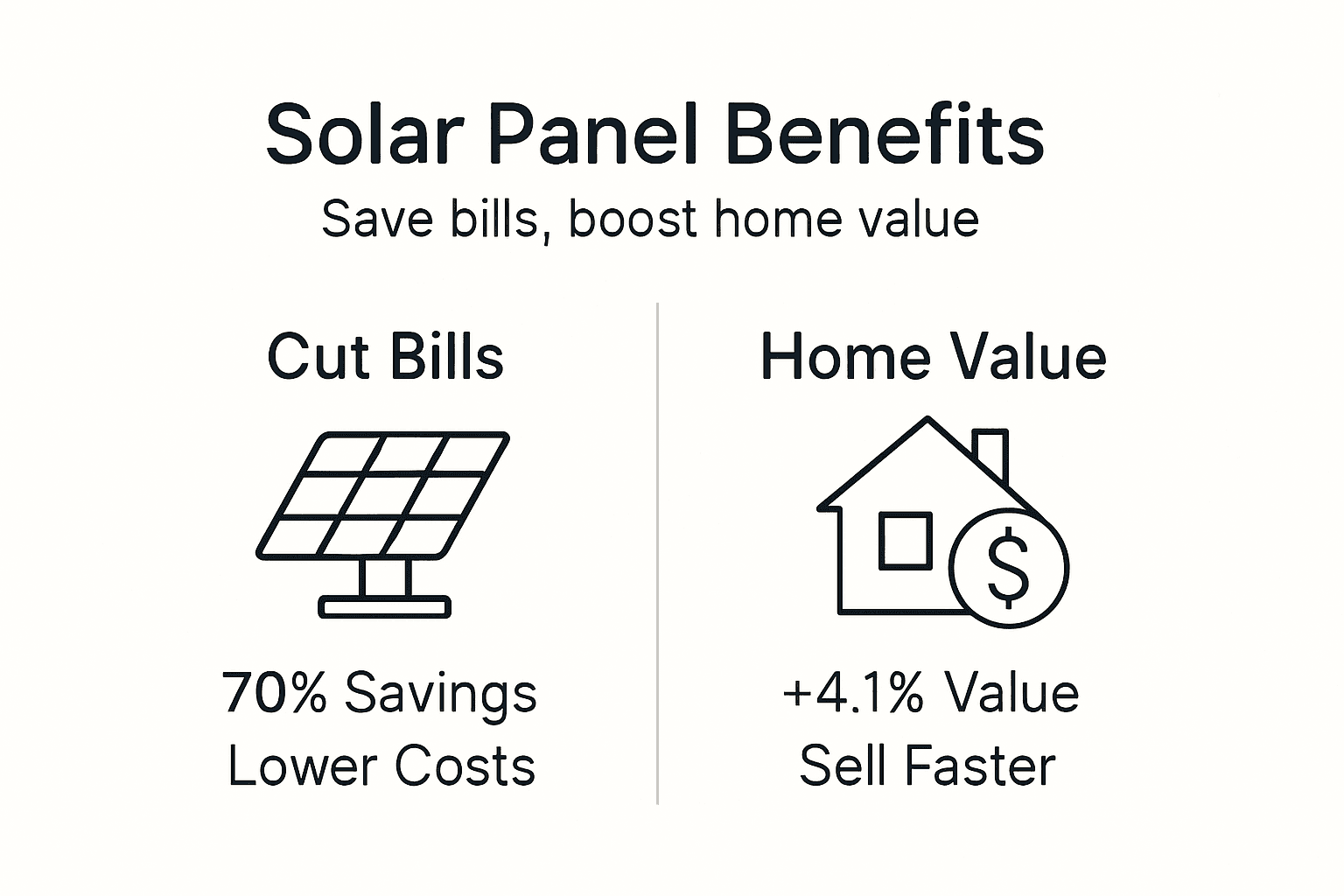
Solar panel longevity extends 25 to 30 years with minimal performance degradation. Most manufacturers guarantee 80% to 85% efficiency after 25 years, ensuring strong output throughout the warranty period. This extended lifespan means 15 to 24 years of post-payback savings, typically totaling $30,000 to $60,000 in lifetime benefits.
Decision-making process for solar adoption:
- Assess current energy consumption using 12 months of utility bills
- Research available federal, state, and local incentive programs
- Obtain quotes from 3 to 5 licensed solar installers
- Evaluate financing options including cash purchase, loans, and leases
- Review roof condition and consider necessary repairs before installation
- Verify net metering policies with your utility company
- Schedule professional site assessment for accurate system design
- Compare warranty coverage and installer reputation and reviews
- Plan installation timeline coordinating with tax credit deadlines
- Arrange monitoring setup to track system performance and savings
Pro Tip: Schedule your roof inspection before solar consultation to address any structural issues first, avoiding installation delays and ensuring your roof can support panels for their full 25 to 30 year lifespan.
Common pitfalls include undersizing systems to save money, resulting in continued grid dependence and reduced savings. Oversizing creates unnecessary expense without proportional benefits if net metering caps limit credit accumulation. Professional assessment prevents these mistakes through accurate load calculations and policy review.
Financing strategies significantly impact overall returns. Cash purchases deliver fastest payback and highest lifetime savings. Solar loans spread costs over time with monthly payments often lower than eliminated utility bills. Leases and power purchase agreements require zero upfront investment but reduce total savings by sharing benefits with third-party owners.
Use our solar payback and costs guide to calculate personalized projections. Review the 2026 solar upgrade decision guide for current year incentives and market conditions affecting your investment timeline.
Explore solar solutions with Sunflowers Energy
Ready to transform your home’s energy profile and start saving immediately? Sunflowers Energy provides comprehensive solar consultation and professional installation services tailored to your unique needs.
Our expert team guides you through every step, from initial assessment to system activation and monitoring setup. We maximize your available incentives and design systems optimized for your roof characteristics and energy consumption patterns. Detailed solar installation steps ensure transparent processes and quality results.
Explore our solar energy efficiency guide to understand how we optimize system performance for maximum savings. Visit Sunflowers Energy today to schedule your free onsite inspection and receive a personalized quote. Start your journey toward energy independence and substantial utility cost reduction.
Frequently asked questions about upgrading to solar panels
How long does it typically take to recoup the investment in solar panels?
Most homeowners recoup their solar investment within 6 to 10 years through utility bill savings and available incentives. After this payback period, you enjoy 15 to 24 additional years of essentially free electricity, generating substantial long-term financial returns.
Can solar panels generate electricity during power outages?
Standard grid-tied solar systems shut down during outages for utility worker safety, meaning no power generation. Adding battery storage enables continued electricity supply during outages, though batteries significantly increase system costs and complexity.
Are there maintenance costs I should budget for with solar panels?
Maintenance costs remain minimal, typically under $150 annually for occasional cleaning and inspection. Most systems require only 1 to 2 cleanings per year, with inverter replacement around year 10 to 15 representing the only significant maintenance expense at $1,000 to $2,000.
Will installing solar panels affect my home insurance or property taxes?
Home insurance premiums may increase slightly to cover the added property value, typically $50 to $100 annually. Many states exempt solar installations from property tax increases despite the added home value, though policies vary by location.
How do I know if my roof is suitable for solar panel installation?
Ideal roofs face south with minimal shading, but east and west orientations work well too. Your roof should have at least 15 years of remaining lifespan, adequate structural integrity, and sufficient unobstructed space for panel placement. Professional site assessments provide definitive suitability determinations.
Recommended
- Why Upgrade to Solar: Savings, Value, and Impact – Sunflowers Energy LLC A Roofing and Solar Companys
- Why Choose Solar Panels in 2026: Cut Costs by 70% & Boost Value – Sunflowers Energy LLC A Roofing and Solar Companys
- Role of Solar Panels in Homes – Real Cost Savings and Value – Sunflowers Energy LLC A Roofing and Solar Companys
- Why Install Solar Panels: Financial and Environmental Impact – Sunflowers Energy LLC A Roofing and Solar Companys