Solar Panel Lifespan: 0.5% Annual Degradation Explained
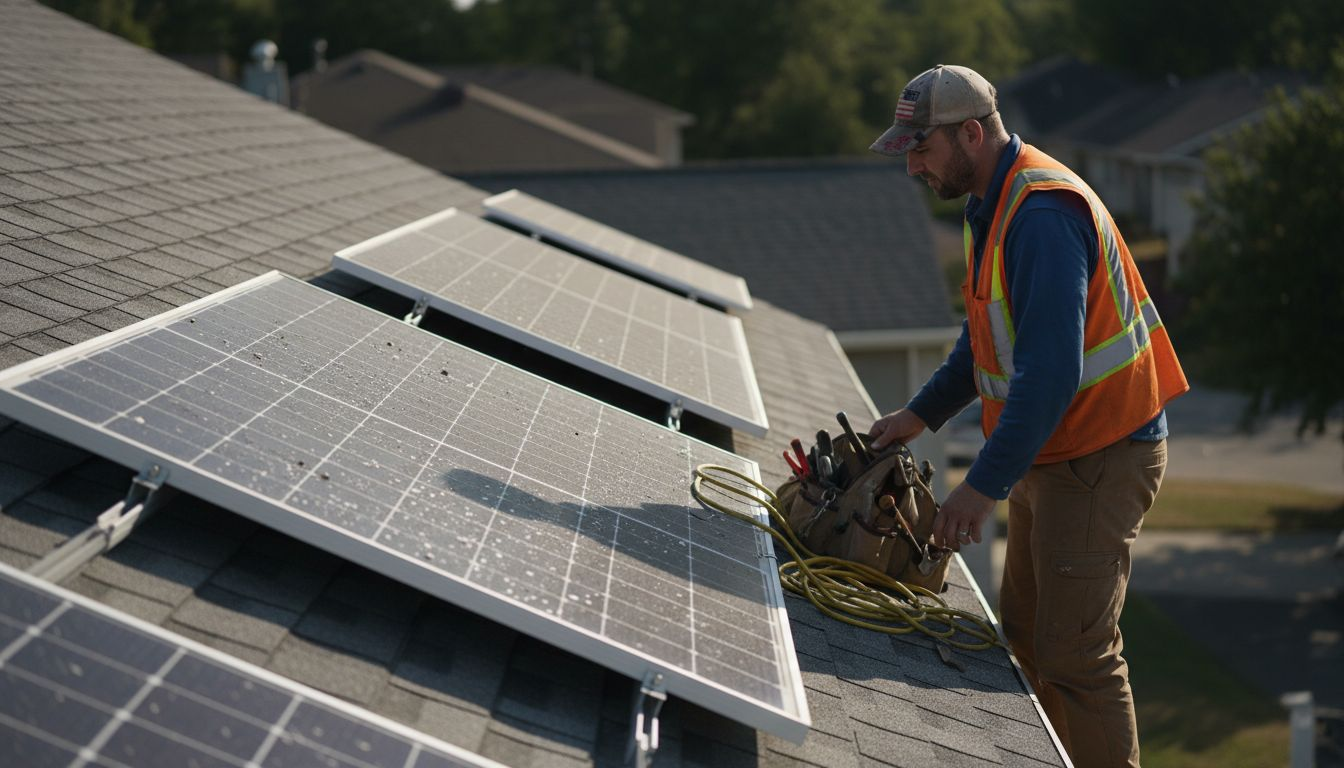
Many homeowners worry their solar panels will fail abruptly after 25 years, but the reality is far different. These systems degrade gradually at roughly 0.5% per year, often producing energy decades beyond warranty periods. Understanding how panels age, what warranties actually guarantee, and how to maximize longevity helps you make smarter energy investments and protect your solar panel maintenance tips efforts.
Table of Contents
- Introduction To Solar Panel Lifespan
- Causes And Mechanisms Of Solar Panel Degradation
- Warranty And Performance Guarantees: What To Expect
- Environmental And Maintenance Factors Influencing Longevity
- Comparison Of Solar Panel Technologies By Durability And Lifespan
- Common Misconceptions About Solar Panel Lifespan
- When And How To Decide On Solar Panel Replacement
- Conclusion And Practical Takeaways For Homeowners
- Explore Sunflowers Energy Solutions For Lasting Solar Performance
Key Takeaways
| Point | Details |
|---|---|
| Gradual Degradation | Solar panels lose approximately 0.5% efficiency annually, not suddenly. |
| Warranty Reality | Warranties guarantee around 80% output after 25 years, not system failure. |
| Environmental Impact | Climate conditions and maintenance practices significantly affect panel lifespan. |
| Technology Differences | Monocrystalline, polycrystalline, and thin-film panels degrade at different rates. |
| Proactive Care | Regular cleaning and monitoring extend operational life and maximize savings. |
Introduction to Solar Panel Lifespan
Most residential solar installations deliver reliable power for 25 to 30 years, though many continue operating well beyond this timeframe. This extended operational window directly impacts your real cost savings of solar panels and determines when replacement makes financial sense.
Understanding lifespan matters because it shapes your investment timeline. When you know how long panels will produce meaningful energy, you can calculate payback periods accurately and plan for future upgrades. This knowledge transforms solar from an uncertain expense into a predictable asset.
Several interconnected factors determine how long your panels will perform:
- Manufacturing quality and materials used in construction
- Local climate patterns including temperature extremes and weather events
- Installation quality and positioning relative to sun exposure
- Maintenance frequency and thoroughness of cleaning routines
- Environmental stressors like pollution, salt air, or debris accumulation
Research confirms that solar panels typically last 25 to 30 years with proper care. The National Renewable Energy Laboratory has extensively studied degradation patterns across thousands of installations. Their findings show most systems retain substantial efficiency decades after installation, challenging misconceptions about abrupt failures.
Causes and Mechanisms of Solar Panel Degradation
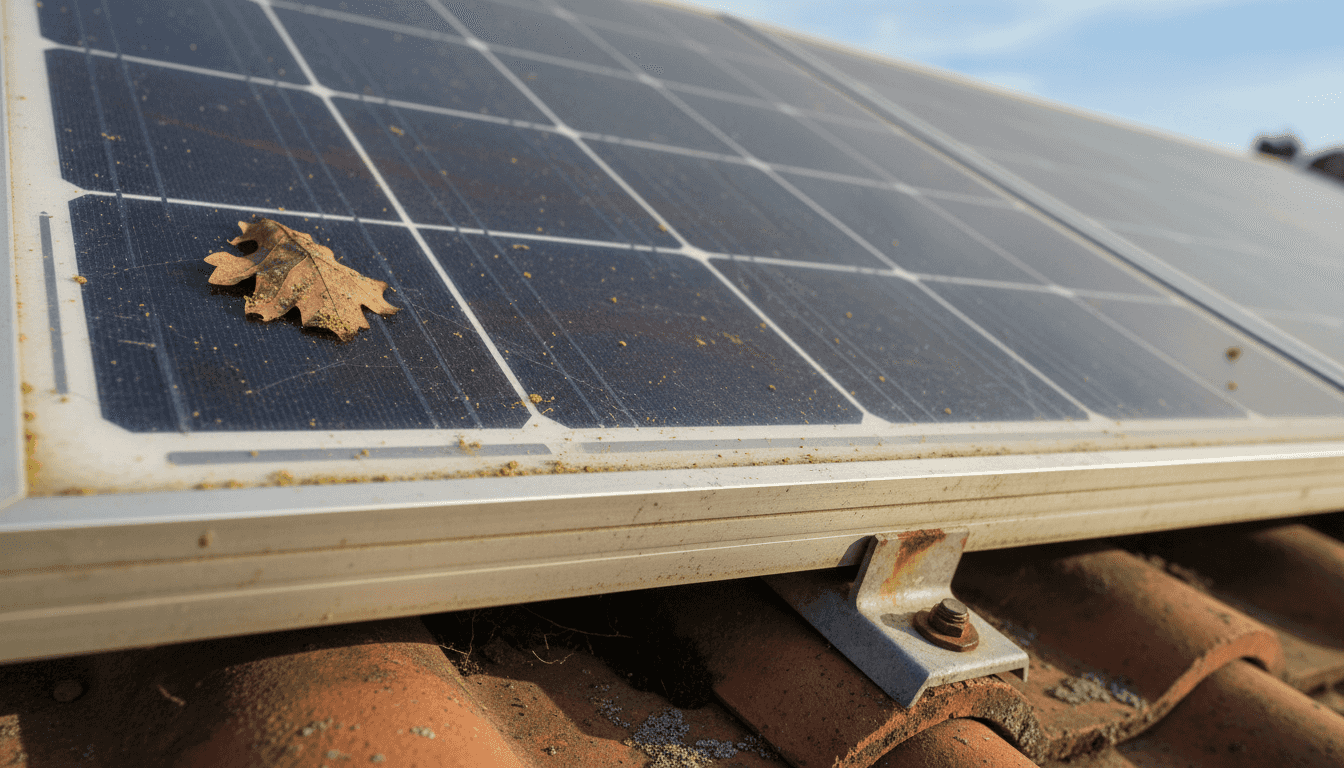
Solar panels lose efficiency through predictable physical processes rather than sudden mechanical failure. UV radiation breaks down encapsulation materials over years of exposure. Temperature swings cause expansion and contraction cycles that stress electrical connections. Moisture infiltration corrodes internal components gradually.
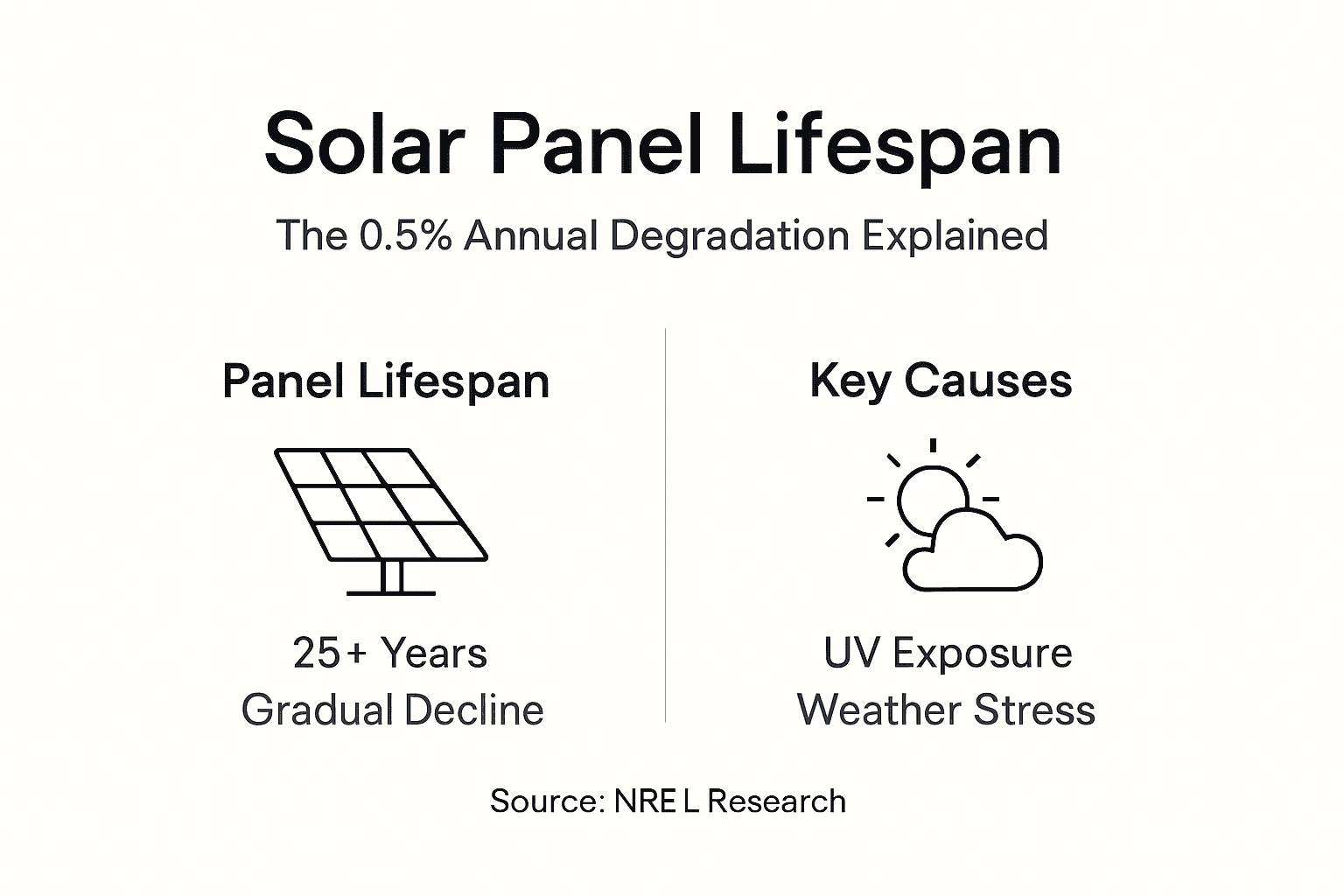
These environmental factors work together to reduce energy conversion capacity. Studies demonstrate that solar panels degrade at an average annual rate of about 0.5%, meaning a panel operating at 100% efficiency in year one will perform at roughly 87.5% after 25 years. This gradual decline allows homeowners to predict output reliably.
Average degradation rate: 0.5% annual efficiency loss
Specific degradation mechanisms include:
- Photochemical degradation: UV light breaks molecular bonds in silicon cells and protective layers
- Thermal cycling stress: Daily temperature changes create microcracks in cell structure
- Potential induced degradation: Voltage differences between cells and frames cause ion migration
- Light induced degradation: Initial exposure to sunlight reduces efficiency in first few hours
- Corrosion: Moisture penetration oxidizes metal contacts and busbars
Different panel technologies respond uniquely to these stressors. High quality materials and construction slow degradation significantly. Panels installed in harsh climates typically degrade faster than those in moderate environments, though quality manufacturing can offset location disadvantages.
Pro Tip: Check your system monitoring data annually to track actual degradation rates. If your panels lose more than 1% efficiency per year, schedule a professional inspection to identify potential issues early.
Warranty and Performance Guarantees: What to Expect
Manufacturers structure warranties to reflect realistic degradation patterns rather than lifespan limits. Typical solar panel warranties cover 25 years guaranteeing at least 80% performance, meaning your panels should still produce 80% of their original output after a quarter century. This guarantee protects your investment without claiming panels will suddenly stop working.
Understanding warranty terms prevents costly misunderstandings:
- Performance warranties guarantee minimum energy output over specified periods
- Product warranties cover manufacturing defects and physical failures separately
- Linear warranties specify declining performance thresholds at multiple intervals
- Tier warranties establish different guarantee levels at 10, 15, and 25 year marks
The 25 year warranty period represents conservative manufacturer confidence, not actual panel lifespan. Many systems continue operating at 70% to 75% efficiency into their fourth decade. Your warranty expiring does not signal imminent failure or immediate replacement need.
Warranty strength varies significantly between manufacturers. Premium brands often guarantee 85% to 90% output after 25 years, while budget options may only promise 80%. These seemingly small differences compound over decades, affecting total energy production and financial returns.
Environmental and Maintenance Factors Influencing Longevity
Climate conditions dramatically impact how quickly panels degrade. High temperatures accelerate chemical breakdown processes inside cells. Thermal cycling between day and night creates mechanical stress. Coastal installations face salt corrosion while desert systems battle dust accumulation.
Your maintenance habits directly influence operational lifespan:
- Regular cleaning removes efficiency reducing dirt, pollen, and bird droppings
- Professional inspections identify developing issues before they cause major failures
- Vegetation management prevents shading that reduces output and creates hot spots
- Connection checks ensure electrical components remain secure and corrosion free
- Weather monitoring allows proactive protection before severe storms
Environmental factors you cannot control still deserve attention. Panels installed on steep slopes shed debris naturally through rain. Systems mounted with adequate ventilation run cooler, slowing degradation. Understanding your local conditions helps you anticipate maintenance needs and budget accordingly.
Proper solar panel maintenance guide practices extend effective lifespan by years. A well maintained system in a moderate climate can outperform a neglected installation in ideal conditions. The time and money invested in upkeep pays dividends through sustained energy production.
Research on outdoor durability principles applies to solar installations. Materials designed to withstand UV exposure, temperature extremes, and moisture infiltration last longer regardless of application. Quality solar panels incorporate these design principles specifically for decades long outdoor exposure.
Pro Tip: Schedule professional cleaning twice yearly in dusty or pollen heavy regions. Clean panels can produce 15% to 25% more energy than dirty ones, directly offsetting maintenance costs through increased generation.
Comparison of Solar Panel Technologies by Durability and Lifespan
Different solar technologies offer distinct tradeoffs between cost, efficiency, and degradation rates. Your choice impacts both initial investment and long term performance. Understanding these differences helps match panel type to your specific needs and budget.
| Technology | Degradation Rate | Typical Lifespan | Efficiency Range | Best For |
|---|---|---|---|---|
| Monocrystalline | 0.35% per year | 25 to 40 years | 17% to 22% | Maximum efficiency and longevity |
| Polycrystalline | 0.5% per year | 25 to 35 years | 15% to 17% | Balanced cost and performance |
| Thin Film | 0.5% to 1% per year | 20 to 25 years | 10% to 13% | Flexible applications and budget installs |
Monocrystalline panels dominate premium installations because of superior degradation resistance. Their single crystal structure handles thermal stress better than alternatives. Higher upfront costs get offset by extended productive life and maintained efficiency. These panels excel in space constrained installations where maximum output matters.
Polycrystalline panels offer middle ground economics. They cost less than monocrystalline options while still providing reliable 25 to 35 year lifespans. Their slightly higher degradation rate becomes noticeable only after decades of operation. Budget conscious homeowners with adequate roof space often choose this technology.
Thin film technology serves specialized applications. Its flexibility allows installation on curved surfaces and portable systems. Lower efficiency and faster degradation make thin film less suitable for permanent residential installations. Commercial buildings with expansive roof areas sometimes use thin film for its lower material costs.
Exploring solar panel technology comparison details helps you evaluate which type aligns with your energy goals and budget constraints. The right choice depends on your roof characteristics, energy needs, and planned ownership duration.
Common Misconceptions About Solar Panel Lifespan
Homeowners often hold inaccurate beliefs about solar panel longevity that lead to poor decisions. Clearing up these misconceptions helps you set realistic expectations and plan appropriately for your solar investment.
Myth: Panels stop working when warranties expire. Reality: Warranties guarantee minimum performance levels, not operational endpoints. Most panels continue producing energy for years or decades beyond warranty periods at gradually decreasing efficiency. Your 25 year warranty means the manufacturer promises at least 80% output through that timeframe, not that panels fail at year 26.
Myth: Efficiency loss happens suddenly. Reality: Degradation occurs gradually and predictably at roughly 0.5% annually. You will not wake up to find your panels producing half their normal output. The slow decline allows you to plan replacement timing strategically rather than responding to emergencies.
Myth: All panels degrade identically. Reality: Technology type, manufacturing quality, climate conditions, and maintenance practices create significant variation. A well maintained monocrystalline system in a moderate climate degrades much slower than a neglected polycrystalline installation in a harsh environment.
Key points to remember:
- Degradation is continuous and measurable through monitoring systems
- Quality installation protects against premature failure
- Environmental factors accelerate or slow natural aging processes
- Manufacturer reputation correlates with actual field performance
Pro Tip: Download your system monitoring data quarterly to track actual degradation. Comparing your real world performance against manufacturer specifications helps identify issues early and validates warranty claims if needed.
When and How to Decide on Solar Panel Replacement
Determining optimal replacement timing requires analyzing multiple factors beyond simple age. Panels operating at 75% efficiency might still deliver adequate energy for your needs. Conversely, panels at 82% efficiency might warrant replacement if new technology offers dramatically better performance.
Follow this decision framework:
- Calculate current production against original specifications to determine actual degradation
- Compare energy costs between maintaining existing panels versus replacing with new technology
- Evaluate available incentives including tax credits and utility rebates for new installations
- Assess physical condition through professional inspection for damage beyond normal aging
- Consider technology advances in efficiency and features since your original installation
- Factor property plans including whether you will sell soon or stay long term
Efficiency dropping below 80% often signals economic replacement makes sense. At this threshold, new panels typically generate enough additional energy to justify upgrade costs within reasonable payback periods. However, your specific situation might differ based on energy prices and available financing.
Repair versus replacement decisions deserve careful analysis. Minor issues like inverter replacement or connector repairs cost far less than full system upgrades. Reference our solar panel repair guide to understand repair options before committing to replacement.
New solar technology improves continuously. Panels manufactured in 2026 outperform 2016 models significantly in efficiency, durability, and cost per watt. Waiting too long to upgrade means missing years of enhanced production. Review solar panel replacement cost analysis to understand current market pricing.
Industry trends from solar industry insights show replacement costs declining while panel performance increases. This favorable trajectory makes strategic timing crucial for maximizing lifetime value from your solar investment.
Conclusion and Practical Takeaways for Homeowners
Solar panels reliably produce energy for 25 to 30 years with gradual 0.5% annual efficiency decline rather than sudden failure. This predictable degradation pattern lets you plan financially and operationally for decades of clean energy production. Your panels will likely outlive their warranties significantly while continuing to reduce electricity costs.
Key actions to maximize your solar investment:
- Monitor system performance quarterly to track actual degradation rates
- Schedule professional maintenance annually or semi annually based on local conditions
- Clean panels regularly to prevent efficiency losses from dirt accumulation
- Document all maintenance and repairs for warranty claims and resale value
- Evaluate replacement timing based on efficiency thresholds and available incentives
Quality installation and consistent maintenance extend operational life substantially. Panels properly mounted with adequate ventilation and minimal shading consistently outperform neglected systems. The relatively small investment in upkeep returns multiples in sustained energy generation.
Understanding your specific panel technology, local climate impacts, and realistic performance expectations transforms solar from a mystery into a manageable asset. You can confidently plan for decades of reduced energy costs while making informed decisions about repairs, upgrades, and eventual replacement timing.
Explore Sunflowers Energy Solutions for Lasting Solar Performance
Maximizing solar panel lifespan requires expert installation, quality components, and professional maintenance. Sunflowers Energy delivers comprehensive solar solutions designed for decades of reliable performance and optimal energy savings.
Our team specializes in solar panel maintenance services that extend system life and preserve efficiency. We offer tailored residential solar systems options matching your energy needs and budget.
Discover how our solar energy efficiency solutions can reduce your energy costs while supporting environmental sustainability. Schedule your free onsite inspection today to learn how professional care protects your solar investment for decades ahead.
FAQ
How long do solar panels typically last?
Solar panels usually last 25 to 30 years, with many functioning beyond this timeframe at reduced efficiency. Well maintained systems in moderate climates often operate effectively for 35 to 40 years. Regular maintenance extends their useful life significantly.
Do solar panels stop working after the warranty expires?
Panels typically continue operating at reduced efficiency after warranty expiration rather than failing completely. Warranties assure minimum performance thresholds but do not mark system failure points. Most panels produce meaningful energy for years beyond warranty periods.
How can I extend the lifespan of my solar panels?
Regular cleaning to remove dirt and debris maintains optimal efficiency and prevents hot spots that accelerate degradation. Avoid shading by trimming vegetation and schedule periodic professional inspections. Following solar panel maintenance tips helps maximize operational life.
When should I consider replacing my solar panels?
Consider replacement when efficiency falls below about 80% of original output, though your specific threshold depends on energy needs and costs. Evaluate the cost benefit of repairs versus investing in newer technology with improved performance. Review our solar panel replacement guide for detailed replacement criteria.
Recommended
- Solar Panel Maintenance: Maximizing Efficiency and Savings – Sunflowers Energy LLC A Roofing and Solar Companys
- Solar Panel Efficiency Explained: Maximize Energy Savings – Sunflowers Energy LLC A Roofing and Solar Companys
- Master the Solar Panel Cleaning Process for Maximum Efficiency – Sunflowers Energy LLC A Roofing and Solar Companys
- Solar Energy Efficiency Guide for Maximized Home Savings – Sunflowers Energy LLC A Roofing and Solar Companys
- Why Digital Marketing Matters for Solar Installers