
A tree branch crashes through your roof at 2 a.m. Water pours into your living room during a heavy storm. A section of shingles peels off in high winds, exposing your home to the elements. These situations don’t wait for business hours, and neither should your response. Emergency roof repair services exist for exactly these moments, when immediate action is the difference between a manageable fix and catastrophic structural damage.
If you’re reading this, there’s a good chance you’re dealing with roof damage right now or preparing for the possibility. Either way, you need clear answers: what counts as a roof emergency, how fast help can realistically arrive, and what steps you should take before a contractor shows up. Those first decisions matter more than most people realize, and acting quickly can save you thousands in secondary water damage, mold remediation, and insurance headaches.
At Sunflowers Energy LLC, we handle urgent roof situations for homeowners and business owners alike, from storm damage and active leaks to full roof restoration with insurance claim assistance. This guide breaks down everything you need to know about emergency roof repair: how the process works, what to expect from a qualified provider, and how to protect your property while you wait for help.
What counts as an emergency roof repair
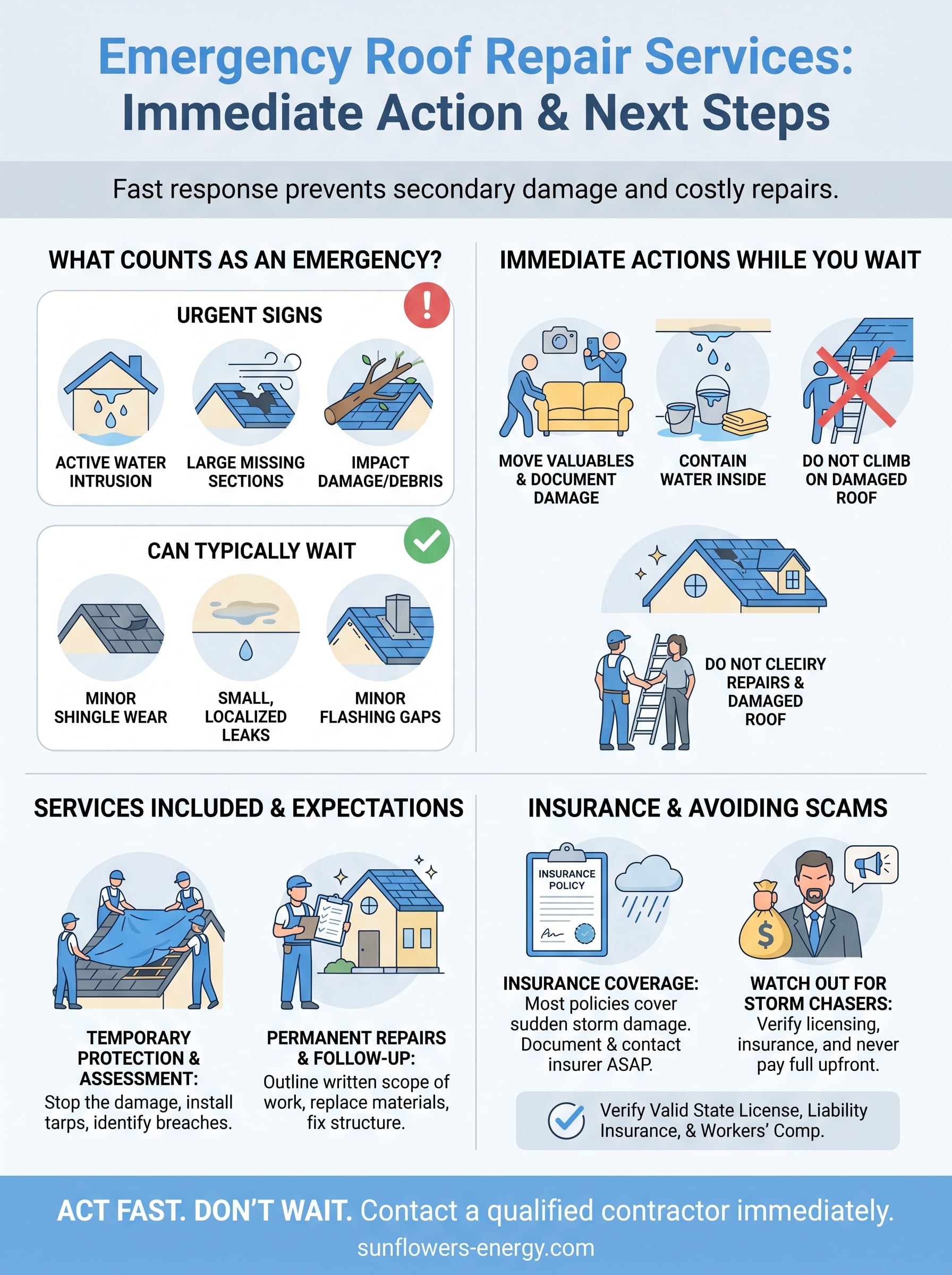
Not every roofing problem demands a midnight call, but some situations absolutely do. A roof emergency is any damage that creates an immediate risk to your home’s structure, your belongings, or your personal safety. If your roof is actively letting in water, has a large section missing, or has sustained impact damage from falling debris, you are dealing with an emergency. Waiting until regular business hours will cost you far more than a weekend service call.
Signs your situation needs immediate attention
The clearest signal is active water intrusion, meaning water is entering your home right now. Beyond that, look for visible holes or missing sections of roofing material, sagging areas in your ceiling, and any structural damage you can see from the ground. Wind damage that exposes the raw roof deck, fallen trees or branches sitting on your roof, and collapsed gutters redirecting water toward your foundation all qualify as emergencies. Emergency roof repair services are designed to respond to exactly these conditions, any time of day or night.
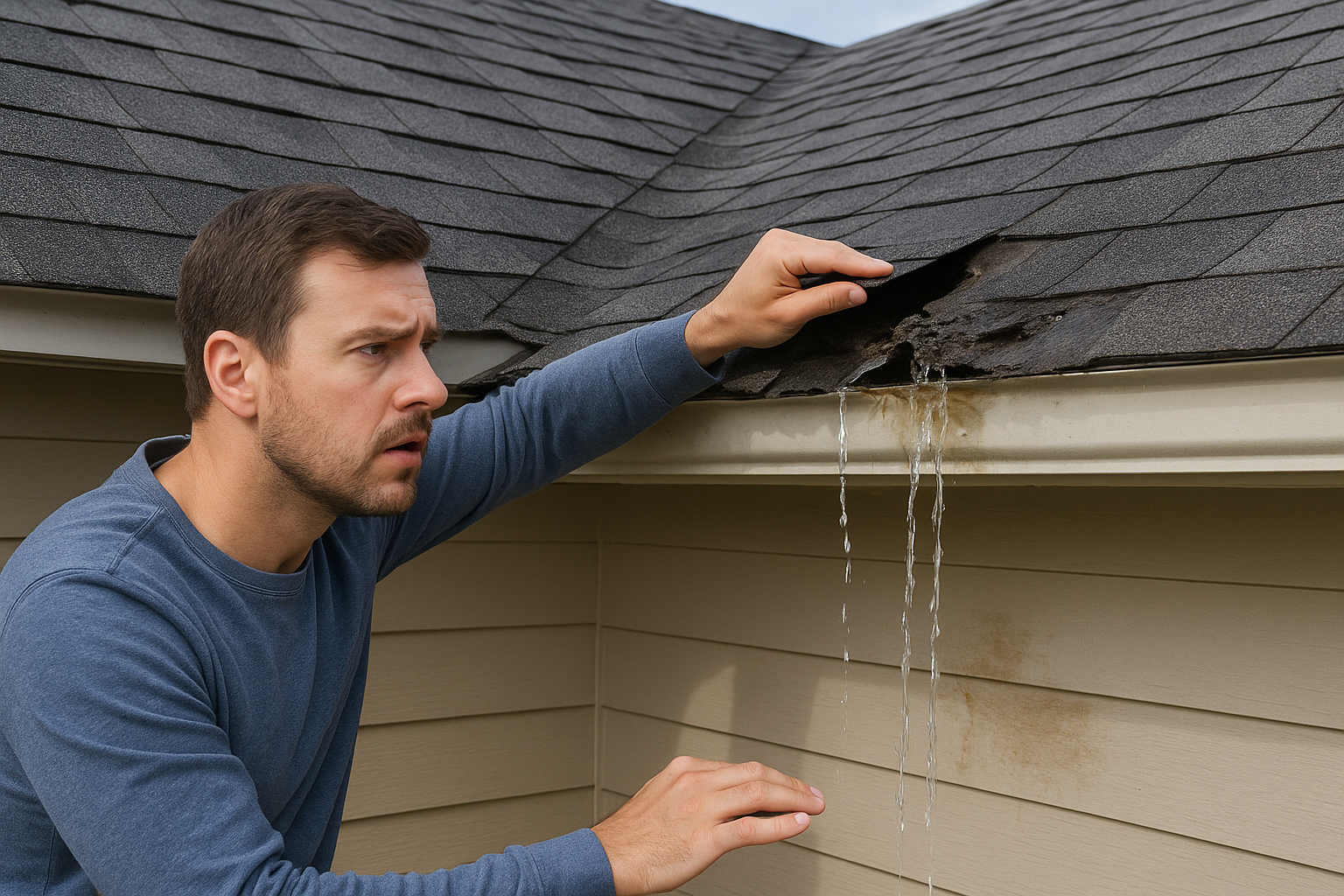
If you see your ceiling bulging or water pooling beneath a ceiling stain, move everyone out of that room immediately and call for help.
Damage that can typically wait
Some roof issues are serious but not urgent. Small, localized leaks that are not actively spreading, a handful of missing shingles during dry weather, and minor flashing damage that has not breached the roof deck can usually be scheduled within a few days. The key question is whether the damage is getting worse in real time. If rain is in the forecast or the affected area looks like it’s expanding, treat it as an emergency until a professional inspects and confirms otherwise.
Common examples of non-emergency roof damage include:
- Worn or curling shingles with no active leak
- Minor granule loss on asphalt shingles
- Small gaps around flashing that have not yet allowed water entry
- A single missing shingle in dry, calm weather
Why fast action matters for your property
A roof breach does not stay contained on its own. Every hour that water enters your home unchecked, it travels further, soaking insulation, saturating wood framing, and setting the stage for mold growth that can begin within 24 to 48 hours. Acting fast the moment you spot damage limits the spread and keeps a single repair from turning into a full interior restoration project.
The hidden cost of waiting
Most homeowners underestimate how quickly secondary damage adds up. A small roof opening during a rainstorm can push gallons of water into your attic before the storm passes. That water then saturates drywall, warps hardwood floors, and damages electrical components, each adding significant cost to what started as a simple roof repair.
The longer you wait, the more damage migrates from your roof into the rest of your home, where repairs are more disruptive and expensive.
Calling emergency roof repair services quickly gives a contractor the chance to stop the damage at the source before it compounds. Temporary protective measures like tarping can often prevent hundreds or thousands of dollars in additional interior repairs, which is why response time matters as much as the quality of the repair itself.
What to do right now while you wait for help
While you wait for emergency roof repair services to arrive, a few simple, immediate actions can significantly reduce the damage spreading through your home. You don’t need tools or roofing experience to make a real difference in the next 30 minutes.
Move valuables and document everything
Start by moving furniture, electronics, and anything irreplaceable away from the affected area. Then grab your phone and take photos and videos of all visible damage, including ceiling stains, wall damage, and the roof exterior if you can see it safely from the ground. Your insurance company will need this documentation later, and capturing it early protects your claim.
Never go onto a damaged roof yourself during or after a storm. Leave the physical inspection to the professionals.
Contain the water inside
Place buckets or plastic bins under active drips to protect your floors. Lay towels or plastic sheeting over wet surfaces to limit water spread across the room. If you have a tarp and a ladder that safely reaches the roof edge, covering the damaged section can help, but only attempt this if conditions are calm and you feel confident doing so without climbing onto the roof itself.
What emergency roof repair services include
When a contractor arrives at your property, their first priority is stopping the damage, not necessarily completing a full repair on the spot. Most emergency roof repair services follow a clear sequence: assess the extent of the damage, secure the affected area right away, and schedule permanent repairs once conditions allow.
Temporary protection and damage assessment
The crew will inspect your roof and identify every breach, crack, or compromised section. From there, they install heavy-duty tarps or temporary patch materials to seal the opening against further water intrusion. This step alone prevents significant interior damage while you coordinate with your insurance company.
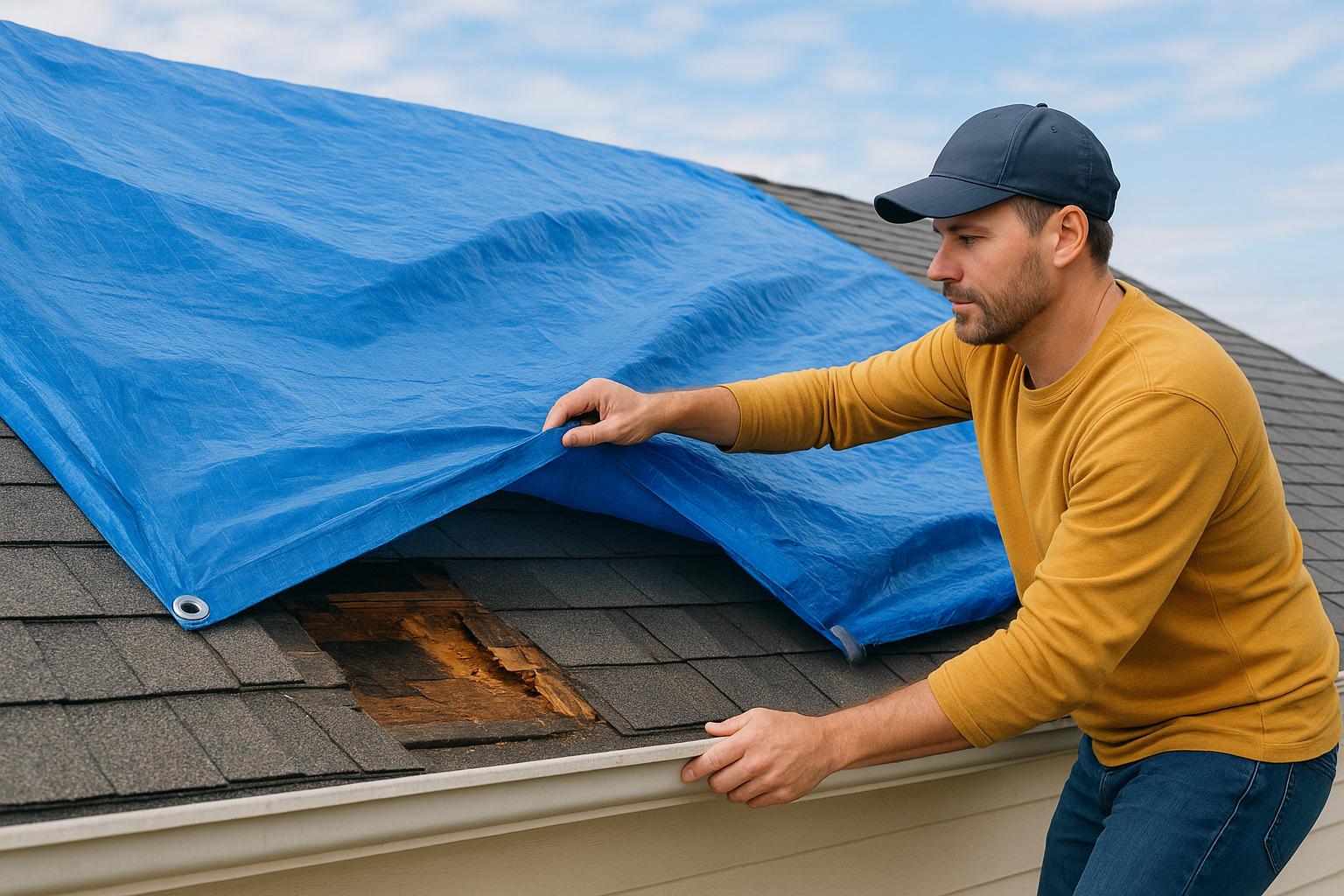
A thorough damage assessment at this stage also gives you solid documentation to support your insurance claim.
Permanent repairs and follow-up
Once the immediate threat is contained, your contractor will outline what permanent repairs are needed, whether that means replacing shingles, fixing flashing, rebuilding structural sections, or addressing decking that water has compromised. A reliable provider will give you a written scope of work before permanent repairs begin so you know exactly what is being done and why. This documentation also becomes part of your project record if warranty questions or insurance adjustments come up later.
Costs, insurance, and avoiding scams
Emergency roof repair costs vary depending on the extent of the damage, the materials required, and how quickly you need a crew on site. Temporary tarping typically runs $200 to $500, while permanent structural repairs can reach several thousand dollars depending on scope. Most standard homeowners insurance policies cover sudden storm damage, so contact your insurer as soon as you have documented the damage and called a contractor.
Protecting yourself from storm chasers
After a major storm, predatory contractors move fast. These storm chasers pressure you to sign contracts on the spot, collect large deposits, and often disappear before completing the work. A reputable provider of emergency roof repair services will give you a written estimate, verify their licensing, and never require full payment before work begins.
If a contractor shows up unsolicited right after a storm, take time to verify their credentials before you sign anything.
Confirm that any contractor you hire carries a valid state license and holds both liability insurance and workers’ compensation coverage before work begins. These protections matter as much for your peace of mind as they do for the quality of the repair. Skipping this check is how many homeowners end up paying twice for the same job.
What to do next
You now know what counts as a roof emergency, what actions to take while you wait, and what to watch out for when hiring a contractor. The most important step you can take right now is calling a qualified contractor the moment you spot significant damage, before water has a chance to spread into your walls, insulation, and flooring. Waiting even a few hours can turn a straightforward repair into a much larger project.
Sunflowers Energy LLC provides emergency roof repair services for homeowners and business owners, with storm damage response, insurance claim assistance, and free on-site inspections built into the process. You get a clear assessment of what is damaged, what it will take to fix it, and exactly what to expect before any work begins. If your roof has taken a hit and you need a fast, reliable response, contact Sunflowers Energy LLC for a free inspection and estimate today.

One Response