
A new roof is one of the biggest investments you’ll make as a homeowner or business owner, and the first question most people ask is straightforward: what’s the roof replacement cost per square foot? The answer depends on several factors, material type, labor rates, roof complexity, and where you live all play a role. In 2026, prices have shifted again, and having accurate cost data before you request quotes can save you from overpaying or underestimating your budget.
At Sunflowers Energy LLC, we handle residential and commercial roof replacements daily, from asphalt shingle installs to TPO and PVC commercial systems. That hands-on experience gives us a clear picture of what drives costs up or down in real projects, not just national averages pulled from a database. We’ve put together this guide based on current pricing we actually see in the field.
Below, you’ll find a full breakdown of 2026 roof replacement costs per square foot by material, labor estimates, regional price differences, and the hidden expenses that catch people off guard. Whether you’re replacing a storm-damaged roof or planning a long-overdue upgrade, this guide will help you estimate your total project cost with confidence before you ever pick up the phone.
Why cost per square foot matters
When a contractor hands you a lump-sum quote, it tells you very little on its own. Cost per square foot gives you a standard unit of measurement you can use to compare bids side by side, regardless of roof size, shape, or scope. If one contractor quotes $8 per square foot and another quotes $14 for the same material and roof, you now have a real question to ask: what explains that difference?
It helps you catch bad bids before you sign anything
Roofing quotes vary widely, and not always for legitimate reasons. Some contractors pad labor costs, while others use lower-grade materials to come in cheap on the headline number and recover their margin elsewhere. When you know the typical roof replacement cost per square foot for your chosen material in your area, you can identify both the suspiciously low bids that suggest corners are being cut and the inflated ones that simply don’t reflect what the local market charges.
A quote that comes in significantly below the going rate per square foot is a red flag, not a bargain.
Knowing the per-square-foot benchmark also gives you real negotiating leverage. You’re not guessing at what’s fair; you have an actual reference point. That puts you in a much stronger position at the table before you ever commit to a contractor.
It gives your budget a concrete framework
Total roof replacement costs can run anywhere from a few thousand dollars to well over $30,000, depending on the size of the structure and the materials involved. Without a per-square-foot reference, those totals are hard to evaluate on their own. Breaking it down changes that fast. A 2,000-square-foot roof at $5 per square foot for materials and $3 per square foot for labor suddenly makes it clear where the money is going and whether each line item is reasonable.
This framework also makes trade-off decisions easier. If you’re comparing asphalt shingles to metal roofing, putting both options on a per-square-foot basis lets you calculate the actual dollar gap for your specific roof rather than relying on vague statements that one "costs more" than the other. You can run the numbers yourself, see the real difference for your project size, and decide whether the performance or longevity of a more expensive material justifies the additional spend upfront.
It sets realistic expectations before you contact anyone
Starting the process with per-square-foot cost data means you won’t be caught off guard by the first quote you receive. Homeowners and business owners who go in without any reference point tend to either accept the first number they hear or reject reasonable quotes because they expected a lower total. Knowing the range in advance keeps your expectations grounded in what projects like yours actually cost in the current market.
How roofers calculate roof cost per square foot
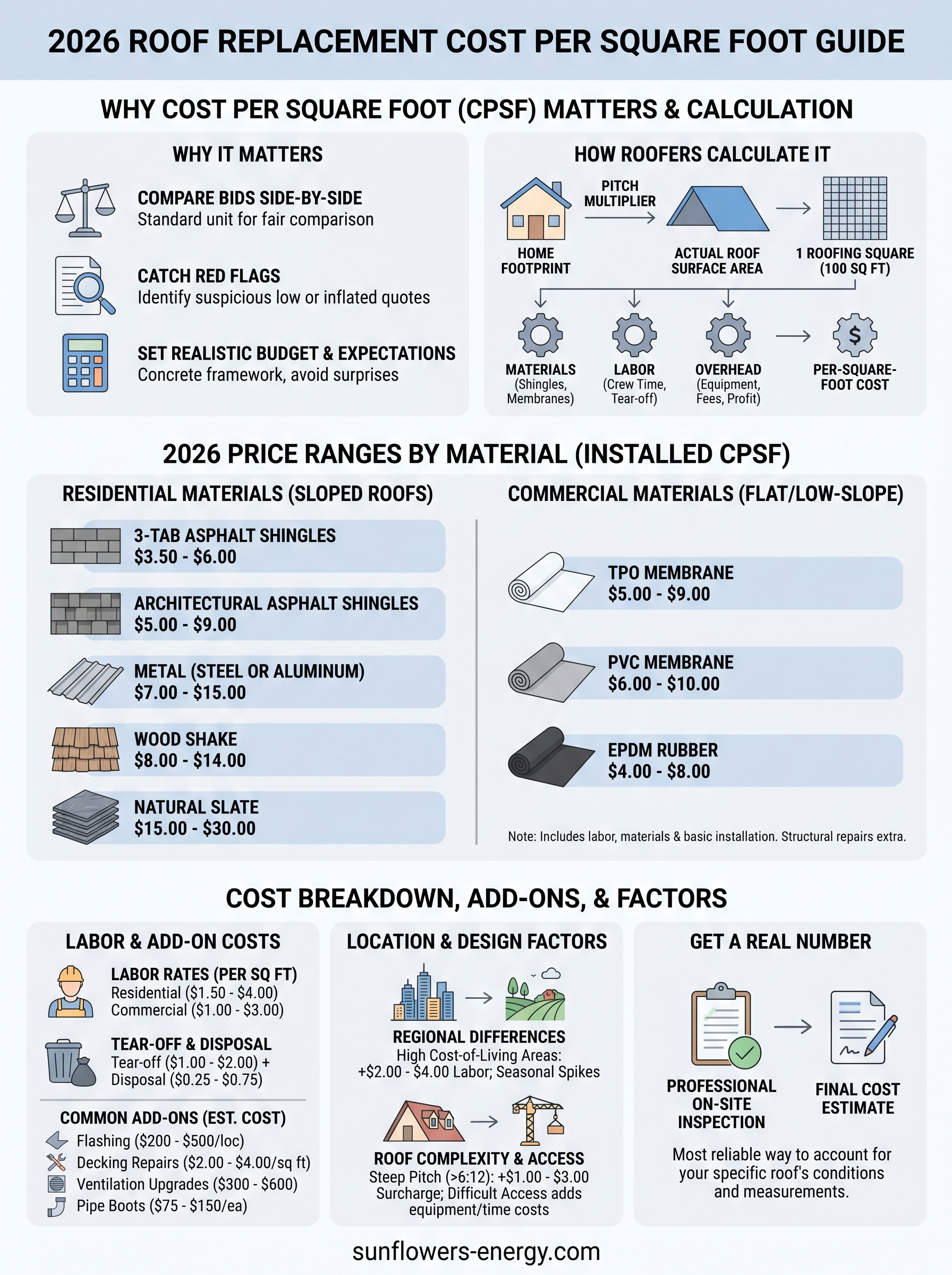
Before a contractor gives you a price, they measure your roof in a specific unit called a roofing square. One roofing square equals 100 square feet of roof surface. Most contractors build their estimates around this unit, then convert the total into a per-square-foot figure for easier comparison. Understanding how that number gets assembled helps you read any quote more accurately.
The roofing square: the unit behind the number
Your contractor starts by calculating the total square footage of your roof, which is not the same as your home’s footprint. A pitched roof has more surface area than the floor plan below it, and steeper slopes add even more. Roofers use the pitch multiplier, a factor based on roof angle, to convert your floor plan into the actual roof surface area they need to cover. A 2,000-square-foot home with a steep roof might have 2,600 or more square feet of actual roof surface once that adjustment is applied.
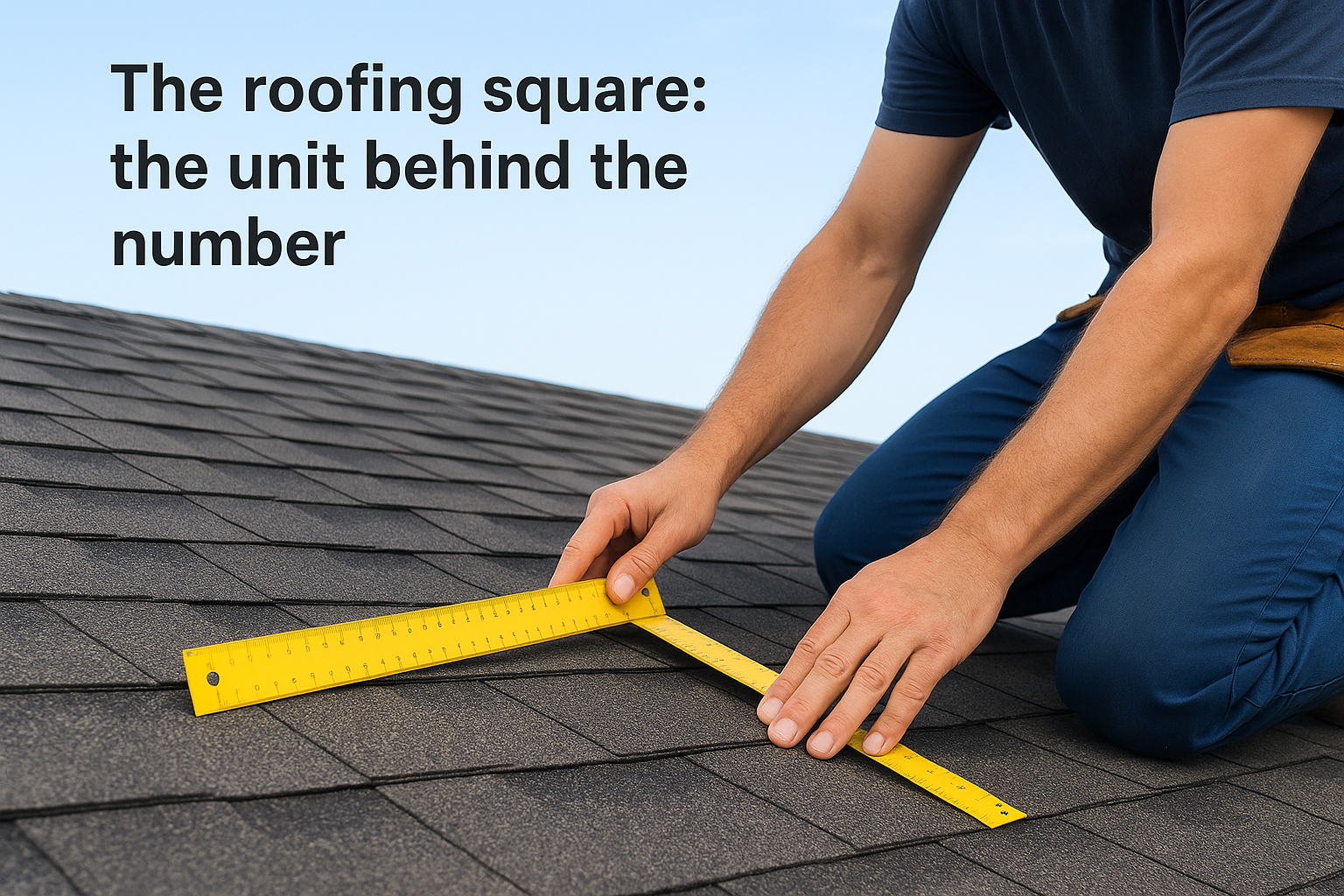
Always ask your contractor to show you their measured square footage before you agree to any quote.
What goes into the per-square-foot price
Once the roofer has your total roof area, they build the per-square-foot cost from three main components: materials, labor, and overhead. Materials cover the shingles, underlayment, flashing, and fasteners. Labor accounts for the crew time required to tear off the old roof and install the new one. Overhead includes equipment, disposal fees, and the contractor’s operating costs.
Each of these components carries its own variable costs depending on material grade, local labor rates, and project complexity. When you see a single roof replacement cost per square foot figure in a quote, it typically bundles all three together. Asking your contractor to break out each component separately gives you a much clearer picture of exactly what you’re paying for.
2026 price ranges per square foot by material
Material is the single biggest variable in any roof replacement cost per square foot estimate. Prices have shifted upward across most categories since 2024, driven by supply costs and higher labor demand. The ranges below reflect installed prices, meaning materials and labor combined, based on current market rates.
Residential roofing materials
Asphalt shingles remain the most common residential choice, and they cover the widest price spread depending on the grade you select. Three-tab shingles sit at the lower end, while architectural and impact-resistant shingles push toward the top of the range.
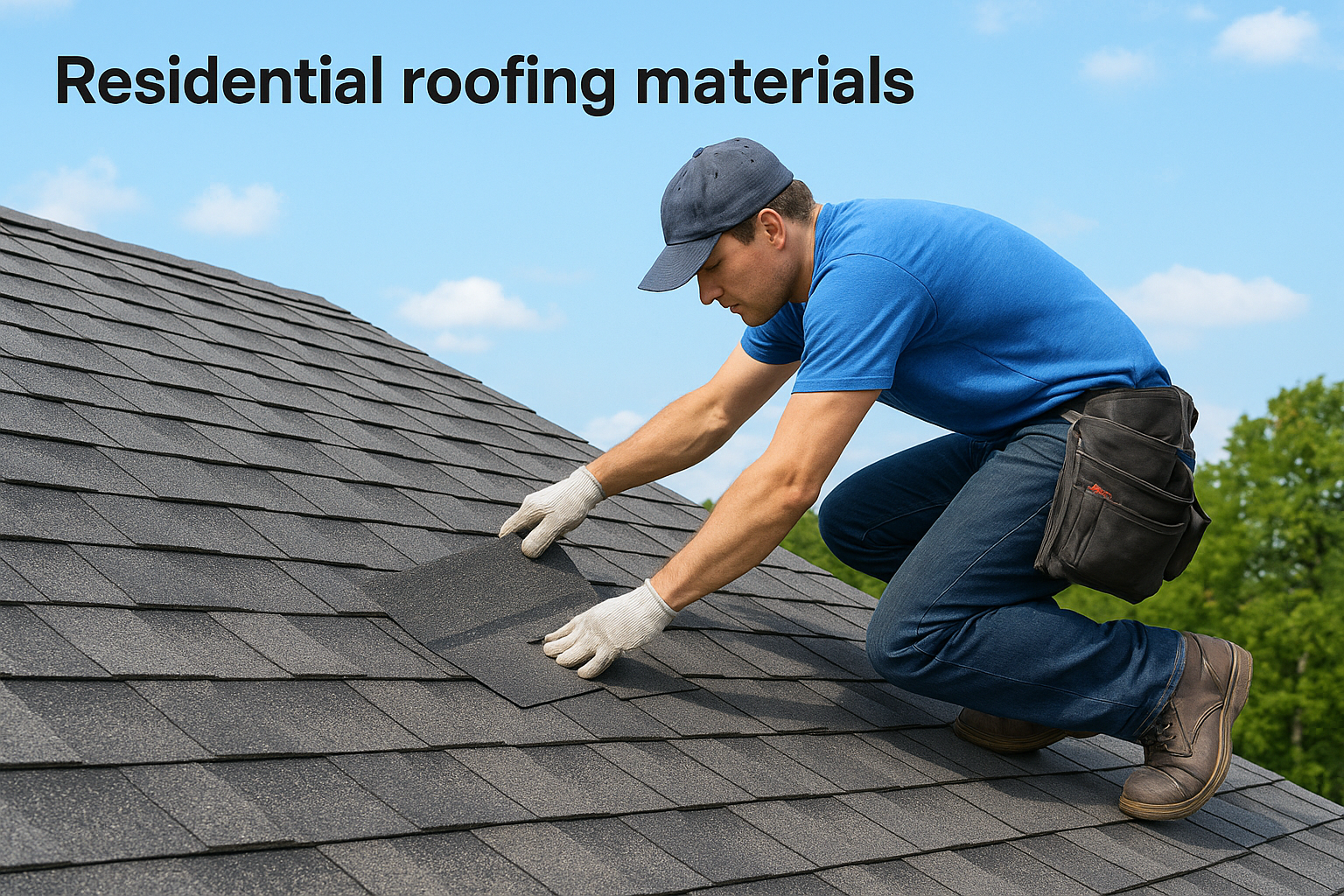
Choosing a higher-grade asphalt shingle often adds 15-20 years to your roof’s service life for a relatively small per-square-foot increase.
| Material | 2026 Installed Cost Per Sq Ft |
|---|---|
| 3-tab asphalt shingles | $3.50 – $6.00 |
| Architectural asphalt shingles | $5.00 – $9.00 |
| Metal (steel or aluminum) | $7.00 – $15.00 |
| Wood shake | $8.00 – $14.00 |
| Natural slate | $15.00 – $30.00 |
Commercial roofing materials
Commercial roofing uses flat or low-slope systems that differ entirely from residential pitched-roof materials. TPO and PVC membranes are the most widely installed options in 2026, balancing durability with cost. EPDM rubber roofing comes in at a lower price point but offers fewer heat-reflective properties than TPO or PVC systems.
| Material | 2026 Installed Cost Per Sq Ft |
|---|---|
| TPO membrane | $5.00 – $9.00 |
| PVC membrane | $6.00 – $10.00 |
| EPDM rubber | $4.00 – $8.00 |
These ranges assume a standard installation without structural repairs underneath. Your actual total will shift based on roof accessibility, tear-off requirements, and local labor rates, all of which the next section breaks down in full.
Labor, tear-off, and common add-on costs
The installed price ranges in the previous section already bundle labor into the total, but breaking those components apart helps you understand exactly where your money goes. Labor, tear-off, and add-on costs can account for 40 to 60 percent of your total bill, which means they’re not a footnote to your roof replacement cost per square foot estimate.
Labor costs by project type
Residential labor typically runs $1.50 to $4.00 per square foot, depending on roof pitch, crew size, and local wage rates. Steep roofs take longer and require more safety equipment, which pushes labor higher. Commercial flat-roof labor tends to run $1.00 to $3.00 per square foot since the work moves faster without pitch complications.
Ask your contractor to break out labor from materials in any quote so you can compare crew rates directly across bids. A lower labor rate doesn’t always mean a better deal; it can also signal a smaller or less experienced crew that takes longer to complete the job.
Tear-off and disposal
Most full replacements require removing the old roofing before the new material goes down. Tear-off labor adds $1.00 to $2.00 per square foot on average, and disposal fees for hauling away old shingles or membrane add another $0.25 to $0.75 per square foot.
If your roof has multiple layers of old shingles, expect tear-off costs to increase since each additional layer adds time and disposal weight.
Common add-ons that raise your total
Several common add-on costs appear regularly on roofing quotes and can meaningfully raise your final total. Watch for these frequent line items:
- Flashing replacement: $200 to $500 per location around chimneys, skylights, and vents
- Decking repairs: $2.00 to $4.00 per square foot of rotted or damaged sheathing
- Ventilation upgrades: $300 to $600 depending on system type
- Pipe boot replacement: $75 to $150 per boot
How location and roof design change pricing
Two factors that don’t appear on any materials price list can swing your roof replacement cost per square foot by several dollars in either direction: where your property is located and how your roof is built. Contractors work with these variables on every job, and they affect both what materials cost to source and how long the crew takes to complete the work.
Regional labor and material costs
Labor rates vary significantly across the country. Contractors in high cost-of-living metro areas like New York City, Seattle, or San Francisco typically charge $2.00 to $4.00 more per square foot for labor than contractors in smaller Midwest or Southern markets. Material costs follow a similar pattern since shipping distance from distribution hubs drives up supply prices in rural or remote regions.
If you’re in a high-demand storm region, expect seasonal price spikes after major weather events when contractor schedules fill up fast and materials run short.
Local permit requirements also vary by city and county. Some jurisdictions require licensed inspections at multiple project stages, which adds cost and time. Always ask your contractor whether permit fees are included in their quote or billed separately.
Roof pitch, complexity, and access
Steeper roofs demand more time, more safety equipment, and more physical effort from the crew. A roof pitch above 6:12 typically triggers a complexity surcharge of $1.00 to $3.00 per square foot on top of the base labor rate. Roofs with multiple valleys, dormers, or irregular angles take longer to cut and fit materials accurately, which adds further cost.
Access challenges also push prices higher. A roof surrounded by mature trees, sitting above a multi-story structure, or requiring a crane to move materials adds equipment rental and crew time that shows up directly in your per-square-foot total.
A simple way to get a real number
Every cost range in this guide gives you a solid starting point, but your actual roof replacement cost per square foot depends on your specific roof, your materials, and your local labor market. The most reliable way to move from estimates to a real number is to get a professional on-site inspection rather than trying to calculate everything yourself from averages. Measurements, pitch, condition of the decking, and access all factor into your final price in ways that no guide can fully capture for your specific project.
You now have the framework to read any quote critically, spot outliers, and ask the right questions before you sign anything. Use that knowledge and take the next step with a contractor who can give you an accurate, itemized number for your property. Get a free roof inspection and estimate from Sunflowers Energy LLC and see exactly what your project will cost in 2026.

One Response