
Choosing the best underlayment for metal roof installations isn’t something you can afford to get wrong. That single layer between your metal panels and roof deck is your last line of defense against moisture intrusion, condensation, and premature roof failure, and the wrong pick can cost you thousands in repairs before your roof even hits the ten-year mark.
Here’s what makes this decision tricky: the underlayment that works perfectly in the dry heat of Arizona can fail miserably in the freeze-thaw cycles of the Midwest. Climate changes everything, from how much vapor your underlayment needs to manage to whether it can handle sustained high temperatures under metal panels that regularly exceed 200°F in direct sunlight. A one-size-fits-all recommendation simply doesn’t exist.
At Sunflowers Energy LLC, we install roofing systems built to last, and we’ve seen firsthand what happens when underlayment selection doesn’t match the environment. That hands-on experience is exactly what shaped this guide. Below, we break down seven top underlayment options organized by climate type, so you can match the right product to your specific region, roof design, and budget.
1. Sunflowers Energy underlayment plan and install
If you want the underlayment matched precisely to your climate, roof pitch, and metal panel system, working with a professional installer removes the guesswork entirely. Sunflowers Energy LLC handles the full scope of your metal roofing project, from selecting the right underlayment product to completing a clean, code-compliant installation that holds up over decades.
Best climates
Sunflowers Energy serves clients across a wide range of climate conditions, including hot and humid regions, areas prone to severe storms, and zones with strong UV exposure. Whether your home faces intense summer heat or occasional ice events, the team assesses your specific environment before recommending any product.
Getting the climate assessment right before purchasing underlayment is the single most important step in the entire process.
What to look for
When Sunflowers Energy evaluates your roof, they focus on a few critical factors that directly affect underlayment selection. First, they assess your roof deck condition and ventilation setup, since poor ventilation traps heat and moisture, which degrades underlayment faster regardless of product quality. Second, they look at your metal panel type, because exposed fastener panels and standing seam systems have different temperature and moisture dynamics that require different underlayment specs.
- Roof slope and drainage patterns
- Existing deck material (OSB, plywood, or wood plank)
- Local building code requirements
- Panel system type and fastening method
Pros and cons
Professional installation means your underlayment gets properly overlapped, fastened, and sealed at all penetrations, which is where most DIY projects fail. The downside is that you pay for labor on top of materials, so the total cost runs higher than a self-managed project.
| Factor | Professional Install |
|---|---|
| Accuracy of product match | High |
| Installation quality | Consistent |
| Warranty eligibility | Typically preserved |
| Total cost | Higher upfront |
Typical installed cost
A full-service metal roof installation with professionally selected underlayment typically runs between $8 and $15 per square foot depending on your region, roof complexity, and the underlayment product specified. Sunflowers Energy provides a free on-site inspection and estimate, so you get an exact number before committing to anything.
2. High-temp peel-and-stick membrane for hot climates
High-temp peel-and-stick membranes are self-adhering underlayments engineered to handle the extreme heat that builds up under metal roofing panels. Standard felt and many synthetic products soften, blister, or lose adhesion when temperatures climb, but these membranes stay stable up to 250°F, which makes them a strong contender for the best underlayment for metal roof installations in hot regions.
Best climates
This product is designed for hot, arid, and semi-arid climates like the Southwest, Southern Plains, and desert regions of California and Nevada. If your roof gets direct sun exposure for most of the day, this is where a high-temp membrane earns its cost.
Sustained panel temperatures above 200°F will degrade standard underlayments within a few seasons, so getting the product spec right matters early.
What to look for
Look for a membrane rated at minimum 250°F heat resistance and verify it carries a Class A fire rating. Check that the product is compatible with your specific metal panel system, since some adhesive formulations react poorly with certain coatings.
- Self-adhering rubberized asphalt or butyl base
- Minimum 40-mil thickness for durability
- UV exposure rating of at least 180 days for open installation periods
Pros and cons
The self-adhering design eliminates fastener points that can allow moisture infiltration, which is a real advantage. The main drawback is cost: material prices run higher than standard synthetic rolls, typically $0.50 to $1.00 more per square foot.
Typical installed cost
Expect to pay $1.50 to $2.50 per square foot for materials, with installed costs landing between $3 and $5 per square foot depending on roof complexity and labor rates in your area.
3. Ice-and-water barrier system for snow and ice zones
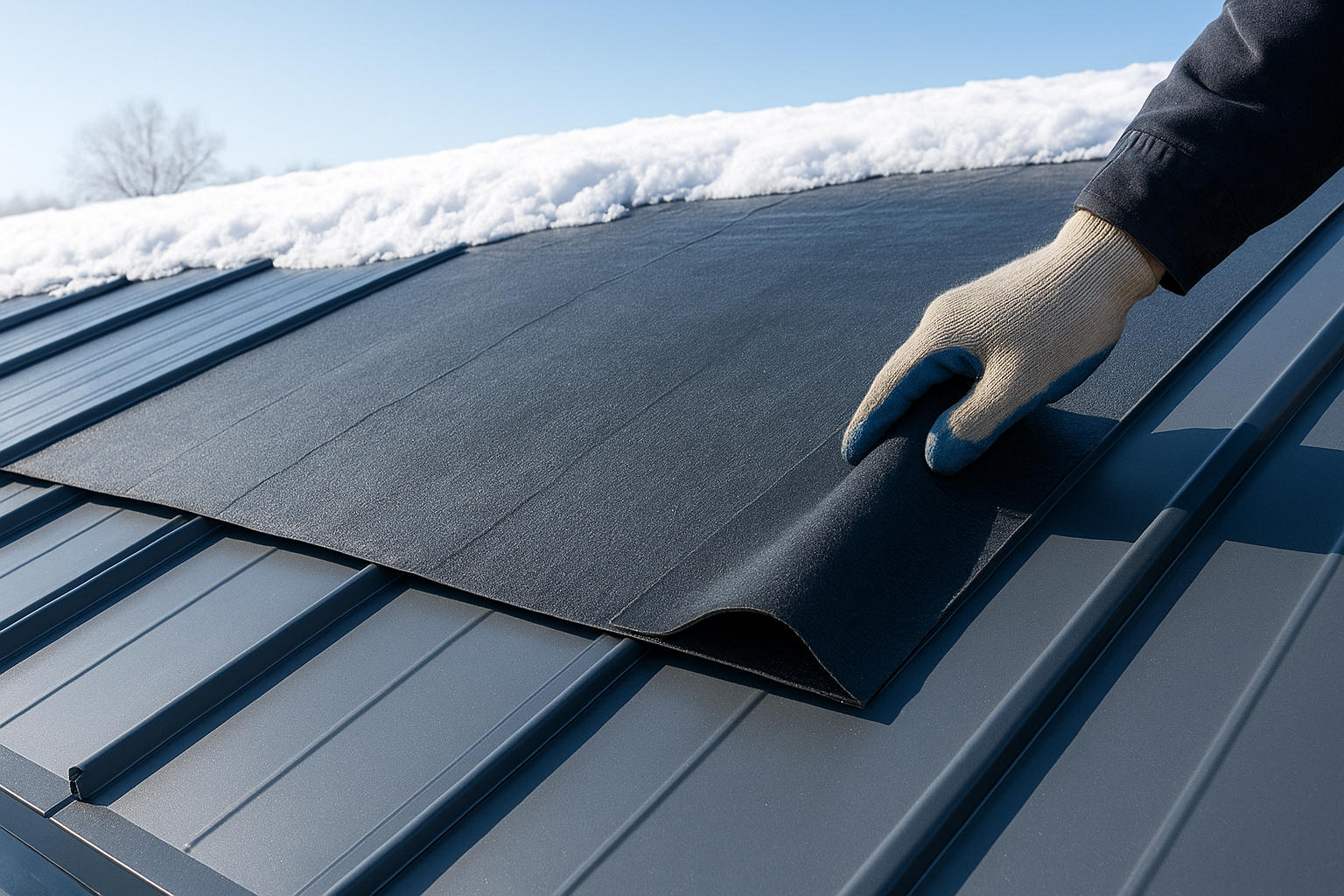
Ice-and-water barrier underlayment is a self-adhering, waterproof membrane designed specifically to handle the brutal freeze-thaw cycles that standard synthetic products simply cannot survive. When water freezes under your metal panels and then expands during thaw, it forces moisture into every available gap, and an ice-and-water system seals those vulnerabilities before they become leaks.
Best climates
This system belongs on roofs in northern climates, high-altitude regions, and any zone that receives regular snow accumulation. If your area sees ice dams forming at eaves, a full ice-and-water installation from eave to ridge is often your best underlayment for metal roof choice, regardless of what other products cost less.
Ice dam damage typically voids manufacturer warranties on standard underlayments, so using the wrong product in snow country is a financial risk, not just a performance one.
What to look for
You need a product with a minimum 40-mil thickness and a cold-temperature flexibility rating that stays pliable well below freezing. Verify the membrane self-seals around fasteners, since that feature prevents water from tracking down nail shanks.
- Rated for temperatures down to at least -20°F
- Compatible with your metal panel’s thermal movement range
- Class A fire rating
Pros and cons
Full waterproof coverage is the standout benefit, but ice-and-water barriers reduce vapor permeability, which means your attic ventilation must be adequate before installation or moisture will build up on the deck side.
Typical installed cost
Materials run $0.80 to $1.50 per square foot, with full installed costs landing between $2.50 and $4.50 per square foot depending on labor rates and roof complexity in your region.
4. High-wind synthetic underlayment for coastal storms
High-wind synthetic underlayment is built from woven or non-woven polypropylene with reinforced fiber layers that resist tearing even when strong gusts get under partially installed panels. If you’re in a coastal market and need the best underlayment for metal roof work that survives both the install and the first major storm season, this is the category to prioritize.
Best climates
This underlayment is made for coastal and hurricane-prone regions, including the Gulf Coast, the Atlantic Seaboard, and the Pacific Northwest where windborne rain is a constant threat. It also performs well in tornado corridors where sustained wind events are part of the annual pattern rather than rare exceptions.
A high-wind rating on the packaging means nothing if the underlayment isn’t properly lapped and fastened, so always follow the manufacturer’s installation specs exactly.
What to look for
You need a product rated for winds of at least 110 mph with a documented nail or cap fastener spacing that meets your local building code. Check that the product carries a Florida Product Approval or equivalent regional certification, since those standards are among the most rigorous in the country.
- Minimum 100 mph wind uplift rating
- Reinforced scrim for tear resistance
- Low slip surface for installer safety on steep pitches
Pros and cons
Tear resistance and fast installation are the main advantages, since these rolls cover large areas quickly without compromising strength. The tradeoff is that vapor permeability varies widely by brand, so you need to verify the perm rating matches your climate’s moisture profile.
Typical installed cost
Materials run $0.25 to $0.60 per square foot, with installed costs landing between $1.50 and $3.00 per square foot depending on roof pitch and local labor rates.
5. High-UV synthetic underlayment for long dry installs
High-UV synthetic underlayment is built for extended exposure periods during installation, specifically when your roof deck sits uncovered for days or weeks while metal panels arrive or get staged. Standard synthetic products carry UV exposure windows of 30 to 90 days, but in regions with intense sun and low humidity, that window shrinks fast and the underlayment can break down before panels ever go down.
Best climates
This product belongs on roofs in high-altitude and desert regions where solar intensity is extreme and installation timelines stretch due to logistics or phased construction. The Mountain West, high-desert Southwest, and interior California valleys are prime candidates, where direct UV radiation degrades standard materials faster than the calendar suggests.
If your installation spans multiple weeks in a high-sun region, your UV exposure rating is just as important as your moisture protection spec.
What to look for
When you’re selecting the best underlayment for metal roof projects with long dry installs, focus on products rated for 180 days or more of UV exposure. Verify that the rating comes from the manufacturer’s technical data sheet, not just marketing copy.
- UV exposure rating of 180-plus days
- Non-slip surface for installer safety in dry heat
- Compatibility with your specific metal panel system
Pros and cons
Extended UV ratings give you flexibility when schedules shift or material deliveries run late. The downside is that these products carry a price premium over standard synthetics, often running 20 to 30 percent higher per roll.
Typical installed cost
Materials run $0.30 to $0.70 per square foot, with installed costs landing between $1.75 and $3.25 per square foot depending on roof complexity and local labor rates.
6. Fire-resistant underlayment for WUI areas
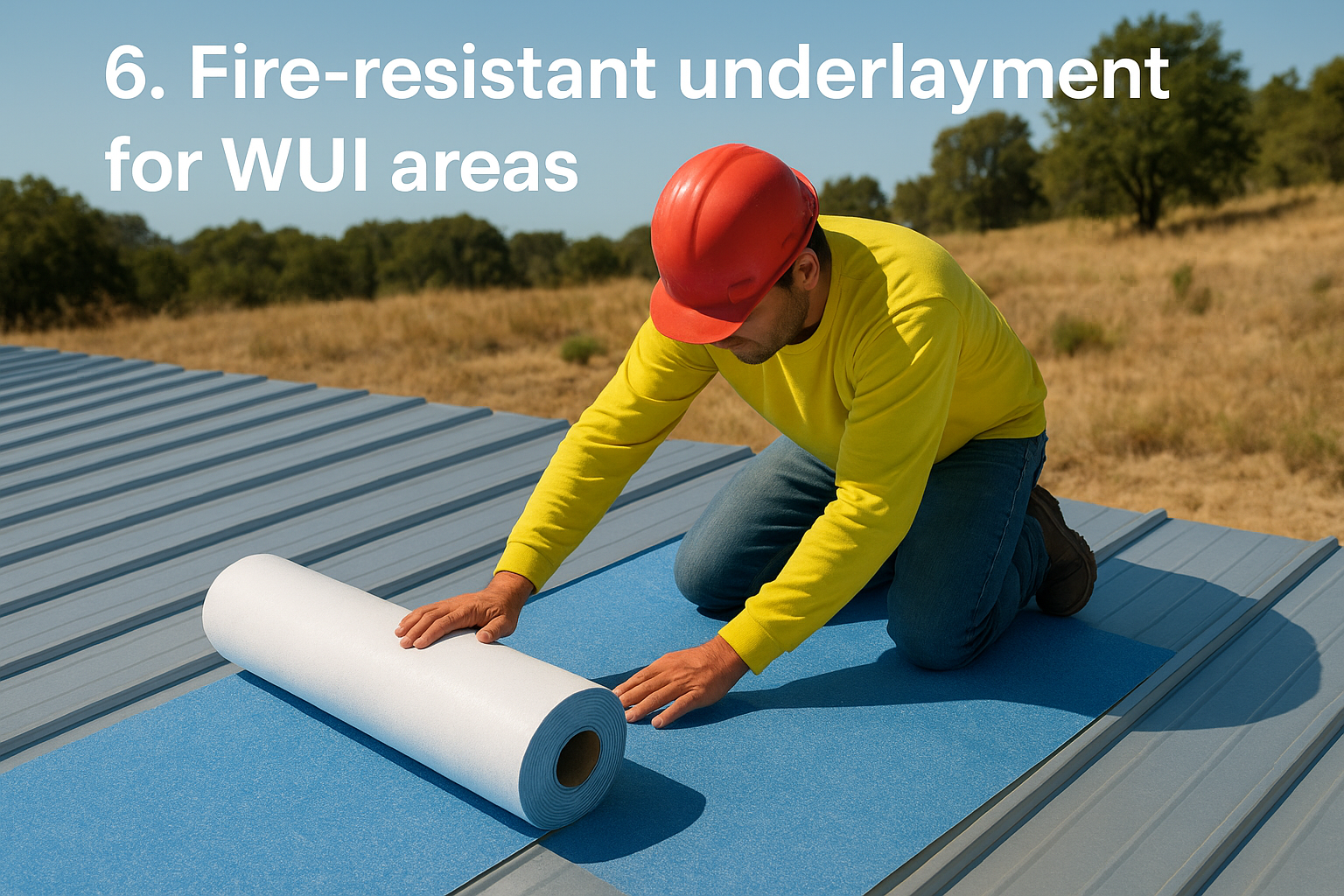
Fire-resistant underlayment is built for homes in Wildland-Urban Interface (WUI) zones, where ember intrusion and radiant heat from nearby wildfires put your entire roof assembly at risk. Standard synthetics are often petroleum-based and combustible, which turns them into a liability in fire-prone regions even when your metal panels themselves are non-combustible.
Best climates
WUI zones span California, Oregon, Colorado, and much of the Mountain West, where dry vegetation and seasonal wind events create high fire-risk conditions every year. If your local fire district has classified your property in a high or very high fire hazard severity zone, fire-resistant underlayment is often a code requirement, not a recommendation.
Confirm your local fire hazard severity zone classification before purchasing any underlayment product, since building departments in WUI areas enforce specific material standards at inspection.
What to look for
When choosing the best underlayment for metal roof projects in WUI zones, prioritize products carrying a Class A fire rating listed under ICC-ES or an equivalent third-party certification program.
- Non-combustible or intumescent base material
- Class A rating per ASTM E108
- Verified compatibility with your local fire code
Pros and cons
Fire-rated underlayments add real protection when embers land on an exposed deck during phased installation. The tradeoff is that material costs run 30 to 50 percent higher per roll compared to standard synthetic options.
| Factor | Fire-Resistant Underlayment |
|---|---|
| Fire protection | High |
| Material cost | Higher than standard |
| Code compliance in WUI | Often required |
Typical installed cost
Materials run $0.50 to $1.00 per square foot, with installed costs landing between $2.00 and $4.00 per square foot depending on roof complexity and labor rates in your region.
7. Standard synthetic underlayment for mild climates
Standard synthetic underlayment is the workhorse product of the metal roofing industry, and for homeowners in temperate regions, it covers every performance requirement without the cost premium of specialized membranes. These polypropylene or polyester-based rolls are lightweight, easy to handle, and consistently meet code requirements across most standard residential installations.
Best climates
Mild climates with moderate rainfall, minimal snow accumulation, and no extreme heat are where standard synthetic underlayment performs at its best. If you live in the Mid-Atlantic, Pacific Northwest interior, Midwest transition zones, or lower elevation areas of the Southeast, this is likely the best underlayment for metal roof projects on your property.
Standard synthetic is a reliable baseline product, but only in regions where temperature extremes, ice events, and wildfire risk are genuinely absent from the local forecast.
What to look for
You want a product rated for at least 90 days of UV exposure with a minimum 9-mil thickness. Verify it carries a Class A fire rating and check that the perm rating aligns with your roof’s ventilation setup.
- Slip-resistant walking surface
- Minimum 90-day UV exposure window
- Compatible with cap fasteners for steep-slope applications
Pros and cons
Lower material cost is the primary advantage here, with rolls running significantly cheaper than any specialized product. The tradeoff is that performance boundaries are narrow, so any shift toward extreme weather makes this an inadequate choice.
Typical installed cost
Materials run $0.15 to $0.35 per square foot, with installed costs landing between $1.00 and $2.25 per square foot depending on your roof pitch and regional labor rates.
Next steps before you buy underlayment
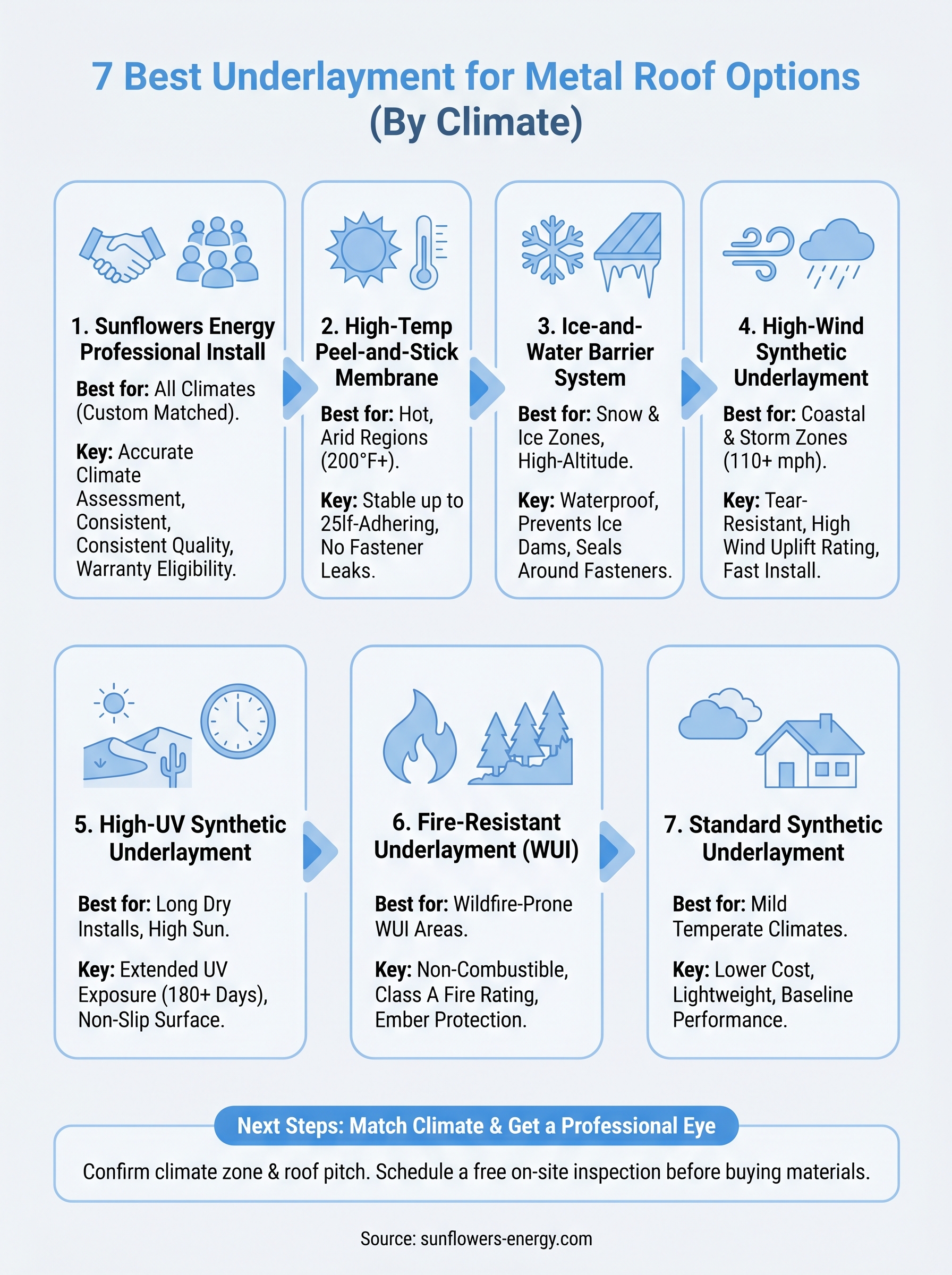
Before you purchase anything, confirm your climate zone and roof pitch against the options above. The best underlayment for metal roof projects isn’t the most expensive one on the shelf or the one a big-box store stocks in bulk. It’s the one matched to your specific environment, deck condition, and metal panel system.
Your next step is getting a professional set of eyes on your roof before you commit to a product or a price. A qualified inspector will catch ventilation gaps, deck damage, and code requirements that change your underlayment selection entirely. Skipping that step often leads to expensive corrections after panels are already down.
If you’re ready to move forward with a roofing project and want expert guidance from start to finish, the team at Sunflowers Energy LLC provides free on-site inspections and estimates with no obligation. Schedule your free roof inspection today and get the right product spec before you spend a dollar on materials.