
If you live somewhere that isn’t sunny 365 days a year, you’ve probably asked yourself: do solar panels work on cloudy days? It’s one of the most common concerns we hear from homeowners considering solar, and it makes sense, nobody wants to invest in a system that only performs half the year.
Here’s the short answer: yes, solar panels do produce electricity on cloudy days. Modern photovoltaic cells capture both direct and diffused sunlight, which means they keep working even when the sky is overcast. That said, output does drop, most panels generate roughly 10–25% of their rated capacity under heavy cloud cover, depending on panel quality, cloud density, and system design.
At Sunflowers Energy LLC, we install residential solar systems built to perform in real-world conditions, not just on perfect sunny afternoons. Below, we’ll break down exactly how much energy you can expect on gray days, what factors affect cloudy-day output, and how the right equipment and installation make a measurable difference in your year-round energy production.
What changes when clouds cover the sun
When clouds roll in, your solar panels don’t shut off. They shift from capturing direct sunlight to capturing diffused light. Direct sunlight travels in a straight line from the sun to your panels, delivering the highest intensity. Diffused light scatters through water droplets and particles in the cloud layer before it reaches your panels. Photovoltaic cells can convert both types into electricity, which is why solar panels work on cloudy days, just at a reduced rate compared to clear conditions.
How photovoltaic cells respond to diffused light
Solar cells are made of semiconductor material, typically silicon, that reacts to photons, which are packets of light energy. Under direct sun, photons hit the cell at full intensity and release electrons, generating a strong electrical current. Under cloud cover, fewer photons reach the cell surface, so the current drops. However, the physics of the conversion process doesn’t fundamentally change. Your panels are still converting available light into usable electricity; they’re simply working with less raw input.
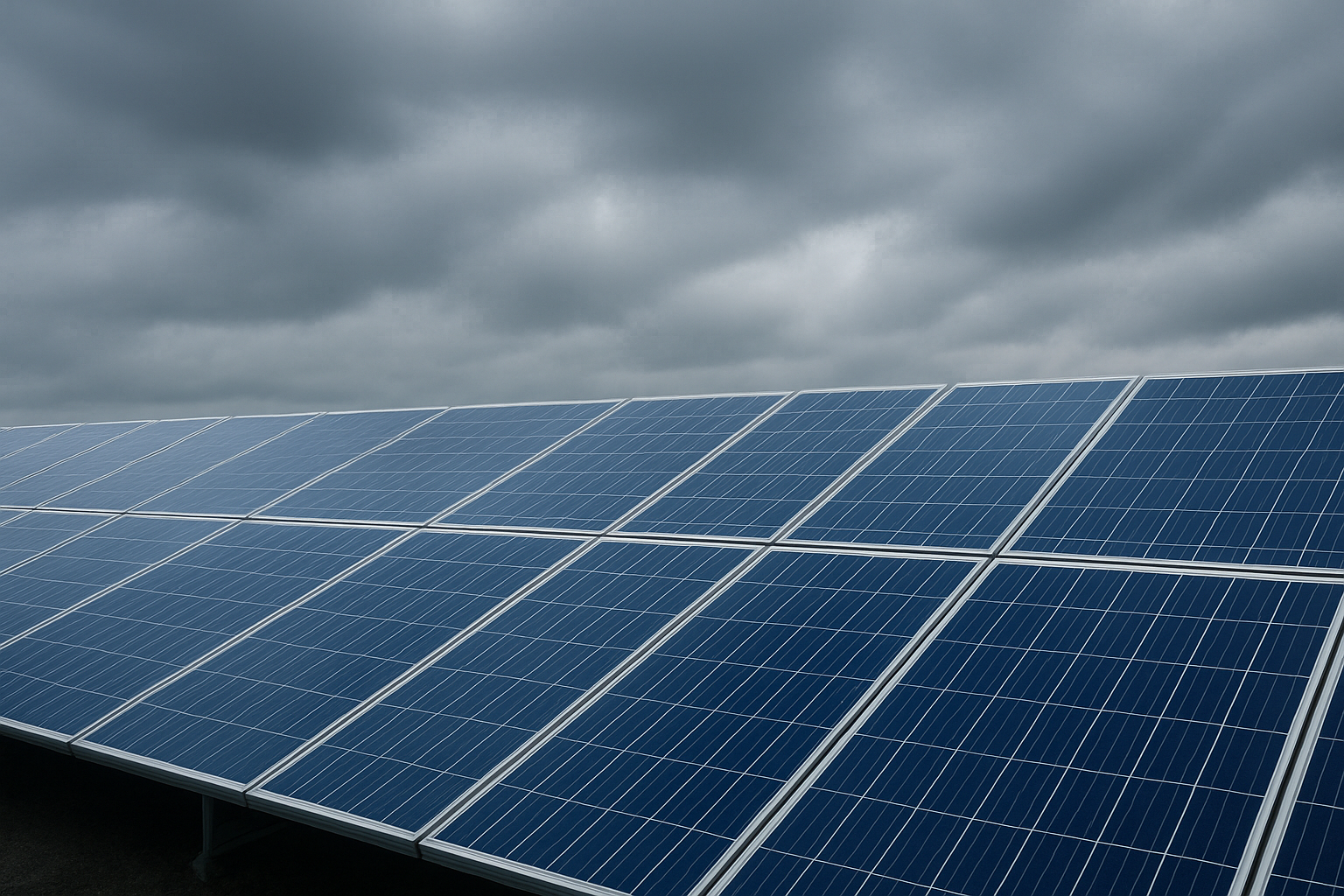
Even on a heavily overcast day, your panels are still pulling energy from the sky, not waiting for the sun to reappear.
The difference between thin clouds and heavy overcast
Not all clouds affect your output equally. Thin, high-altitude clouds like cirrus allow a large percentage of sunlight through, and your panels may operate close to their rated capacity. These clouds act more like a light filter than a full barrier. Your system likely won’t show a dramatic drop in production on days like this.
Dense, low-altitude storm clouds are a different story. They block a much higher percentage of incoming light, pushing your panels toward the lower end of that 10–25% output range. Knowing this difference helps you set realistic expectations for your system’s daily performance without being caught off guard by your energy bill.
How much power solar makes on cloudy days
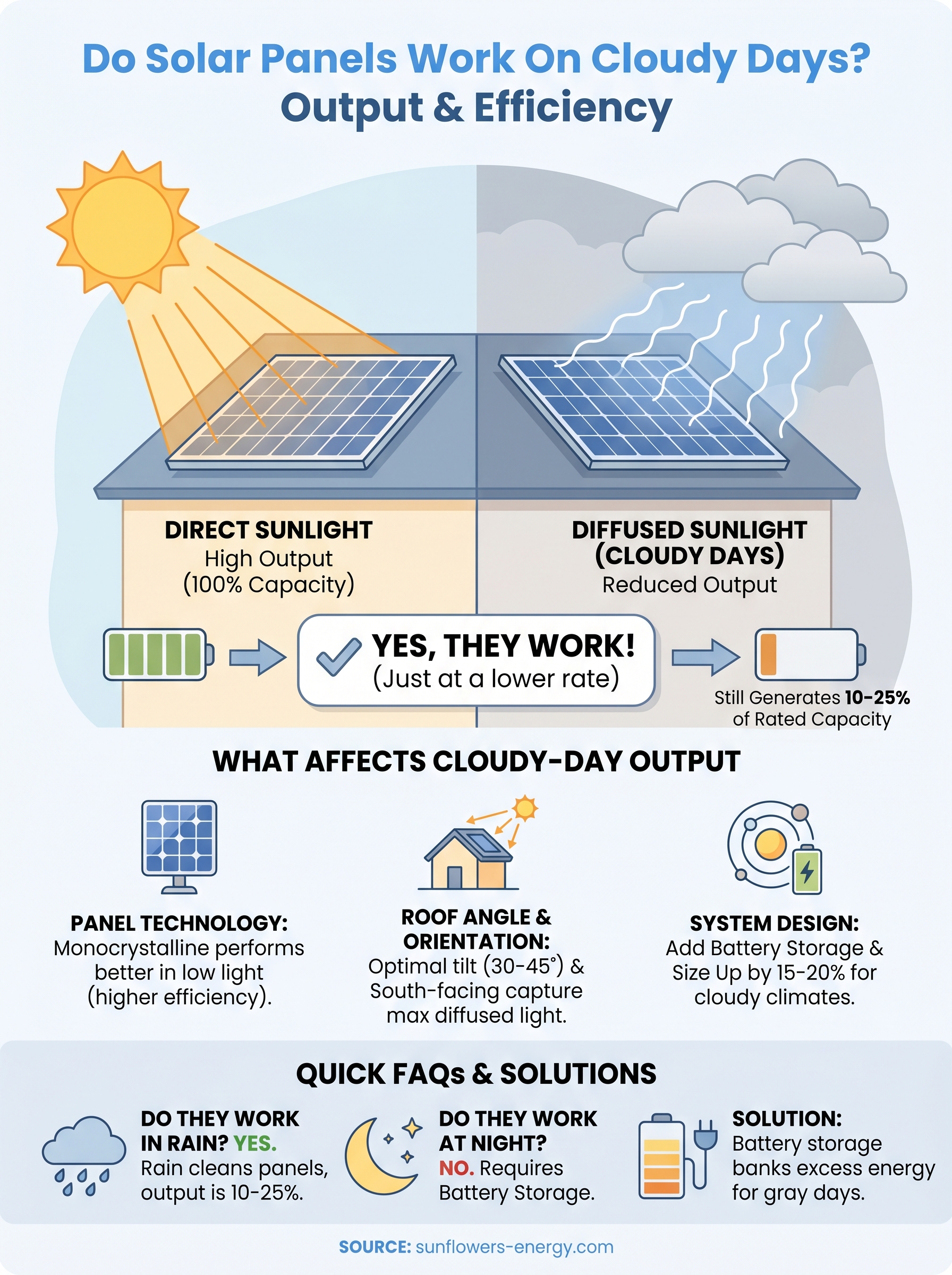
Solar output on cloudy days drops significantly, but it doesn’t zero out. Most residential panels produce between 10% and 25% of their rated capacity under heavy overcast, which means your system keeps generating electricity even on the grayest days of the year.
The 10-25% range explained
This range exists because cloud density varies widely. A light overcast might cut your output by only 20-30%, while a thick storm system pushes you toward the lower bound. Manufacturers rate panels under Standard Test Conditions (STC), which assume 1,000 watts of solar irradiance per square meter. Heavy clouds can drop that figure to 100-250 W/m², mapping directly to that 10-25% production range.
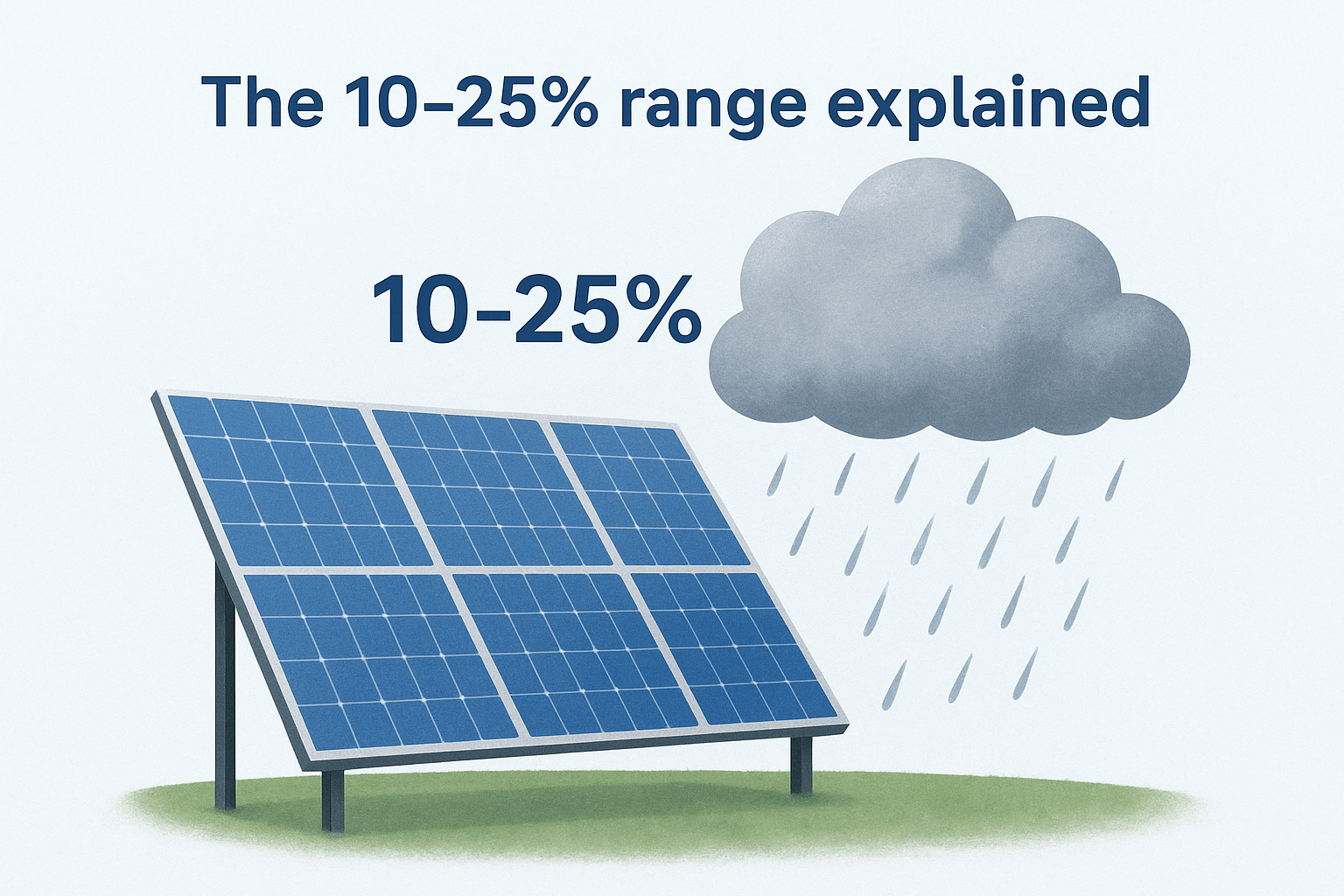
Knowing this range lets you size your battery storage and grid connection properly, so you’re prepared for extended gray stretches.
What a real system produces
For a 6-kilowatt residential system rated to produce 24 kWh on a clear day, cloudy conditions typically yield 2.4 to 6 kWh depending on cloud thickness. Your inverter and monitoring app will show this drop in real time, giving you a clear daily picture.
So yes, solar panels do work on cloudy days, and these numbers confirm it. Your system keeps cutting your energy bill even when the sun doesn’t fully break through.
What affects cloudy-day solar output
Not every solar system performs the same way on a gray day. Panel technology, system design, and your local climate all play a role in determining how much electricity your setup produces when clouds move in. Understanding these factors helps you make smarter choices before and after installation.
Panel technology and quality
When homeowners ask do solar panels work on cloudy days, panel technology is one of the biggest variables in the answer. Monocrystalline panels handle low-light conditions better than older polycrystalline models because their higher cell efficiency allows them to convert a greater percentage of available diffused light into electricity, which matters most when every photon counts.
Choosing high-efficiency monocrystalline panels can push your cloudy-day output toward the upper end of that 10-25% range rather than the lower end.
Roof angle and orientation
South-facing roofs with a tilt between 30 and 45 degrees capture the most light year-round, including on overcast days. A poor angle reduces your panels’ exposure to diffused light, cutting output further than cloud cover alone would. Your installer should optimize both tilt and orientation based on your specific roof geometry and your region’s sun path to maximize production in all weather conditions.
How to design and use solar for cloudy climates
If you live in a region with frequent overcast, the question shifts from do solar panels work on cloudy days to how you design a system that performs despite gray weather. Two strategies make the biggest difference: battery storage and proper system sizing.
Add battery storage
Battery storage lets you bank excess electricity on sunny days and draw on it when clouds cut your production. A well-sized battery keeps your home running through multi-day overcast stretches, reducing your reliance on the grid. Your installer can recommend the right capacity based on your average daily usage and local cloud patterns.
Pairing your panels with battery storage turns cloudy-day shortfalls into a manageable buffer rather than a gap in your energy supply.
Size your system for your actual climate
Your installer should use local irradiance data rather than national averages to calculate the right system size for your roof. Cloudier regions typically benefit from these two adjustments:
- Size up by 15 to 20 percent to compensate for lower average daily production
- Prioritize high-efficiency panels to capture more diffused light per square foot
Both moves keep your annual energy offset on target without inflating your budget.
Cloudy-day myths and quick FAQs
A few persistent myths lead homeowners to underestimate solar panel performance in poor weather. Clearing them up helps you set realistic expectations and make a confident decision about going solar.
Myth: solar panels stop working in the rain
Rain actually helps your system in two ways: it cleans dust and debris off the panels, and light still reaches the cells through the cloud layer above. Rainy days keep your panels producing electricity, just at the lower end of that 10-25% output range.
Rain is maintenance you didn’t have to schedule.
Quick FAQs
Homeowners often have follow-up questions once they learn that solar panels work on cloudy days. Here are the most common questions answered directly:
- Do solar panels work at night? No. Without any light source, panels produce no electricity, which is why battery storage matters.
- Do panels work in snow? Light snow reduces output; heavy snow accumulation blocks it temporarily. Panels usually shed snow quickly due to their smooth surface and tilt angle.
- Does fog affect solar output? Yes, fog reduces diffused light reaching your panels, similar to heavy clouds, but output recovers once the fog lifts.
Bottom line for your home
Solar panels do work on cloudy days, and now you have the numbers to back that up. Your system will produce 10 to 25% of its rated capacity on overcast days, which still cuts your electricity bill and reduces your grid dependence. The right panel technology, proper system sizing, and battery storage close most of the gap that gray weather creates.
Your location doesn’t have to be sunny year-round to make solar a smart investment. Millions of homeowners in cloudy climates like the Pacific Northwest and New England run productive solar systems because good design compensates for reduced daily irradiance. When you match panel efficiency, roof angle, and storage capacity to your actual climate, annual energy production stays on target regardless of how many overcast days your region sees.
Ready to find out what your roof can generate? Get a free solar estimate from Sunflowers Energy LLC and we’ll size your system around your real local conditions.

https://shorturl.fm/pgv5Q