
A water stain spreading across your ceiling is never something you want to see. But before you panic about the bill, it helps to understand what roof leak repair cost actually looks like in 2026, because the range is wider than most homeowners expect. A small fix around a pipe boot might run you a couple hundred dollars, while extensive water damage tied to structural decay could push well into the thousands.
The final number depends on several things: the type of roofing material, the location and severity of the leak, how long the water has been getting in, and whether your roof needs a patch or a full replacement. Labor rates, permits, and regional pricing also play a role. Without understanding these variables, it’s easy to either overpay for a simple repair or underestimate what a serious leak actually demands.
At Sunflowers Energy LLC, we handle residential and commercial roof repairs every week, from storm damage restoration to slow leaks that have gone unnoticed for months. We offer free on-site inspections and estimates so you know exactly what you’re dealing with before any work begins, and we assist with insurance claims when storm damage is involved.
This guide breaks down 2026 pricing for common roof leak repairs, walks through the factors that influence cost, and compares minor repairs against full roof replacement. By the end, you’ll have a clear picture of what to budget and when it makes sense to act fast versus when you can plan ahead.
Why roof leak repair cost varies so much
No two roof leaks are the same. A pinhole-sized gap around a flashing seam costs far less to fix than a section of rotted decking beneath a valley that has been soaking up water for two full seasons. Understanding why prices differ so widely helps you evaluate contractor quotes accurately, set a realistic budget before anyone climbs on your roof, and avoid the trap of choosing the lowest bid without knowing what it actually covers.
The source and severity of the leak
The root cause of your leak is the single biggest driver of cost. Flashing failures, which happen around chimneys, skylights, and roof-to-wall transitions, are among the most common sources of leaks and often require only a few hours of targeted labor. A cracked vent boot or a handful of missing shingles can fall into the same affordable category. On the other end of the spectrum, widespread sheathing decay or sagging rafters signal structural damage that turns a simple patch into a multi-day project with material and labor costs to match.
The source of a roof leak matters more than its visible size. A small ceiling stain can sometimes trace back to a large area of rotted wood that is not visible from inside the house at all.
Severity compounds the issue further. A leak that has been dripping through your attic insulation for months will also mean replacing soaked insulation, treating for mold, and potentially repairing interior drywall. Each layer of secondary damage adds line items to the final invoice, and that is why two homeowners with similar-looking ceiling stains can receive quotes that differ by several thousand dollars.
Labor rates and regional pricing
Where you live shapes what contractors charge per hour. In high-cost metro areas like New York City, San Francisco, or Chicago, skilled roofing labor can run $75 to $150 per hour or more. In smaller markets or rural areas, the same quality of work might cost $45 to $75 per hour. Most roof leak repairs involve at least two hours of hands-on labor, and complex jobs can stretch to a full day or longer for a crew of two or three workers.
Material costs also shift by region. Shipping costs, local supplier markups, and seasonal demand after major storms all push prices up or down depending on your zip code. When you request a roof leak repair cost estimate, ask your contractor to break out labor and materials separately so you can see exactly where the money is going and compare bids on equal footing.
How long the leak has been active
Time is expensive when it comes to roof leaks. A leak you catch within a few weeks usually means limited damage confined to the original entry point. Waiting six months or longer gives water time to spread along roof decking, drip into wall cavities, and fully saturate insulation batts. At that point, mold remediation and structural repairs often exceed the cost of the original roofing fix by a significant margin.
Catching a leak early is not just about saving money on the immediate repair. It also protects you from secondary costs that homeowners’ insurance may not fully cover, particularly if your insurer classifies the damage as gradual deterioration rather than a sudden and accidental event. Acting quickly after you notice any sign of water intrusion is always the lower-cost path.
2026 roof leak repair cost ranges at a glance
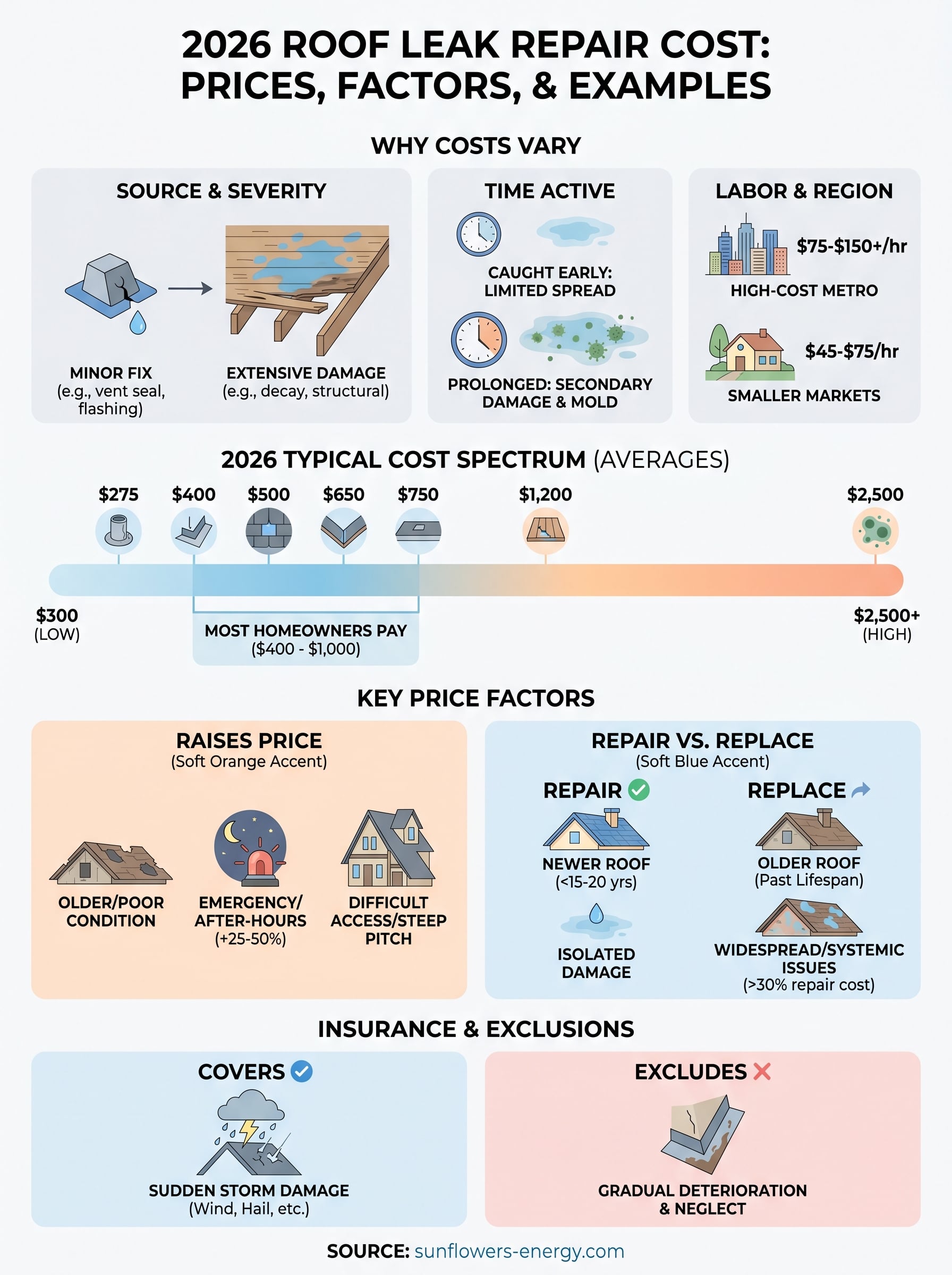
Before diving into the specifics of what drives your price up or down, it helps to see the full spectrum of roof leak repair cost in one place. Most homeowners pay somewhere between $300 and $1,500 for a standard residential roof leak repair in 2026, but the range stretches well beyond that on both ends depending on the scope of the problem.
Typical price ranges for common repairs
The table below reflects national average costs for 2026, including labor and basic materials. Your final quote may land higher or lower based on your location, roof pitch, and the specific conditions a contractor finds once they are up on the roof.
| Repair Type | Low End | High End | Average |
|---|---|---|---|
| Pipe boot or vent seal | $150 | $400 | $275 |
| Flashing repair (chimney, skyline) | $200 | $600 | $400 |
| Shingle replacement (small area) | $250 | $750 | $500 |
| Valley repair | $300 | $1,000 | $650 |
| Flat roof patch | $300 | $1,200 | $750 |
| Decking repair (rotted section) | $500 | $2,000 | $1,200 |
| Leak with mold remediation | $1,000 | $4,000 | $2,500 |
A quote that seems unusually low often means the contractor is scoping only the visible damage rather than inspecting the full roof and surrounding decking for moisture spread.
What the average homeowner actually pays
Most residential roof repairs fall into a middle range of $400 to $1,000, which typically covers one or two problem areas without major structural involvement. If your roof is relatively new, well-maintained, and the leak was caught early, you are likely looking at the lower half of that bracket. Older roofs with multiple worn areas often push costs toward the upper end because a contractor has to address more than just the single entry point you noticed.
Emergency or after-hours repairs add a premium of 25 to 50 percent on top of standard labor rates in most markets. If your roof is actively leaking during a storm, be prepared to pay more for immediate availability. Planning a repair during dry weather and normal business hours is one of the simplest ways to keep your total repair cost in a manageable range.
Roof leak repair costs by problem type
The source of your leak shapes your bill more than almost any other factor. A contractor who identifies the root cause quickly can often resolve the problem in a few hours, while a misdiagnosed leak that gets patched at the symptom rather than the source will come back and cost you a second time. Understanding what each problem type typically costs helps you verify that a quote makes sense before you sign anything.
Flashing failures and sealant breakdowns
Flashing is the metal material installed around chimneys, skylights, vents, and roof-to-wall transitions to direct water away from gaps. It is also one of the most frequent sources of residential roof leaks. When flashing lifts, corrodes, or pulls away from the surface, water finds a direct path into your home. Repairs typically run $200 to $600 depending on the location and how much material needs to be replaced. Chimney flashing repairs land toward the higher end of that range because the work requires careful sealing on multiple sides.
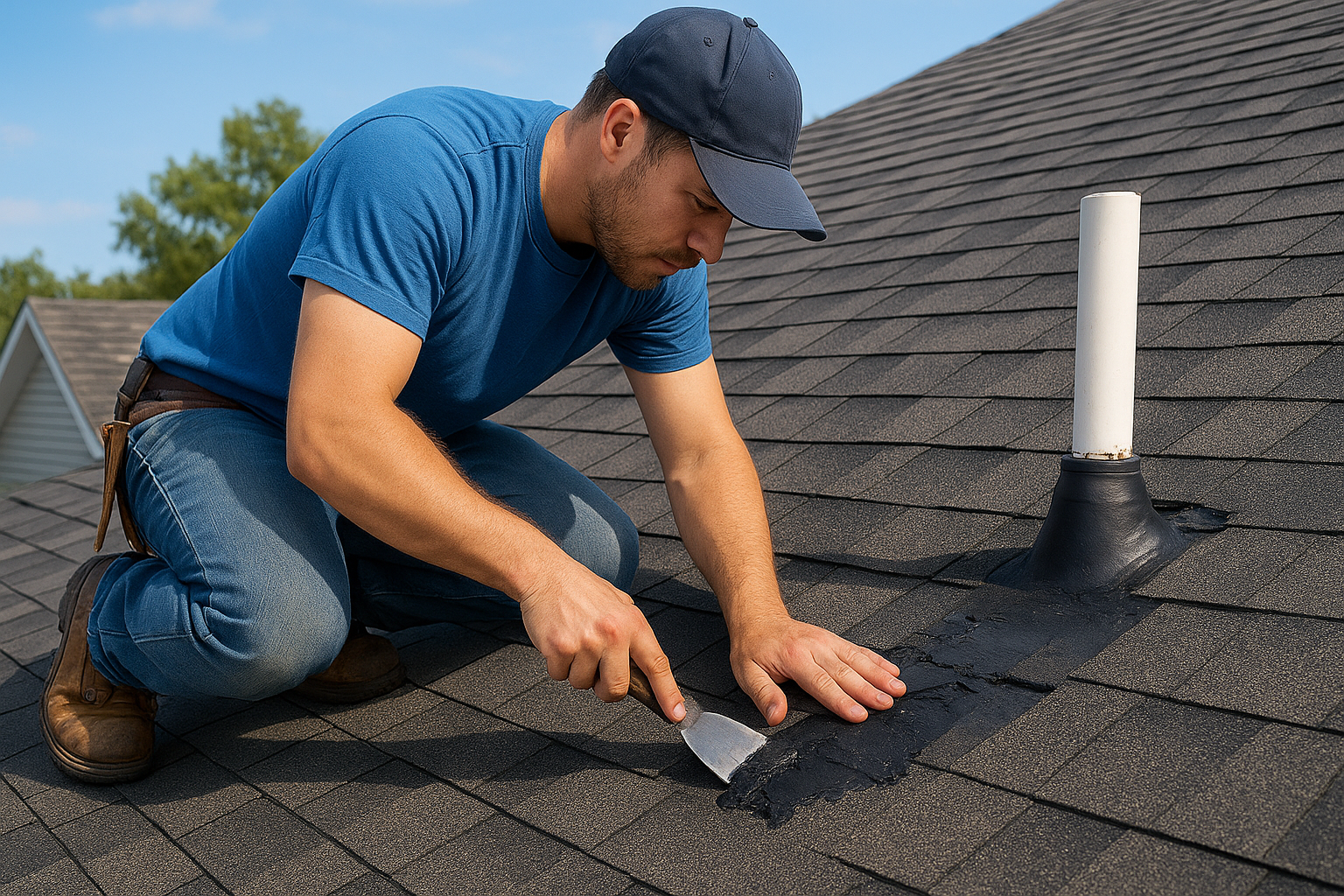
Sealant failures around pipe boots and roof vents are usually quicker fixes. A cracked rubber collar or a dried-out sealant bead can often be repaired in under two hours, with total costs landing between $150 and $400 in most markets.
Shingle and surface damage
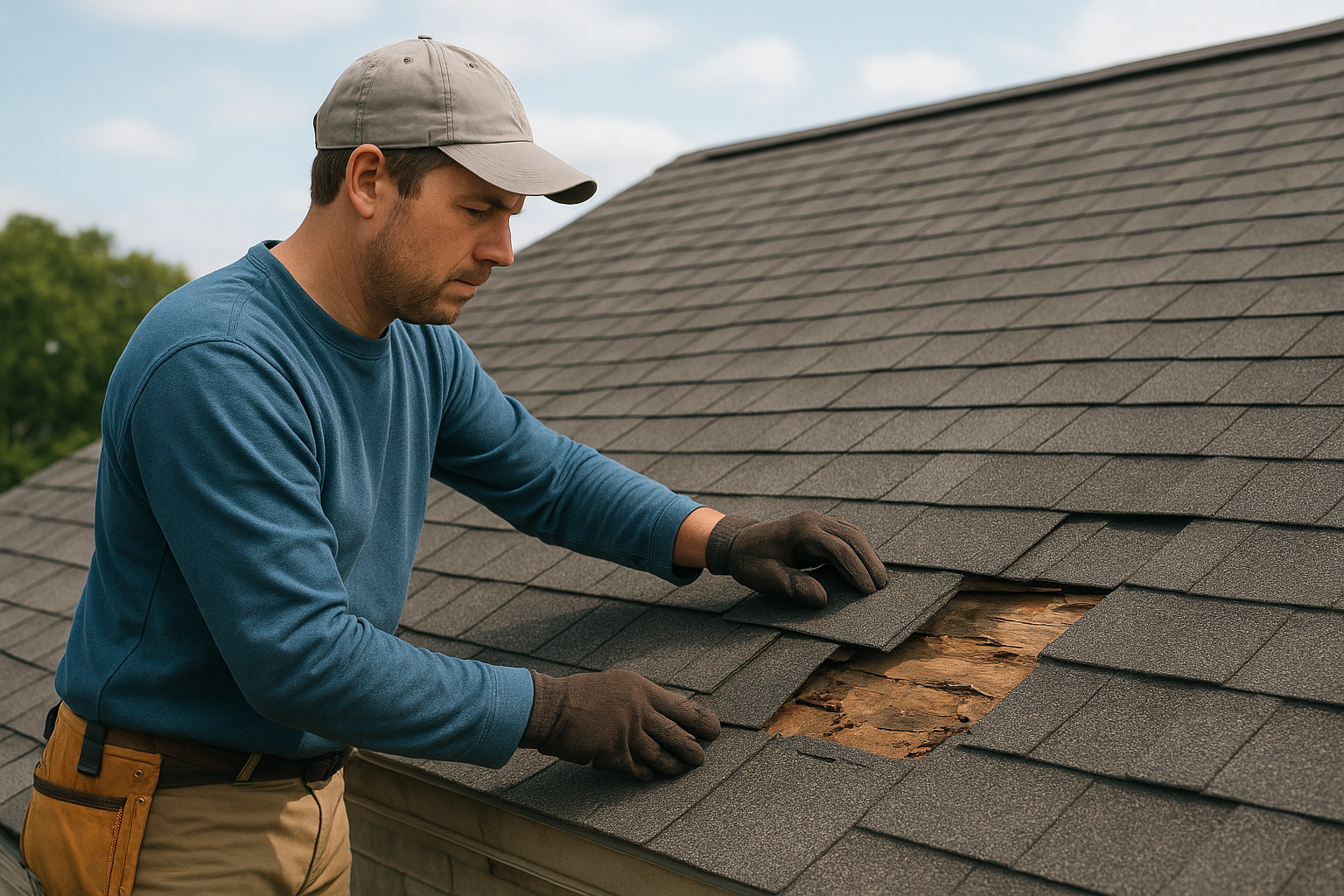
Missing, cracked, or curling shingles expose the underlayment and decking beneath them directly to rain. A small section of damaged shingles covering a few square feet typically costs $250 to $750 to repair, including material and labor. If the damage spans a larger area, such as after a hail storm, costs rise proportionally because more material is required and the job takes a full crew longer to complete.
Matching replacement shingles to your existing roof color is harder on older roofs, and a visible patch can affect curb appeal and resale value if the tones do not align closely.
Structural and decking damage
When water has been entering your home for an extended period, rot spreads into the roof decking or the structural framing beneath it. Replacing a single rotted section of decking costs roughly $500 to $1,500, but widespread damage across multiple sections can push the total roof leak repair cost above $3,000 once labor, materials, and any mold treatment are included. This category of repair requires the most thorough inspection upfront, because the full extent of the damage is rarely visible from the attic floor.
Roof leak repair costs by roof material and roof style
The type of roofing material on your home directly affects both the parts cost and the labor time needed for a proper repair. Some materials require specialty tools, specific training, or harder-to-source components. Your roof’s pitch and overall layout add another layer to the pricing equation, since steep or complex roofs take longer to work on safely and efficiently.
Asphalt shingles vs. premium roofing materials
Asphalt shingles are the most common residential roofing material in the United States, and repairs tend to be the most affordable as a result. Patching a small leak area on an asphalt roof typically costs $250 to $750, and replacement shingles are widely available through local suppliers. The labor is straightforward for experienced crews, which keeps hourly costs from climbing quickly.
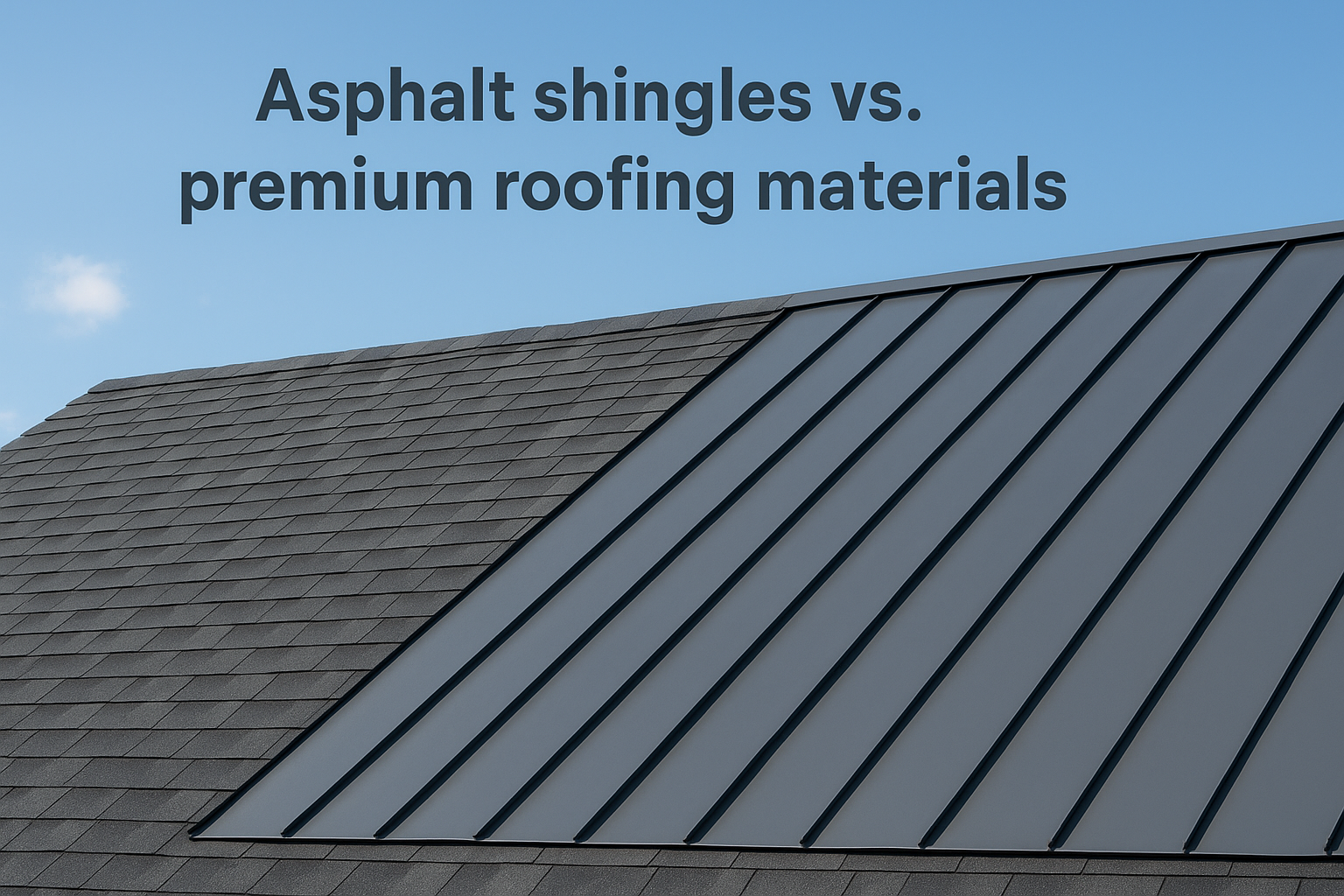
Premium materials tell a different story. Metal roofing repairs generally run $300 to $900 depending on the panel type, because cutting and sealing metal panels correctly requires additional skill. Tile and slate repairs often cost $500 to $1,500 per area since individual pieces are fragile, hard to source, and time-consuming to remove without cracking adjacent tiles. Cedar shake repairs fall in a similar range and require careful matching to avoid visible patches.
If your roof uses tile, slate, or cedar shake, always confirm that the contractor you hire has direct experience with that specific material before any work begins.
Flat roofs and low-slope systems
Flat and low-slope roofs use different materials than pitched residential roofs, and their repair costs reflect that difference. TPO, PVC, and rubber EPDM membrane roofing is common on commercial buildings and some modern homes. A small membrane patch typically runs $300 to $800, but if the membrane has pulled away from a seam or drain over a larger section, repairs can reach $1,200 or more.
Flat roofs also collect standing water, which accelerates damage to the substrate beneath the membrane. When water gets under a TPO or PVC layer, it spreads quickly and silently, so the total roof leak repair cost on flat systems often increases more steeply than homeowners expect once a contractor opens the damaged area.
Roof pitch and accessibility
Steeper roof pitches require additional safety equipment and slow down every task a crew performs on the surface. A repair that takes two hours on a low-slope roof might take three or four hours on a steep pitch. That extra labor adds $150 to $400 to most repair quotes for pitches above a 7:12 slope, and some contractors charge a flat steep-slope premium on top of their standard rates.
The biggest factors that raise or lower your price
Several variables determine where your roof leak repair cost lands on the price spectrum, and most of them are things a contractor evaluates during an on-site inspection. Knowing these factors in advance helps you ask better questions, understand why quotes differ, and make a more confident decision about how to move forward.
Roof age and overall condition
An older roof compounds the cost of any repair. Shingles, flashing, and underlayment all degrade over time, so a contractor working on a 20-year-old roof often discovers adjacent weak spots while fixing the primary leak. Those secondary issues require attention too, otherwise the same area will fail again within a season. A newer roof in good overall condition usually means the repair stays contained, the materials match more easily, and the crew finishes faster.
Repairing one section of a roof nearing the end of its lifespan often costs nearly as much as replacing the affected area entirely, because additional worn material gets addressed in the same visit.
Your roof’s maintenance history also matters. Regular inspections, clean gutters, and prompt attention to small problems keep repairs in the minor category. Deferred maintenance turns minor fixes into compound jobs that affect both the repair price and the time it takes to complete the work.
Timing, urgency, and site access
When you schedule the repair significantly affects what you pay. Emergency repairs requested after hours or during weekends typically carry a premium of 25 to 50 percent above standard labor rates. Scheduling work during normal business hours on a dry week, rather than calling a crew out during an active storm, is one of the most direct ways to control your total cost.
Physical access to the damaged area adds another pricing layer. Steep pitches, multi-story homes, and roofs with complex geometry like multiple valleys, dormers, or turrets require more setup time and safety equipment. A repair on a straightforward ranch-style roof takes less time to set up and execute than the same repair on a three-story home with a high-pitch hip roof. Contractors typically factor access difficulty into their labor estimate, so ask specifically how pitch and layout are reflected in the quote you receive.
Repair vs replacement: when a leak means bigger work
A single leak does not automatically mean you need a new roof, but it sometimes points toward one. The decision comes down to how much of the roof is compromised versus how much useful life it has left. Choosing repair when replacement is the smarter option costs you money twice: once for the repair and again when the roof fails again within a few years. Understanding where that line sits helps you make the right call the first time.
Signs that a repair is the right call
Targeted repair makes sense when the damage is limited to one clear area and the rest of the roof is in sound condition. If your roof is less than 15 years old, the shingles or membrane show no widespread cracking or granule loss, and the contractor finds rot confined to a small section of decking, a focused repair will likely hold for years. Flashing failures and isolated shingle damage on an otherwise healthy roof are textbook repair scenarios, and most homeowners in this situation see a strong return on a modest investment.
- Roof is under 15 to 20 years old
- Damage is confined to one location with no spread into adjacent sections
- Decking and framing beneath the repair area are structurally sound
- The rest of the roof passes a basic visual and moisture inspection
When replacement makes more financial sense
Your roof leak repair cost calculation changes significantly when the damage is spread across multiple sections or when the roof has already exceeded its expected lifespan. An asphalt shingle roof typically lasts 20 to 30 years depending on installation quality and climate exposure. If your roof is approaching that range and showing widespread granule loss, multiple soft spots, or recurring leaks in different areas, patching one section while ignoring the rest is a short-term fix on a long-term problem.
When repair costs exceed 30 percent of a full replacement estimate on a roof past its midpoint in lifespan, most roofing professionals recommend putting that money toward a complete replacement instead.
A contractor performing a thorough inspection will flag signs of systemic failure that are not always visible from the attic or the ground. Sagging ridgelines, extensive sheathing moisture, and failing underlayment across large portions of the roof all point toward replacement. Getting that full picture upfront prevents you from committing repair money to a roof that will need full replacement within the next two or three seasons anyway.
Insurance, storm damage, and what coverage usually excludes
Homeowners insurance can offset a significant portion of your roof leak repair cost when the damage traces back to a sudden, covered event. Understanding what your policy actually includes before you file a claim saves you time, prevents surprises, and helps you document the damage in a way that supports your payout.
What homeowners insurance typically covers
Most standard homeowners policies cover storm-related roof damage caused by wind, hail, falling trees, and other sudden events. If a hailstorm punches through your shingles and water enters your home as a direct result, your insurer will generally pay for both the roofing repair and any interior damage caused by the water intrusion, minus your deductible. Filing promptly after a storm matters because many policies include deadlines for reporting damage, and delays can give an insurer reason to reduce or deny the claim.
Documenting the damage with dated photographs taken before any temporary repairs begin is one of the strongest steps you can take to support a storm damage claim.
What insurers commonly exclude
Insurers draw a clear line between sudden damage and gradual deterioration. A leak that developed slowly over months because shingles wore thin or flashing corroded will typically fall outside your coverage, even if you only noticed it recently. Maintenance neglect is the most common reason claims get denied or reduced, because policies require homeowners to keep their roofs in reasonable condition.
Age-related decline is another frequent exclusion. If your roof is past its expected service life, an insurer may only pay for the depreciated value of the damaged material rather than the full replacement cost, or they may deny the claim outright on the basis that the roof was already failing.
How storm damage claims work in practice
When you report a storm-related leak, your insurer will send an adjuster to assess the damage in person. Working with a roofing contractor who has direct experience assisting with insurance claims helps ensure the adjuster sees the full scope of the problem, not just the surface-level symptoms. At Sunflowers Energy LLC, we walk homeowners through the entire claims process, from the initial inspection to final documentation, so nothing gets overlooked and your claim reflects the true extent of the damage.
How to get a reliable quote and avoid bad repairs
Getting an accurate roof leak repair cost estimate starts with finding a contractor who inspects the full roof rather than just the spot above your ceiling stain. A thorough quote requires someone physically on your roof, checking the flashing, decking, underlayment, and surrounding shingles, not just a number given over the phone based on your description. Three written quotes from licensed contractors give you a reliable range and enough information to spot when one estimate is out of line with the others.
What a good inspection looks like
A legitimate roofing inspection covers more than the obvious damage. A qualified contractor will check the attic for moisture, soft spots, and daylight coming through, measure the affected area, and document secondary damage like soaked insulation or compromised decking. If an inspector spends less than 20 minutes on your roof and produces an estimate on the spot without any photographs or written breakdown, that is a sign the quote lacks depth.
Ask every contractor to provide a written estimate that separates labor costs from material costs so you can compare bids on a fair, line-by-line basis.
Red flags to watch for in contractor bids
Certain patterns signal a repair that will not hold up. Unusually low bids often mean the contractor is scoping only the visible damage and skipping a full moisture inspection of the surrounding area. A contractor who pressures you to decide the same day, refuses to provide proof of insurance, or cannot name specific materials by brand or specification is worth avoiding. Storm chasing after heavy weather is another warning sign where out-of-town crews appear in neighborhoods offering fast, cheap repairs that frequently fail within a season.
Questions to ask before you hire
Asking the right questions upfront separates reliable contractors from risky ones. Request proof of general liability insurance and workers’ compensation coverage before any crew member steps onto your property. Ask how long the contractor has been operating locally, whether they pull the necessary permits for structural repairs, and what their workmanship warranty covers.
- Do you carry liability and workers’ comp insurance?
- Will you pull permits for this repair if required?
- What is your workmanship warranty, and what does it exclude?
- Can you provide references from recent local jobs?
- How will you document the full scope of the damage before starting work?
Contractors who answer these questions clearly and without hesitation are the ones most likely to deliver a repair that holds.
Next steps
Now that you understand how roof leak repair cost breaks down by damage type, material, and scope, the next move is getting eyes on your roof from someone qualified to assess the full picture. A ceiling stain or drip rarely tells the whole story, and the longer you wait, the more secondary damage compounds the original problem.
Your best first step is scheduling a professional inspection before water spreads further into your decking, insulation, or interior walls. At Sunflowers Energy LLC, we provide free on-site inspections and written estimates for residential and commercial roofing so you know exactly what you’re dealing with and what it will cost before any work begins. If storm damage is involved, we also walk you through the insurance claim process from start to finish. Request your free roof inspection today and get a clear, honest picture of what your roof actually needs.

2 Responses