
A missing shingle, a ceiling stain after last night’s rain, a gutter pulling away from the fascia, roof problems rarely announce themselves at a convenient time. And the first question that hits is almost always the same: how much does roof repair cost? The answer depends on more variables than most homeowners expect, from the type of damage and roofing material to your location and the pitch of your roof. Without a clear picture of those factors, budgeting for a repair can feel like guessing.
The national average for a roof repair in 2026 sits between $400 and $1,800, but that range stretches much wider once you account for structural issues, storm damage, or specialty materials. Knowing where your situation falls on that spectrum, and whether a repair even makes more financial sense than a full replacement, can save you thousands. Understanding real cost breakdowns before you call a contractor puts you in a stronger negotiating position and helps you avoid overpaying.
At Sunflowers Energy LLC, we handle residential and commercial roof repairs across a wide range of damage types, from minor leak patches to full storm-damage restoration with insurance claim assistance. We put this guide together based on what we see in the field every day, actual pricing factors, not vague estimates pulled from thin air. Below, you’ll find a detailed cost breakdown by repair type, material, and scope, along with guidance on when it makes sense to repair and when replacement is the smarter investment.
What roof repair costs in 2026
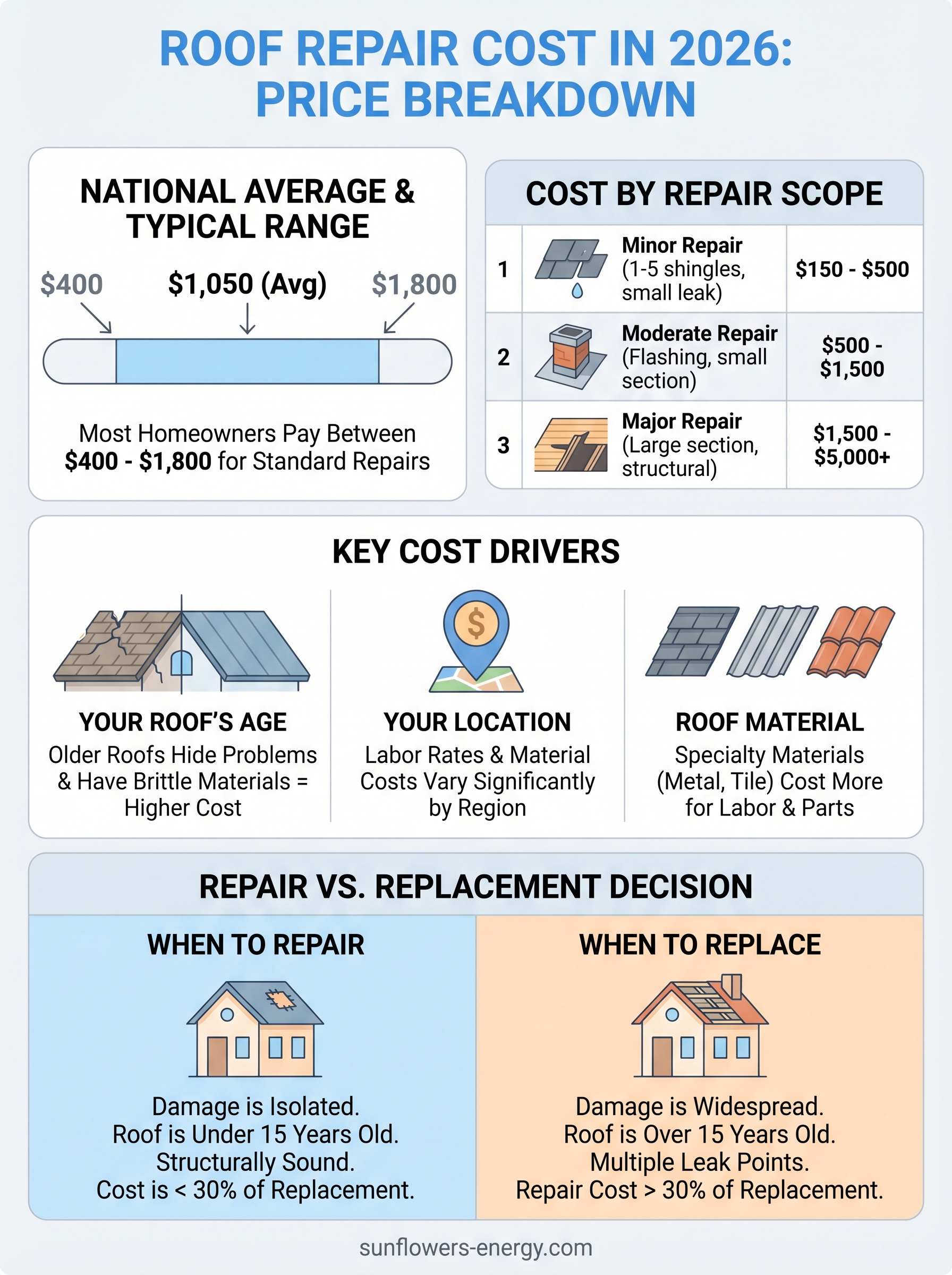
The short answer to how much does roof repair cost in 2026: most homeowners pay between $400 and $1,800 for a standard repair. That range covers typical scenarios like patching a few shingles or fixing a small leak around a flashing joint. Once you move into larger structural repairs, commercial roofing, or storm damage that affects multiple areas at once, costs can climb to $5,000 or higher without much difficulty. Knowing where your specific situation falls on that spectrum is the first step toward budgeting accurately.
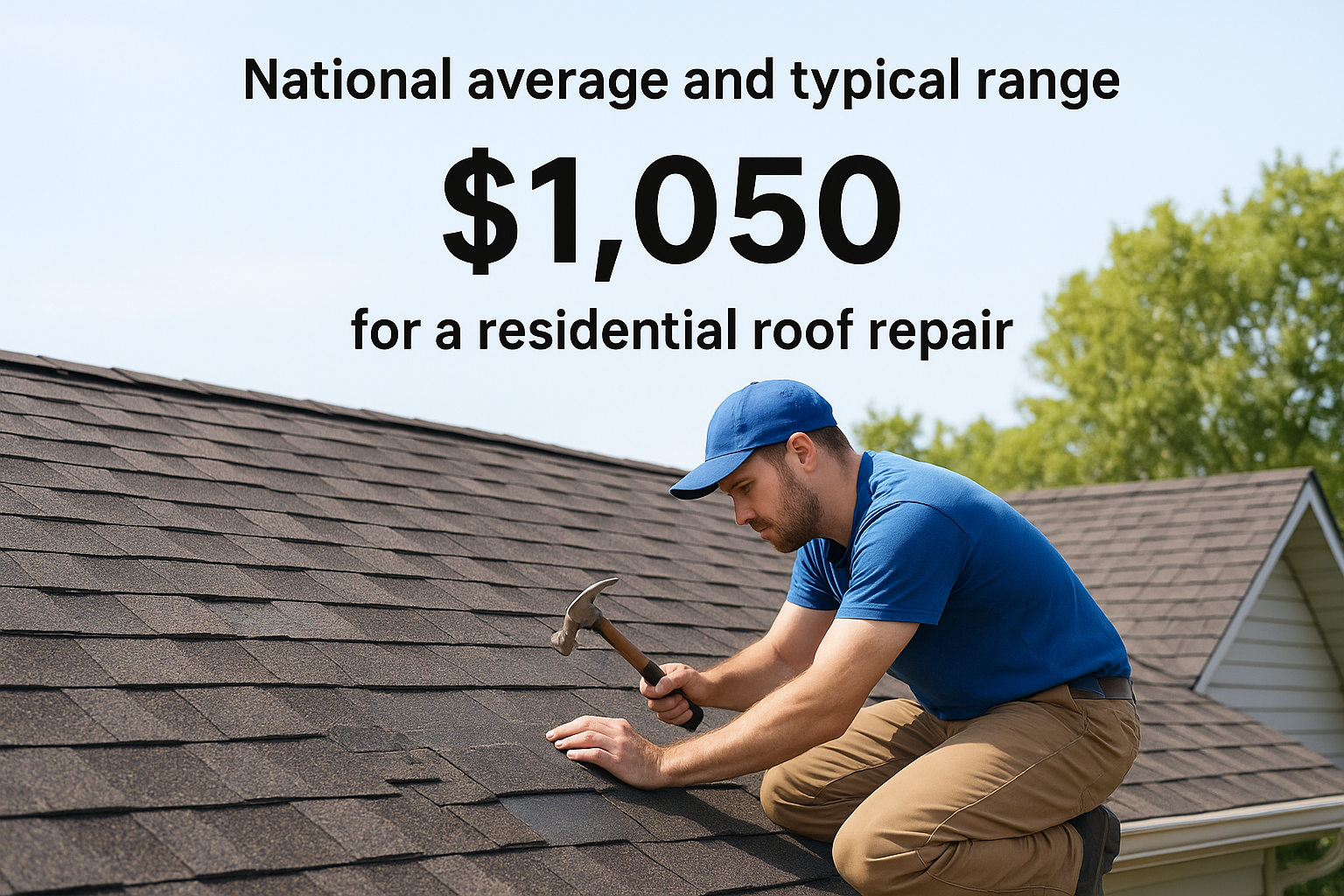
National average and typical range
The national average sits around $1,050 for a residential roof repair in 2026, based on what contractors across the country are charging for common jobs. That figure reflects moderate damage on an asphalt shingle roof with straightforward access, which describes the majority of repair calls. Your actual number will shift based on local labor rates, the extent of the damage, and the materials your roof uses.
| Repair Scope | Typical Cost Range |
|---|---|
| Minor repair (1-5 shingles, small leak) | $150 – $500 |
| Moderate repair (flashing, small section) | $500 – $1,500 |
| Major repair (large section, structural) | $1,500 – $5,000+ |
| Emergency or after-hours repair | Add $200 – $500 |
Most roofing contractors set a minimum service call fee between $150 and $250, even for small jobs, so factor that baseline into your budget before you schedule anything.
Small repairs vs. large repairs
Small repairs cover cosmetic and minor functional issues: a handful of missing shingles after a windstorm, a small flashing gap letting water in near a chimney, or a cracked vent boot that started dripping into the attic. These jobs typically take a few hours, require minimal materials, and stay well under $500 in most markets. Labor makes up the majority of the cost at this scale, often 60 to 70 percent of the total bill.
Larger repairs work differently. When a contractor finds rotted decking beneath damaged shingles, or when a significant portion of your roof’s underlayment needs replacement, the scope expands fast and so does the price. A repair that looks minor from the ground can turn into a $2,500 to $4,500 job once the contractor pulls back the shingles and finds what’s underneath. That outcome is not unusual, which is exactly why a thorough inspection matters before you agree to any quote.
What affects your specific number
Two homes on the same street can receive very different repair bills for what looks like identical damage on the surface. Your roof’s age is a major cost driver because older roofs often have brittle underlayment and dried-out flashing that cracks or breaks during the repair process, requiring a wider replacement area than originally planned. A roof that is 15 years into a 20-year lifespan will almost always cost more to repair than a 5-year-old roof with similar visible damage.
Labor rates vary significantly by region, with contractors in the Northeast and along the West Coast charging noticeably more than those in the Midwest or South for the same scope of work. A repair that runs $800 in Kansas City might cost $1,300 in Boston. Material pricing also shifts by region because of shipping distances and local supplier markups. When you compare quotes from different contractors, make sure you are comparing the same scope of work and the same materials, not just the bottom-line totals, otherwise the numbers tell you very little about actual value.
Why roof repair pricing varies so much
When homeowners ask how much does roof repair cost, they often expect a single number. The reality is that pricing swings widely because several independent variables stack on top of each other, and no two repair jobs hit every factor the same way. Understanding those variables helps you read a quote intelligently and push back when something looks out of proportion.
Where you live sets the labor rate
Labor is the single largest cost driver in most repair jobs, and labor rates change substantially from one region to the next. A roofing crew in Chicago or Seattle earns significantly more per hour than one doing identical work in a rural part of the South or Midwest, and contractors price their bids to reflect those local market conditions. You can expect to pay 15 to 30 percent more in high-cost metro areas compared to lower-cost markets for the exact same scope of work.
Material costs also shift by location. Roofing suppliers in remote areas charge more because of longer shipping distances and thinner local competition. Your proximity to distribution hubs directly affects the per-square-foot cost of shingles, underlayment, and flashing, even when the manufacturer’s suggested retail price looks the same across markets.
Your roof’s age and current condition
Older roofs hide problems that younger roofs do not. When a contractor lifts shingles on a 20-year-old roof to fix visible damage, they frequently find brittle underlayment, rusted flashing, or soft decking that has been absorbing moisture for years without showing obvious signs from the street. Each of those discoveries extends the repair scope and adds materials and labor hours to the final bill.
A roof in generally poor condition also increases the risk of collateral damage during the repair itself, meaning a contractor may need to replace additional shingles or sections to avoid causing new leaks. That is not a contractor trying to upsell you; it is the practical reality of working on aged materials that break under normal handling.
If your roof is more than 15 years old, budget a contingency of at least 20 percent above your initial estimate to cover what the contractor finds once work begins.
Contractor demand and timing
Seasonal demand plays a larger role in pricing than most homeowners realize. After a major storm, contractors in the affected area book out quickly, and some raise rates to manage the surge in requests. Scheduling a non-emergency repair in late winter or early spring, before peak roofing season begins, typically gets you faster availability and more competitive bids. A few timing strategies worth keeping in mind:
- Avoid scheduling repairs in late summer and fall, when contractors are at peak capacity following storm season
- Request quotes from at least three contractors to understand your local market rate before committing
- Book early in the week since contractors often have more flexibility on Monday and Tuesday compared to end-of-week slots
Roof repair cost by problem type
Not every repair job costs the same, and the type of damage driving the repair is one of the strongest predictors of final price. When homeowners ask how much does roof repair cost, breaking the answer down by problem type gives you a much more accurate starting point than a broad national average. Below are the most common repair categories and what each typically runs in 2026.
Shingle and surface damage
Missing, cracked, or curling shingles represent the most common residential repair call, and they also tend to be the most straightforward jobs a contractor handles. Replacing a small group of damaged shingles typically costs $150 to $500, depending on how many shingles need replacement and whether the underlayment below them is still intact. A larger wind or hail event that strips shingles across a wide section of the roof pushes that number up to $1,000 to $2,500, since the labor to re-secure and align a bigger area adds time to the job.
Match your replacement shingles as closely as possible to your existing ones, because visible mismatches can affect your home’s resale value.
Flashing and leak repairs
Flashing failures are the leading cause of interior water damage, yet the repair itself is often relatively affordable when caught early. Resealing or replacing flashing around a chimney, skylight, or vent pipe runs $200 to $600 in most markets. If the flashing has been leaking long enough to damage the underlying wood, that cost climbs quickly because the contractor now has to address both the flashing and the rotted decking beneath it.
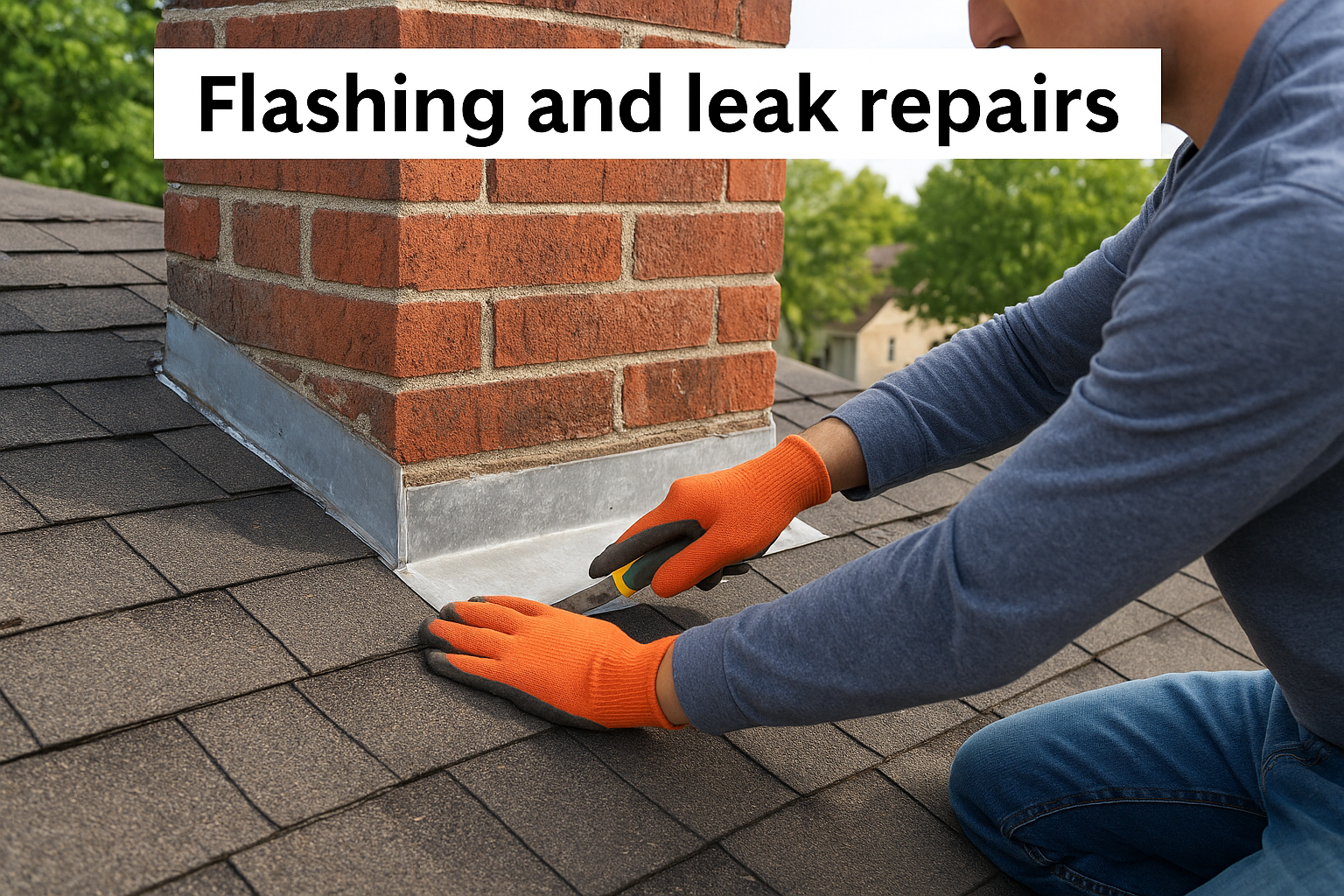
Leak repairs that are not tied to obvious surface damage can be harder to price upfront. Identifying the exact entry point takes diagnostic time, which most contractors bill at their standard labor rate. Expect to pay $300 to $800 for a leak repair once the source is confirmed, plus additional costs if secondary damage turns up during the investigation.
Structural and decking problems
Structural repairs are the most expensive category by a significant margin, and they are often discovered mid-repair rather than identified from the ground. Replacing a section of rotted or sagging decking costs $500 to $2,500, depending on the size of the affected area and the accessibility of the damage. Fascia and soffit repairs typically run $600 to $2,000 when combined with related surface work.
| Problem Type | Typical Cost Range |
|---|---|
| Shingle replacement (small area) | $150 – $500 |
| Shingle replacement (large section) | $1,000 – $2,500 |
| Flashing repair or replacement | $200 – $600 |
| Leak diagnosis and repair | $300 – $800 |
| Decking or structural repair | $500 – $2,500 |
| Fascia and soffit repair | $600 – $2,000 |
Roof repair cost by roof material
The material covering your roof directly determines how much does roof repair cost for your specific home. Labor rates for working with specialty materials run higher than those for standard asphalt, and replacement materials themselves vary widely in price per square foot. Two homes with the same visible damage can receive quotes that differ by hundreds of dollars simply because they are covered in different materials.
Asphalt shingles
Asphalt shingles cover roughly 80 percent of residential roofs in the United States, which is one reason repair costs for them tend to be the most competitive. Contractors work with asphalt constantly, materials are easy to source locally, and the installation process is well understood. Repairs on an asphalt shingle roof typically run $150 to $600 for moderate damage, making them the most affordable material category to fix.
The grade of shingle also matters. Three-tab shingles are cheaper to repair than architectural or premium laminate shingles because they cost less per square and go down faster. If your roof uses a higher-end product, expect material costs to push your repair total noticeably higher than baseline estimates for standard asphalt.
Metal, tile, and flat roofing
Metal roofing repairs require specialized labor because seams, panels, and fasteners all need to be matched precisely to avoid creating new leak points. A small patch or re-sealing job on a metal roof runs $300 to $1,500, depending on whether the contractor needs to replace entire panels or simply reseal seams and fasteners. Standing seam metal roofs cost more to repair than corrugated or exposed-fastener systems because the panel alignment demands more time.
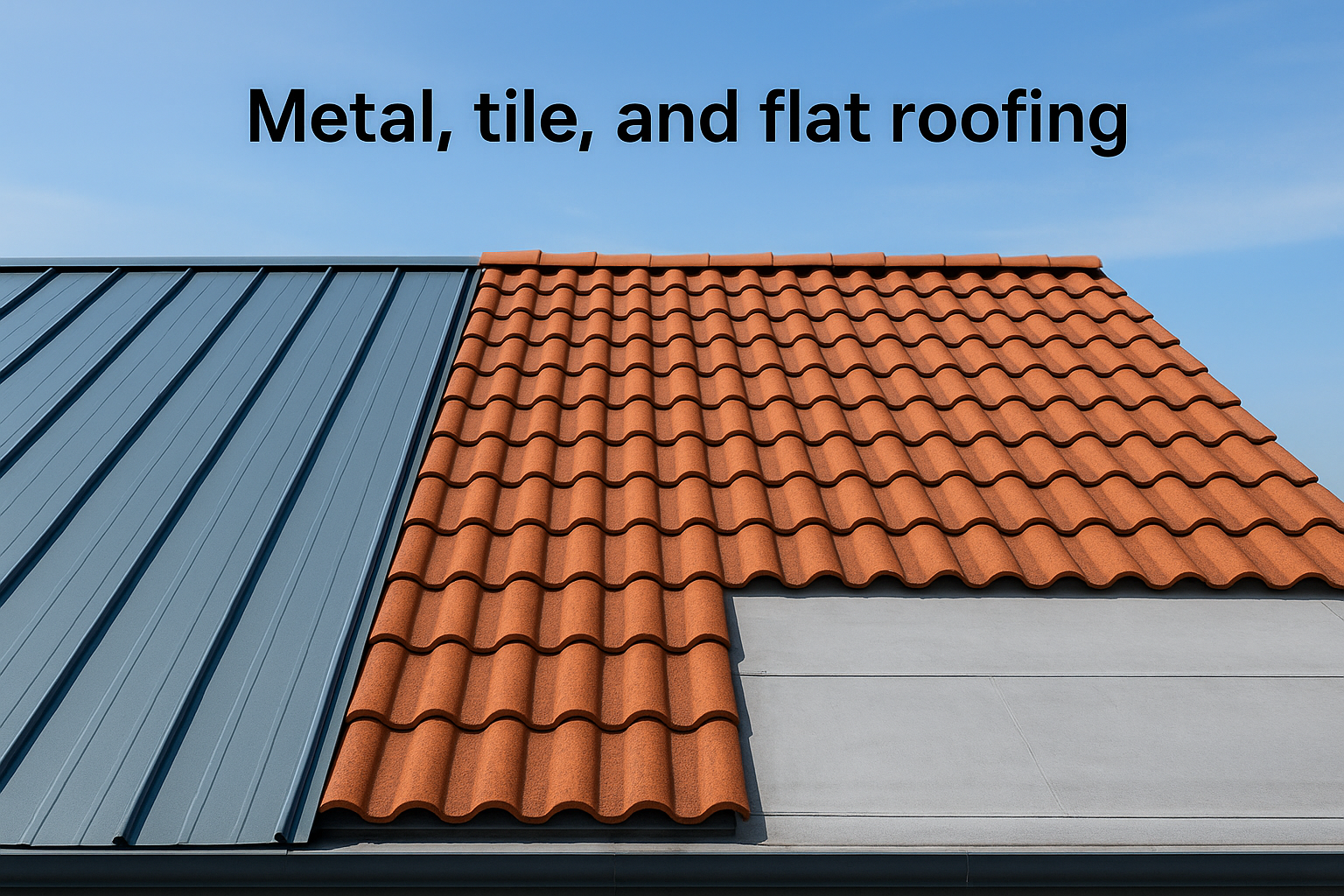
Tile roofs, whether clay or concrete, are among the most expensive to repair on a per-square basis. Individual tiles crack or shift more easily than shingles during weather events, and sourcing matching tiles for an older roof can be a project in itself. Expect repair costs in the $500 to $2,500 range depending on how many tiles are affected and whether the underlayment beneath them needs attention.
If your tile roof is more than 10 years old, have a contractor check the underlayment condition during any tile replacement, since the underlayment often wears out before the tiles do.
Flat roofing systems, common on commercial properties, use TPO, PVC, or rubber (EPDM) membranes that each carry different repair costs. Small patch repairs on a flat roof run $250 to $750, while resealing seams or addressing ponding water problems can push costs to $1,500 or more depending on the size of the affected area.
How roof size, pitch, and access affect price
Beyond materials and damage type, the physical characteristics of your roof drive how long a job takes and how many materials it consumes. When you are trying to figure out how much does roof repair cost for your specific home, accounting for size, pitch, and access gives you a more realistic number before a contractor ever sets foot on your property.
Roof size and square footage
Roofing contractors price work in squares, where one square equals 100 square feet of roof surface. A repair that covers two or three squares costs proportionally less per square than one stretching across eight or ten, because the setup and breakdown time stays the same regardless of area. Material costs scale directly with the number of squares affected, so even a modest expansion in the repair zone can add several hundred dollars to your final bill.
Larger homes naturally carry more roof surface, meaning the same percentage of damage translates to a bigger absolute repair area than it would on a smaller home. A storm that damages 15 percent of a 1,200-square-foot roof costs less to fix than the same percentage damage on a 3,000-square-foot roof, simply because more material and more labor hours are involved.
Roof pitch and slope
Steeper roofs cost more to repair because they require additional safety equipment, slower movement across the surface, and more time per square than a low-slope roof. Contractors calculate pitch in rise-over-run units, and roofs above a 6:12 pitch typically trigger a steep-slope surcharge that adds 20 to 50 percent to the base labor cost.
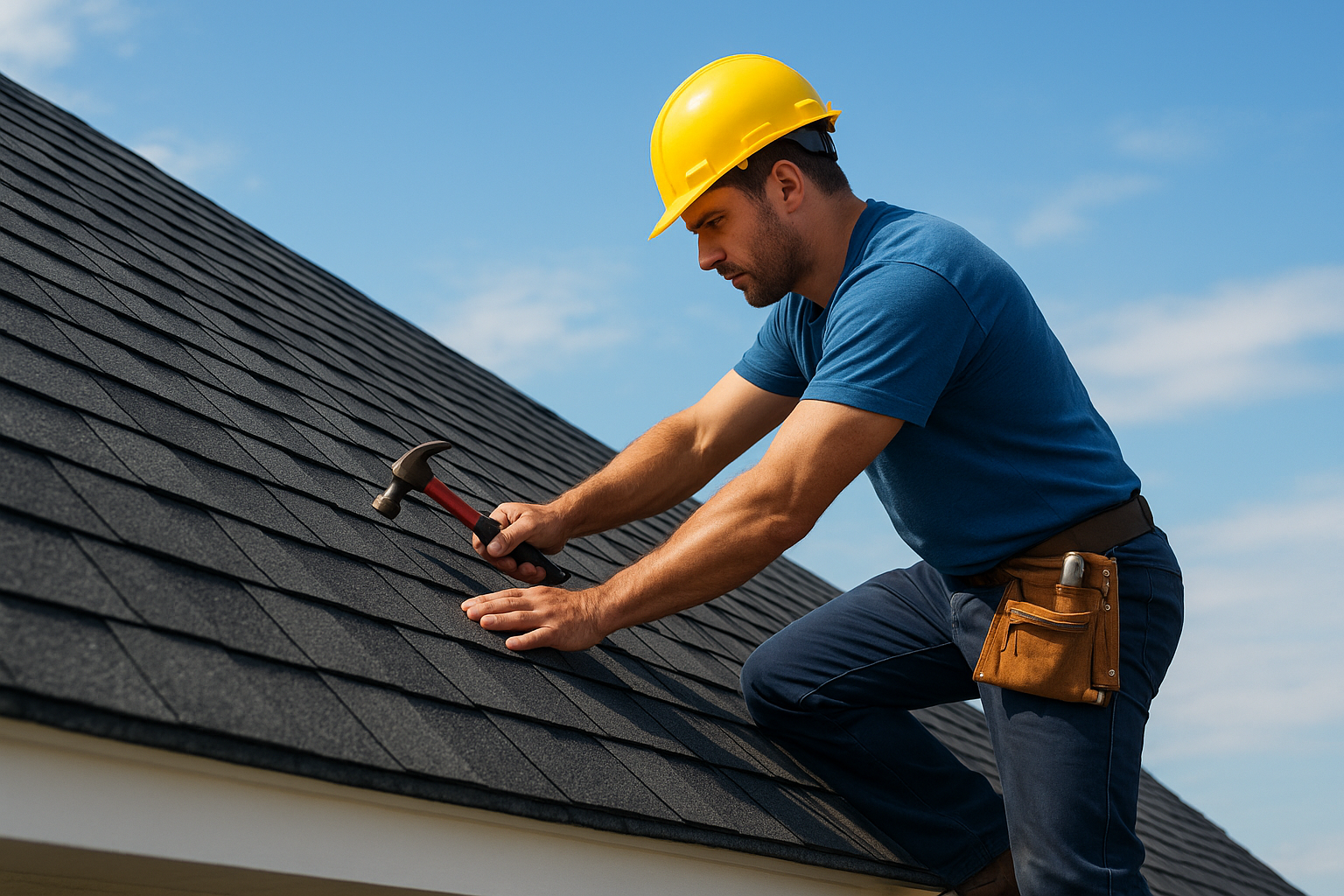
A roof with a 9:12 or 12:12 pitch can easily add $300 to $800 to a standard repair job compared to the same scope of work on a flat or low-slope surface.
Your roof’s pitch also affects how quickly a crew can move materials into position and reposition themselves safely between work areas. That reduced efficiency means more billable hours for the same square footage covered, which is why two homes with identical damage levels can come back with noticeably different quotes when one has a dramatically steeper slope.
Physical access challenges
How easily a crew can reach your roof affects the time it takes to get materials up and waste down, and that time shows up directly in your bill. Multi-story homes cost more to repair than single-story ones because ladders need to be longer and materials require more effort to carry up. Properties with limited driveway space, nearby power lines, or dense landscaping blocking equipment access can add $150 to $400 to any repair job, since the crew works less efficiently navigating those obstacles.
Extra line items that raise the bill
A repair quote rarely tells the full story upfront. Many homeowners receive an initial estimate that looks manageable, then watch the final invoice climb once work begins and additional costs surface. Knowing what those line items are before you sign anything helps you budget more accurately and ask better questions when a contractor hands you a proposal. When you are trying to pin down how much does roof repair cost for your home, these extras can add $300 to $1,500 or more to a job that seemed straightforward at first glance.
Permits and inspections
Most municipalities require a permit for roofing work that goes beyond simple shingle replacement, especially when structural components like decking or rafters are involved. Permit costs vary widely by location, typically running $75 to $500 depending on the scope of work and your local building department’s fee schedule. Your contractor should pull the permit on your behalf and include it in the quote, but not every contractor volunteers that line item upfront, so ask directly whether permits are included before you compare bids.
Required inspections that follow permitted work also add time to a project, which occasionally means paying a crew to return to the job site after an inspector signs off rather than completing the job in a single visit. That return trip may carry an additional labor charge depending on how your contractor structures their billing.
Always confirm that your contractor pulls the required permits, since unpermitted roofing work can create problems when you sell your home or file an insurance claim.
Debris removal and material disposal
Tearing off old shingles and damaged materials generates significant waste, and hauling that debris to a disposal facility is not always included in a base repair quote. Some contractors bundle disposal into their pricing as a standard line item, while others bill it separately at $100 to $400 depending on the volume of material removed. On a larger repair involving decking replacement or a wide shingle tear-off, that disposal cost can climb higher.
Renting a dumpster for debris, when a contractor uses one, may also appear as a separate charge on your invoice rather than being absorbed into overhead. Ask your contractor whether waste removal is included in their quote before work starts.
Upgrades recommended mid-repair
Contractors frequently identify opportunities to improve related components while they already have access to a section of your roof. Replacing an aging vent pipe boot, adding ice and water shield along vulnerable eaves, or upgrading attic ventilation are common suggestions. Each upgrade carries legitimate long-term value, but they also add material and labor costs that were not in the original estimate, so evaluate each recommendation on its own merit before agreeing to additional work.
Repair vs replacement: when each makes sense
Understanding how much does roof repair cost only gets you halfway to the right decision. The more important question is whether a repair actually solves your problem or whether you are putting money into a roof that needs to come down entirely within the next few years. Getting that call wrong in either direction costs you money, so the decision deserves careful thought before you authorize any work.
When repair is the right call
Repair makes financial sense when the damage is isolated and your roof still has meaningful life remaining. If your roof is under 15 years old, structurally sound across most of its surface, and the problem traces back to a specific event like a windstorm or a failed flashing seal, a targeted repair protects your home without committing to the much larger expense of a full replacement. A contractor who finds damage concentrated in one or two areas, with the surrounding material in good condition, is describing a repair situation.
A general industry guideline worth knowing: if a repair costs more than 30 percent of what a full replacement would run, replacement often delivers better long-term value.
Age relative to your roof’s rated lifespan is the clearest signal a contractor will use to steer you toward one option or the other. Asphalt shingles typically carry a 20 to 30 year lifespan depending on grade, and a roof inside the first half of that window is almost always a repair candidate unless the underlying structure is compromised.
When replacement makes more sense
Replacement becomes the smarter investment when a roof is old, widespread in its damage, or showing signs of systemic failure. A roof within five years of its expected end of life that needs a major repair is a candidate for full replacement, because additional problems are likely to surface soon and each repair compounds your total spending without extending the roof’s useful life. Multiple leak points across different areas of the roof tell a similar story.
The cost comparison between repair and replacement should also account for energy performance and code compliance. Older roofs often lack modern underlayment, proper ventilation, and current code requirements that a new installation would include automatically. When your repair quote climbs above $3,000 and your roof is past the 15-year mark, getting a full replacement bid alongside the repair estimate gives you the information you need to make a genuinely informed decision rather than defaulting to the lower upfront number.
Insurance and storm damage claims
Storm damage repairs fall into a different financial category than standard wear-and-tear fixes, and understanding how your homeowner’s insurance policy handles roof damage can dramatically change how much does roof repair cost out of your own pocket. Filing a claim correctly and documenting damage thoroughly before any contractor touches your roof determines whether your insurer covers the bulk of the repair or leaves you holding a bill you were not expecting.
What your homeowner’s policy typically covers
Most standard homeowner’s insurance policies cover sudden, accidental damage caused by wind, hail, falling trees, and similar storm events. What they typically exclude is damage that results from neglect or gradual deterioration, so a roof that has been slowly failing for years before a storm hits may not qualify for a full claim payout. Your insurer will send an adjuster to assess the damage, and that adjuster’s findings directly determine how much your policy pays versus how much falls to your deductible.
Document every visible area of damage with photos and video before a contractor starts any work, since evidence collected after repairs begin carries far less weight with an insurance adjuster.
Two terms you need to understand before filing are actual cash value (ACV) and replacement cost value (RCV). An ACV policy pays out the depreciated value of your damaged roof, meaning an older roof receives a lower payout than a newer one for the same damage. An RCV policy covers what it actually costs to repair or replace the roof at current material and labor prices, which is almost always the better outcome for you as a homeowner.
How to file a storm damage claim effectively
Filing promptly after a storm matters more than most homeowners realize. Most policies include a window for reporting storm damage, and waiting too long can give your insurer grounds to reduce or deny your claim on procedural grounds. Contact your insurance company within 24 to 48 hours of identifying damage, even if you have not yet spoken with a contractor.
Getting a professional inspection before the adjuster visits gives you independent documentation to support your claim. An experienced roofing contractor can identify hail impacts, wind-lifted shingles, and compromised flashing that a non-specialist adjuster might miss or undervalue. At Sunflowers Energy LLC, we walk homeowners through the insurance claim process directly, attend adjuster visits when needed, and make sure the scope of covered repairs reflects the actual damage rather than a minimum payout.
How to get an accurate roof repair quote
Getting a number you can actually trust requires more than calling one contractor and accepting what they say. The quality of a quote depends almost entirely on what information gets exchanged during the estimate process, and most homeowners leave money on the table simply because they do not know what to ask. Whether you are dealing with minor shingle damage or a larger structural issue, following a consistent process gives you a reliable answer to how much does roof repair cost for your specific situation.
Get multiple bids, not just one
Three bids is the standard recommendation for any roofing job, and for good reason. A single quote gives you no frame of reference, and it is nearly impossible to know whether you are looking at a fair price or an inflated one without something to compare it against. Collecting bids from three different contractors shows you where the local market sits and flags any outliers on either end of the range.
When bids differ by more than 20 percent for the same scope of work, ask each contractor to walk you through their pricing line by line rather than simply choosing the lowest number.
When you request quotes, give every contractor identical information about the damage so you are comparing apples to apples. If one contractor prices a larger scope than another, the bids reflect different jobs, not different rates, and that distinction changes how you evaluate them.
Ask the right questions before signing
A detailed quote protects you from surprise charges once work begins. Before you authorize any repair, confirm the following with your contractor:
- Is debris removal and disposal included in the price?
- Are permits required for this job, and who pulls them?
- What warranty covers the labor, and for how long?
- Will you receive a written scope of work before the crew starts?
- How does the contractor handle additional damage found mid-repair?
Written answers to these questions eliminate the most common sources of billing disputes that homeowners run into after a project wraps up.
Red flags to watch for
A contractor who pressures you to sign the same day they inspect your roof is worth scrutinizing carefully. Legitimate contractors expect homeowners to review quotes and collect competing bids before committing. High-pressure tactics, requests for full payment upfront, and vague line items in a written estimate are all signals worth taking seriously before you hand over a deposit.
Verify that any contractor you hire carries current liability insurance and workers’ compensation coverage before work begins. Ask for a certificate of insurance directly, since a claim filed against an uninsured contractor can leave you financially responsible for injuries or property damage that occur on your property.
Wrap up and plan your repair
Figuring out how much does roof repair cost comes down to knowing your specific variables: damage type, roof material, pitch, age, and local labor rates. The national average sits around $1,050, but your actual number depends on what a contractor finds once they get on your roof. Small repairs stay manageable when you catch problems early, while deferred maintenance turns affordable fixes into expensive structural jobs.
Your best move right now is to get an accurate inspection before minor damage becomes a larger bill. Document any visible damage with photos, collect at least three bids from licensed contractors, and ask each one to walk through their pricing in writing before you commit. If a recent storm hit your area, acting quickly protects both your home and your insurance claim timeline.
Ready to get a clear picture of your repair scope and cost? Schedule a free roof inspection with Sunflowers Energy LLC and get an honest, no-obligation estimate.

https://shorturl.fm/cdW1W