
Your gutters work hand-in-hand with your roof to protect your home from water damage. When it’s time to replace them, the decision usually comes down to aluminum vs vinyl gutters, two materials that differ significantly in cost, durability, and long-term performance. Picking the wrong one can mean premature replacements, sagging, or water issues that compromise the roof system above it.
At Sunflowers Energy LLC, we see the consequences of poor gutter choices during our roof inspections and repair projects every week. Gutters that fail put fascia boards, soffits, and even foundations at risk, problems that no homeowner wants to deal with twice.
This guide breaks down the pros, cons, costs, and expected lifespan of both aluminum and vinyl gutters. By the end, you’ll have a clear picture of which material fits your climate, budget, and property, so you can make a confident decision the first time around.
Why gutter material choice matters for your home
Gutters have one job: move water off your roof and away from your foundation. But the material they’re made from determines how long they last, how often they need maintenance, and how well they hold up through your local winters and summers. Pick the wrong material for your climate, and you’ll spend more on repairs and replacements than you ever saved going with the cheaper option.
The gutter material you choose today directly affects your roof’s long-term health and your home’s foundation integrity.
How gutters connect to your roof’s health
Your gutters attach directly to your fascia boards, the wooden trim running along the edge of your roofline. When gutters sag, pull away, or overflow because the material has degraded, water backs up under your shingles and rots the fascia. A failed gutter system doesn’t just affect drainage; it puts your entire roof structure at risk.
Understanding the aluminum vs vinyl gutters debate matters here because these two materials age very differently under heat, cold, and UV exposure. One might hold up fine for 20 years in your region while the other starts pulling away from the fascia in five.
What gutter failure actually costs you
When gutters fail prematurely, the damage rarely stops there. Fascia rot, foundation cracks from pooling water, and flooded basements are all common results of a gutter system that gave out too soon. Repair bills for these secondary problems can climb well into the thousands.
Replacing gutters on an average home typically runs $600 to $2,400, depending on material and linear footage. That number jumps significantly when you factor in fascia repairs, wood rot remediation, or water intrusion damage to your walls or foundation.
Vinyl gutters: strengths, weaknesses, best fit
Vinyl gutters come in pre-cut PVC sections that snap together without special tools. They’re the most common choice for budget-focused homeowners who want a low-cost option they can install themselves over a weekend.
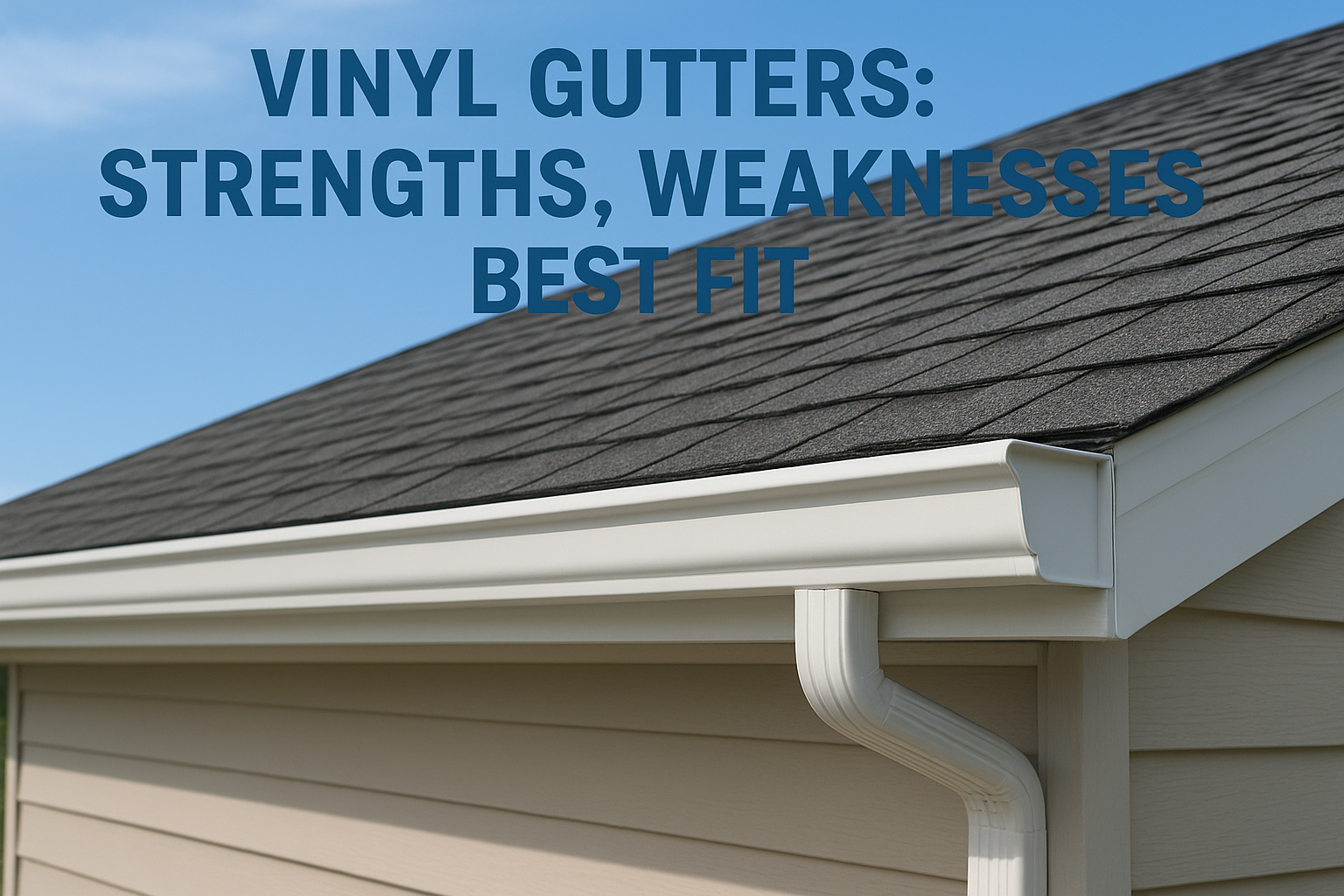
Vinyl’s price advantage is real, but your climate will ultimately determine how long those savings actually hold up.
What vinyl does well
Upfront cost is vinyl’s main appeal, typically running $3 to $5 per linear foot installed. Vinyl won’t rust or corrode, and its tool-free snap-together design makes self-installation straightforward for most homeowners.
In mild, temperate climates, vinyl reliably lasts 10 to 20 years with minimal upkeep. You skip the contractor fee and still get solid performance as long as your region doesn’t push temperature extremes in either direction.
Where vinyl falls short and who it suits best
Comparing aluminum vs vinyl gutters, vinyl’s core weakness is temperature sensitivity. Extreme cold makes it brittle and prone to cracking, while summer heat causes it to warp and sag away from your fascia boards.
Vinyl’s sectional joints also separate over time, creating leak points along your roofline. This material suits homeowners in mild southern climates with moderate rainfall and no heavy snow or ice loads.
Aluminum gutters: strengths, weaknesses, best fit
Aluminum gutters are the industry standard across most of the country, and professional contractors prefer them for good reason. They come in seamless runs cut to match your exact roofline, which eliminates the joint-leak problem that plagues sectional vinyl installations. Most gutter contractors work primarily with aluminum because it performs reliably across a wider range of conditions.
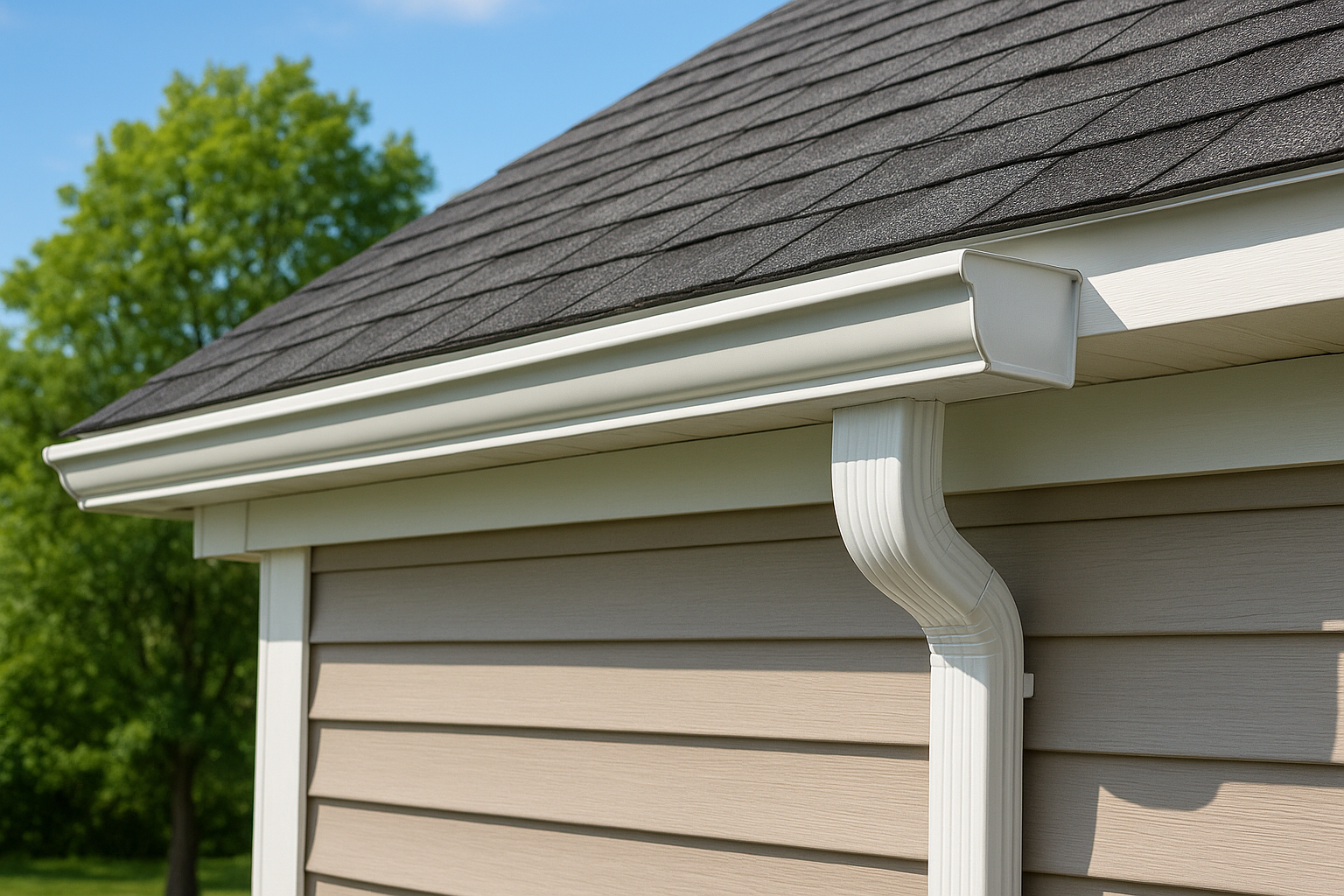
What aluminum does well
Durability is aluminum’s defining advantage. A properly installed aluminum gutter system lasts 20 to 30 years and holds its shape through temperature swings, heavy snow loads, and repeated freeze-thaw cycles. In the aluminum vs vinyl gutters comparison, aluminum wins on longevity in virtually every climate outside the mildest coastal zones.
Seamless aluminum gutters eliminate most of the leak points that cause fascia rot and water intrusion along your roofline.
Where aluminum falls short and who it suits best
Aluminum costs more upfront, typically $6 to $12 per linear foot installed, and professional installation is usually required since seamless sections are cut on-site with specialized equipment. This material suits homeowners who want a long-lasting, low-maintenance system that handles weather extremes without early failure.
A few trade-offs to keep in mind:
- Aluminum can dent from hail or falling branches
- Requires a contractor with seamless gutter equipment
- Higher upfront cost compared to vinyl
Cost and value: upfront price vs lifetime cost
The price difference between aluminum and vinyl gutters is real, but focusing only on the install cost can lead you to a more expensive decision over time. Your total cost of ownership depends on how long each material lasts in your climate and how much you’ll spend on repairs and replacements along the way.
Upfront installation costs
Vinyl runs $3 to $5 per linear foot installed, making it the cheaper starting point. Aluminum typically costs $6 to $12 per linear foot because seamless installation requires professional on-site fabrication with specialized equipment.
| Material | Installed cost per linear foot |
|---|---|
| Vinyl | $3-$5 |
| Aluminum | $6-$12 |
Long-term value over time
When you compare aluminum vs vinyl gutters on lifetime cost, aluminum often wins. Vinyl may need replacement in 10 to 15 years in harsh climates, while aluminum regularly delivers 20 to 30 years of solid performance.
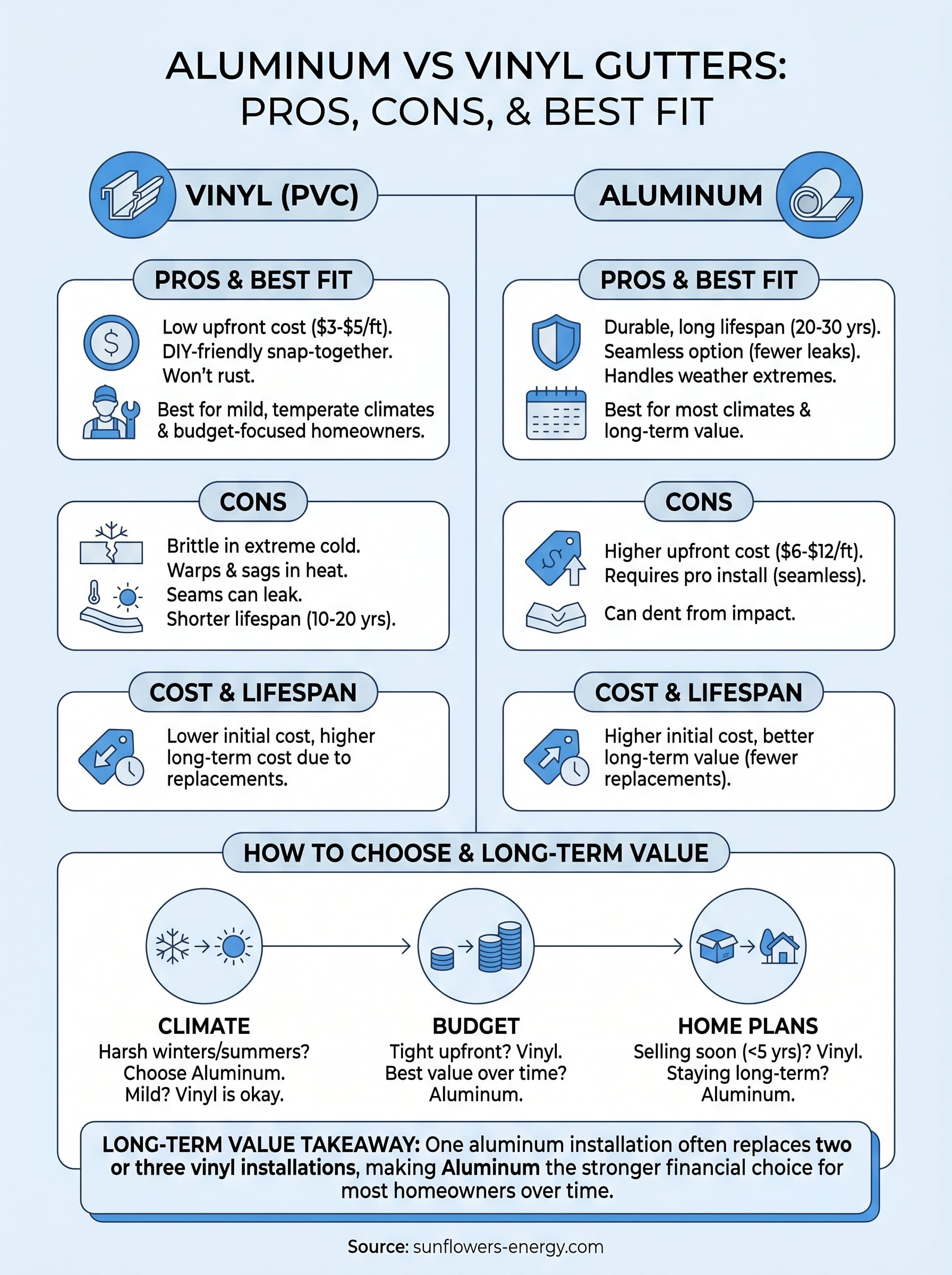
One aluminum installation frequently replaces two or three vinyl installations, making it the stronger long-term financial choice for most homeowners.
Replacing gutters twice adds up fast once you include labor costs each time. For homeowners dealing with cold winters or hot summers, aluminum delivers better value per year of service despite the higher install price.
How to choose between aluminum and vinyl gutters
The right call in the aluminum vs vinyl gutters debate depends on three factors: your climate, your budget, and how long you plan to stay in your home. Neither material is universally better, but matching the right option to your specific situation will save you money and headaches down the road.
Consider your climate first
If your region experiences cold winters, heavy snow loads, or regular freeze-thaw cycles, aluminum is the right material. Vinyl becomes brittle and cracks under those conditions. Mild climates with moderate rainfall are the sweet spot where vinyl performs reliably and saves you real money at install time.
Use this quick guide:
- Cold winters or heavy snow: choose aluminum
- Mild climate, no temperature extremes: vinyl works well
- Hot summers with strong UV exposure: lean toward aluminum
Your climate is the single biggest factor in determining which gutter material will actually last on your home.
Match your budget to your long-term plan
Planning to sell your home within five years in a mild climate? Vinyl’s lower cost makes sense. Staying long-term means the higher upfront cost of aluminum pays off through fewer replacements over the life of your home.
Two vinyl replacements often cost more than one aluminum installation once you factor in labor both times. Run the numbers for your specific situation before defaulting to the cheaper option.
Next steps for protecting your roof and foundation
The aluminum vs vinyl gutters decision comes down to matching the right material to your climate, budget, and how long you plan to stay in your home. Aluminum wins in harsher climates and for homeowners who want a long-term solution with minimal replacements. Vinyl makes sense in mild regions where temperature extremes won’t shorten its lifespan.
Your gutters and your roof work as a single system. A sagging or leaking gutter puts your fascia, soffits, and foundation at direct risk regardless of which material you choose. Getting both evaluated together saves you from discovering one problem after you’ve already paid to fix the other.
If your gutters or roof need attention, the best next step is a professional inspection before minor issues become expensive repairs. Schedule a free on-site roof and gutter inspection with Sunflowers Energy LLC to get an honest assessment and a no-obligation quote for your home.

https://shorturl.fm/ln5eO
https://shorturl.fm/vnsAd