
Choosing between composite shingles vs architectural shingles comes down to what matters most to you, upfront cost, how long the roof lasts, or how little maintenance you want to deal with over the years. Both options sit above basic 3-tab shingles in quality and appearance, but they’re built from fundamentally different materials, which means they perform differently on your roof. Understanding those differences before you commit can save you thousands of dollars and decades of headaches.
At Sunflowers Energy LLC, we install both types of shingles on residential roofs across a wide range of budgets and property styles. That hands-on experience has shown us exactly where each material shines and where it falls short. We’ve seen homeowners overpay for features they didn’t need, and we’ve seen others go cheap only to replace their roof far sooner than expected. The right choice depends on your home, your climate, and your long-term plans for the property.
This article breaks down the real cost differences, expected lifespans, durability under weather stress, and overall value of composite and architectural shingles. By the end, you’ll have the clarity you need to pick the roofing material that actually fits your situation, not just the one with the best marketing.
Why these shingle terms confuse homeowners
The confusion starts with how the roofing industry uses language. Manufacturers, contractors, and retailers often apply different labels to the same product, or use the same label to describe completely different products. When you start researching composite shingles vs architectural shingles online, you quickly run into overlapping terminology that makes it hard to know whether you’re comparing two distinct materials or two names for the same thing. That ambiguity is not your fault – it comes from how roofing materials have evolved and how inconsistently the industry talks about them.
The "composite" label covers multiple products
Composite is one of the most overused words in roofing. At its core, a composite shingle is any shingle made by combining more than one material, and that definition is broad enough to cover asphalt shingles, fiberglass shingles, and high-end synthetic shingles made from rubber, plastic, or polymer blends. Some manufacturers use "composite" specifically to describe their premium synthetic products, while others apply the term as a catch-all category that includes standard asphalt options. This means when a contractor says "composite shingle," they may be referring to a very different product than the one you researched.
If a contractor uses the word "composite" without specifying the base material, always ask for the manufacturer name and full product line before agreeing to anything.
Specifically, the synthetic version of composite shingles – those made from engineered polymers – is what most homeowners mean when they ask about composites. These polymer-based products are designed to mimic the look of wood shake, slate, or clay tile, and they carry a much higher price tag than asphalt-based options. Knowing which type of composite is actually on the table changes the entire cost and lifespan comparison.
Architectural shingles go by several names
Architectural shingles are also called dimensional shingles or laminate shingles, and all three terms refer to the same product. Roofers and suppliers use these names interchangeably, which adds to the confusion when you try to get consistent answers across multiple sources. The product itself is a multi-layer asphalt shingle designed to create a textured, three-dimensional appearance on your roof instead of the flat look of a basic 3-tab shingle.
You’ll also find that architectural shingles are sometimes marketed as a type of composite shingle because they’re made from a combination of fiberglass mat, asphalt, and ceramic granules. That description is technically accurate under the broad definition of composite, but it muddies the water when you’re trying to compare options. Most roofing professionals today use "architectural shingles" to refer specifically to the asphalt laminate product, and "composite shingles" to mean the premium synthetic polymer alternative.
Where the overlap causes real problems
The overlap in terminology creates problems when you’re collecting quotes from multiple contractors. One contractor might quote you for "composite shingles" meaning standard asphalt laminates, while another quotes for "composite shingles" meaning premium synthetic tiles. Without clarification, you could easily be comparing a $12,000 job to a $28,000 job without realizing the materials are entirely different. Both the cost and the expected lifespan vary that dramatically depending on which version of composite is on the table.
Knowing the terminology before you talk to a roofer puts you in a much stronger position. When you ask specifically about the base material and the product line, you get cleaner quotes and make a better-informed decision for your home.
Architectural shingles explained
Architectural shingles are the most widely installed roofing product in the United States, and for good reason. They give your home a textured, layered appearance that looks far more substantial than a basic flat shingle, and they do it at a price point that fits most residential budgets. Understanding what they’re actually made of helps you judge whether they deliver the performance your home needs.
What they’re made of and how they’re built
Architectural shingles consist of multiple layers of asphalt-saturated fiberglass mat bonded together and coated with ceramic granules on the exposed surface. That laminated construction is what separates them from the single-layer 3-tab shingles many older homes still carry. Manufacturers bond two or more layers together during production, which creates the uneven, shadow-casting surface that gives architectural shingles their dimensional look.
The fiberglass core provides structural stability and fire resistance, while the asphalt layers add waterproofing and flexibility. The granules on top protect the asphalt from UV degradation, and the specific granule formulation varies by product line, with premium versions using copper-coated granules to slow algae growth. Each layer in the construction contributes to how long the shingle holds up under heat cycles, rain, and wind.
What you pay and how long they last
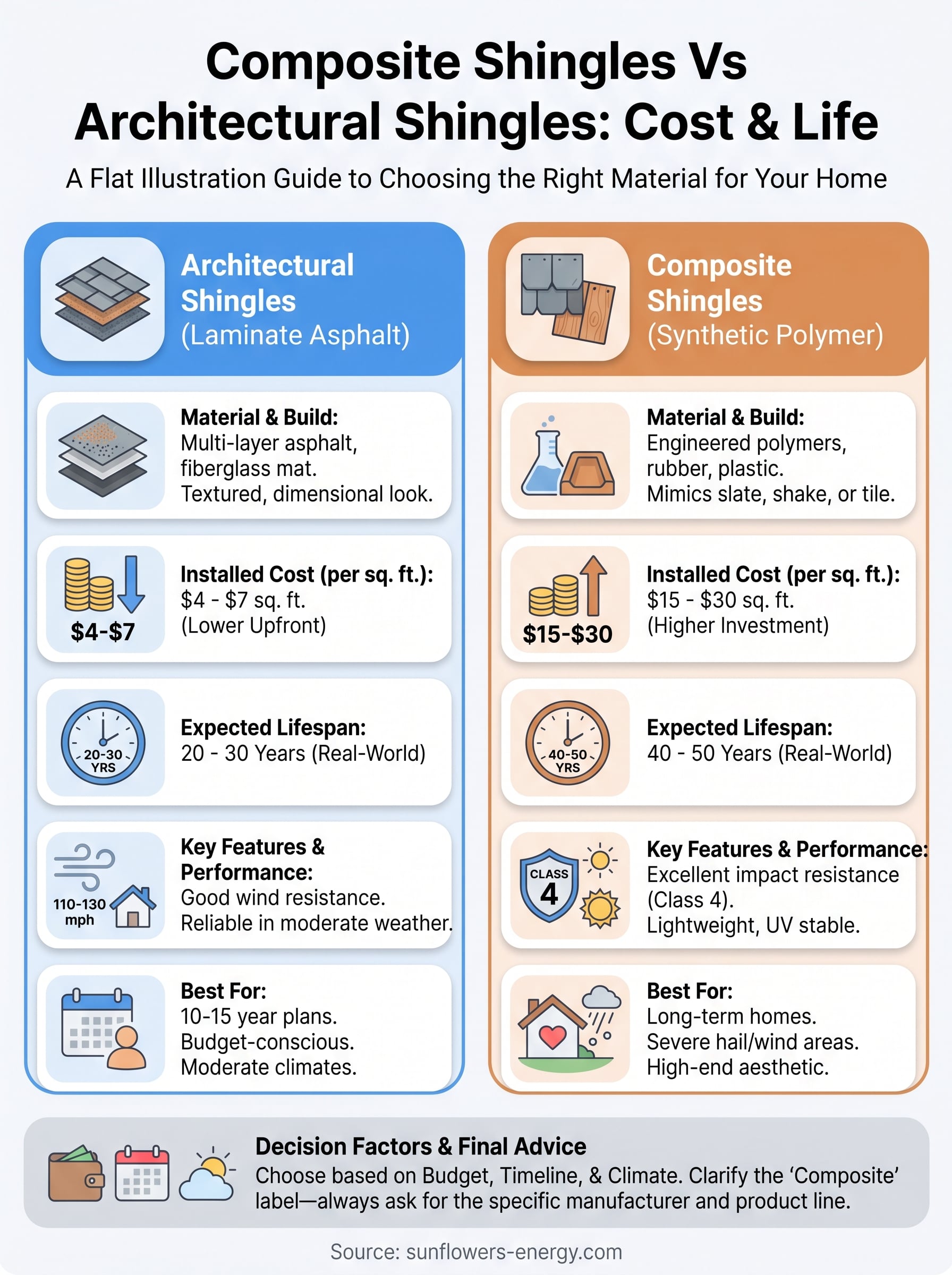
Architectural shingles typically cost between $4 and $7 per square foot installed, which puts a full roof replacement in the $8,000 to $16,000 range for an average-sized home depending on roof complexity, local labor rates, and the specific product line you select. That range makes them significantly more accessible than premium synthetic alternatives, which is why they dominate residential installations across every region of the country.
Architectural shingles carry manufacturer warranties ranging from 25 years to lifetime coverage, but the actual functional lifespan in real-world conditions runs between 20 and 30 years for most climates.
Wind resistance ratings for architectural shingles typically run from 110 mph to 130 mph depending on the product, which handles most storm conditions but falls short of what you’d get from a premium synthetic product. When you compare composite shingles vs architectural shingles on durability, the asphalt laminate option performs well under normal conditions but shows more wear in areas with severe hail, heavy snow loads, or repeated high-wind events. For moderate climates, architectural shingles deliver reliable protection at a cost most homeowners can justify without stretching their budget.
Composite shingles explained
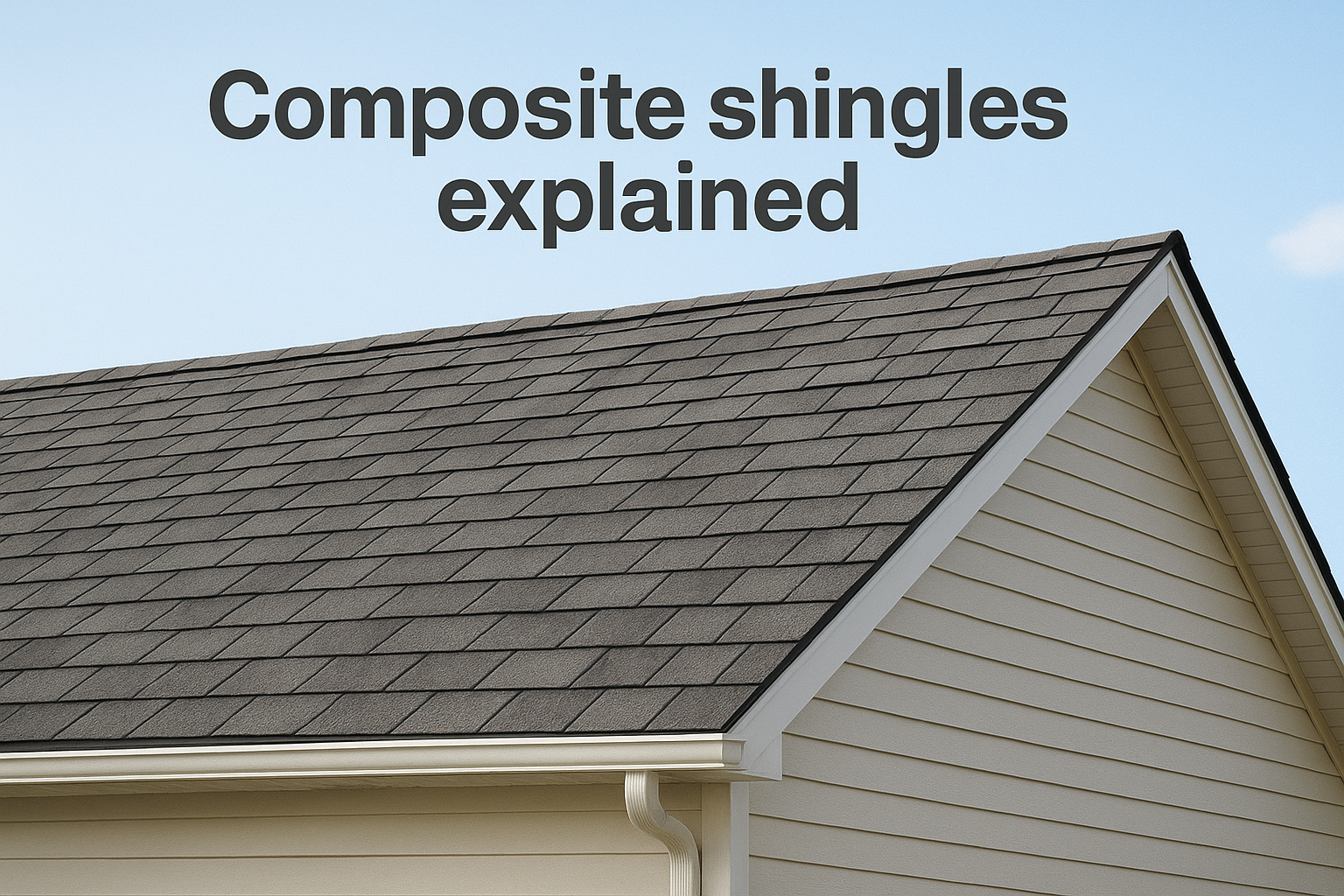
When most homeowners use the term composite shingles today, they’re referring to the synthetic polymer version, not the broad category that also includes asphalt laminates. These shingles are engineered products made from rubber, plastic, or a blend of recycled materials, and manufacturers design them to replicate the visual texture of natural slate, wood shake, or clay tile at a fraction of the installation complexity those materials require. That distinction matters when you’re working through the composite shingles vs architectural shingles comparison, because you’re not just weighing cost differences – you’re comparing fundamentally different material technologies.
What they’re made of and how they’re built
Synthetic composite shingles start with a polymer or rubber base that gets molded under high pressure to produce detailed surface textures. Some manufacturers add recycled content like reclaimed rubber from tires or post-industrial plastic into the mix, which reduces raw material costs and appeals to homeowners focused on sustainability. The result is a shingle that’s lighter than natural slate, more flexible than clay tile, and far more resistant to impact than standard asphalt.
The structural properties of synthetic composites outperform asphalt laminates in several measurable ways:
- Impact resistance: Most premium synthetic shingles carry a Class 4 impact rating, the highest available, which reduces hail damage claims significantly.
- Weight: Synthetic composites weigh far less than natural slate or tile, so your roof deck needs no structural reinforcement.
- UV stability: The polymer base resists UV degradation better than asphalt, which extends color retention over time.
- Freeze-thaw performance: The flexible base material handles repeated freeze-thaw cycles without cracking.
What you pay and how long they last
Premium synthetic composite shingles cost significantly more than architectural shingles, with installed prices typically ranging from $15 to $30 per square foot depending on the brand, profile, and your local labor market. That puts a full roof replacement for an average home between $25,000 and $55,000, which is a substantial upfront investment compared to the asphalt laminate option.
The higher upfront cost reflects a longer expected lifespan: most premium synthetic composites carry 40- to 50-year warranties, with real-world performance in that same range under normal conditions.
Your long-term cost per year of roof life often ends up competitive with architectural shingles when you factor in that longer service window, reduced maintenance, and the potential insurance discounts that come with a Class 4 impact-rated product.
How to choose based on cost and lifespan
The decision between composite shingles vs architectural shingles comes down to three factors: your budget right now, how long you plan to stay in the home, and what your local climate throws at your roof. Neither option is universally better. The right shingle for your home is the one that aligns your upfront investment with your realistic timeline and risk exposure, not the one with the longest warranty or the lowest price tag. Getting that match right is what determines whether you’re getting value or just paying more.
When architectural shingles make the most sense
Architectural shingles earn their place as the dominant residential option because they deliver solid, reliable performance at a cost most budgets can absorb without strain. If you’re planning to sell the home within the next 10 to 15 years, paying a premium for a 50-year synthetic product doesn’t generate a proportional return. Most buyers factor in roof age but won’t pay significantly more for premium materials they can’t easily verify at a showing. A quality architectural shingle install gives you a competitive, presentable roof without over-investing for a future owner.
Climate also tilts the math toward architectural shingles in many regions. If you live in an area with moderate weather, limited hail exposure, and typical seasonal temperature cycles, the performance gap between asphalt laminates and synthetic composites narrows considerably. Architectural shingles in those conditions will easily reach 25 years with basic maintenance, which keeps their cost per year of service genuinely competitive with higher-priced alternatives.
When composite shingles are worth the extra cost
The case for synthetic composites strengthens in specific situations. If you’re staying in your home long-term and your area faces frequent hail, high winds, or extreme temperature swings, the higher upfront cost spreads across a longer service window and reduces the likelihood of repair costs or early replacement. Class 4 impact-rated products, which most premium synthetic shingles carry, can also qualify your home for [meaningful insurance premium discounts](https://sunflowers-energy.com/how-much-does-a-roof-replacement-cost/) that offset a portion of the price difference over time.
Check with your insurance provider before purchasing, because a Class 4 impact rating can reduce your annual premium by 20% to 30% in hail-prone states.
Homeowners who want the visual profile of slate or wood shake without the structural requirements or installation complexity also find that composite shingles justify their cost on aesthetic grounds alone. If curb appeal and long-term durability are both priorities, the premium synthetic option delivers on both counts.
What to ask your roofer before you buy
Walking into a roofing conversation without the right questions puts you at a disadvantage. The composite shingles vs architectural shingles decision only makes sense once you have clear answers about what’s actually being proposed, how it’s being installed, and what happens if something goes wrong after the crew leaves.
Clarify the exact product being quoted
Your first move is to nail down the specific product. Ask the contractor for the manufacturer name, product line, and material base before you agree to anything. This cuts through the terminology confusion covered earlier in this article. A roofer should be able to hand you a product spec sheet without hesitation.
If a contractor can’t tell you the manufacturer name and impact rating of the shingles they’re proposing, treat that as a red flag.
You also want to confirm the shingle’s wind resistance rating and impact resistance classification. These ratings directly affect how your roof performs in storms and whether you qualify for insurance premium discounts. A Class 4 impact rating is the highest available, and not every shingle carries it.
Ask about warranties and what they actually cover
Manufacturer warranties and workmanship warranties are two separate things, and most homeowners don’t realize that until they need to file a claim. The manufacturer warranty covers defects in the shingle itself, while the workmanship warranty covers installation errors made by the crew. Both matter, and both should come with clear documentation before you sign anything.
Ask specifically how long the workmanship warranty lasts and whether it transfers if you sell the home. A transferable warranty adds measurable value to your property and can be a legitimate selling point when the time comes.
Ask how your roof deck and ventilation will be handled
Proper ventilation is one of the most overlooked factors in roof longevity, and it applies to both shingle types. Poor attic ventilation traps heat and moisture, which degrades shingles from underneath regardless of how premium the material is. Ask your contractor to walk you through their ventilation plan and whether they’ll inspect the decking before installation begins.
Your contractor should also tell you whether any decking boards will be replaced and how that cost gets handled, either as a flat inclusion or as a per-board add-on. Knowing this upfront keeps your final invoice from coming in higher than the original quote.
Next steps for your roof
You now have the core framework to make a confident decision on the composite shingles vs architectural shingles debate. Architectural shingles fit most budgets and deliver reliable performance across moderate climates, while synthetic composites earn their higher price in long-term homes, hail-prone regions, and situations where Class 4 impact ratings translate into real insurance savings. Neither option is the automatic right answer, but matching the material to your timeline and climate makes the difference between a roof that pays off and one that costs more than it should.
Your next move is a proper assessment of your current roof before any purchase decision. Sunflowers Energy LLC offers free on-site inspections so you can understand exactly what your roof needs before committing to a material or a budget. Book your inspection today with the team at Sunflowers Energy LLC and get a clear, no-obligation quote built around your specific home.