
Why Choose Solar Panels in 2026: Cut Costs by 70% & Boost Value
Rising home energy costs have pushed U.S. homeowners to rethink how they power their lives. Electricity bills climbed steadily over the past decade, straining budgets and sparking interest in smarter alternatives. Solar panels convert sunlight into clean electricity, slashing reliance on the grid while reducing monthly expenses. This guide unpacks why homeowners across America embrace solar, from financial savings to environmental impact, and what you need to know before making the switch.
Table of Contents
- How Solar Panels Cut Energy Costs for Homeowners
- Environmental Benefits: Reducing Carbon Footprint with Solar
- Common Misconceptions and Financial Realities About Solar Panels
- How Technology and Durability Make Solar Panels a Reliable Choice
- Solar Panels and Home Value: What Homeowners Need to Know
- Choosing the Right Solar Panel System for Your Home
- Explore Solar Solutions with Sunflowers Energy LLC
- Frequently Asked Questions About Choosing Solar Panels
Key Takeaways
| Point | Details |
|---|---|
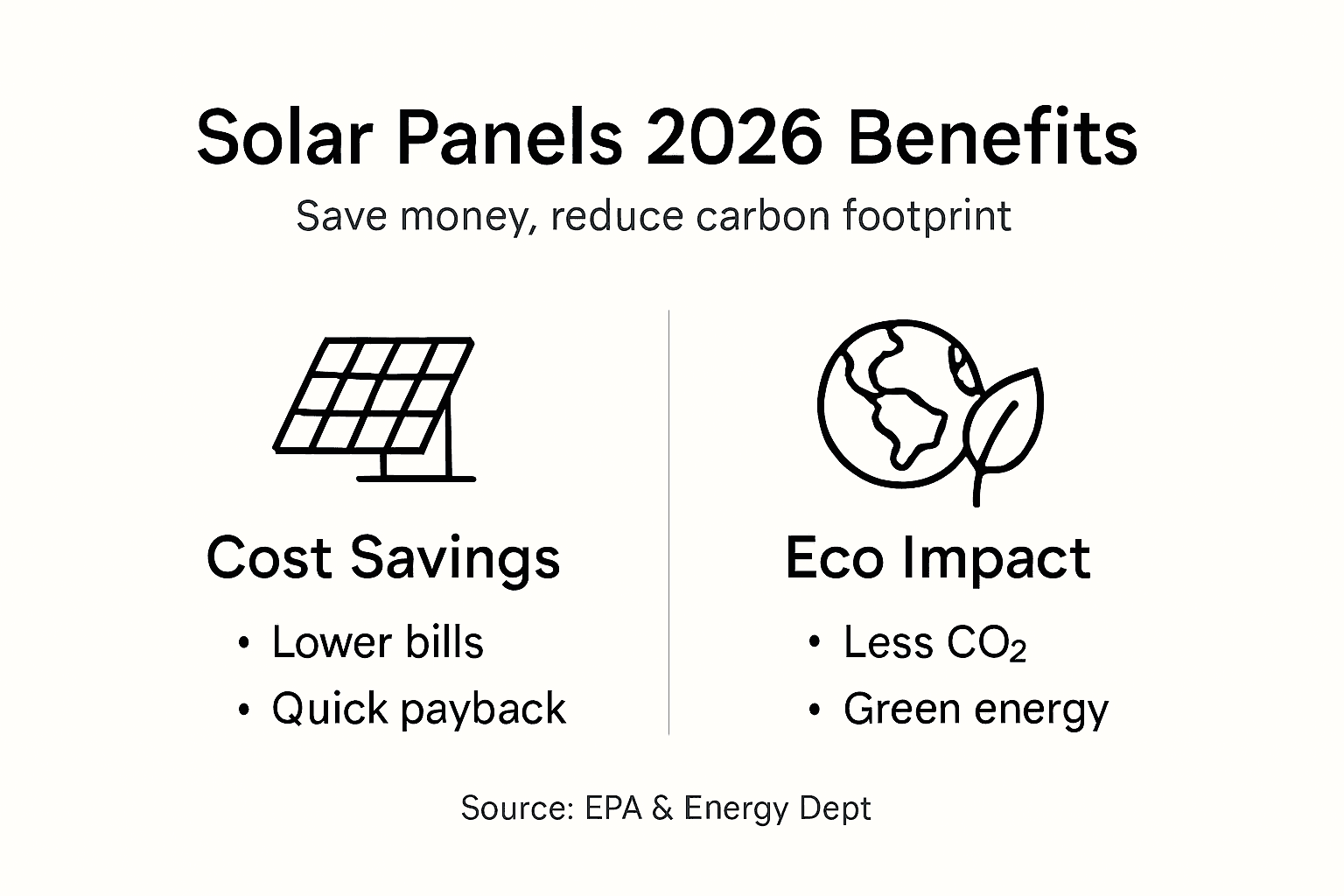
| Financial Savings | Solar panels reduce electricity bills by 50% to 70%, with payback periods of 6 to 9 years. |
| Environmental Impact | Installing solar cuts carbon emissions by 3 to 5 tons annually, equal to planting over 100 trees each year. |
| Technology Advances | Modern panels deliver 18% to 22% efficiency with warranties ensuring 80%+ performance for 25 to 30 years. |
| Myth Busting | Federal tax credits and state incentives cover 30% to 50% of installation costs, lowering upfront barriers significantly. |
| Property Value Boost | Homes with solar sell for 4.1% more on average and attract buyers faster due to ongoing energy savings. |
How Solar Panels Cut Energy Costs for Homeowners
Solar panels deliver immediate financial relief by generating electricity from sunlight instead of drawing power from utility companies. Residential solar panels reduce average electricity bills by 50% to 70% for U.S. homeowners, translating to thousands saved annually. The average payback period ranges from 6 to 9 years, depending on system size, local electricity rates, and sun exposure.
Federal tax credits and state incentives significantly accelerate returns. Tax credits and incentives can cover 30% to 50% of installation costs, making solar accessible to more families. Net metering programs let you sell excess power back to the grid, further boosting savings. When your panels produce more electricity than you use, the utility company credits your account, lowering future bills.
Key cost-saving strategies include:
- Sizing your system to match actual energy consumption prevents overspending on capacity you don’t need.
- Leveraging federal and state incentives maximizes upfront savings and shortens payback periods.
- Installing net metering captures surplus energy value, turning your home into a mini power plant.
- Monitoring usage patterns helps identify peak demand times and optimize solar generation.
Pro Tip: Run a detailed energy audit before installation to understand your home’s consumption patterns. This data ensures your system size delivers maximum financial returns without overbuilding capacity. Explore proven strategies in this solar energy savings workflow to optimize your investment.
Environmental Benefits: Reducing Carbon Footprint with Solar
Switching to solar power slashes your household’s carbon footprint dramatically. Solar panels reduce 3 to 5 tons of CO2 emissions annually, equivalent to planting over 100 mature trees each year. This reduction stems from replacing fossil fuel-generated electricity with clean, renewable energy produced right on your roof.

Solar installations ease strain on the electrical grid during peak demand hours. When thousands of homes generate their own power, utility companies rely less on carbon-intensive peaker plants that fire up during high-use periods. This collective impact improves grid stability while reducing overall greenhouse gas emissions across communities.
Environmental advantages extend beyond carbon reduction:
- Cutting greenhouse gases slows climate change and improves air quality in your neighborhood.
- Decreasing air pollution from power plants reduces respiratory health risks for vulnerable populations.
- Conserving water resources that conventional power generation requires for cooling processes.
- Promoting sustainable energy adoption encourages broader renewable infrastructure investment.
Solar energy supports the transition from finite fossil fuels to abundant renewable resources. Each kilowatt-hour your panels produce displaces electricity that would otherwise come from coal, natural gas, or oil-fired plants. Over a typical 25-year lifespan, a residential solar system prevents tens of tons of carbon from entering the atmosphere. Learn more about the broader environmental benefits of solar panels for your home and community.
Common Misconceptions and Financial Realities About Solar Panels
Myths about solar costs, maintenance, and performance hold many homeowners back from exploring this technology. Understanding the facts helps you make informed decisions without falling for outdated assumptions that no longer reflect modern solar realities.
Myth 1: Solar panels cost too much upfront. Reality: Federal tax credits and state incentives cover 30% to 50% of installation costs, dramatically lowering financial barriers. Financing options and solar leases eliminate large upfront payments for many families.
Myth 2: Solar systems require expensive ongoing maintenance. Reality: Modern panels need minimal upkeep, typically just occasional cleaning to remove debris and periodic inverter checks. No moving parts mean fewer breakdowns and lower long-term costs.
Myth 3: Cloudy climates render solar ineffective. Reality: Improved technology allows panels to generate electricity even on overcast days. Germany, hardly a sun-drenched nation, leads Europe in solar capacity, proving performance transcends perfect weather.
Solar warranties guarantee over 80% performance for 25 to 30 years, ensuring reliable returns on your investment. Manufacturers stand behind their products because modern panels withstand harsh weather, temperature swings, and decades of exposure without significant degradation.
Steps to verify true solar costs and benefits:
- Request detailed quotes from at least three certified installers to compare pricing and equipment quality.
- Research federal, state, and local incentive programs that apply to your specific location and income level.
- Calculate payback periods using your actual electricity bills and regional sun exposure data.
- Review warranty terms carefully to understand coverage for panels, inverters, and installation workmanship.
Pro Tip: Always check installer certifications and customer reviews before signing contracts. Request multiple quotes and confirm local incentive eligibility to avoid overpaying or missing available savings. Understanding how solar panels work empowers smarter purchasing decisions.
How Technology and Durability Make Solar Panels a Reliable Choice
Solar panel efficiency improvements over the past decade have transformed residential energy generation. Current solar panels achieve efficiencies between 18% and 22%, with cutting-edge models pushing above 23%. This means more electricity from less roof space, maximizing output even on smaller homes.
Monocrystalline panels offer superior efficiency, reaching up to 22%, but cost more per watt than polycrystalline alternatives that typically deliver around 18% efficiency. The choice depends on your budget, available roof space, and energy goals. Monocrystalline panels work better in low-light conditions and occupy less area for equivalent power output.
| Panel Type | Efficiency | Cost | Low-Light Performance | Lifespan |
|---|---|---|---|---|
| Monocrystalline | 20% to 22% | Higher | Excellent | 25+ years |
| Polycrystalline | 18% to 20% | Lower | Good | 25+ years |
Manufacturers back their products with warranties guaranteeing over 80% performance after 25 to 30 years of operation. This confidence reflects rigorous testing and proven durability across millions of installations worldwide. Panels withstand hail, wind, snow loads, and temperature extremes without performance loss.
Maintenance requirements remain minimal throughout system life:
- Clean panels once or twice yearly to remove dust, pollen, and debris that block sunlight.
- Inspect inverters annually to ensure proper conversion of DC power to AC electricity.
- Monitor system output through apps or web portals to catch performance issues early.
Inverters typically need replacement after 10 to 15 years, representing the main ongoing cost beyond cleaning. Modern microinverters attached to individual panels offer better reliability and easier troubleshooting than older central inverter designs. Explore detailed solar panel efficiency comparisons to match technology with your home’s specific needs.
Solar Panels and Home Value: What Homeowners Need to Know
Solar installations deliver financial benefits beyond monthly utility savings by boosting property market value. Homes with solar panels sell for an average of 4.1% more than comparable properties without renewable energy systems. On a $400,000 home, this premium translates to an extra $16,400 at closing.
Solar upgrades attract eco-conscious buyers willing to pay more for homes with lower operating costs and smaller environmental footprints. Real estate listings highlighting solar systems generate more inquiries and showings than properties dependent solely on grid electricity. Buyers recognize ongoing savings and appreciate turnkey sustainability features.
Homes equipped with solar tend to sell faster due to perceived value and reduced monthly expenses for new owners. Multiple competing offers become more common when buyers calculate years of utility savings already built into the purchase. This speed advantage matters in competitive markets where timing affects selling success.
Resale benefits include:
- Increased market price reflecting energy independence and lower operating costs for future owners.
- Faster sales cycles as sustainability-minded buyers prioritize homes with renewable energy systems.
- Appeal to younger demographics who value environmental responsibility and long-term savings.
- Energy cost predictability that protects new owners from rising utility rates over time.
Appraisers now factor solar systems into property valuations, recognizing their contribution to home worth. This shift ensures sellers capture returns on their solar investment when moving. Understanding the solar panels impact on home value helps you evaluate both immediate utility savings and future resale advantages.
Choosing the Right Solar Panel System for Your Home
Selecting the ideal solar system requires assessing your home’s unique energy profile, roof characteristics, and financial goals. Choosing the right solar panel involves evaluating home energy use, panel efficiencies ranging from 18% to 22%, and incentive impacts on payback times. This personalized approach ensures maximum returns and optimal performance.
Step 1: Assess current electricity consumption by reviewing 12 months of utility bills. Identify seasonal patterns, peak usage periods, and total kilowatt-hours consumed annually. This baseline determines system size needed to offset your specific demand.
Step 2: Compare panel types based on efficiency, cost, and space constraints. Monocrystalline panels deliver highest output per square foot, ideal for limited roof area or shaded conditions. Polycrystalline options cost less upfront but require more space for equivalent power generation.
Step 3: Evaluate financial incentives and calculate expected payback periods using local electricity rates and available tax credits. Factor in net metering policies that credit excess generation back to your account. Some states offer additional rebates beyond federal incentives.
| Panel Type | Efficiency | Cost Range | Best For | Expected Lifespan |
|---|---|---|---|---|
| Monocrystalline | 20% to 22% | $1.00 to $1.50/watt | Limited space, partial shade | 25 to 30 years |
| Polycrystalline | 18% to 20% | $0.70 to $1.00/watt | Budget-conscious, ample roof area | 25 to 30 years |
Pro Tip: Homes in less sunny or shaded areas benefit most from high-efficiency monocrystalline panels paired with microinverters. This combination maximizes output when conditions aren’t perfect, delivering better returns than cheaper alternatives that underperform in challenging environments.
Four steps to select your solar system:
- Conduct energy audit analyzing 12 months of usage to establish accurate system sizing requirements.
- Research federal, state, and utility incentives available in your area to calculate true net costs.
- Compare panel technologies, inverter types, and warranty terms from multiple manufacturers and installers.
- Obtain at least three detailed quotes including equipment specs, installation timelines, and financing options.
Roof orientation, pitch, and shading patterns significantly affect solar performance. South-facing roofs with minimal shade deliver best results in the U.S., but east and west orientations still generate substantial power. Professional site assessments identify optimal panel placement and potential obstacles. Consider energy efficiency improvements like window upgrades that reduce consumption before sizing your system.
Explore Solar Solutions with Sunflowers Energy LLC
Now that you understand the compelling reasons homeowners choose solar panels, exploring professional installation options makes your transition seamless. Sunflowers Energy offers various residential solar system types tailored to different home sizes, energy needs, and budget constraints.
Our team guides you through every decision, from initial energy audits to final system activation. Detailed solar energy efficiency guides help maximize your savings by optimizing panel placement, inverter selection, and consumption patterns. We handle permits, utility coordination, and incentive applications so you focus on enjoying lower bills.
Professional installation ensures your system performs reliably for decades. Our proven solar installation process includes structural assessments, electrical upgrades when needed, and comprehensive testing before handoff. Free onsite inspections evaluate your property’s solar potential without obligation.
Frequently Asked Questions About Choosing Solar Panels
What is the average payback time for a home solar panel system?
Most residential solar systems achieve payback in 6 to 9 years, depending on system size, local electricity rates, and available incentives. Federal tax credits covering 30% of installation costs significantly accelerate returns, while net metering programs that credit excess generation further shorten payback periods.
How do solar panels perform in less sunny or cloudy regions?
Modern solar panels generate electricity effectively even in cloudy climates thanks to improved technology and higher efficiency ratings. Panels capture diffuse sunlight on overcast days, producing 10% to 25% of peak output depending on cloud density. Germany’s solar leadership despite limited sunshine proves performance transcends perfect weather conditions.
Are there ongoing maintenance costs for solar panels after installation?
Solar systems require minimal maintenance beyond occasional cleaning and periodic inverter inspections. Most homeowners spend less than $150 annually on upkeep, primarily for professional cleaning or monitoring services. Inverters may need replacement after 10 to 15 years, representing the main long-term expense beyond installation.
Will solar panels increase my home’s resale value?
Yes, homes with solar panels sell for approximately 4.1% more than comparable properties without renewable energy systems. Solar installations also attract more buyer interest and typically sell faster due to perceived ongoing savings and environmental benefits. Appraisers now factor solar systems into property valuations, ensuring sellers capture investment returns.
How do I determine the right size solar panel system for my house?
Review 12 months of electricity bills to calculate annual consumption in kilowatt-hours, then size your system to offset 80% to 100% of that usage. Professional energy audits identify consumption patterns and seasonal variations that affect sizing decisions. Account for future needs like electric vehicle charging that may increase demand.
Recommended
- Why Upgrade to Solar: Savings, Value, and Impact – Sunflowers Energy LLC A Roofing and Solar Companys
- Why Choose Solar Roofing: Savings, Durability, Value – Sunflowers Energy LLC A Roofing and Solar Companys
- How to Choose Solar Roofing for Maximum Savings – Sunflowers Energy LLC A Roofing and Solar Companys
- 6 ventajas clave de techos solares en 2026 para hogares – Sunflowers Energy LLC A Roofing and Solar Companys
- Premium solarna svetila – Solarne svetilke | megamiska.eu
- How Energy Efficient are Your Windows? – Cloudy2Clear Windows