Solar energy myths explained: clear facts for smart 2026 choices
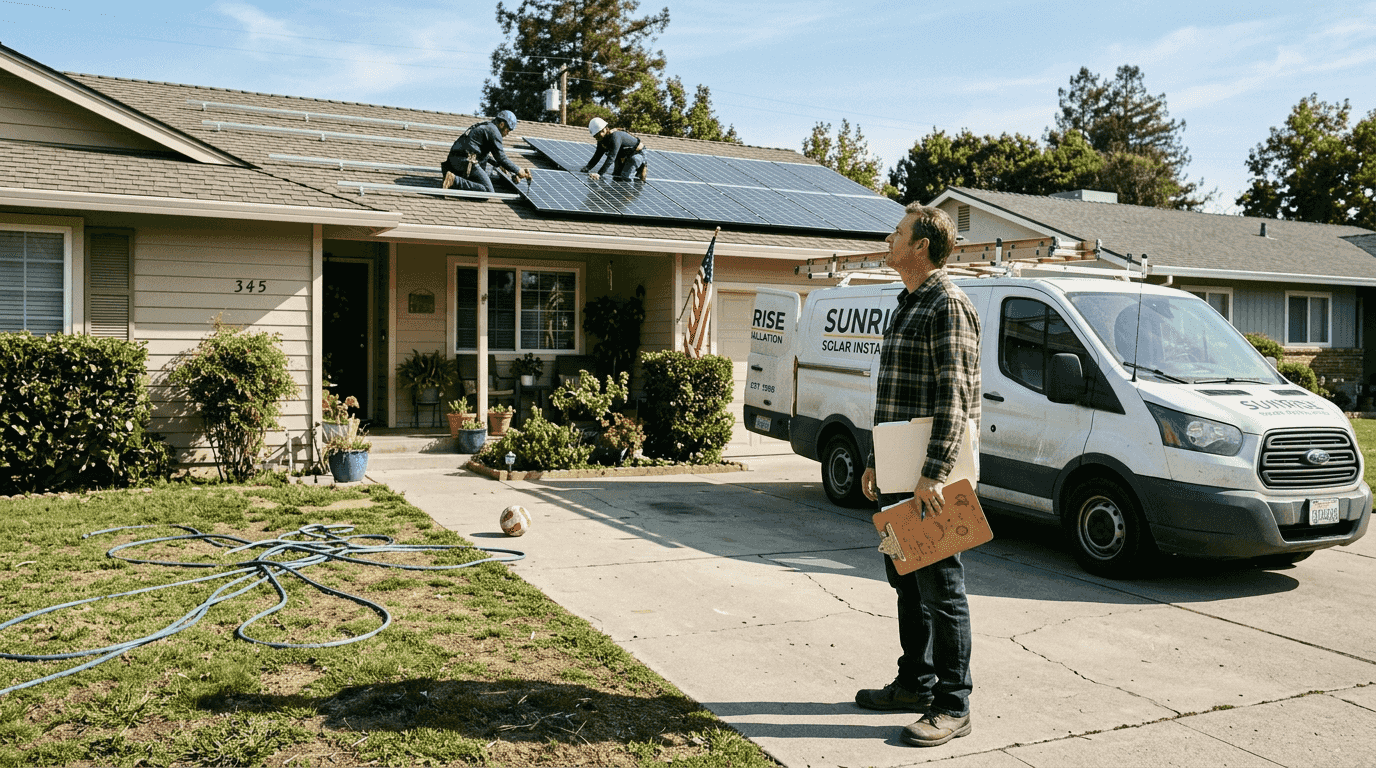
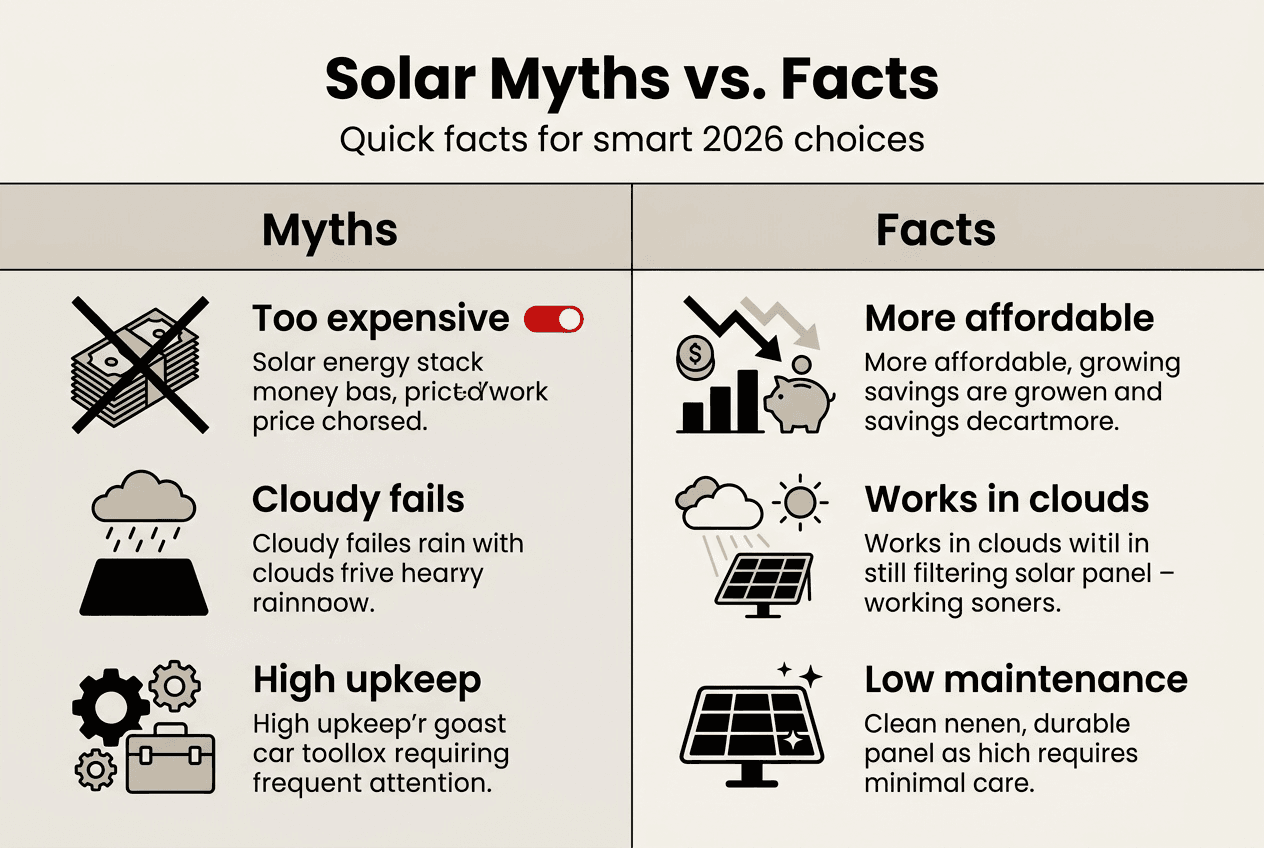
Most homeowners believe solar panels cost too much, don’t work in cloudy weather, and require constant upkeep. These myths keep thousands from saving money and protecting the environment. Solar technology has evolved dramatically, yet outdated assumptions still dominate conversations about renewable energy. This guide breaks down the most persistent solar myths with evidence-based facts, helping you make confident decisions about sustainable energy solutions for your home or business in 2026. You’ll discover real costs, actual performance data, and maintenance truths that change everything.
Table of Contents
- Common Myth #1: Solar Energy Is Too Expensive For Most Homeowners And Businesses
- Common Myth #2: Solar Panels Don’t Work Well In Cloudy Or Cold Climates
- Common Myth #3: Solar Panels Require High Maintenance And Have A Short Lifespan
- How Solar Energy Myths Affect Decision-Making And The Environment
- Explore Reliable Solar Solutions For Your Home Or Business
- Frequently Asked Questions
Key takeaways
| Point | Details |
|---|---|
| Solar costs have dropped significantly | Modern panels and incentives make solar accessible to most homeowners and businesses in 2026. |
| Panels work in all climates | Solar technology generates electricity even on cloudy days and performs efficiently in cold weather. |
| Minimal maintenance required | Panels last 25-30 years with simple cleaning and occasional inspections, no complex upkeep needed. |
| Myths delay adoption | Misconceptions prevent people from realizing substantial savings and environmental benefits. |
| Expert guidance matters | Trusted providers help navigate options and maximize your solar investment effectively. |
Common myth #1: solar energy is too expensive for most homeowners and businesses
The biggest barrier to solar adoption isn’t technology or installation complexity. It’s the widespread belief that only wealthy property owners can afford solar panels. This myth persists despite dramatic price reductions over the past decade.
Solar installation costs have plummeted by over 70% since 2010, making systems accessible to middle-income families and small businesses. Technology improvements, manufacturing scale, and competitive markets drive prices down continuously. The average residential system now costs between $15,000 and $25,000 before incentives, with solar driving sustainability and cutting costs by 30% in 2026 for typical installations. Federal tax credits, state rebates, and local utility programs reduce upfront expenses by 30% to 50% in many regions.
Long-term savings transform the financial picture completely. Most homeowners see electricity bill reductions of 50% to 70% within the first year. Over a 25-year panel lifespan, total savings often exceed $30,000 for residential properties and significantly more for commercial installations. You can cut bills and boost home value while protecting against utility rate increases that average 3% to 5% annually.
Business owners gain additional advantages beyond residential benefits:
- Accelerated depreciation schedules reduce taxable income
- Enhanced corporate sustainability credentials attract environmentally conscious customers
- Predictable energy costs improve long-term financial planning
- Commercial systems scale efficiently for larger operations
Financing options eliminate the need for large upfront payments. Solar loans, leases, and power purchase agreements let you start saving immediately with zero or minimal down payments. Monthly loan payments typically cost less than previous electricity bills, creating positive cash flow from day one.
Pro Tip: Request quotes from three certified installers to compare pricing and system designs. Local competition often reveals $3,000 to $5,000 price differences for identical equipment, and multiple bids help you identify fair market rates while avoiding overpriced proposals.
The affordability myth prevents countless property owners from exploring options that would save money immediately. Understanding real costs and available incentives reveals solar as a practical investment, not a luxury purchase. Check out this solar energy efficiency guide for home savings to calculate your potential returns.
Common myth #2: solar panels don’t work well in cloudy or cold climates
Many people assume solar panels only function effectively in sunny desert regions like Arizona or California. This geographic misconception causes homeowners in northern states and cloudy regions to dismiss solar without investigating actual performance data.
Solar panels produce energy even on cloudy days because they capture diffuse sunlight, not just direct sun rays. Photovoltaic cells convert light particles into electricity regardless of weather conditions. Cloudy days reduce output by 10% to 25% compared to clear conditions, but panels still generate substantial power. Germany leads global solar adoption despite having less annual sunshine than most U.S. states, proving climate isn’t a limiting factor.
Cold temperatures actually enhance panel efficiency by reducing heat-related energy losses. Silicon solar cells perform optimally between 59°F and 95°F. When temperatures exceed 95°F, efficiency drops by 0.5% for every degree increase. Winter conditions in northern climates create ideal operating temperatures, offsetting shorter daylight hours. Snow reflects additional light onto panels, boosting output when surfaces remain clear.
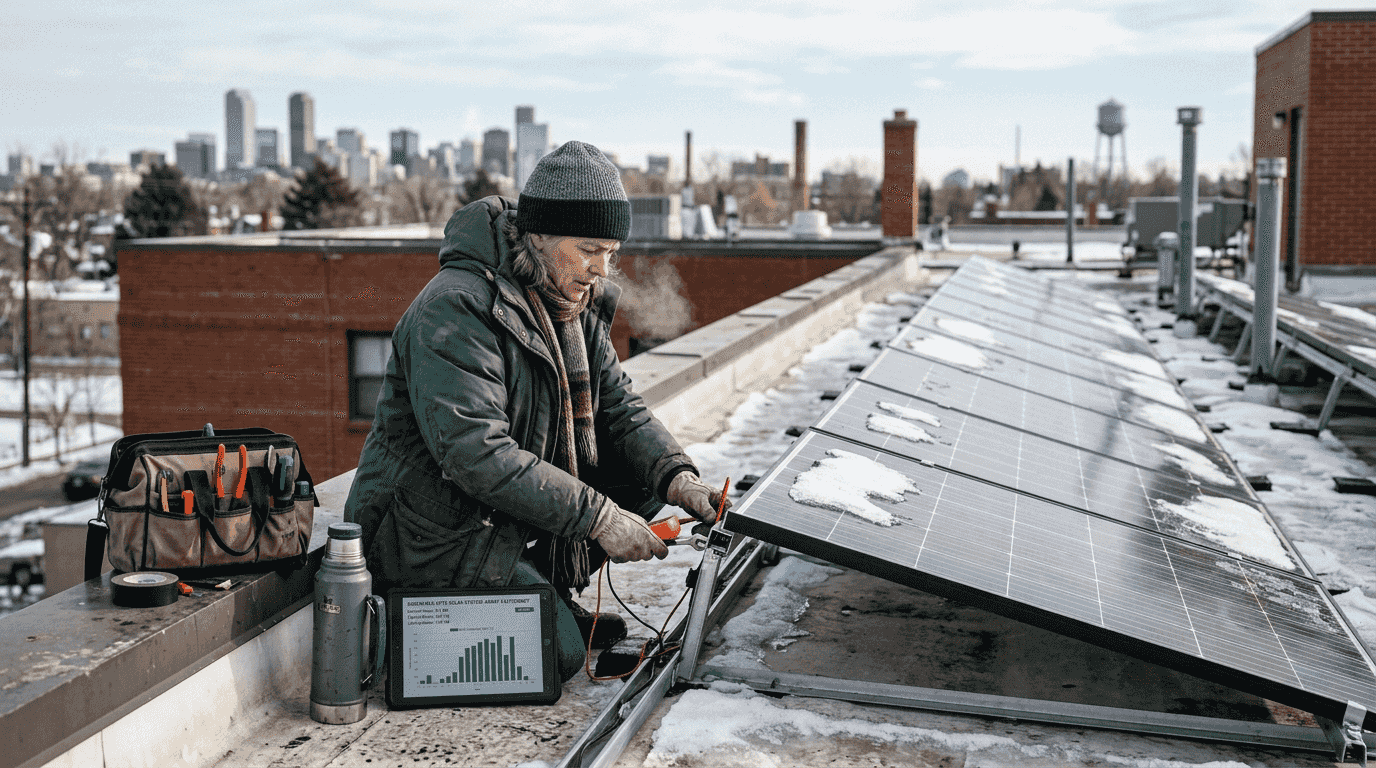
| Weather Condition | Energy Output | Efficiency Notes |
|---|---|---|
| Clear sunny day | 100% baseline | Optimal direct sunlight conditions |
| Partly cloudy | 75% to 90% | Intermittent clouds reduce but don’t eliminate production |
| Overcast/heavy clouds | 50% to 75% | Diffuse light still generates significant power |
| Light snow cover | 0% to 40% | Output resumes quickly as snow melts or slides off |
Modern panel technology continues improving low-light performance. Bifacial panels capture reflected light from ground surfaces, increasing total energy collection by 5% to 15%. Advanced cell designs maximize electron movement in reduced light conditions. These innovations make solar viable in regions previously considered unsuitable.
Location matters less than system design and orientation. Proper panel angle, unobstructed positioning, and quality equipment deliver strong results across diverse climates. Professional installers optimize configurations for local conditions, ensuring maximum output regardless of regional weather patterns. The solar panel efficiency explained resource provides detailed performance insights.
Geographic myths cost property owners in cloudy regions thousands in potential savings. Panels work effectively in Seattle, Portland, Boston, and other cities with limited sunshine. Rejecting solar based on climate assumptions ignores proven technology and real-world success stories from less sunny locations.
Common myth #3: solar panels require high maintenance and have a short lifespan
Concerns about ongoing maintenance costs and frequent replacements deter potential adopters who fear hidden expenses. This myth stems from confusion between solar panels and other home systems requiring regular servicing.
Solar panels typically last 25 to 30 years with degradation of only 0.5% per year, maintaining 85% to 90% of original output after three decades. Manufacturers provide performance warranties guaranteeing minimum production levels throughout this period. Panels have no moving parts, eliminating mechanical wear that affects other equipment. Tempered glass and aluminum frames withstand hail, wind, and temperature extremes without damage.
Maintenance requirements involve simple tasks homeowners and facility managers handle easily:
- Rinse panels with a garden hose two to four times yearly to remove dust and debris
- Inspect mounting hardware annually for loose bolts or corrosion
- Trim nearby trees or vegetation blocking sunlight as growth occurs
- Check inverter display monthly for error codes or performance alerts
- Schedule professional inspection every three to five years for electrical connections
Rainfall naturally cleans panels in most climates, reducing manual washing needs. Dust accumulation rarely exceeds 5% efficiency loss between rain events. Arid regions require more frequent cleaning, but the process takes 20 to 30 minutes for typical residential systems. Commercial installations often include automated cleaning systems that operate without human intervention.
Pro Tip: Perform visual inspections during spring and fall when seasonal debris accumulates most. Look for bird nests under panels, leaf buildup in corners, and any visible damage from storms. Catching minor issues early prevents efficiency losses and extends system lifespan beyond warranty periods.
Inverters represent the only component requiring eventual replacement. These devices convert DC power from panels to AC electricity for home use. Modern inverters last 10 to 15 years, and replacement costs $1,500 to $3,000 for residential systems. Microinverters attached to individual panels often outlast traditional string inverters, reducing long-term expenses.
Experts confirm minimal upkeep demands. As one solar engineer notes, “Panels require less maintenance than your car, roof, or HVAC system. An annual visual check and occasional rinse keep them operating at peak efficiency for decades.” This durability makes solar one of the lowest-maintenance home improvements available.
The maintenance myth creates unnecessary hesitation about solar adoption. Reality involves simple tasks requiring minimal time and expense over a 30-year lifespan. Understanding actual requirements removes this barrier and reveals solar as a reliable, low-effort energy solution. Visit solar panel maintenance for efficiency savings for detailed care guidelines.
How solar energy myths affect decision-making and the environment
Misconceptions about solar technology create ripple effects beyond individual purchasing decisions. These myths slow renewable energy adoption rates, increase household expenses, and delay environmental progress at community and national levels.
Homeowners who believe solar myths continue paying rising utility rates instead of locking in lower energy costs. The average household spends $1,500 to $2,000 annually on electricity. Over 25 years, that totals $37,500 to $50,000 without accounting for rate increases. Solar adopters redirect these funds toward system payments initially, then enjoy free electricity after payoff. Delayed adoption means lost savings that could fund other financial goals.
Businesses face even larger opportunity costs. Commercial properties consuming 50,000 to 100,000 kWh annually spend $6,000 to $12,000 on electricity. Solar energy adoption reduces carbon footprint significantly while cutting these expenses by 40% to 60%. Companies postponing solar installation due to myths sacrifice competitive advantages and sustainability credentials valued by modern consumers.
| Scenario | Annual CO2 Emissions (tons) | 25-Year Energy Cost | Environmental Impact |
|---|---|---|---|
| No solar adoption | 7.5 | $50,000+ | Equivalent to 180,000 miles driven |
| Solar adoption in 2026 | 1.2 | $15,000 | Equivalent to planting 125 trees |
Environmental consequences extend beyond individual properties. Every household avoiding solar due to myths continues relying on fossil fuel power plants. Coal and natural gas generation produce greenhouse gases, air pollutants, and water contamination. Residential solar systems offset 3 to 4 tons of carbon dioxide annually, equivalent to planting 100 trees or removing a car from roads for eight months.
Myth-driven hesitation slows grid transformation and renewable infrastructure development. Utility companies invest in new generation capacity based on demand projections. Lower solar adoption rates justify continued fossil fuel plant construction instead of clean energy expansion. Your decision influences broader energy policy and investment patterns.
Key benefits lost to solar myths include:
- $30,000 to $60,000 in lifetime energy savings for homeowners
- 80% to 100% reduction in electricity-related carbon emissions
- Increased property values averaging $15,000 for solar-equipped homes
- Energy independence protecting against utility rate volatility
- Local job creation in installation and maintenance sectors
Overcoming misconceptions requires accessing accurate information from credible sources. Industry data, government research, and verified case studies reveal solar’s true costs, performance, and benefits. Making decisions based on facts rather than myths unlocks financial savings and environmental progress simultaneously. Explore commercial solar basics to understand business applications.
Explore reliable solar solutions for your home or business
Now that you understand the facts behind common solar myths, taking action becomes straightforward. Sunflowers Energy specializes in residential and commercial solar installations designed for maximum efficiency and long-term savings. Our expert team guides you through every decision, from system sizing to financing options.
Discover the best solar energy solutions for 2026 tailored to your property’s unique characteristics and energy goals. We analyze your roof orientation, shading patterns, and consumption history to design optimal systems. Our transparent pricing and detailed proposals eliminate surprises.
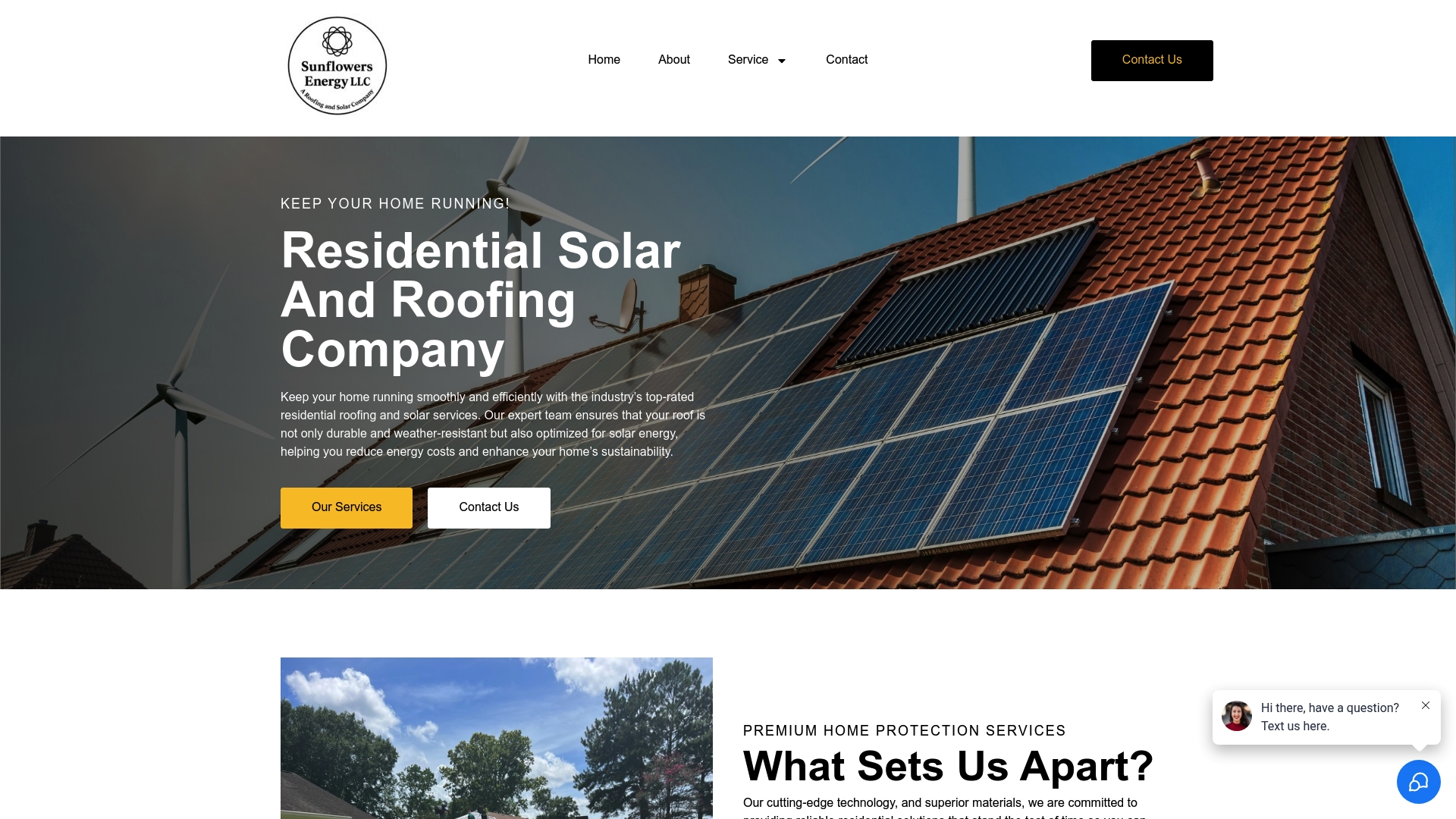
Understanding solar installation steps for home efficiency helps you prepare for a smooth process from consultation to activation. We handle permits, utility coordination, and inspections while keeping you informed at every stage. Learn about various types of residential solar systems to identify which configuration delivers the best value for your situation. Schedule your free onsite inspection today to receive a personalized quote and start saving.
Frequently asked questions
What are the most common myths about solar energy?
The three most persistent myths claim solar costs too much for average property owners, panels don’t work in cloudy or cold climates, and systems require extensive maintenance with short lifespans. Each misconception has been thoroughly debunked by industry data, real-world performance records, and technological advances over the past decade. These myths create unnecessary barriers preventing homeowners and businesses from realizing substantial savings and environmental benefits available through modern solar installations.
Does solar energy work in areas with frequent cloud cover?
Solar panels generate electricity efficiently even during cloudy weather by capturing diffuse sunlight rather than requiring direct sun exposure. Output decreases by only 10% to 25% on overcast days compared to clear conditions, still producing significant power for household and business needs. Germany demonstrates this principle as a global solar leader despite having less annual sunshine than most U.S. regions. Modern panel technology continues improving low-light performance, making climate a minor consideration rather than a limiting factor for adoption.
How long do solar panels typically last before replacement is needed?
Quality solar panels last 25 to 30 years while maintaining 85% to 90% of original efficiency throughout their lifespan. Annual degradation averages only 0.5%, meaning panels still produce substantial power after three decades of operation. Manufacturers provide performance warranties guaranteeing minimum output levels, and panels often continue functioning beyond warranty periods. The only component requiring replacement is the inverter after 10 to 15 years, costing $1,500 to $3,000 for residential systems.
Are solar panels worth the investment for businesses in 2026?
Businesses achieve significant returns through reduced energy costs, tax incentives, and enhanced sustainability credentials that attract environmentally conscious customers. Commercial solar systems typically pay for themselves within 5 to 8 years through electricity savings and accelerated depreciation benefits. Companies gain predictable energy expenses protecting against utility rate increases while demonstrating corporate environmental responsibility. Federal tax credits, state programs, and improved technology make 2026 an optimal year for commercial solar investment. Review commercial solar basics to evaluate your business opportunities.
Recommended
- Why Choose Solar Roofing: Savings, Durability, Value – Sunflowers Energy LLC A Roofing and Solar Companys
- Why Choose Solar Panels in 2026: Cut Costs by 70% & Boost Value – Sunflowers Energy LLC A Roofing and Solar Companys
- Why Upgrade to Solar: Savings, Value, and Impact – Sunflowers Energy LLC A Roofing and Solar Companys
- Solar drives sustainability and cuts costs by 30% in 2026 – Sunflowers Energy LLC A Roofing and Solar Companys