
A small gap in chimney flashing might not seem urgent, until water starts pooling in your attic or running down an interior wall. At that point, the chimney flashing repair cost becomes a lot more real, and so does the pressure to act fast. Whether you’ve spotted early warning signs or you’re already dealing with active leaks around a chimney, understanding what this repair actually costs helps you make smarter decisions and avoid overpaying.
In 2026, homeowners can expect to pay anywhere from $200 to $1,500 or more depending on the type of repair, the flashing material, roof pitch, and local labor rates. That’s a wide range, and it often leaves people wondering whether the quote sitting in their inbox is fair. The truth is, several specific factors drive the final number on your estimate, and knowing them puts you in a stronger negotiating position.
At Sunflowers Energy LLC, we handle roofing repairs and installations for both residential and commercial properties, and chimney flashing issues are among the most common problems we see during our free on-site inspections. We built this guide to break down real pricing by repair type, explain what affects your total cost, and give you the context you need to evaluate any quote with confidence.
Why chimney flashing affects your roof and budget
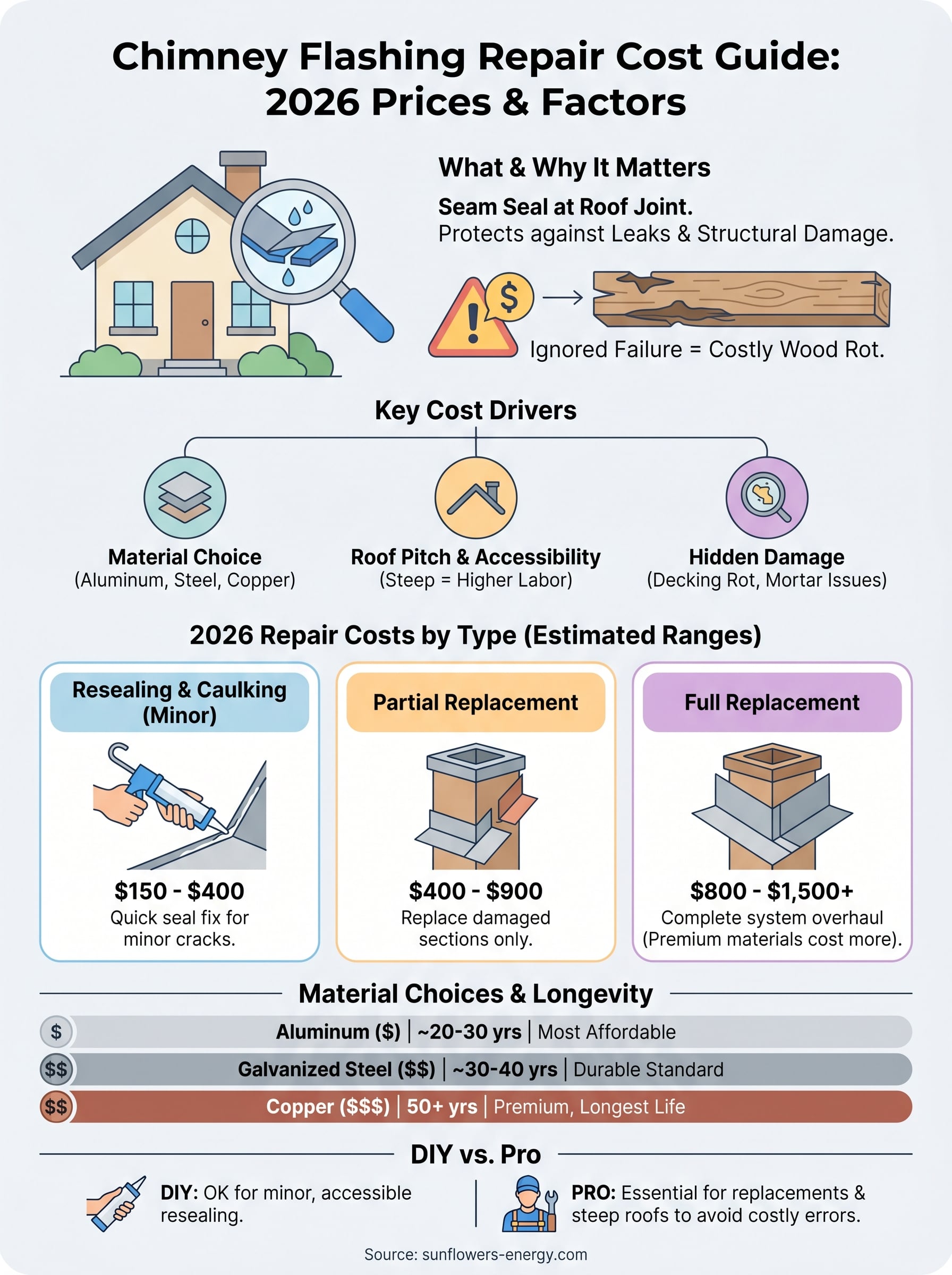
Chimney flashing sits at one of the most vulnerable joints on your entire roof: the seam where masonry meets the roofing surface. This area expands and contracts with every temperature cycle, takes a beating from rain, and faces constant wind stress. When flashing holds, water runs cleanly off your roof. When it fails, water finds the path of least resistance, and that path leads directly into your home’s structure.
What chimney flashing actually does
Flashing is a system of thin overlapping metal strips that creates a watertight seal between your chimney and the roof deck below it. A complete system typically includes step flashing along the chimney sides, counter flashing embedded into the mortar joints, and in some cases a saddle or cricket behind the chimney to redirect water flow. Each layer overlaps the next in a precise sequence to channel water down the slope and away from the joint. Most residential installations use galvanized steel, aluminum, or copper, and each material carries a different lifespan and price point that directly affects your repair estimate.
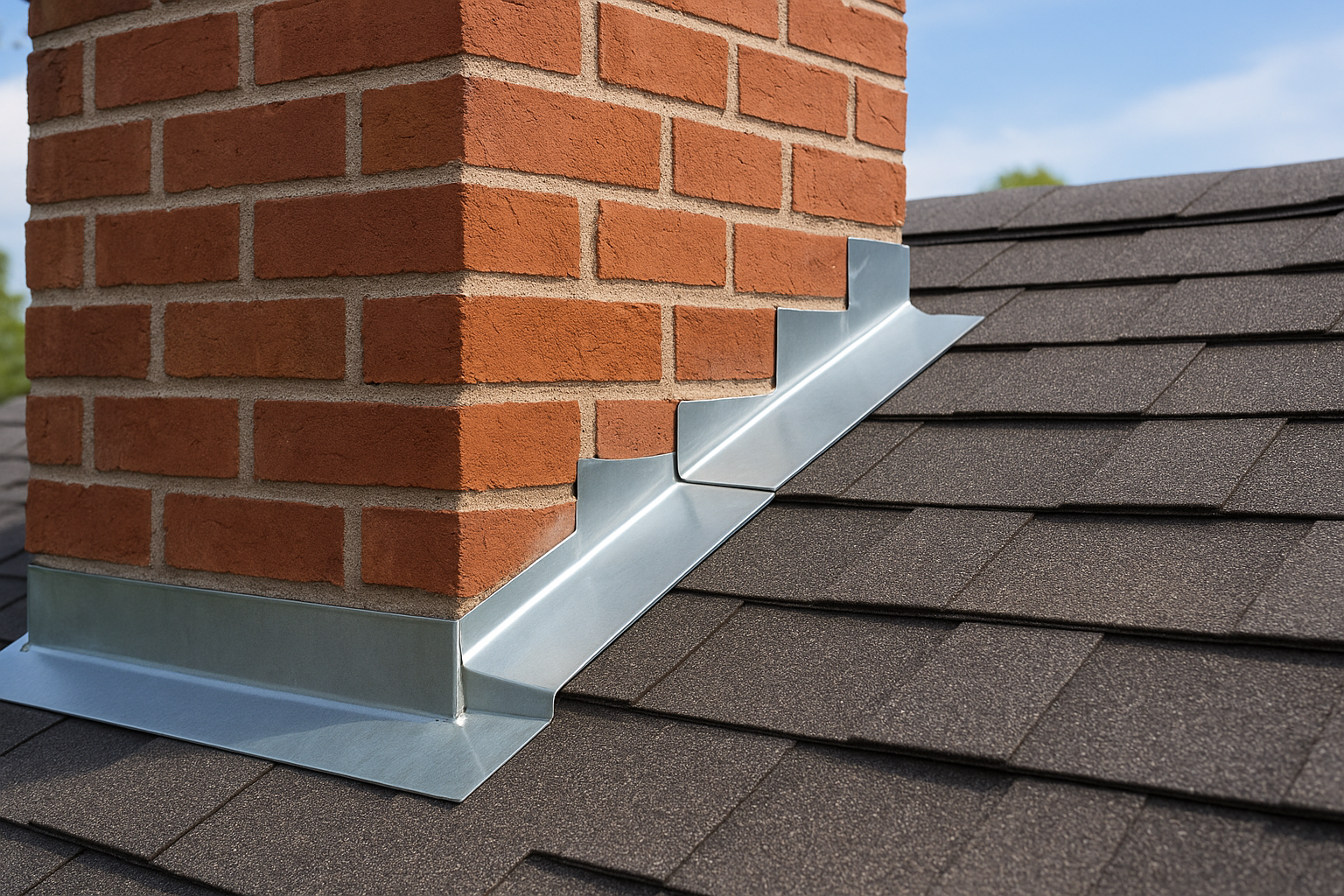
The flashing also shields the wooden roof framing underneath the chimney. That framing is far more costly to replace than the metal flashing covering it, which is exactly why addressing early signs of failure keeps your overall budget under control.
Ignoring a minor flashing gap can turn a $300 repair into a $3,000 structural fix within a single wet season.
What happens when flashing fails
Water is patient. A small separation, crack, or lifted edge in flashing allows moisture to seep in gradually, and that moisture does not stay where it entered. It travels along rafters, saturates insulation, and eventually surfaces as a stain on a ceiling or interior wall, often far from the chimney itself. By the time you spot visible water damage inside, the underlying wood framing and insulation may already be significantly compromised.
Failed flashing also speeds up masonry deterioration. Moisture that works behind the flashing and into the chimney base freezes in winter and forces mortar and brick apart through repeated freeze-thaw cycles. A job that started as flashing replacement can expand quickly to include mortar repointing or brick repair, both of which push your total bill higher than you originally anticipated.
Why repairs get expensive fast
A proper flashing repair involves multiple layers of skilled work. Your roofer needs to strip out old caulk, remove or cut away the damaged metal, inspect the decking beneath for rot, install new flashing in the correct overlapping sequence, and seal everything to match your specific roofing system. That process requires time and expertise even on a straightforward job, which is why labor typically accounts for 50 to 70 percent of your total chimney flashing repair cost.
Roof accessibility drives costs up as well. A steep pitch or a chimney on a two-story home requires additional safety setup and more time on the job, both of which appear in your estimate. Recognizing why this work takes the time it does helps you evaluate quotes accurately and understand why a low-bid repair that skips steps will almost always cost you more in the long run.
2026 chimney flashing repair cost by repair type
The chimney flashing repair cost you pay depends almost entirely on the scope of work your roofer needs to complete. A simple resealing job sits at the low end of the pricing spectrum, while a full system replacement with premium materials lands at the top. Understanding the three main repair categories gives you a realistic baseline before you request a single quote.
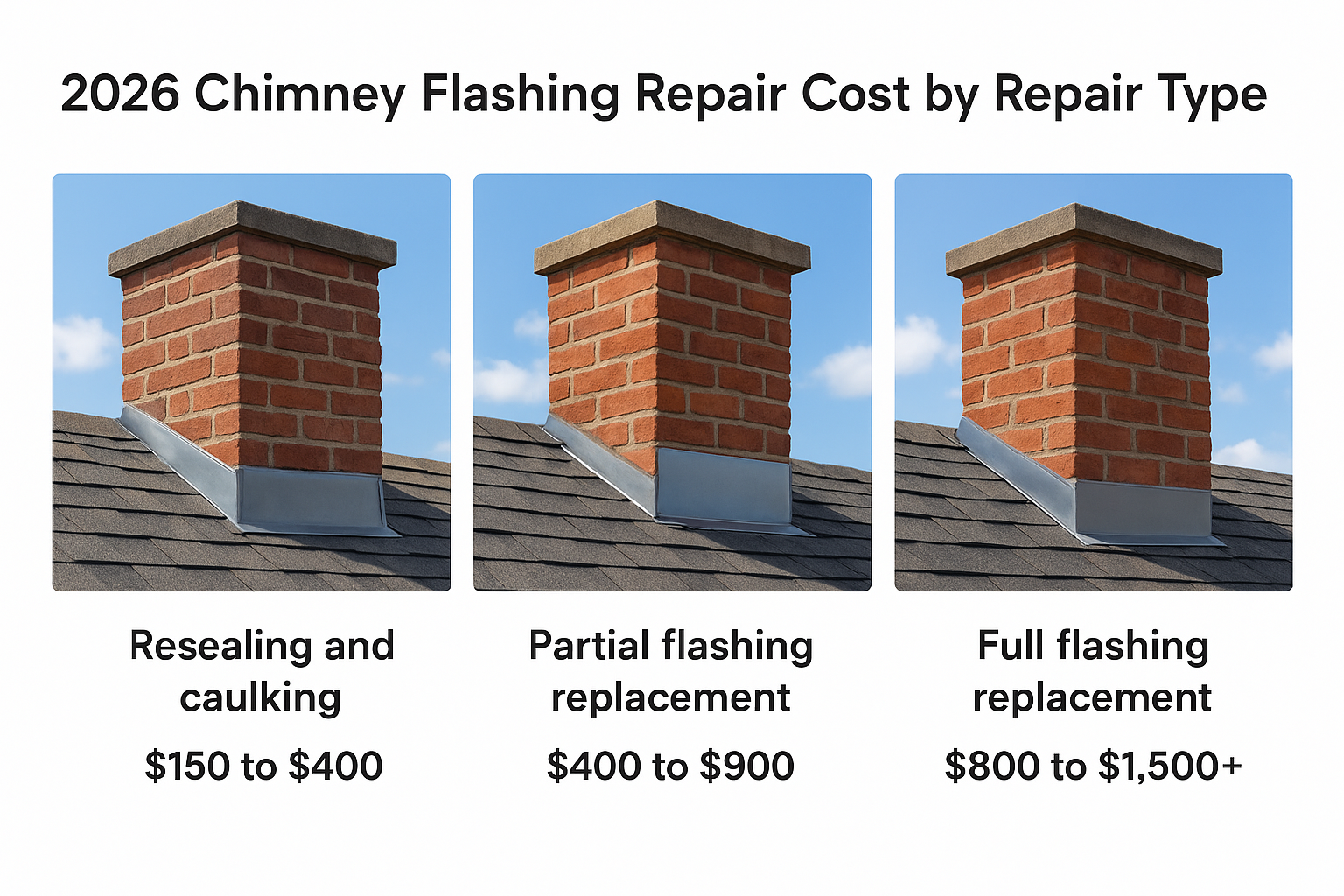
| Repair Type | Typical Cost Range |
|---|---|
| Resealing and caulking | $150 to $400 |
| Partial flashing replacement | $400 to $900 |
| Full flashing replacement | $800 to $1,500+ |
Skipping an annual inspection can turn a $250 resealing job into a full flashing replacement within one wet season.
Minor repairs: resealing and caulking
When the flashing metal itself is structurally intact but the sealant along its edges has cracked, lifted, or dried out, your roofer strips the old material and applies a fresh seal. This type of repair typically runs between $150 and $400, with the majority of that cost covering labor rather than materials since the work usually wraps up in a few hours. It is the most common repair category and the easiest to address early before the metal underneath takes on damage.
Partial flashing replacement
If one section of the system has corroded, bent out of position, or pulled away from the chimney wall, your roofer will remove and replace only the affected area without touching the rest of the installation. Step flashing along a single chimney side and counter flashing that has worked loose from a mortar joint are the most frequent candidates for this repair. Partial replacements typically fall between $400 and $900, driven by how much linear footage needs new material and which metal your roofer installs.
Full flashing replacement
A full replacement involves stripping every layer of existing flashing from the chimney base and building a new system from scratch. Your roofer will most likely recommend this when corrosion has spread across multiple sections, when a previous repair was installed out of sequence, or when decking rot appears beneath the old flashing. Costs for a complete job range from $800 to $1,500 or more, and copper installations regularly push past that upper figure given the material price alone.
What drives the price up or down
Several variables shape your final chimney flashing repair cost, and understanding them helps you spot where a quote is reasonable and where it might be inflated. Two jobs that look identical from the street can land hundreds of dollars apart based on material selection, roof geometry, and what the roofer finds once the old flashing comes off.
Material choice
The metal your roofer installs is one of the most direct price variables. Aluminum is the most affordable option, typically costing $1 to $3 per linear foot for material alone, while galvanized steel runs slightly higher and delivers a longer service life. Copper sits at the premium end, ranging from $15 to $25 per linear foot, which means a full copper replacement on a large chimney can add several hundred dollars to your estimate before labor even enters the picture.
Here is a quick breakdown of common flashing materials and their general cost ranges:
| Material | Material Cost Per Linear Foot | Typical Lifespan |
|---|---|---|
| Aluminum | $1 to $3 | 20 to 30 years |
| Galvanized steel | $3 to $6 | 30 to 40 years |
| Copper | $15 to $25 | 50+ years |
Roof pitch and accessibility
A steep roof takes more time and more safety equipment, and both factors show up directly in your labor line. Roofers working on a pitch above 6:12 typically charge a higher labor rate to account for harness setup and slower movement across the surface. A chimney on the back slope of a two-story home with limited ground access can add $100 to $300 to a job that would cost far less on a low-slope ranch-style property.
Your geographic location also shapes the labor rate. In high cost-of-living metro areas, contractor rates often run 20 to 40 percent higher than in rural markets for the exact same scope of work.
Extent of hidden damage
Once old flashing comes off, your roofer may find rotted decking, saturated insulation, or deteriorated mortar joints at the chimney base. Any of those findings adds both material costs and labor hours to the project. A repair quoted as a partial replacement can expand into a full system job if water has been working its way in undetected for multiple seasons, so be prepared for that possibility when you review your estimate.
DIY vs hiring a roofer
When you first see a flashing price estimate, the idea of doing the work yourself is tempting. Resealing caulk on accessible flashing is genuinely within reach for a careful homeowner with basic tools, but most chimney flashing work sits above that threshold and carries real consequences if done incorrectly.
When DIY makes sense
Reapplying sealant to intact, accessible flashing on a low-slope roof is a reasonable weekend project if you are comfortable working at height and understand which products to use. Roofing caulk and flashing sealant are available at any hardware store, and the material cost is minimal. If you limit your work to surface-level resealing on undamaged metal, you can handle this category without a contractor and keep your immediate spending under $50.
If you notice the metal itself is lifted, corroded, or bent, stop and call a roofer. Surface sealant applied over damaged metal will fail within one season and leave the underlying structure worse off.
Why most homeowners should hire a roofer
Partial and full flashing replacements involve working on a sloped surface while cutting and fitting metal precisely around masonry, and the margin for error is very small. A single step flashing piece installed out of sequence breaks the overlapping water-shedding system and creates a new entry point for moisture. The result is a leak that may not surface for months, by which point wood rot and insulation damage have already added significant cost to your project.
Licensed roofers carry liability insurance and workers compensation coverage, which protects you if something goes wrong on your property during the repair. That coverage is part of what you are paying for when you review your chimney flashing repair cost estimate, and it has real value. Attempting a full replacement without it means you absorb all risk for any injury or subsequent water damage traced back to the installation.
Hiring a professional for anything beyond basic resealing is the more cost-effective path in almost every case once you account for materials, specialty tools, and the potential expense of correcting a failed DIY repair.
How to compare quotes and avoid bad repairs
Getting multiple quotes is the single most reliable way to validate your chimney flashing repair cost, but only if you know what to look for inside each estimate. A number on a page tells you very little without the scope of work, materials, and warranty details behind it. Comparing quotes line by line rather than by total price alone keeps you from choosing a low bid that cuts corners you will pay for later.
What a solid quote should include
A well-written estimate breaks down labor and materials separately so you can see exactly what you are paying for each component. It should specify the flashing material by type, such as galvanized steel or copper, along with the linear footage your roofer plans to install. Any quote that lists only a single lump sum without itemization is a signal that the contractor is not being transparent about how your money is being spent.
Your estimate should also include a clear description of the repair scope, including whether the roofer will inspect the decking beneath the old flashing and what happens if hidden rot is found. A reputable contractor puts that process in writing rather than leaving it as a verbal promise. Ask directly about the warranty on both materials and labor, and confirm whether the company carries liability insurance before anyone sets foot on your roof.
A quote that skips itemized material costs or omits a warranty clause is worth walking away from, regardless of the total price.
Red flags to watch for
Pressure to accept a quote on the spot is one of the clearest warning signs in the roofing industry. Legitimate contractors give you time to review the estimate, compare it against other bids, and ask follow-up questions. A roofer who pushes for an immediate decision or offers a steep discount for same-day commitment is prioritizing the sale over the quality of the repair.
Watch for vague language around hidden damage as well. If a quote says nothing about what happens when the roofer removes old flashing and finds rotted decking, you have no protection against a surprise bill that doubles your original estimate once work begins.
Next steps for a leak-free chimney
Now that you understand what shapes your chimney flashing repair cost, the best move is to get an accurate picture of what your specific roof actually needs. Start by walking your property after the next rainfall and checking for water stains on interior ceilings or walls near the chimney. Even minor discoloration is worth investigating before it spreads to the framing underneath. If you spot lifted metal, cracked caulk, or rust streaking down your chimney, schedule a professional inspection before those issues compound into a full replacement job.
Getting multiple itemized quotes gives you the context to evaluate pricing with confidence rather than guessing. A reputable contractor will walk you through the scope, explain material options, and provide a written warranty without pressuring you to decide on the spot. If you want a straightforward, no-obligation assessment from a team that handles both roofing and storm damage repairs, schedule your free inspection with Sunflowers Energy LLC and get a clear answer on exactly what your chimney needs.